Pulley is the first pick on this list for founders and finance leaders. Listed starting prices: EquityList from $100 a month. Alternatives: Global Shares for employee equity compensation programs, and Capdesk for equity management within a private capital suite. The other 3 tools in the list cover narrower or pricier cases.
Ainotely put together this guide to software for managing compensation equity for readers who want a clear shortlist without reading every vendor page. It compares 6 tools on starting price, free plans, who each one suits and where each one falls short.
Key takeaways
Pulley is the opening pick, best for founders and finance leaders.
A fair warning about Capdesk: suite context can complicate standalone use.
EquityList has the lowest monthly starting price in this list: $100 per month.
For unified equity and compensation plans, Ledgy is worth a look.
A free plan is available from 4 of the 6 tools: Capdesk, Carta, EquityList, Ledgy.
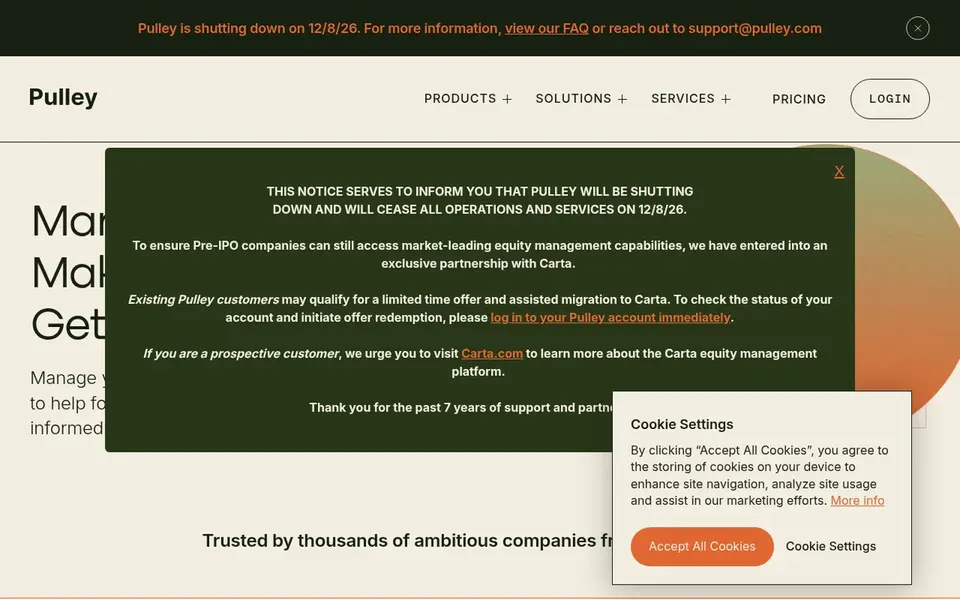
Where Pulley fits: founders and finance leaders. Since the product centers on cap table management, teams needing fund administration or broader portfolio services should look at a wider suite.
Check the vendor site for Pulley pricing; none is listed in this comparison. On free options: Not stated.
Honest limits: Less suited to fund administration.
Global Shares targets employee equity compensation programs. Global Shares, presented under J.P. Morgan Workplace Solutions, centres on enhancing equity compensation offerings built to enable employees and bring reward strategy to life.
Honest limits: Geared toward employee plan administration.
On top of that, the emphasis is on employee equity compensation instead of cap table ownership records. So teams needing a cap table system should pair it with a dedicated tool. Beyond that, smaller businesses without formal employee plans may find it more than they need. No starting price is listed for Global Shares here; confirm pricing on the vendor site. Free access: Not stated.
Best for: Equity management within a private capital suite
Capdesk is a good fit for equity management within a private capital suite. If you only need entry-level cap table records, a narrower product may be more straightforward to adopt.
Honest limits: Setup effort for connected workflows.
As for the details, Capdesk appears within Carta's end-to-end suite for private capital, where software and services combine to deliver connected clarity and control across equity, fund, and portfolio management. Check the vendor site for Capdesk pricing; none is listed in this comparison. Capdesk includes a free tier.
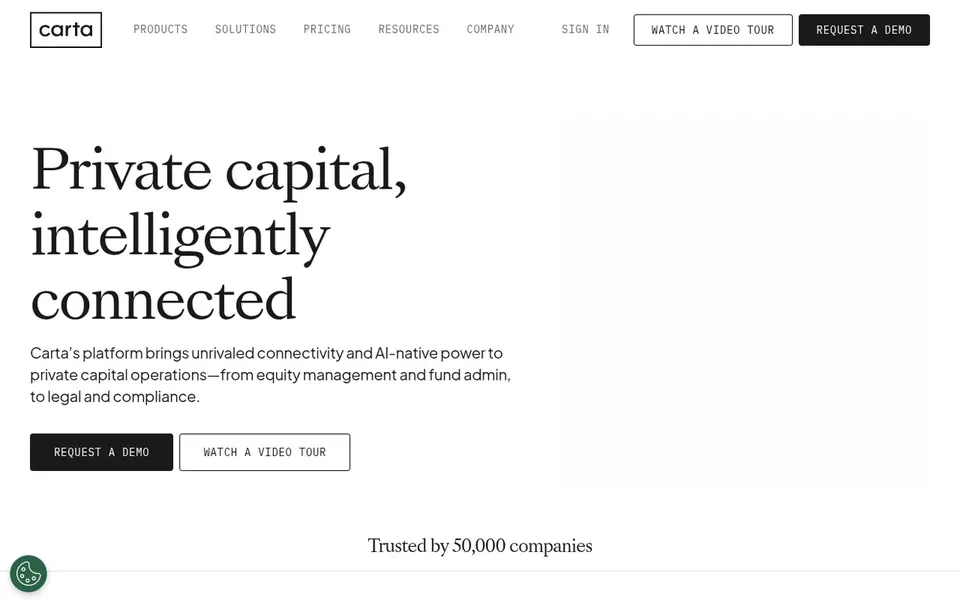
Carta is built with end-to-end private capital management in mind. Carta presents itself as an end-to-end suite connecting private capital, with an ERP-style combination of software and services for equity, fund, and portfolio management. On top of that, if your priority is a lean tool aimed squarely at founders and finance leaders, a narrower choice may suit you better.
On top of that, teams expecting to grow into fund administration or portfolio oversight frequently find the breadth handy. Also, the wide suite can be more than a small startup needs for entry-level cap table tracking, and adopting a connected product takes setup time. No starting price is listed for Carta here; confirm pricing on the vendor site. Free access exists with Carta.
Trade-offs to know: Wide scope may exceed small team needs.
EquityList targets AI-native cap table and compliance. EquityList is presented as an AI-native cap table and compliance operating system for private and public firms worldwide. Worth adding: the compliance emphasis can feel heavy for a very early startup that chiefly needs ownership tracking.
Watch-outs: Compliance focus may overwhelm early startups.
More specifically, the global framing appeals to teams operating across jurisdictions. Teams whose priority is fund administration or portfolio oversight should compare a broader private capital suite instead. Entry price for EquityList: $100 per month. EquityList includes a free tier.
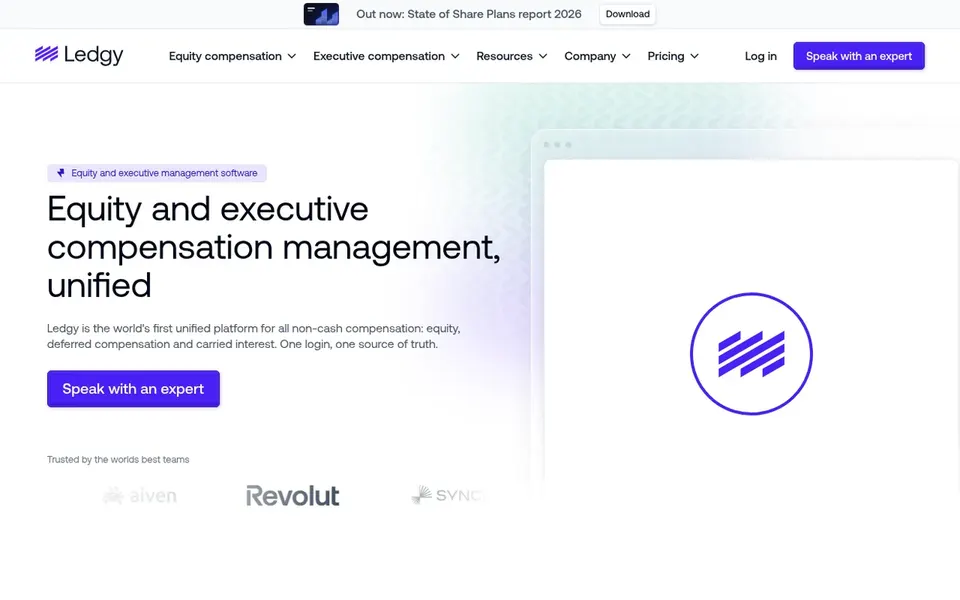
Ledgy was built for unified equity and compensation plans. That single source of truth approach suits businesses that want compensation equity and related plans managed together rather than across separate systems.
The main drawbacks: May be heavy for straightforward cap tables.
In practice, the breadth of plan types can mean a longer setup and more configuration than a straightforward cap table needs. Ledgy shows no starting price here, so confirm the cost on the vendor site. Ledgy offers a free plan.
Get a written quote from Pulley, Global Shares, Capdesk and others; the list shows no starting price for them.
Look at free plan limits closely: Capdesk, Carta, EquityList and Ledgy have one, and the caps decide whether it is usable for real work.
Read the limits listed for Pulley first: narrower scope than full suites.
Test how quickly Pulley answers a pre-sales question; it hints at how support will feel later.
Check how data leaves Global Shares: formats, limits and whether exports are available on every plan.
How we picked
Selection started from tools commonly considered for software for managing compensation equity, then narrowed to 6 that have clear pricing information or a clear quote process. Prices and plan limits come from vendor pages and can change, so confirm them on the vendor site before you buy. We ordered the tools by general fit, then by how clearly pricing is shown, then by free access. A buyer with unusual needs may reorder them.
Every price and plan detail on this page comes from the vendors’ own websites. We did not run hands-on tests unless the text says so, and we do not publish star ratings or review scores. See how we score and our disclosure.
Keep your shortlist in one place
Paste prices, trial dates and notes from this guide into Ainotely, our AI note app. It files them into a topic and pulls out tasks like “cancel trial by Friday”. Free 7-day trial, no card needed.
How are the tools for software for managing compensation equity ordered?
Pulley sits first and Ledgy last because the order follows typical fit for software for managing compensation equity, then price clarity and free access. It is a judgement call, so read each profile for fit and limits.
Do these tools publish their prices?
Not all of them. Pulley, Global Shares, Capdesk and others publish no starting price, so expect a quote request for those. The rest, EquityList included, show a starting price, though seats and billing terms still change the final cost.
Can I try these tools before paying?
Often, yes. Capdesk, Carta, EquityList and Ledgy have a free plan. Use your own data and a real task during the test, and check what the free tier or trial limits before you rely on it.
How do cap table tools differ from full equity suites?
Cap table tools focus on ownership records and grants for founders and finance teams. Full suites add fund, portfolio, or governance services, which fits businesses and managers with broader administrative needs.
What is the cheapest option for software for managing compensation equity in this list?
On published monthly entry prices, EquityList is the lowest here at $100 per month. Entry price is only part of the cost, because seats, add-ons and billing terms can change the total.