Best software for residential property management in 2026: 8 Options Compared

- Our pick for most buyers is AppFolio, which fits managers with larger residential portfolios and covers the core needs in this category.
- Buildium is a strong alternative for buyers who want a different balance of price and features.
- Prices and free tiers vary widely, so confirm the current plan on the vendor website before you buy, since tiers change during the year.
- The best choice depends on your team size, existing tools, and the specific workflow you run every day, not only on the feature list.
- We compared official feature pages, pricing pages, app store listings, privacy policies, and public reviews for every product below.
Quick comparison
| Product | Ideal for | Price from | Free version | |
|---|---|---|---|---|
 AppFolio | managers with larger residential portfolios | See website | No | Visit |
 Buildium | managers growing a rental portfolio | See website | Free trial | Visit |
 RentRedi | independent landlords with a few units | See website | Free trial | Visit |
 TenantCloud | landlords who want a free starting tier | See website | Yes | Visit |
 Avail | independent landlords who want simplicity | See website | Yes | Visit |
 DoorLoop | managers who want modern property tools | See website | Free trial | Visit |
 RentManager | managers needing deep accounting control | See website | Free trial | Visit |
 Propertyware | managers with single family portfolios | See website | No | Visit |
The best software for residential property management
Landlords and property managers use these tools to collect rent, handle maintenance requests, and keep tenant records in one place. We compared official feature pages, pricing, app store listings, privacy policies, and public reviews, and we focused on products that truly fit this topic in October 2026.
AppFolio
Ideal for: managers with larger residential portfolios
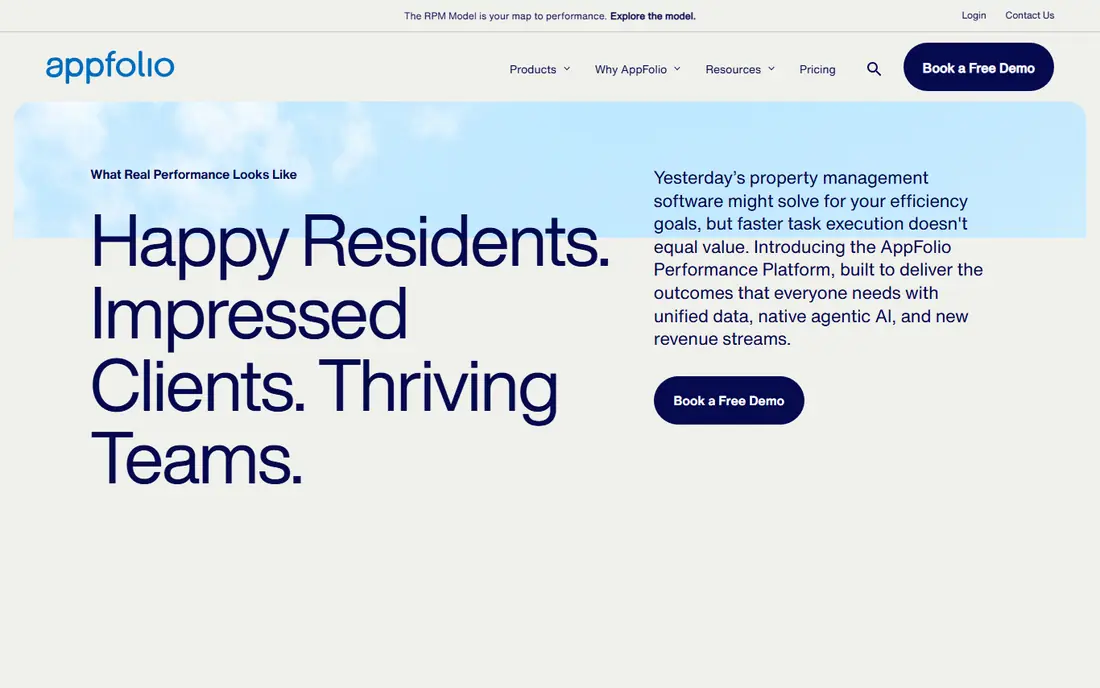
For teams weighing this category, AppFolio stands out because full property accounting. It fits managers with larger residential portfolios, and its broader strengths include full property accounting; online payments; maintenance workflows. In daily use, that combination matters because buyers in this category judge tools by whether routine work gets faster and clearer, not by a long feature list alone. Pricing is listed as See website, so check the vendor website for the current tier that matches your team size before you decide.
The honest catch is that pricing suits larger portfolios. That weakness matters more for some buyers than others, so weigh it against how you will actually use the product each week. If the catch affects your core workflow, shortlist a different option from this list and compare it side by side on the same tasks. If it does not, AppFolio remains a solid choice, and we would still recommend a trial or demo with your real data before committing to a paid plan.
- Full property accounting
- Online payments
- Maintenance workflows
- Pricing suits larger portfolios
- Onboarding takes time
Buildium
Ideal for: managers growing a rental portfolio
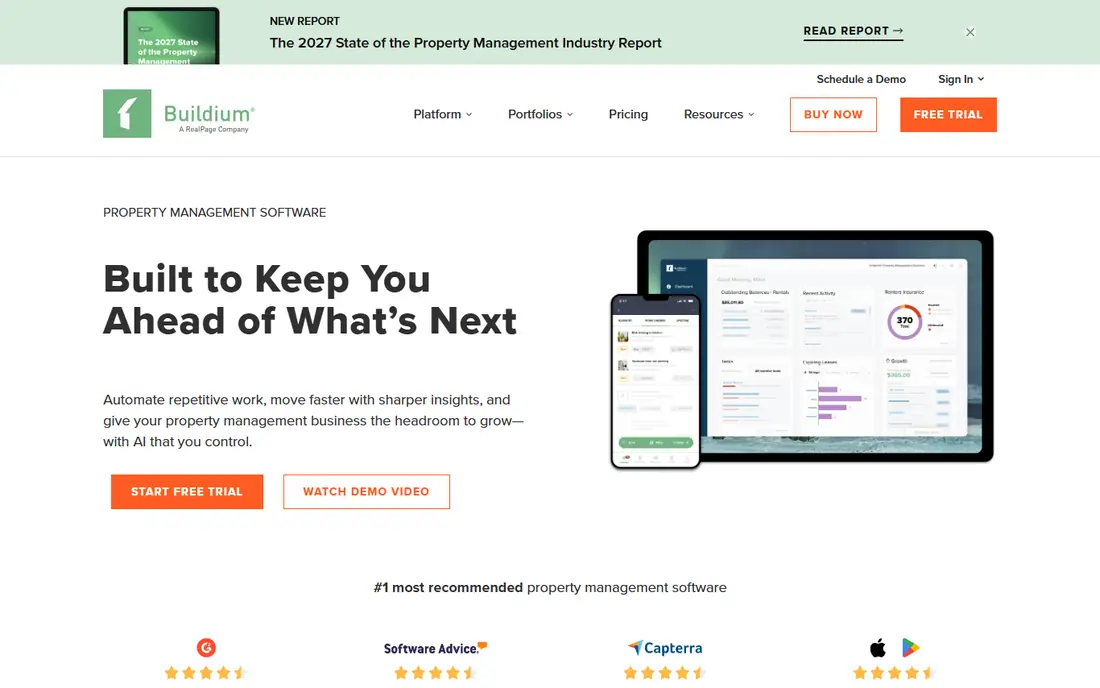
Our first look at Buildium focused on fit, and rent collection. It fits managers growing a rental portfolio, and its broader strengths include rent collection; accounting; resident portal. In daily use, that combination matters because buyers in this category judge tools by whether routine work gets faster and clearer, not by a long feature list alone. Pricing is listed as See website, so check the vendor website for the current tier that matches your team size before you decide.
The honest catch is that pricing per unit adds up. That weakness matters more for some buyers than others, so weigh it against how you will actually use the product each week. If the catch affects your core workflow, shortlist a different option from this list and compare it side by side on the same tasks. If it does not, Buildium remains a solid choice, and we would still recommend a trial or demo with your real data before committing to a paid plan.
- Rent collection
- Accounting
- Resident portal
- Pricing per unit adds up
- Advanced features need higher tiers
RentRedi
Ideal for: independent landlords with a few units
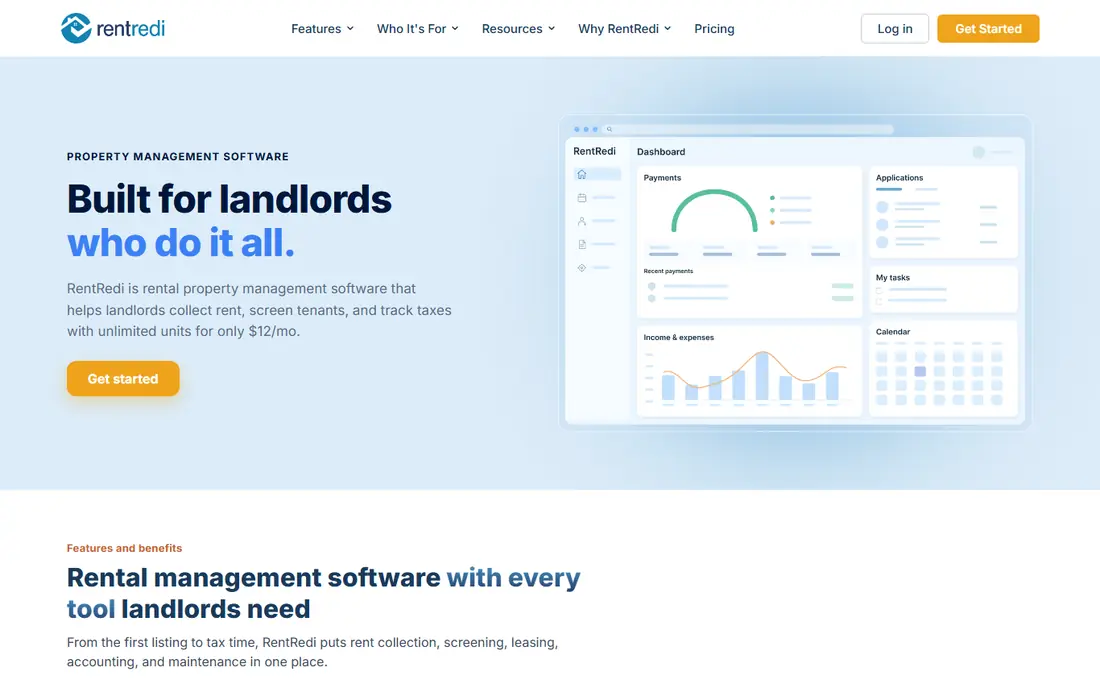
When we compared options, RentRedi earned a place because affordable landlord tools. It fits independent landlords with a few units, and its broader strengths include affordable landlord tools; rent payments; tenant screening. In daily use, that combination matters because buyers in this category judge tools by whether routine work gets faster and clearer, not by a long feature list alone. Pricing is listed as See website, so check the vendor website for the current tier that matches your team size before you decide.
The honest catch is that accounting depth is lighter than enterprise tools. That weakness matters more for some buyers than others, so weigh it against how you will actually use the product each week. If the catch affects your core workflow, shortlist a different option from this list and compare it side by side on the same tasks. If it does not, RentRedi remains a solid choice, and we would still recommend a trial or demo with your real data before committing to a paid plan.
- Affordable landlord tools
- Rent payments
- Tenant screening
- Accounting depth is lighter than enterprise tools
- Owner reporting is basic
TenantCloud
Ideal for: landlords who want a free starting tier
Among the tools we reviewed, TenantCloud is worth attention because free tier for landlords. It fits landlords who want a free starting tier, and its broader strengths include free tier for landlords; rent payments; maintenance requests. In daily use, that combination matters because buyers in this category judge tools by whether routine work gets faster and clearer, not by a long feature list alone. Pricing is listed as See website, so check the vendor website for the current tier that matches your team size before you decide.
The honest catch is that advanced features need paid plans. That weakness matters more for some buyers than others, so weigh it against how you will actually use the product each week. If the catch affects your core workflow, shortlist a different option from this list and compare it side by side on the same tasks. If it does not, TenantCloud remains a solid choice, and we would still recommend a trial or demo with your real data before committing to a paid plan.
- Free tier for landlords
- Rent payments
- Maintenance requests
- Advanced features need paid plans
- Support varies by plan
Avail
Ideal for: independent landlords who want simplicity
We included Avail after checking its core fit, and simple landlord setup. It fits independent landlords who want simplicity, and its broader strengths include simple landlord setup; rent collection; lease templates. In daily use, that combination matters because buyers in this category judge tools by whether routine work gets faster and clearer, not by a long feature list alone. Pricing is listed as See website, so check the vendor website for the current tier that matches your team size before you decide.
The honest catch is that portfolio tools are lighter than manager platforms. That weakness matters more for some buyers than others, so weigh it against how you will actually use the product each week. If the catch affects your core workflow, shortlist a different option from this list and compare it side by side on the same tasks. If it does not, Avail remains a solid choice, and we would still recommend a trial or demo with your real data before committing to a paid plan.
- Simple landlord setup
- Rent collection
- Lease templates
- Portfolio tools are lighter than manager platforms
- Screening fees apply
DoorLoop
Ideal for: managers who want modern property tools
A closer look at DoorLoop shows why it fits here, since modern interface. It fits managers who want modern property tools, and its broader strengths include modern interface; rent and accounting; maintenance tracking. In daily use, that combination matters because buyers in this category judge tools by whether routine work gets faster and clearer, not by a long feature list alone. Pricing is listed as See website, so check the vendor website for the current tier that matches your team size before you decide.
The honest catch is that newer platform than the largest vendors. That weakness matters more for some buyers than others, so weigh it against how you will actually use the product each week. If the catch affects your core workflow, shortlist a different option from this list and compare it side by side on the same tasks. If it does not, DoorLoop remains a solid choice, and we would still recommend a trial or demo with your real data before committing to a paid plan.
- Modern interface
- Rent and accounting
- Maintenance tracking
- Newer platform than the largest vendors
- Some features still growing
RentManager
Ideal for: managers needing deep accounting control
For buyers who care about day to day use, RentManager matters because deep accounting and reporting. It fits managers needing deep accounting control, and its broader strengths include deep accounting and reporting; customizable workflows; owner portals. In daily use, that combination matters because buyers in this category judge tools by whether routine work gets faster and clearer, not by a long feature list alone. Pricing is listed as See website, so check the vendor website for the current tier that matches your team size before you decide.
The honest catch is that interface feels dated. That weakness matters more for some buyers than others, so weigh it against how you will actually use the product each week. If the catch affects your core workflow, shortlist a different option from this list and compare it side by side on the same tasks. If it does not, RentManager remains a solid choice, and we would still recommend a trial or demo with your real data before committing to a paid plan.
- Deep accounting and reporting
- Customizable workflows
- Owner portals
- Interface feels dated
- Setup needs training
Propertyware
Ideal for: managers with single family portfolios
We kept Propertyware on the list after reviewing its strengths, and single family focused tools. It fits managers with single family portfolios, and its broader strengths include single family focused tools; accounting; maintenance. In daily use, that combination matters because buyers in this category judge tools by whether routine work gets faster and clearer, not by a long feature list alone. Pricing is listed as See website, so check the vendor website for the current tier that matches your team size before you decide.
The honest catch is that pricing is quote based. That weakness matters more for some buyers than others, so weigh it against how you will actually use the product each week. If the catch affects your core workflow, shortlist a different option from this list and compare it side by side on the same tasks. If it does not, Propertyware remains a solid choice, and we would still recommend a trial or demo with your real data before committing to a paid plan.
- Single family focused tools
- Accounting
- Maintenance
- Pricing is quote based
- Onboarding takes time
How we picked these
We started from the topic itself and looked for products that exist, work in October 2026, and truly fit the use case, rather than general tools with a loose connection. We compared official feature pages, pricing pages, app store listings, privacy policies, and public reviews, and we left out products we could not verify or that did not fit. Prices are shown as listed by vendors at the time of writing, and where a price could not be verified we wrote See website instead of guessing.
What to check before you pick property management software
Count your units first, since pricing and features change a lot between a few rentals and a large portfolio. Check online rent payments, late fee rules, and maintenance request flow. Screening, lease signing, and owner reporting matter if you manage for others. Also test the tenant app, since tenants will use it more than you will, and confirm accounting reports your accountant can use. Also ask about support hours, onboarding help, and contract terms, since those practical details affect total cost and daily experience as much as headline features. A short trial with your real workflow usually reveals more than a feature checklist, so use that trial to test the tasks you repeat most often.
Frequently asked questions
How much does best software for residential property management cost?
Cost varies by vendor, team size, and tier. Some tools in this list offer a free tier or trial, while others price by quote, so check the vendor pricing page for the plan that matches your needs and confirm renewal pricing before you commit.
Is there a free option for best software for residential property management?
Some products above offer a free tier or trial, and the comparison table shows which ones do. Free tiers usually limit users, records, or advanced features, so test whether the free tier covers your core workflow before relying on it.
Which option is best for a small team?
Small teams usually do best with a tool that is quick to set up and covers the core workflow without a long implementation. From this list, start with the options marked as simple or affordable, run a trial with real tasks, and only move to an enterprise option if you outgrow it.
Can I switch tools later if I pick the wrong one?
In most cases yes, but switching cost depends on data export, integrations, and staff training. Before you buy, check export options and ask the vendor how migration works, so a future move stays practical rather than painful.
How do I stay safe with best software for residential property management?
Review the privacy policy, access controls, and data retention terms before you sign up. Limit access to sensitive data, use strong passwords and two factor authentication where offered, and check compliance needs that apply to your industry or region.