Best Solar Design Software in 2026: 8 Options Compared

- 1
 Aurora Solarsolar installers wanting design plus salesVisit
- 2
 PVSystengineers wanting detailed solar simulationVisit
- 3
 OpenSolarinstallers wanting free design toolsVisit
- 4
 HelioScopedesigners wanting layout and production toolsVisit
- 5
 SolarEdge DesignerSolarEdge installers wanting designVisit
- Aurora Solar is our pick for solar installers wanting design plus sales, while PVSyst suits engineers wanting detailed solar simulation.
- OpenSolar is a strong option for installers wanting free design tools, and HelioScope fits designers wanting layout and production tools.
- Prices are mostly custom or vary by plan, so get a written quote and check what is included before you commit.
- SolarEdge Designer and Solargraf show how different this market is, from simple tools to full enterprise platforms.
- Read the catch for each option below, because limits on price, scale and support matter as much as headline features.
Quick comparison
| Product | Ideal for | Price from | Free version | |
|---|---|---|---|---|
| Aurora Solar | solar installers wanting design plus sales | See website | See website | Visit |
| PVSyst | engineers wanting detailed solar simulation | See website | See website | Visit |
| OpenSolar | installers wanting free design tools | See website | Yes | Visit |
| HelioScope | designers wanting layout and production tools | See website | See website | Visit |
| SolarEdge Designer | SolarEdge installers wanting design | See website | Yes | Visit |
 Solargraf | installers wanting design plus CRM | See website | See website | Visit |
 PV SOL | engineers wanting PV simulation | See website | See website | Visit |
 Nearmap | teams wanting aerial imagery for design | See website | See website | Visit |
The best solar design software
We compared official feature pages, pricing pages, app store listings where relevant, privacy policies and public reviews to build this list of best solar design software. Each option below truly fits the topic, and we note where pricing is custom or where a free option has real limits.
Aurora Solar
Ideal for: solar installers wanting design plus sales
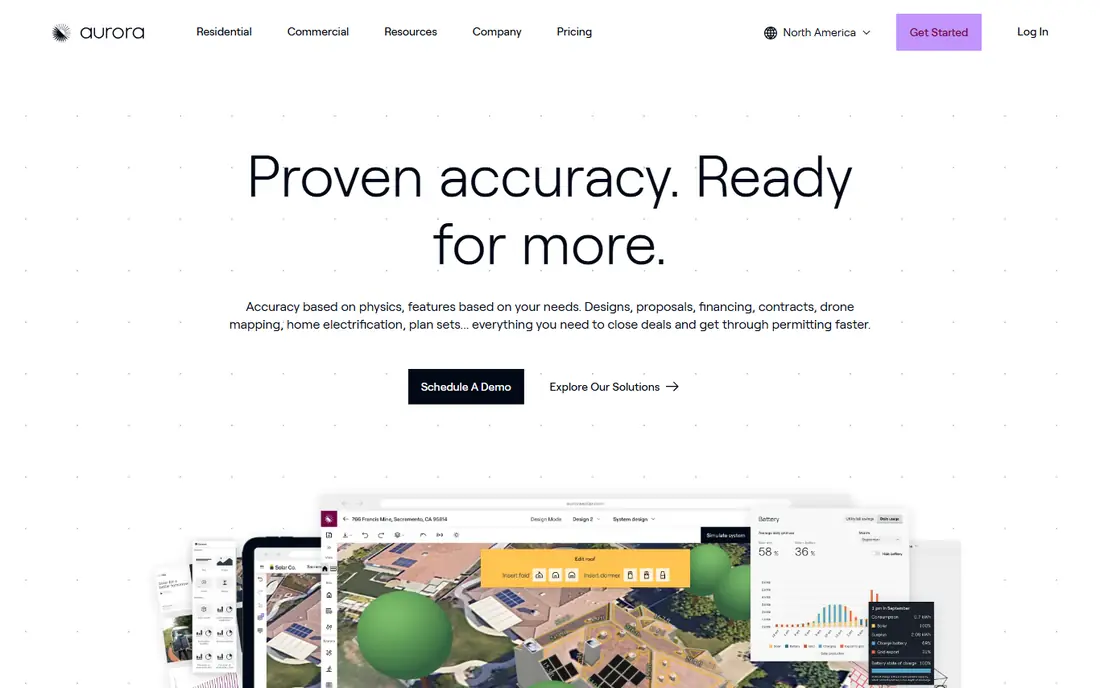
Aurora Solar is a strong fit for solar installers wanting design plus sales. Aurora Solar offers solar design with shading and production estimates. For many buyers, that focus is the main reason to shortlist it, even when other options look similar on a feature list. Its sales tools help installers create proposals quickly. That practical detail matters in daily use, because a tool that fits your workflow will get used, while a poor fit often sits unused. We also checked how clearly the vendor explains pricing, support and limits, since vague pricing makes comparison harder. The catch is that estimate accuracy depends on roof data and local conditions. Pricing is listed as See website, and the free plan status is See website, so confirm the exact terms on the official site before you buy. If that catch affects your main use case, move to the next option rather than trying to work around it.
- Solar design, shading and production estimates
- Sales tools
- Integrations
- Pricing is custom
- Learning curve
- Accuracy depends on data
PVSyst
Ideal for: engineers wanting detailed solar simulation
For engineers wanting detailed solar simulation, PVSyst is worth a close look. PVSyst is a detailed simulation tool for solar engineers. For many buyers, that focus is the main reason to shortlist it, even when other options look similar on a feature list. Its shading and loss analysis suit technical system design. That practical detail matters in daily use, because a tool that fits your workflow will get used, while a poor fit often sits unused. We also checked how clearly the vendor explains pricing, support and limits, since vague pricing makes comparison harder. The catch is that steep learning curve means it fits engineers, not casual users. Pricing is listed as See website, and the free plan status is See website, so confirm the exact terms on the official site before you buy. If that catch affects your main use case, move to the next option rather than trying to work around it.
- Detailed PV simulation
- Shading and loss analysis
- Engineering reports
- Licence pricing varies
- Learning curve steep
- Interface is technical
OpenSolar
Ideal for: installers wanting free design tools
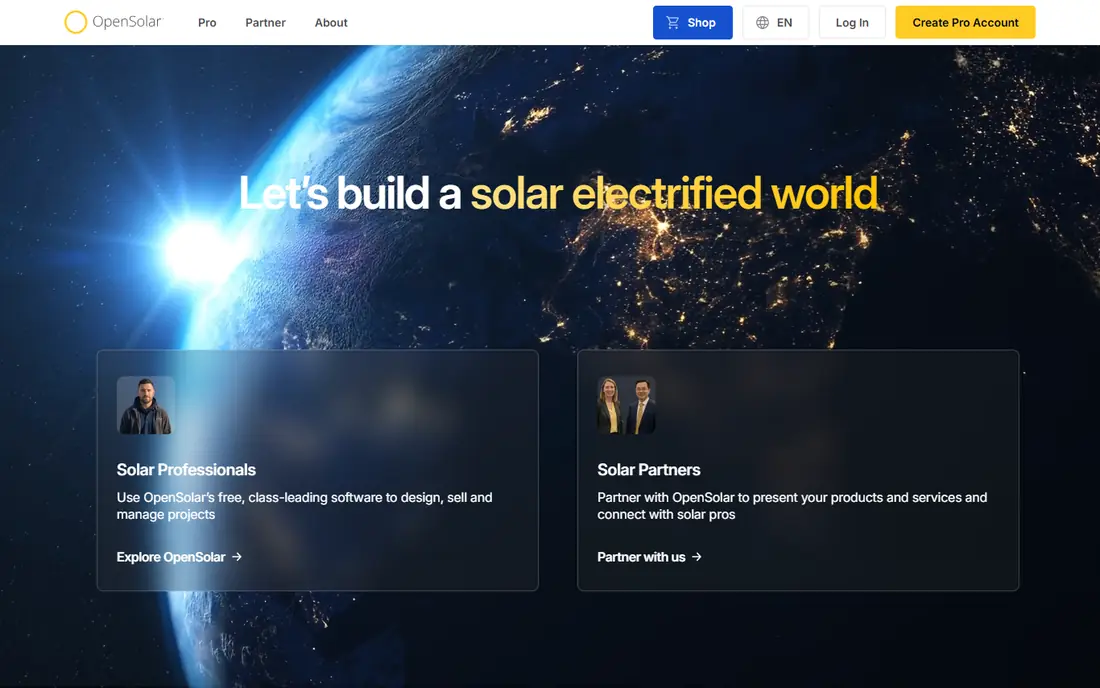
OpenSolar stands out for installers wanting free design tools. OpenSolar offers free solar design and proposal tools for installers. For many buyers, that focus is the main reason to shortlist it, even when other options look similar on a feature list. Its free model suits small installers starting with design software. That practical detail matters in daily use, because a tool that fits your workflow will get used, while a poor fit often sits unused. We also checked how clearly the vendor explains pricing, support and limits, since vague pricing makes comparison harder. The catch is that check which advanced features need a paid plan. Pricing is listed as See website, and the free plan status is Yes, so confirm the exact terms on the official site before you buy. If that catch affects your main use case, move to the next option rather than trying to work around it.
- Free solar design
- Proposals
- Project management basics
- Free tier features vary
- Advanced features paid
- Support varies
HelioScope
Ideal for: designers wanting layout and production tools
If you need help with designers wanting layout and production tools, HelioScope deserves attention. HelioScope offers solar layout and production estimation for designers. For many buyers, that focus is the main reason to shortlist it, even when other options look similar on a feature list. Its engineering tools suit commercial and residential design. That practical detail matters in daily use, because a tool that fits your workflow will get used, while a poor fit often sits unused. We also checked how clearly the vendor explains pricing, support and limits, since vague pricing makes comparison harder. The catch is that layout accuracy depends on site data quality. Pricing is listed as See website, and the free plan status is See website, so confirm the exact terms on the official site before you buy. If that catch affects your main use case, move to the next option rather than trying to work around it.
- Solar layout, shading and production estimates
- Engineering tools
- Pricing varies
- Learning curve
- Data accuracy varies
SolarEdge Designer
Ideal for: SolarEdge installers wanting design
SolarEdge Designer is a strong fit for SolarEdge installers wanting design. SolarEdge Designer offers free design for SolarEdge solar systems. For many buyers, that focus is the main reason to shortlist it, even when other options look similar on a feature list. Its inverter links suit installers using SolarEdge hardware. That practical detail matters in daily use, because a tool that fits your workflow will get used, while a poor fit often sits unused. We also checked how clearly the vendor explains pricing, support and limits, since vague pricing makes comparison harder. The catch is that installers using other hardware may prefer a neutral tool. Pricing is listed as See website, and the free plan status is Yes, so confirm the exact terms on the official site before you buy. If that catch affects your main use case, move to the next option rather than trying to work around it.
- Free design for SolarEdge systems
- Layout and production
- Inverter links
- SolarEdge focused, so other hardware fits less well
- Features vary
Solargraf
Ideal for: installers wanting design plus CRM
For installers wanting design plus CRM, Solargraf is worth a close look. Solargraf combines solar design with proposals and CRM tools. For many buyers, that focus is the main reason to shortlist it, even when other options look similar on a feature list. Its lead and sales tools suit installers managing growth. That practical detail matters in daily use, because a tool that fits your workflow will get used, while a poor fit often sits unused. We also checked how clearly the vendor explains pricing, support and limits, since vague pricing makes comparison harder. The catch is that check design accuracy and CRM fit for your workflow. Pricing is listed as See website, and the free plan status is See website, so confirm the exact terms on the official site before you buy. If that catch affects your main use case, move to the next option rather than trying to work around it.
- Solar design, proposals and CRM
- Lead tools
- Integrations
- Pricing varies
- Learning curve
- Feature depth varies
PV SOL
Ideal for: engineers wanting PV simulation
PV SOL stands out for engineers wanting PV simulation. PV SOL, from Valentin Software, offers PV simulation and design. For many buyers, that focus is the main reason to shortlist it, even when other options look similar on a feature list. Its 3D visualisation suits engineers designing complex systems. That practical detail matters in daily use, because a tool that fits your workflow will get used, while a poor fit often sits unused. We also checked how clearly the vendor explains pricing, support and limits, since vague pricing makes comparison harder. The catch is that technical interface means training helps. Pricing is listed as See website, and the free plan status is See website, so confirm the exact terms on the official site before you buy. If that catch affects your main use case, move to the next option rather than trying to work around it.
- PV simulation and design
- 3D visualisation
- Engineering reports
- Pricing varies
- Learning curve
- Interface technical
Nearmap
Ideal for: teams wanting aerial imagery for design
If you need help with teams wanting aerial imagery for design, Nearmap deserves attention. Nearmap provides high resolution aerial imagery used in solar design. For many buyers, that focus is the main reason to shortlist it, even when other options look similar on a feature list. Its measurement tools help designers assess roofs remotely. That practical detail matters in daily use, because a tool that fits your workflow will get used, while a poor fit often sits unused. We also checked how clearly the vendor explains pricing, support and limits, since vague pricing makes comparison harder. The catch is that it is imagery, not a full solar design tool, so pair it with design software. Pricing is listed as See website, and the free plan status is See website, so confirm the exact terms on the official site before you buy. If that catch affects your main use case, move to the next option rather than trying to work around it.
- High resolution aerial imagery
- Measurement tools
- Integrations
- Pricing is custom
- Imagery is not a full design tool
- Coverage varies
How we picked these
We started from the topic itself and kept only products that truly fit it in October 2026. We compared official feature pages, pricing pages, app store listings where relevant, privacy policies and public reviews. We did not claim hands-on testing that did not happen, and we did not invent prices, awards, user counts or ratings. We favoured a mix of well known leaders and strong smaller options, and we kept pricing honest. Where a vendor does not publish a price, we wrote See website rather than guessing. That approach keeps the comparison useful even when exact prices need a quote.
How to choose the right option for you
Start with your main job, not the longest feature list. For best solar design software, write down the one outcome you need in the next three months, then check which options deliver that outcome without extra tools. A short trial or demo is worth more than a long sales call, because it shows whether the workflow fits your team. Next, check total cost, not just the headline price. Look for per user fees, usage limits, add ons, renewal prices and contract length. Ask what support is included, what happens at renewal, and how you can leave or export your data. Those answers often decide value more than a small price gap. Then check fit for your scale and skills. A tool built for large enterprises can feel heavy for a small team, while a simple tool can feel thin for a large team. Read recent public reviews, check the vendor privacy policy, and confirm support hours for your time zone. If a vendor cannot answer those questions clearly, treat that as a warning sign. Finally, shortlist two or three options and test them on a real task. For best solar design software, use your own data or a realistic example, not just a demo script. Compare speed, clarity and support during the test, then choose the option your team will actually use every week.