6 Best Solar Project Management Software Options for 2026

- 1
 PVcaseUtility-scale AutoCAD designVisit
- 2
 HelioScopeCommercial system design and engineeringVisit
- 3
 Scoop SolarField operations and crew dispatchVisit
- 4
 Aurora SolarDesign accuracy and bankable proposalsVisit
- 5
 SightenQuotes and project tracking in one placeVisit
- The list opens with PVcase, aimed at utility-scale AutoCAD design.
- PVcase, Sunbase and the 4 others all need a premium plan or a trial, since no free plan is listed.
- Sunbase is the one to check for customizable CRM plus design and projects.
- Sunbase has the lowest monthly starting price in this list: $59 per user/month.
Direct answer
For utility-scale AutoCAD design, PVcase is where this list starts. For a different need, HelioScope covers commercial system design and engineering and Scoop Solar covers field operations and crew dispatch. All 6 tools are compared below on price, free plan and limits.
Quick comparison
| Product | Ideal for | Price from | Free version | |
|---|---|---|---|---|
| PVcase | Utility-scale AutoCAD design | See website | No | Visit |
| HelioScope | Commercial system design and engineering | See website | No | Visit |
| Scoop Solar | Field operations and crew dispatch | See website | No | Visit |
| Aurora Solar | Design accuracy and bankable proposals | See website | No | Visit |
| Sighten | Quotes and project tracking in one place | See website | No | Visit |
 Sunbase | Customizable CRM plus design and projects | $59 per user/month | No | Visit |
Every option for Solar project management software explained
If you are comparing Solar project management software, this page covers 6 tools in one place: what each is best for, what it costs to start, whether it has a free plan, and the main limit to know about.
PVcase
Ideal for: Utility-scale AutoCAD design

For utility-scale AutoCAD design, PVcase is a natural candidate. PVcase is the engineering-led pick for projects above 1 MW. Worth adding: ground Mount automates utility-scale layout design inside AutoCAD, adapting to real terrain, whereas Prospect takes care of site selection and Yield runs cloud-based energy modeling.
Honest limits: Requires AutoCAD and real CAD skills, with a multi-week ramp-up time.
This is not an installer tool. For utility-scale developers with in-house engineering, it is close to a standard. PVcase shows no starting price here, so confirm the cost on the vendor site. There is no free plan with PVcase.
- Used on over 4 TW of projects annually
- End-to-end suite from site selection to yield modeling
- No financial modeling or proposal features included
HelioScope
Ideal for: Commercial system design and engineering
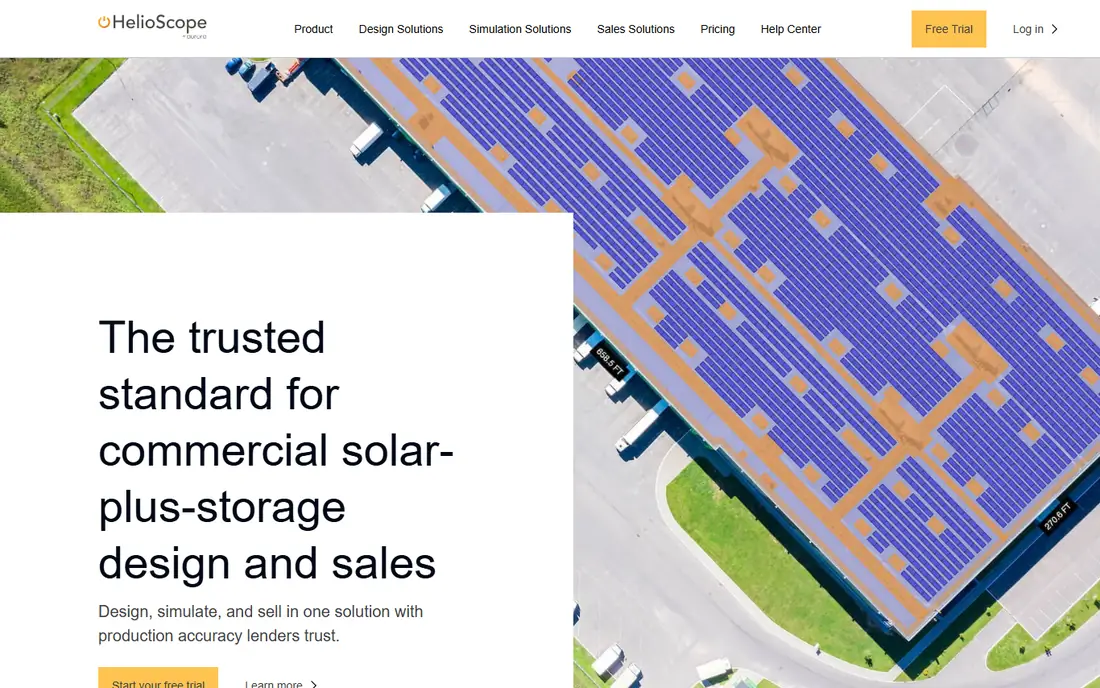
Pick HelioScope if this describes you: commercial system design and engineering. It remains a capable pick for C&I design today, but ask about the roadmap before committing a team to it.
Check the vendor site for HelioScope pricing; none is listed in this comparison. There is no free plan with HelioScope.
Limits to weigh: Now part of Aurora, so the long-term product roadmap is uncertain.
- LIDAR integration and AI obstruction detection on Pro plans
- Single line diagram generation and CAD export on every level
- No published pricing
Scoop Solar
Ideal for: Field operations and crew dispatch
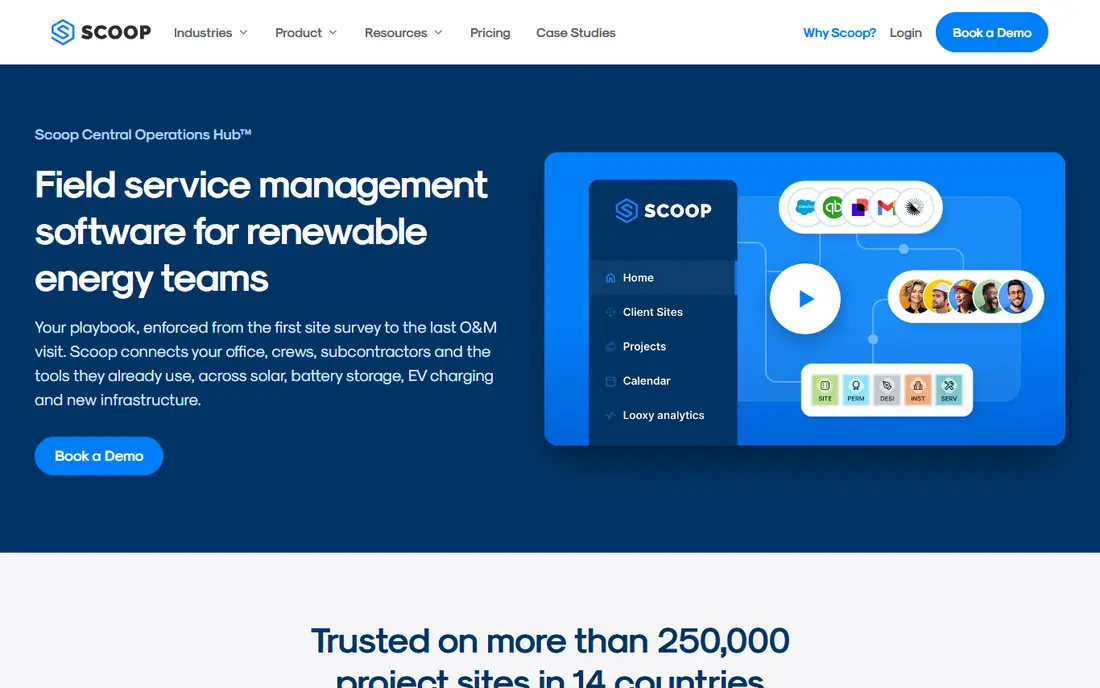
Scoop Solar is built with field operations and crew dispatch in mind. It assumes the sale is already made and concentrates on everything after: work orders, dispatch, service requests, technician scheduling, and maintenance tickets.
The main drawbacks: No published pricing.
The pricing model is unusual and worth a close look. Scoop Solar shows no starting price here, so confirm the cost on the vendor site. Scoop Solar does not include a free plan.
Main advantages: storage and devices on every plan.
- Not just sales
- Made for install and service crews
- Relies on external design and proposal tools for the sales side
Aurora Solar
Ideal for: Design accuracy and bankable proposals
Pick Aurora Solar if this describes you: design accuracy and bankable proposals. Aurora does not publish prices, and the pricing page frames plans around project volume (50 projects a month on standard levels) instead of a straightforward per-seat number.
It is a design and sales tool first. Beyond that, the product builds 3D roof models from imagery and LIDAR, runs performance simulations, and turns the result into refined sales proposals with payment plans choices modeled in. Pricing for Aurora Solar is not stated here, so ask the vendor for current figures. Aurora Solar does not include a free plan.
The main drawbacks: No public pricing, quotes are custom.
- Industry-leading 3D modeling with LIDAR-assisted accuracy
- AHJ database including 25,000+ US jurisdictions
- Residential focus means commercial workflows need extras
Sighten
Ideal for: Quotes and project tracking in one place
Choose Sighten for quotes and project tracking in one place. Sighten sits in the middle ground between pure design tools and pure operations systems.
Limits to weigh: No published pricing.
Best features of Sighten: API access for custom integrations.
In daily use, the downside is that breadth includes compromises. Check the vendor site for Sighten pricing; none is listed in this comparison. Sighten has no permanent free option.
- Long track record with US installers since 2012
- Permitting and monitoring in one product
- Interface feels dated next to newer competitors
Sunbase
Ideal for: Customizable CRM plus design and projects
In short, Sunbase is for customizable CRM plus design and projects. It also runs natively for roofing and construction, which fits contractors with mixed trades.
Where it falls short: Configuration-heavy onboarding takes real setup time.
Sunbase cost at the entry level: $59 per user/month. Sunbase has no permanent free option.
- Modular setup lets you buy only the capabilities you need
- Roofing and construction workflows
- Design tools are solid but less specialized than Aurora for complicated shading
What went into this list
Ainotely looked at what each vendor publishes: pricing, plan limits, feature coverage for Solar project management software and stated drawbacks. No hands-on testing is claimed. Prices and plan limits come from vendor pages and can change, so confirm them on the vendor site before you buy. Tools are placed by general fit for Solar project management software, with price clarity and free access as tie-breakers. A different team can reasonably rank them differently.
Questions to settle before buying
- Ask PVcase, HelioScope, Scoop Solar and others for a written quote, since no starting price is shown.
- Read the limits listed for PVcase first: needs AutoCAD and real CAD skills, with a multi-week ramp-up time.
- A short pilot of PVcase with your real workflow tells you more than a feature table.
- Find out whether the entry plan of Aurora Solar covers your must-haves or only a trimmed-down version.
- Ask HelioScope whether prices are locked for the first term and what happens at renewal.
Frequently asked questions
Is PVcase the right pick for everyone comparing Solar project management software?
No single tool suits every team. PVcase comes first because it fits utility-scale AutoCAD design, while HelioScope suits commercial system design and engineering and Scoop Solar suits field operations and crew dispatch. Match the tool to your own size, budget and workflow before deciding.
Does any tool for Solar project management software here have a free plan?
No tool in this list, PVcase and Sunbase included, has a permanent free plan. Trials and quotes are the usual route, so plan a short evaluation period.
How are the tools for Solar project management software ordered?
PVcase sits first and Sunbase last because the order follows typical fit for Solar project management software, then price clarity and free access. It is a judgement call, so read each profile for fit and limits.
Can I try these options before paying?
Not by default. None of the tools, from PVcase to Sunbase, lists a free plan or a free trial here, so ask each vendor for a demo before committing.
Do I need LIDAR-based design?
For straightforward rooftops sold cash, standard satellite imagery is normally enough. Do not pay a premium for accuracy your sales process cannot use.