Best SOX Compliance Management Tools Compared

- 1
 WorkivaPublic companies linking SOX controls to filingsVisit
- 2
 Optro (formerly AuditBoard)Large enterprises running dedicated SOX programsVisit
- 3
 LogicGate Risk CloudMid-market teams that want no-code control workflowsVisit
- 4
 HyperproofMid-market teams automating evidence across frameworksVisit
- 5
 DrataEngineering-led teams that want continuous control monitoringVisit
- All eight vendors in this guide hide prices behind a quote, so budget time for demos and a sales cycle, and get every quote in writing.
- Workiva and Optro are the dedicated SOX picks, with SOX controls linked to financial reporting in Workiva and a SOX module built for testing and walkthroughs in Optro.
- FloQast and BlackLine tie controls to the close itself, so reconciliations, journals, and evidence are produced by the same workflow.
- Drata and Vanta automate compliance broadly, but SOX usually needs custom setup in both, since neither ships SOX as a ready template.
- LogicGate Risk Cloud and Hyperproof suit mid-market teams that want no-code control workflows and automated evidence without an enterprise platform team.
Quick comparison
| Product | Ideal for | Price from | Free version | |
|---|---|---|---|---|
| Workiva | Public companies linking SOX controls to filings | quote only | No | Visit |
| Optro (formerly AuditBoard) | Large enterprises running dedicated SOX programs | quote only | No | Visit |
| LogicGate Risk Cloud | Mid-market teams that want no-code control workflows | quote only | No | Visit |
| Hyperproof | Mid-market teams automating evidence across frameworks | quote only | No | Visit |
| Drata | Engineering-led teams that want continuous control monitoring | quote only | No | Visit |
 Vanta | Growing companies starting with one framework | quote only | No | Visit |
 FloQast | Accounting teams tying SOX controls to the close | quote only | No | Visit |
 BlackLine | Large finance teams automating reconciliations and journals | quote only | No | Visit |
The best SOX compliance management tools
Workiva
Ideal for: Public companies linking SOX controls to filings
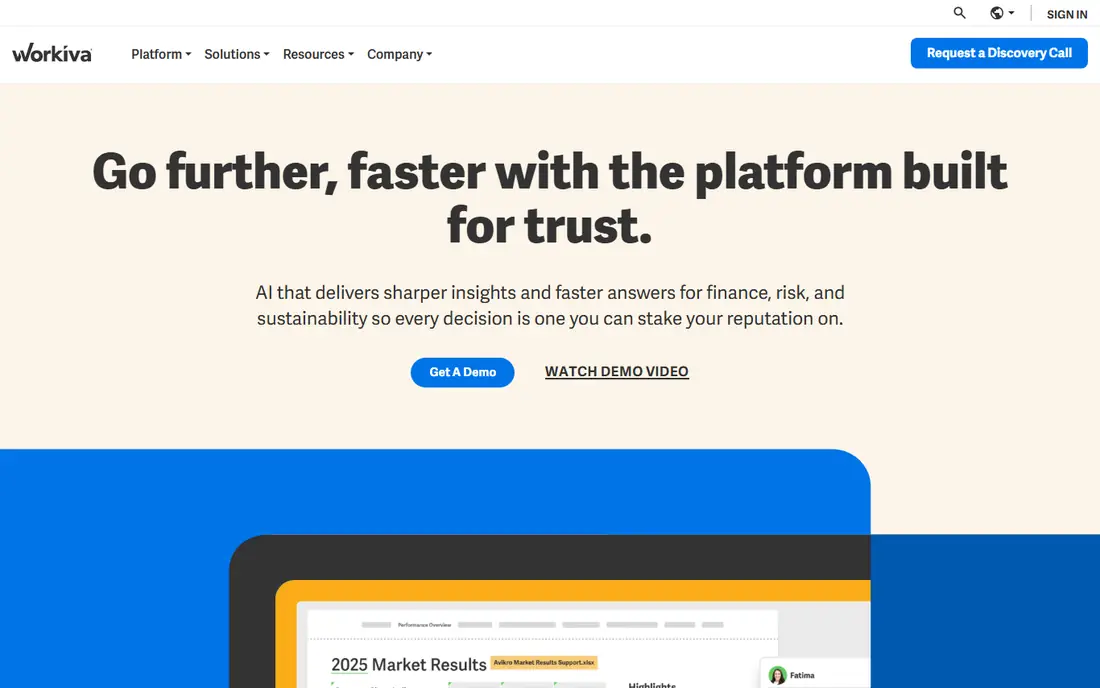
Workiva is a connected reporting platform that ties financial reporting, risk, and audit work together, and SOX compliance sits inside its Risk area beside controls management and audit management. Control documentation, testing results, and management certifications connect to the financial statements they support, so a change to a number flows into every document that cites it. The homepage lists SOX Compliance as a core Risk use case, and the platform serves more than 6,700 global companies.
The strength is the link between controls and reporting. A control, its test result, and its evidence live beside the filing they support, which gives management and auditors one trail to follow. The limit is commercial: Workiva publishes no price, and every offering is quoted by solution on request. Smaller filers may find the platform heavy for a modest control set. Implementation help is part of the offer, with dedicated onboarding teams and round-the-clock support named on the homepage.
- SOX controls link directly to SEC filings and reports
- A single document version supports unlimited users
- No published price and enterprise contracts run high
- Setup and learning take real effort for smaller teams
Optro (formerly AuditBoard)
Ideal for: Large enterprises running dedicated SOX programs
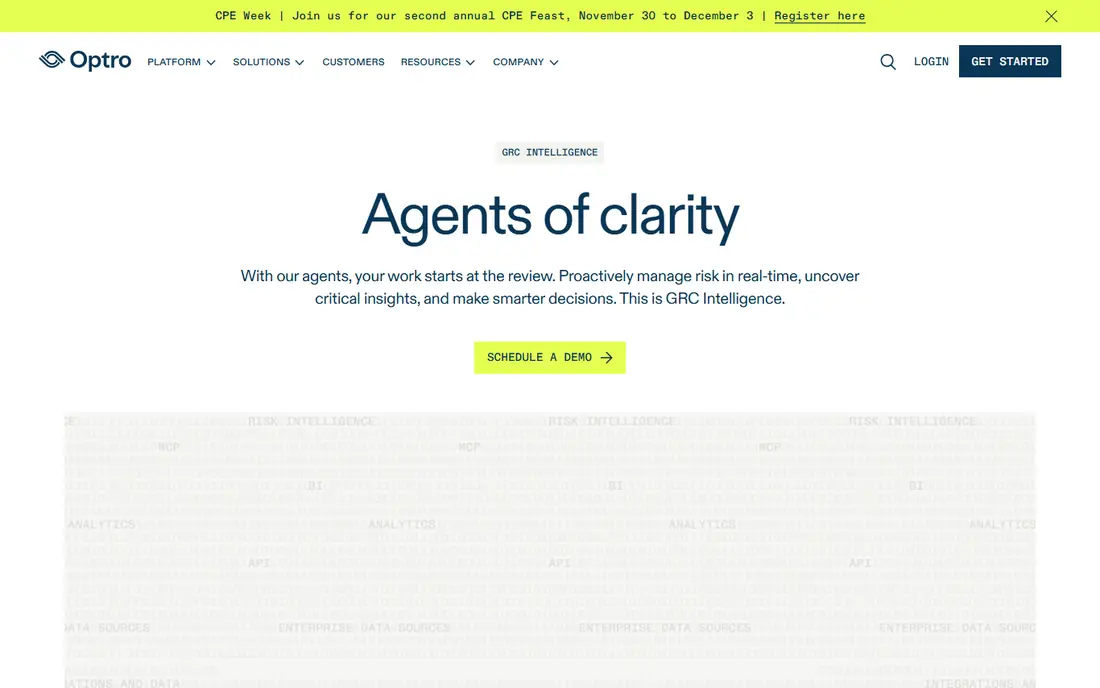
Optro began in 2014 as SOXHUB, a tool built to modernise SOX compliance, became AuditBoard in 2017, and rebranded to Optro on 9 March 2026. SOXHUB remains the SOX module, with workflows for documenting controls, scheduling and recording tests, running walkthroughs, and producing the reports management and external auditors need. It sits beside OpsAudit, RiskOversight, and CrossComply in one connected system, and the homepage says the platform is trusted by over half of the Fortune 500.
The platform now calls itself a GRC Intelligence Platform, with AI agents that draft, test, and review while humans stay in control of each decision, and every decision is logged with a full audit trail. The limit is price clarity: the pricing page names flexible plans and unlimited stakeholder licences but prints no dollar figure, and there is no self-serve trial. Ask for each module priced separately, because a SOX-only quote and a full-platform quote can differ by a wide margin.
- SOXHUB is built for SOX, with control testing, walkthroughs, and auditor reporting
- Unlimited stakeholder licences are included
- No published price and no self-serve trial, so buyers start with a demo and a quote
- Multi-module deals climb fast
LogicGate Risk Cloud
Ideal for: Mid-market teams that want no-code control workflows
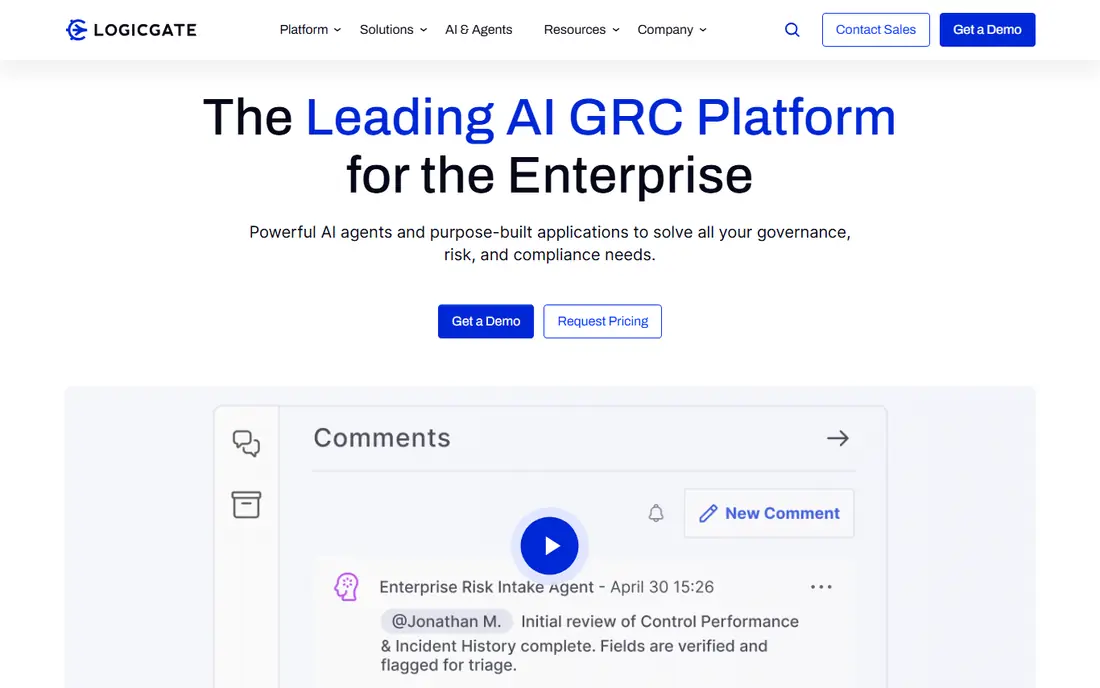
LogicGate Risk Cloud is a no-code GRC platform built around a graph database that links controls, assets, risks, and evidence, so a team can trace how one control supports many requirements. A library of more than 30 applications covers enterprise risk, controls compliance, third-party risk, policy, and cyber risk, and the no-code builder lets a team shape control testing and approval workflows without developers. Automated control testing shifts testing from ad-hoc checks to continuous monitoring, with alerts when an issue appears.
Pricing follows applications and Power User licences, and the pricing page states that Standard and External users carry no extra licence cost, which keeps contributor access cheap. The homepage reports average implementation of 96 days, against a 6 to 12 month industry average it cites. The limit is transparency: the pricing page prints no dollar figure, there is no self-serve trial, and per-application pricing can grow as a team adds applications, so scope the application list before signing.
- No-code builder creates control and testing workflows without developers
- Standard and External users carry no extra licence cost
- No published price and no self-serve trial
- Per-application pricing can grow as more applications are added
Hyperproof
Ideal for: Mid-market teams automating evidence across frameworks
Hyperproof is an AI-powered GRC platform that organises controls, evidence, risks, and audits in one place, with a common control set that maps one control to many frameworks. Evidence collected once can satisfy related requirements in other frameworks, which cuts repeat work when a team runs SOX beside other frameworks. The platform lists more than 200 integrations, so evidence can be pulled from the systems a team already runs, and its audit tools connect evidence to auditor requests in a shared workspace.
The platform also covers risk management, trust centres, third-party risk, and policy management, so a SOX program can grow into a wider GRC program without a second tool. The limit is price: the vendor pricing page shows no dollar figures, and contracts are annual, so a buyer should get a written quote that names the frameworks in scope and the user count before signing, and should confirm which modules the quote covers.
- A common control set maps one control to many frameworks
- More than 200 integrations pull evidence automatically
- No published price on the vendor pricing page
- Contracts are annual, with no monthly billing option
Drata
Ideal for: Engineering-led teams that want continuous control monitoring
Drata is a compliance automation platform that connects to a company cloud and IT stack, maps controls to frameworks, and collects evidence continuously. Controls are tested on a schedule, failures surface with guided remediation, and the evidence trail stays ready for the auditor. A custom framework builder lets a team define its own controls and evidence needs, which is how SOX programs are usually run in Drata, since SOX is not one of its pre-built frameworks.
The platform suits engineering-led teams that want testing as code and daily control updates, and its plans run from Foundation to Enterprise with risk management and a trust centre included. The limit is fit and price: SOX needs custom setup rather than a ready template, custom frameworks cost extra on every plan, and the vendor plans page publishes no dollar figures, so the price comes from a quote. The audit itself is still done by a licensed CPA firm, which is a separate engagement.
- Continuous monitoring tests controls on a schedule and collects evidence automatically
- Custom framework builder covers SOX-style controls
- No published price on the vendor plans page
- SOX needs custom setup, and custom frameworks cost extra on every plan
Vanta
Ideal for: Growing companies starting with one framework
Vanta is a trust management platform that automates evidence collection, monitors controls continuously, and keeps a company audit-ready across frameworks. The pricing page lists four plans: Essentials with one compliance framework, Plus with 25 AI questionnaire responses a year, Professional with 144 a year and six custom reports, and Enterprise as a custom package. Each plan builds on the one below it, and the platform includes a trust centre, auditor access, and continuous control monitoring.
Vanta suits growing companies that want a clear first step, with a wide integration library and an auditor network to choose from. The limit is scope and price: Essentials covers one framework, so SOX beside a second framework adds cost, and the vendor pricing page prints no dollar figure for any plan, asking buyers to request a demo for personalised pricing. Get the quote in writing, with frameworks, headcount basis, and add-ons named.
- Four plans from Essentials to Enterprise with clear feature steps
- Wide integration library and a large auditor network
- No dollar figure on the vendor pricing page
- Essentials covers one framework, so a second framework adds cost
FloQast
Ideal for: Accounting teams tying SOX controls to the close
FloQast is accounting workflow automation software that runs the month-end close from one checklist, with account reconciliations, journal entries, task assignments, approvals, and evidence attached to each item. Its Risk and Compliance package adds control design, testing, and remediation in the same workspace, so the controls that support SOX sit beside the close work they protect. A control updated once updates everywhere it is used, and testing runs against the evidence already attached.
The pricing page states that FloQast charges no per-user fees and prices by package and scope, with Close Management, Close AI, and Risk and Compliance sold as packages. The homepage says more than 3,500 accounting teams use the platform. The limit is price clarity: the pricing page lists no dollar figures, final pricing needs scoping and a sales call, and the SOX features sit in a separate package from the close tools, so a buyer should confirm which package covers control testing.
- Risk and Compliance package tests controls with evidence attached
- No per-user fees, with pricing by package and scope
- No published price, and final pricing needs scoping and a sales call
- SOX features sit in a separate package from the close tools
BlackLine
Ideal for: Large finance teams automating reconciliations and journals
BlackLine is a cloud platform for the office of the CFO that automates record-to-report work: account reconciliations, transaction matching, journal entries, task management, consolidation, intercompany accounting, and reporting. Controls run inside those workflows, with automated certification rules and review notes, so SOX evidence is produced by the close itself rather than assembled after it. Its Studio360 platform adds Verity AI agents that prepare reconciliations, match transactions, flag anomalies, and draft variance explanations, each with a reviewable audit trail.
The platform suits large, multi-entity finance teams that close across several ERPs and need one controlled workflow for every entity. The limit is cost and access: BlackLine publishes no price list, sells by quote on modules, users, entities, and ERP connectors, and offers no self-serve trial, so buyers start with a demo. Smaller teams may find the platform and its implementation effort heavier than the close problem they need to solve.
- Studio360 platform covers reconciliations, journals, intercompany, and close tasks
- Verity AI agents flag anomalies with audit trails
- No published price and no self-serve trial
- Platform pricing follows customer size and complexity, so small teams face enterprise costs
How we chose
We compared vendor pricing pages, product documentation, and homepages for all eight tools on 11 November 2026. We checked which vendors publish a price and which ask for a quote, and we marked every unpublished price as quote only rather than repeating third-party estimates as fact. We compared SOX depth: control documentation, testing, walkthroughs, evidence, issue remediation, certifications, and auditor workflows. We also weighed ERP and close links, framework breadth, and whether a tool needs custom setup for SOX. We did not run hands-on tests, sit through a demo as a buyer, or negotiate quotes, so feature claims here come from vendor documentation.
What to check before you buy
Check SOX depth first. Confirm that the tool covers control documentation, design and operating tests, walkthroughs, deficiency tracking, and management certification, not only a framework checklist. Ask how auditor requests are handled, whether external auditors get their own access, and whether evidence links to the control it supports. Confirm how the price is metered, by module, user, entity, or framework, and get a three-year cost model that covers growth in control counts and entities. Ask what implementation includes, how long it takes, and what training costs, because enterprise tools can take months to go live. Finally, run a proof of value on a real set of controls from your own program, not a demo environment, and measure time to first test result, evidence completeness, and time to close an issue.
| Team size and budget to plan for | Best fit | Why | Watch out | | 1 to 10 people, under $25,000 a year | Vanta, Drata | Lowest entry point and fastest start for a first framework | Both are quote only, and SOX needs custom setup in both | | 10 to 50 people, $25,000 to $75,000 a year | Hyperproof, LogicGate Risk Cloud | Mid-market GRC depth with automated evidence and no-code workflows | Neither publishes a price, so confirm the quote in writing | | 50 to 200 people, $75,000 to $150,000 a year | FloQast, Optro | Controls tied to the close, or a dedicated SOX module | FloQast SOX sits in a separate package; Optro modules add up | | 200 or more people, over $150,000 a year | Workiva, BlackLine, Optro | Enterprise SOX depth, close automation, and multi-entity control | Enterprise quotes, implementation time, and multi-year pricing need review |
Frequently asked questions
What is SOX compliance management software?
SOX compliance management software holds the controls, risks, tests, evidence, issues, and certifications behind Section 404 of the Sarbanes-Oxley Act in one place. It replaces spreadsheets for documenting controls, scheduling tests, collecting evidence, tracking deficiencies to remediation, and giving auditors a complete trail.
Which tool is best for SOX compliance?
Workiva suits public companies that want SOX controls linked to financial reporting, while Optro suits large enterprises that want a dedicated SOX module with testing and walkthroughs. FloQast suits accounting teams that want controls tied to the close. The right pick depends on company size, entity count, and how deep the SOX program runs.
How much do SOX compliance tools cost?
All eight tools in this guide are quote only, because none publishes a price on its own pricing page. Expect a sales conversation and an annual contract at every vendor. Ask for a written quote that names modules, users, entities, frameworks, implementation, and term, so the first-year figure and the renewal figure are both clear.
Do SOX tools replace the external auditor?
No. SOX tools organise controls, tests, and evidence, and they give auditors access to that trail, but the external auditor still performs independent testing and attests to management assessment under Section 404. A tool can make the audit faster and cleaner, yet the opinion still comes from the auditor, not the software.
Can a small company use these tools?
Yes, but with care. Vanta and Drata offer the lowest entry point for a first framework, while Hyperproof and LogicGate Risk Cloud suit mid-market teams. Small teams should confirm that SOX is covered without custom work, check the minimum contract size, and weigh whether a lighter tool fits before committing to an enterprise platform.