Best Spaced repetition apps in 2026: 9 Options Compared

- Our top pick for most readers is Anki, because it covers the core job well and is easy to start with.
- The best value depends on your budget: compare the free plan and the starting price in the table before you pay for anything.
- Quizlet and Memrise are strong second choices when the top pick does not fit your workflow.
- Read the cons for each option carefully, since the main trade-off is usually price, limits on the free plan, or a learning curve.
- Prices and plans change, so confirm the current details on the official website linked for each product before you buy.
Quick comparison
| Product | Ideal for | Price from | Free version | |
|---|---|---|---|---|
 Anki | Learners who want full control over flashcards | Free | Yes | Visit |
 Quizlet | Students who want easy flashcard sets | Free | Yes | Visit |
 Memrise | Language learners who want video and repetition | Free | Yes | Visit |
 RemNote | Students who want notes plus flashcards | Free | Yes | Visit |
 SuperMemo | Learners who want the original spaced repetition method | See website | Free trial | Visit |
 Brainscape | Students who want confidence-based review | Free | Yes | Visit |
 Mochi | Learners who want Markdown flashcards | Free | Yes | Visit |
 Neuracache | Learners who want flashcards from notes | Free | Yes | Visit |
 Knowt | Students who want free AI flashcards from notes | Free | Yes | Visit |
The best spaced repetition apps
We compared official feature pages, pricing pages, app-store listings, privacy policies, and public reviews to build this list for best spaced repetition apps. The options below cover different budgets and skill levels, so use the table above to narrow the field and then read the write-up for the two or three options that fit your needs best.
Anki
Ideal for: Learners who want full control over flashcards
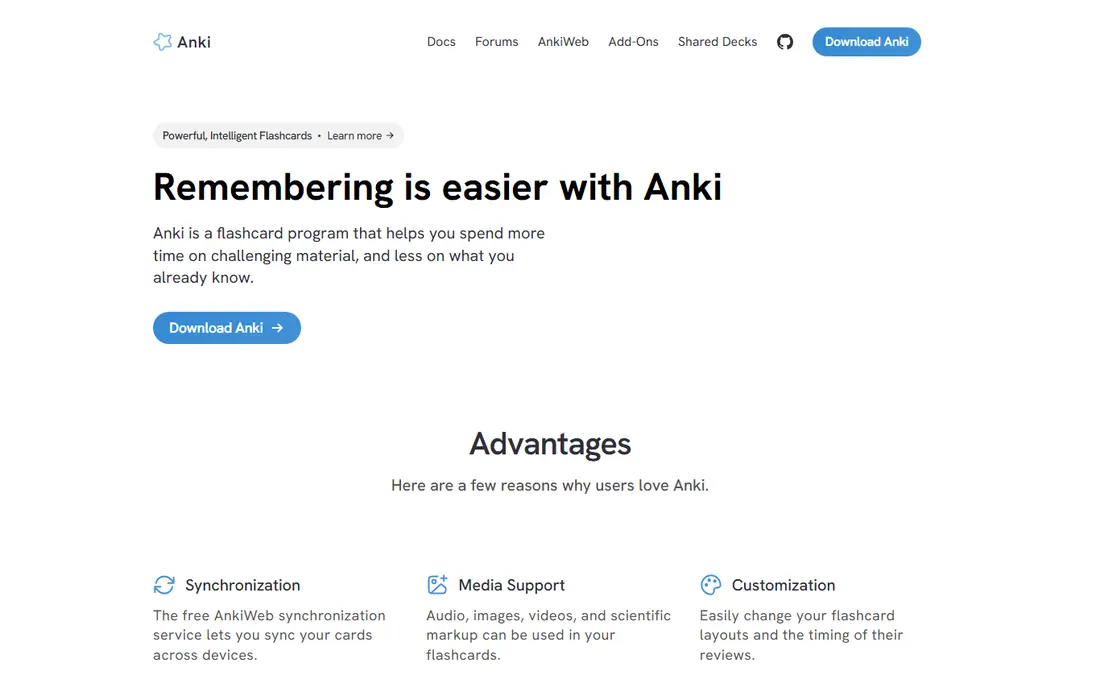
For learners who want full control over flashcards, Anki is one of the strongest options in this list. Its main strength is full control with custom scheduling, which gives it a clear role even next to bigger names. We looked at its official feature page, pricing page, and public reviews, and the picture was steady: a product that does its core job well, with limits that are easy to see in advance. That honesty about limits is part of why it earns a place here.
The main drawback is its interface is dated. Before you decide, weigh that point against the strength above and against the next option in this list. Try the free plan or trial where one is offered, and confirm the current price on the official site, since plans and limits change.
- Full control with custom decks and scheduling
- Huge shared decks
- Free on desktop
- Interface is dated
- Mobile app on iOS is paid
Quizlet
Ideal for: Students who want easy flashcard sets
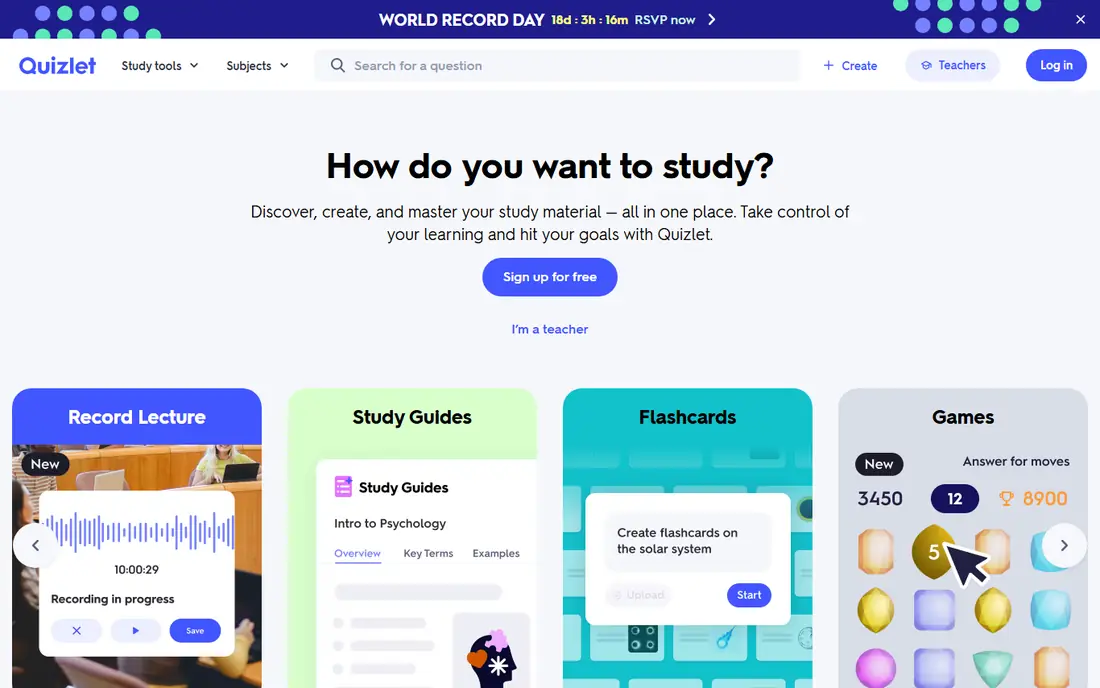
Quizlet earns its place here for students who want easy flashcard sets. Its main strength is easy flashcard sets with learn modes, and readers who care most about that point will notice the difference quickly. We checked its official feature page, pricing page, and app-store listing against the rest of this list. It is not the right fit for everyone, and the cons below say why, but for its target reader it is a solid and practical choice.
Keep in mind that advanced repetition needs a paid plan. That is the honest limit here, and it matters more for some readers than for others. Use the free plan or trial to test the workflow you will actually use, and confirm the current price on the official site before you pay.
- Easy flashcard sets with learn modes
- Huge shared sets
- Classroom use
- Advanced spaced repetition needs a paid plan
- Ads on free tier
Memrise
Ideal for: Language learners who want video and repetition
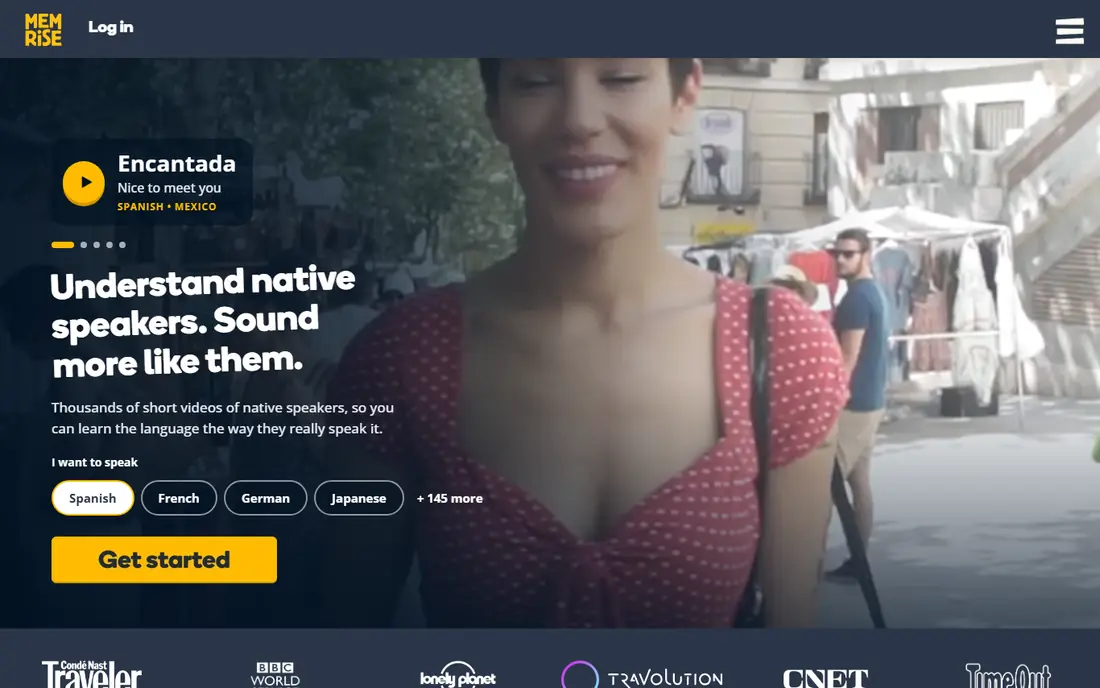
Memrise stands out for readers who need language learners who want video and repetition. Its main strength is language courses with native video, and that focus shows up in the way the product is set out. We compared its official feature page, pricing page, and app-store listing with the other options here, and it held up well on the points that matter for everyday use. If you want a dependable starting point and you do not want to spend days comparing tools, this is a sensible place to begin.
The catch is free content is limited. That trade-off may not matter to you, and if it does not, this option is easy to recommend. Check the free plan or trial first, confirm the current price on the official site, and try the core workflow for a day or two before you commit.
- Language courses with native video
- Spaced review
- Gamified learning
- Free content is limited
- Some courses need a paid plan
RemNote
Ideal for: Students who want notes plus flashcards
For students who want notes plus flashcards, RemNote is one of the strongest options in this list. Its main strength is notes that turn into flashcards, which gives it a clear role even next to bigger names. We looked at its official feature page, pricing page, and public reviews, and the picture was steady: a product that does its core job well, with limits that are easy to see in advance. That honesty about limits is part of why it earns a place here.
The main drawback is its learning curve takes time. Before you decide, weigh that point against the strength above and against the next option in this list. Try the free plan or trial where one is offered, and confirm the current price on the official site, since plans and limits change.
- Notes that turn into flashcards
- Spaced repetition built in
- PDF study
- Learning curve for full use
- Advanced features need a paid plan
SuperMemo
Ideal for: Learners who want the original spaced repetition method
SuperMemo earns its place here for learners who want the original spaced repetition method. Its main strength is the original spaced repetition algorithm, and readers who care most about that point will notice the difference quickly. We checked its official feature page, pricing page, and app-store listing against the rest of this list. It is not the right fit for everyone, and the cons below say why, but for its target reader it is a solid and practical choice.
Keep in mind that its interface is dated. That is the honest limit here, and it matters more for some readers than for others. Use the free plan or trial to test the workflow you will actually use, and confirm the current price on the official site before you pay.
- Original spaced repetition algorithm
- Strong for long-term retention
- Desktop power
- Interface is dated
- Setup is technical
Brainscape
Ideal for: Students who want confidence-based review
Brainscape stands out for readers who need students who want confidence-based review. Its main strength is confidence-based review with curated decks, and that focus shows up in the way the product is set out. We compared its official feature page, pricing page, and app-store listing with the other options here, and it held up well on the points that matter for everyday use. If you want a dependable starting point and you do not want to spend days comparing tools, this is a sensible place to begin.
The catch is full decks need a paid plan. That trade-off may not matter to you, and if it does not, this option is easy to recommend. Check the free plan or trial first, confirm the current price on the official site, and try the core workflow for a day or two before you commit.
- Confidence-based review
- Curated decks
- Teacher tools
- Full decks need a paid plan
- Deck quality varies
Mochi
Ideal for: Learners who want Markdown flashcards
For learners who want markdown flashcards, Mochi is one of the strongest options in this list. Its main strength is Markdown flashcards with offline use, which gives it a clear role even next to bigger names. We looked at its official feature page, pricing page, and public reviews, and the picture was steady: a product that does its core job well, with limits that are easy to see in advance. That honesty about limits is part of why it earns a place here.
The main drawback is sync needs a paid plan. Before you decide, weigh that point against the strength above and against the next option in this list. Try the free plan or trial where one is offered, and confirm the current price on the official site, since plans and limits change.
- Markdown flashcards with spaced repetition
- Clean app
- Offline use
- Sync needs a paid plan
- Community decks are fewer
Neuracache
Ideal for: Learners who want flashcards from notes
Neuracache earns its place here for learners who want flashcards from notes. Its main strength is flashcards from notes and PDFs, and readers who care most about that point will notice the difference quickly. We checked its official feature page, pricing page, and app-store listing against the rest of this list. It is not the right fit for everyone, and the cons below say why, but for its target reader it is a solid and practical choice.
Keep in mind that the free plan limits cards. That is the honest limit here, and it matters more for some readers than for others. Use the free plan or trial to test the workflow you will actually use, and confirm the current price on the official site before you pay.
- Flashcards from notes and PDFs
- Spaced repetition
- Clean mobile app
- Free plan limits cards
- Desktop tools are limited
Knowt
Ideal for: Students who want free AI flashcards from notes
Knowt stands out for readers who need students who want free ai flashcards from notes. Its main strength is free AI flashcards from notes, and that focus shows up in the way the product is set out. We compared its official feature page, pricing page, and app-store listing with the other options here, and it held up well on the points that matter for everyday use. If you want a dependable starting point and you do not want to spend days comparing tools, this is a sensible place to begin.
The catch is AI cards need review for errors. That trade-off may not matter to you, and if it does not, this option is easy to recommend. Check the free plan or trial first, confirm the current price on the official site, and try the core workflow for a day or two before you commit.
- Free AI flashcards from notes and videos
- Learn modes
- Shared sets
- AI cards need review for errors
- Some features are newer
How we picked these
We started with the topic itself, best spaced repetition apps, and kept only products that exist, work in October 2026, and truly fit that topic. We compared official feature pages, pricing pages, app-store listings, privacy policies, and public reviews, and we left out options that were discontinued, that did not fit the topic, or that we could not verify. Where we could not verify a current price from the vendor, we wrote See website rather than guessing a number.
We also weighed who each product is really for, what it does best, and where it falls short. A well-known name did not earn a place on its own, and a smaller option did earn one when its features, price, or free plan made it a better fit for a clear group of readers. The result is a list that mixes leaders with strong smaller options, so you can match a product to your budget and your workflow instead of picking the most famous name by default.
How to choose the right option for best spaced repetition apps
Start with the job you need done most often, not with the longest feature list. Write down the two or three tasks you will do every week, then check which options in this list handle those tasks on the free plan or at a price you can accept. A product that covers your daily tasks well is worth more than one with extra features you will never open.
Next, check the total cost, not just the headline price. Look for limits on the free plan, per-user charges, add-ons, and any fee for the feature you need most. Read the privacy policy in brief, especially for products that handle personal, financial, or health information, and check how you can export your data or cancel. Finally, try the free plan or trial with real work, not just a quick tour, and keep the option that felt clearest on the first day.
Frequently asked questions
What is the best option for best spaced repetition apps?
For most readers, Anki is the safest starting point, because it covers the core job well and is easy to learn. Still, the best choice depends on your budget and on the exact tasks you will do each week. Compare the table, then test your top two options.
Is there a free option for best spaced repetition apps?
Yes, several options in this list offer a free plan or a free trial, and the table shows which ones do. Free plans usually limit storage, seats, or advanced features, so check the limit that matters most to you.
How much should I expect to pay?
Prices vary widely across this list, and the table gives the starting price or See website where we could not verify a current price. Read the pricing page for the plan you need, and confirm the current price on the official site before you buy.
Can I switch later if I pick the wrong one?
In most cases, yes, but switching is easier when you can export your data and when you have not built a large library inside one product. Before you commit, check export options and cancellation terms on the official site.
Which option is best for beginners?
Beginners should pick the option with the clearest free plan, the simplest setup, and the fewest settings to learn on day one. Anki fits that description for most readers, while Quizlet is a good second choice. Try the core workflow for a day and keep the one that felt clearest.