Best Streaming Platforms for New Streamers in 2026: 8 Platforms Compared

- 1
 TwitchLargest live audienceVisit
- 2
 YouTube LiveSearchable videos plus liveVisit
- 3
 KickGenerous revenue splitVisit
- 4
 TikTok LiveFast casual discoveryVisit
- 5
 Facebook LiveExisting social audienceVisit
- Twitch has the largest live-streaming audience, but it is also the hardest place for a new streamer to get discovered.
- YouTube combines live streaming with searchable videos, which gives new creators a second route to an audience.
- Kick offers a more generous revenue split for streamers, while TikTok Live suits short, casual streams that can reach new viewers fast.
- New streamers should pick one main platform, stream on a consistent schedule, and use clips on other platforms to grow.
- Our pick for most new streamers is YouTube, because searchable videos plus live streams give two paths to discovery.
Quick comparison
| Product | Ideal for | Price from | Free version | |
|---|---|---|---|---|
| Twitch | Largest live audience | See website | Yes | Visit |
| YouTube Live | Searchable videos plus live | See website | Yes | Visit |
| Kick | Generous revenue split | See website | Yes | Visit |
| TikTok Live | Fast casual discovery | See website | Yes | Visit |
| Facebook Live | Existing social audience | See website | Yes | Visit |
 Trovo | Smaller community feel | See website | Yes | Visit |
 DLive | Blockchain-based rewards | See website | Yes | Visit |
 Instagram Live | Casual streams to followers | See website | Yes | Visit |
The best streaming platforms for new streamers
Starting a streaming channel means choosing where to invest limited time. The platforms below were compared on audience size, discovery for new creators, monetization, ease of starting, and what kind of content each one rewards.
Twitch
Ideal for: Largest live audience
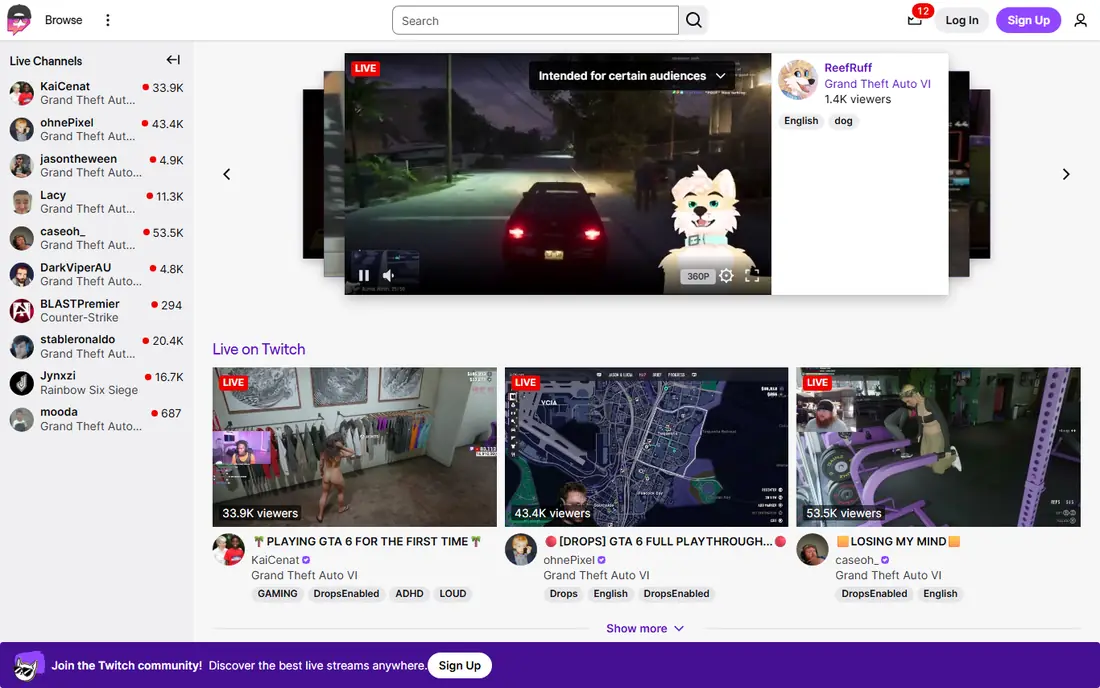
Twitch is the center of live streaming, with the largest audience for gaming, creative work, and talk formats. Its monetization tools, including subscriptions, bits, and ads, are mature, and its community features like chat, raids, and clips help channels build a loyal following. For a streamer who grows, Twitch offers the most complete live career platform.
Discovery is the problem for beginners. Popular categories are crowded, and new channels with few viewers sit far down the listings. New streamers need to bring an audience from elsewhere, stream consistently in less crowded niches, and use clips and social posts to get noticed. Twitch rewards persistence, but it is a slow start.
- Largest live-streaming audience
- Strong gaming and creative categories
- Mature monetization tools
- Hard for new streamers to get discovered
- Crowded categories favor established channels
YouTube Live
Ideal for: Searchable videos plus live
YouTube gives new streamers two routes to an audience: live streams and regular videos that viewers can find through search long after upload. A new creator can post edited videos that attract subscribers, then bring those subscribers to live streams, which is a growth loop Twitch cannot offer. Its audience is enormous, and its tools for chat, premieres, and memberships are solid.
Live discovery on YouTube still favors larger channels, and monetization requires meeting subscriber and watch-hour thresholds. The advantage is durability: a good video keeps working for months, while a live stream disappears from attention quickly. For a new streamer building from zero, that durability matters.
- Live streams plus searchable videos
- Huge audience
- Monetization through ads and memberships
- Live discovery still favors larger channels
- Monetization requires meeting eligibility thresholds
Kick
Ideal for: Generous revenue split
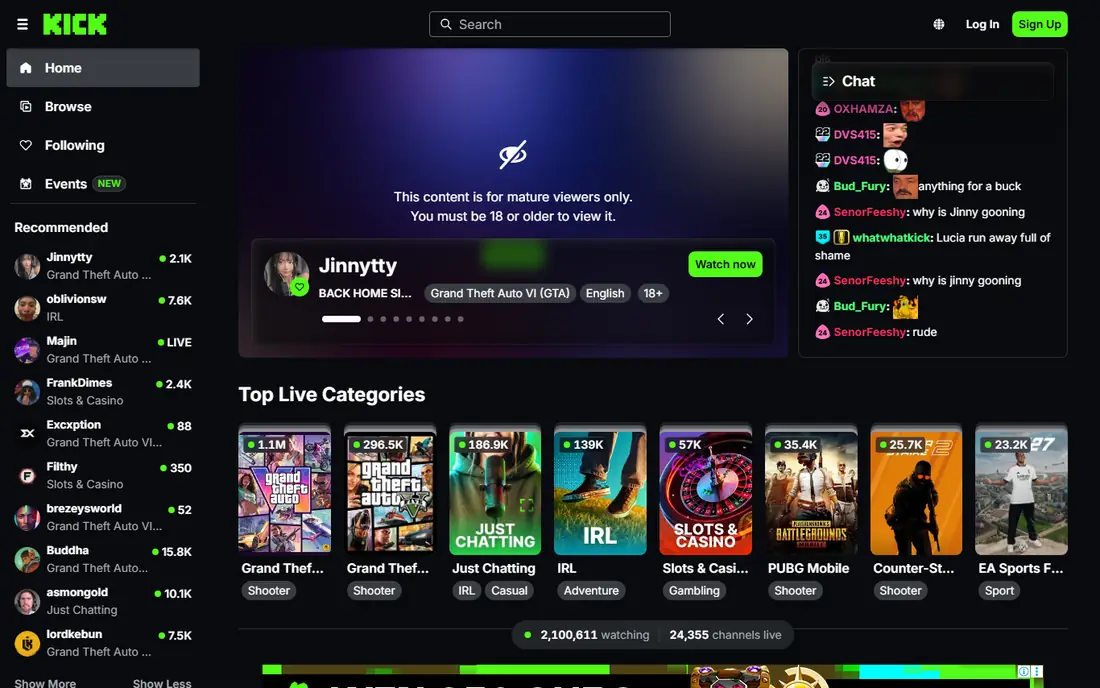
Kick has attracted streamers with a more generous revenue split than Twitch, keeping more subscription income with the creator. Its audience is growing, and its categories are less saturated, which gives new streamers a better chance of being seen on the front page or in a category listing. For a streamer focused on income share, Kick is an attractive alternative.
Its audience is still far smaller than Twitch or YouTube, and its moderation reputation has drawn criticism, which matters to brands and to streamers who want a safe community. New streamers should weigh the better split against the smaller audience and the platform's evolving rules.
- Favorable revenue split for streamers
- Growing audience
- Less saturated than Twitch
- Smaller audience than Twitch or YouTube
- Moderation and brand safety vary
TikTok Live
Ideal for: Fast casual discovery
TikTok Live suits streamers who thrive on short, casual, personality-driven content. Its recommendation feed can put a new creator in front of thousands of viewers without an existing following, which is rare among streaming platforms. Going live is simple, and the audience skews young and mobile-first.
The format limits depth: TikTok streams tend to be shorter and more casual than Twitch or YouTube streams, and its community and monetization tools are thinner. It works best as a discovery engine that feeds a main channel elsewhere, or as a primary platform for creators whose content fits short live formats.
- Fast discovery through the For You feed
- Huge young audience
- Low barrier to going live
- Streams are casual and short
- Monetization and community tools are thinner than Twitch
Facebook Live
Ideal for: Existing social audience
Facebook Live lets creators stream directly to people who already follow them, which is useful for community groups, local businesses, musicians, and creators with an established Facebook page. Sharing is built in, and viewers can join without creating a new account on a gaming platform. For non-gaming content, that built-in audience is a real advantage.
Its creator discovery and gaming audience are weaker than Twitch or YouTube, and younger viewers have largely moved elsewhere. Facebook Live works best when the streamer already has a Facebook audience to activate, rather than as a place to build one from scratch.
- Stream to an existing friends and followers base
- Easy sharing
- Good for community and local content
- Gaming and creator discovery is weaker than Twitch or YouTube
- Younger audiences are elsewhere
Trovo
Ideal for: Smaller community feel
Trovo, from Tencent, offers a smaller streaming community where new creators face less competition for attention. Its gaming focus and community features suit streamers who prefer a tighter, more personal audience over a massive one. For a beginner who feels lost on Twitch, Trovo can feel more welcoming.
The audience is much smaller, which limits growth and brand deals. Trovo suits streamers who value community over scale, or who want a second platform to practice and build confidence before competing on a larger one.
- Smaller, tighter community
- Discovery is easier for new streamers
- Gaming focus
- Much smaller audience
- Fewer monetization and brand opportunities
DLive
Ideal for: Blockchain-based rewards
DLive uses a blockchain-based reward system that lets viewers support streamers with cryptocurrency-based gifts, with a creator-friendly revenue approach. Its community is small but engaged, and its model appeals to streamers who want an alternative to traditional platform cuts. For a niche audience interested in that model, DLive offers something distinct.
Its audience is small, and the blockchain element can confuse viewers who just want to watch a stream. Most new streamers will find larger platforms more practical, but DLive is worth knowing about for creators exploring alternative monetization.
- Creator-friendly reward model
- No platform cut on some earnings
- Community focus
- Small audience
- Blockchain model may confuse new viewers
Instagram Live
Ideal for: Casual streams to followers
Instagram Live is the simplest way for an existing Instagram creator to go live: followers get notified, joining takes one tap, and the format suits Q and A sessions, behind-the-scenes content, and casual chats. For influencers, artists, and small businesses, it turns an existing audience into a live community with almost no setup.
It is not built for long gaming streams or for building a new audience from scratch, since discovery beyond followers is limited. As a complement to a main streaming channel, though, Instagram Live is an easy way to stay connected with followers between bigger streams.
- Stream to existing Instagram followers
- Simple to start
- Good for Q and A and behind-the-scenes content
- Not built for long gaming streams
- Discovery beyond followers is limited
How we picked these
We compared official platform pages, creator documentation, and monetization information for live-streaming platforms, focusing on audience size, discovery for new creators, monetization terms, and ease of starting. We favored platforms with real, active streaming communities and included both large and niche options so new streamers can compare scale against opportunity.
What to check before you start
Pick one main platform and commit to a schedule before spreading across many. Consistency matters more than platform choice early on, since viewers return when they know when you will be live. Also check each platform's monetization eligibility and content rules, since thresholds and moderation policies affect when and how you can earn.
Invest in the basics: clear audio matters more than a fancy camera, and a stable internet connection matters more than either. Finally, plan how you will use clips: short clips posted to TikTok, YouTube Shorts, or Instagram Reels are often the fastest way for a new streamer to reach viewers who have never seen a live stream.
Another practical step is to test support before you depend on it. Send a question during the trial and note how fast and how helpfully the team responds, since that response is a preview of what you will get when something breaks at an awkward moment. Also check the documentation and community: clear guides and an active user community can solve many problems without waiting for support at all. If the service handles important data or money, review its security and privacy pages too, and confirm that its practices match your requirements. A product that is strong on features but weak on support or security can cost far more in stress and risk than it saves in subscription fees.
Frequently asked questions
Which streaming platform is best for a brand-new streamer?
YouTube is the best starting point for most new streamers, because videos keep attracting viewers through search while live streams build community. Twitch is best once you have an audience, and TikTok Live is best for fast, casual discovery.
Is Twitch too crowded for new streamers?
It is crowded in popular categories, but new streamers can still grow by choosing a less saturated niche, streaming consistently, and bringing viewers from clips and social posts. Growth is slower than on YouTube or TikTok, but the live community payoff can be larger.
How do streamers make money when starting out?
Early income usually comes from tips, small subscriptions, and affiliate links rather than ads, since ad and partner programs have eligibility thresholds. Focus on building a loyal small audience first, since monetization follows community, not the other way around.
Do I need expensive equipment to start streaming?
No. A decent microphone, a stable internet connection, and a computer or console that can run your content are enough to start. Upgrade equipment only after you have streamed regularly for a while and know what limits you.
Should I stream on multiple platforms at once?
Multistreaming can widen reach, but it splits chat and community, which hurts early growth. Most new streamers do better focusing on one main platform and using clips on others, rather than streaming everywhere at once.
Should I try a free plan or trial first for best streaming platform for new streamers?
Yes, whenever one is available. A trial with your real data and real tasks reveals fit, speed, and ease of use in a way no sales page can, and it often surfaces deal-breakers early, such as a missing integration or a confusing workflow. Use the trial actively rather than just browsing: complete a typical task end to end, contact support once, and check how easy it is to export your work if you decide to leave.