Best Supplier Management Software in 2026: 7 Tools Compared

- Onboarding speed matters, since slow supplier setup delays purchasing.
- Risk monitoring should cover financial, compliance, and geographic risks, not just one type.
- Spend visibility helps negotiate better terms and spot duplicate suppliers.
- Integration with ERP and finance systems prevents duplicate data entry.
Quick comparison
| Product | Ideal for | Price from | Free version | |
|---|---|---|---|---|
 Coupa | Spend plus supplier management | See website | No | Visit |
 SAP Ariba | Enterprise procurement network | See website | No | Visit |
 Oracle Procurement | Procurement inside Oracle Cloud | See website | No | Visit |
 Jaggaer | Source to pay supplier tools | See website | No | Visit |
 Zycus | AI led procurement suite | See website | No | Visit |
 Precoro | Simple procurement for growing teams | See website | No | Visit |
 Procurify | Purchasing control for mid sized teams | See website | No | Visit |
The best supplier management software
Supplier management software tracks suppliers, contracts, performance, risk, and spending in one place, and the best tools differ on procurement depth, supplier onboarding, and integration with finance systems.
We compared supplier onboarding, contract tools, risk monitoring, performance tracking, and prices across leading platforms, and our pick for most companies is a tool with strong onboarding and clear spend visibility.
In this guide, we walk through each option in turn, starting with who it suits best, then looking at what it does well and where it falls short, so you can compare like with like. We also cover pricing in plain terms, including where a price is quote based or where a free plan covers only part of the service, because the headline price rarely tells the full story. By the end, you should have a short list of two or three options worth a closer look, rather than a long list of names with no clear differences.
Coupa
Ideal for: Spend plus supplier management
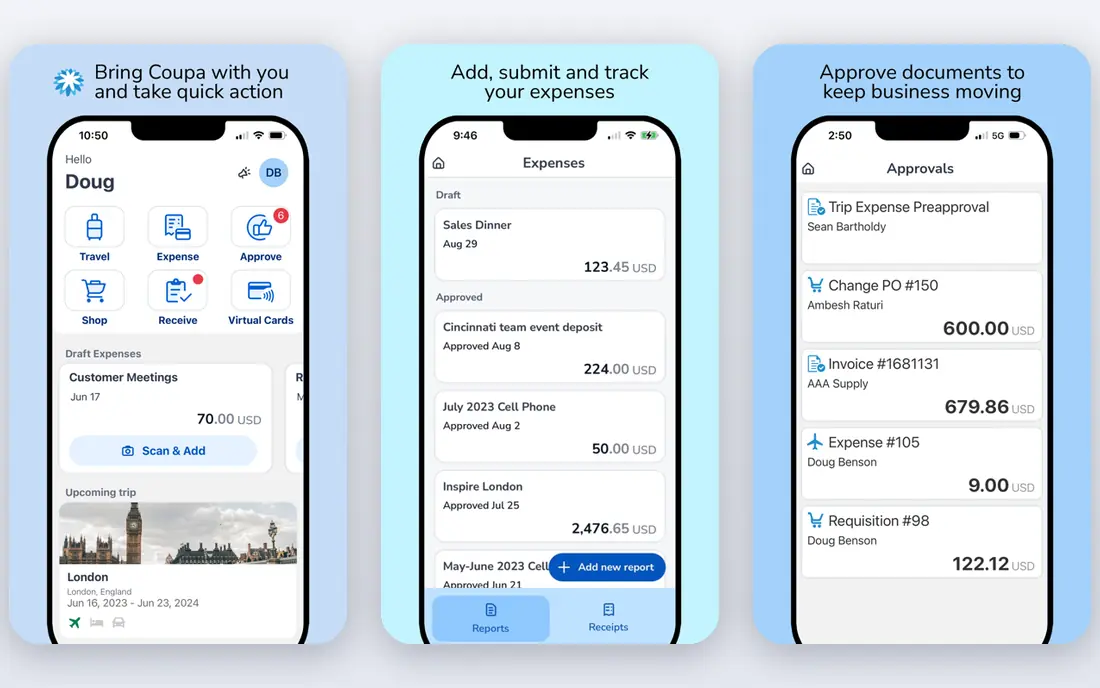
Coupa combines supplier management with spend management, which suits companies that want one view of purchasing. Its supplier network helps onboard suppliers faster, and spend analytics show where money goes.
Contract and risk tools are well built. For mid sized and large companies, Coupa is a leading choice.
Pricing is enterprise oriented, and setup needs care to get data clean.
On balance, Coupa stands out for Spend plus supplier management, with strengths that include Strong spend visibility; supplier tools; large network. The main drawbacks to weigh are Enterprise pricing; setup needs care. If those trade offs fit your situation and your budget, it is worth putting on your short list, and if they do not, compare it with the next options in this guide before you decide, since a small difference in price, coverage, or support can matter a lot over a year of use.
- Strong spend visibility
- Supplier tools
- Large network
- Enterprise pricing
- Setup needs care
SAP Ariba
Ideal for: Enterprise procurement network
SAP Ariba is an enterprise procurement platform with a large supplier network and deep sourcing tools. Its supplier management covers onboarding, qualification, and performance.
For companies already on SAP, integration is a major advantage. The network effect helps find and onboard suppliers.
It can feel complex, and value is highest inside the SAP ecosystem.
On balance, SAP Ariba stands out for Enterprise procurement network, with strengths that include Large supplier network; deep procurement; SAP fit. The main drawbacks to weigh are Complex; best inside SAP ecosystem. If those trade offs fit your situation and your budget, it is worth putting on your short list, and if they do not, compare it with the next options in this guide before you decide, since a small difference in price, coverage, or support can matter a lot over a year of use.
- Large supplier network
- Deep procurement
- SAP fit
- Complex
- Best inside SAP ecosystem
Oracle Procurement
Ideal for: Procurement inside Oracle Cloud
Oracle Procurement, part of Oracle Cloud, suits companies already running Oracle ERP and finance. Its supplier management links to purchasing, contracts, and payables in one system.
Contract tools are strong, and global scale covers many countries. For Oracle customers, that integration reduces duplicate data.
It fits Oracle best, and implementation is a major project.
On balance, Oracle Procurement stands out for Procurement inside Oracle Cloud, with strengths that include ERP integration; strong contracts; global scale. The main drawbacks to weigh are Oracle focused; implementation is major. If those trade offs fit your situation and your budget, it is worth putting on your short list, and if they do not, compare it with the next options in this guide before you decide, since a small difference in price, coverage, or support can matter a lot over a year of use.
- ERP integration
- Strong contracts
- Global scale
- Oracle focused
- Implementation is major
Jaggaer
Ideal for: Source to pay supplier tools
Jaggaer offers source to pay software with strong supplier management, sourcing, and analytics. Its supplier tools cover onboarding, qualification, and performance tracking.
Analytics help procurement teams see spend and supplier risk. The platform suits mid sized and large companies across industries.
Pricing is quote based, and setup varies by scope.
On balance, Jaggaer stands out for Source to pay supplier tools, with strengths that include Source to pay coverage; supplier analytics; flexible. The main drawbacks to weigh are Pricing is quote based; setup varies. If those trade offs fit your situation and your budget, it is worth putting on your short list, and if they do not, compare it with the next options in this guide before you decide, since a small difference in price, coverage, or support can matter a lot over a year of use.
- Source to pay coverage
- Supplier analytics
- Flexible
- Pricing is quote based
- Setup varies
Zycus
Ideal for: AI led procurement suite
Zycus is a procurement suite with AI features for supplier management, sourcing, and spend analytics. Its supplier tools help onboard, qualify, and monitor suppliers.
AI helps classify spend and surface risks. For companies that want AI led procurement, Zycus is a strong option.
It is enterprise focused, and pricing is quote based.
On balance, Zycus stands out for AI led procurement suite, with strengths that include AI features; supplier tools; spend analytics. The main drawbacks to weigh are Enterprise focus; pricing is quote based. If those trade offs fit your situation and your budget, it is worth putting on your short list, and if they do not, compare it with the next options in this guide before you decide, since a small difference in price, coverage, or support can matter a lot over a year of use.
- AI features
- Supplier tools
- Spend analytics
- Enterprise focus
- Pricing is quote based
Precoro
Ideal for: Simple procurement for growing teams
Precoro offers simpler procurement and supplier management for growing teams. Its setup is faster than enterprise platforms, and approval workflows are clear.
The interface suits teams that want purchasing control without heavy complexity. For mid sized companies, it is a good value choice.
Advanced supplier risk monitoring is thinner than enterprise rivals, and the ecosystem is smaller.
On balance, Precoro stands out for Simple procurement for growing teams, with strengths that include Easy setup; clear approvals; good value. The main drawbacks to weigh are Advanced supplier risk is thinner; smaller ecosystem. If those trade offs fit your situation and your budget, it is worth putting on your short list, and if they do not, compare it with the next options in this guide before you decide, since a small difference in price, coverage, or support can matter a lot over a year of use.
- Easy setup
- Clear approvals
- Good value
- Advanced supplier risk is thinner
- Smaller ecosystem
Procurify
Ideal for: Purchasing control for mid sized teams
Procurify helps mid sized teams control purchasing and manage suppliers with clear approvals and spend visibility. Its interface is easy for requesters, approvers, and finance teams.
Spend reporting shows where money goes by team and category. For companies moving from spreadsheets to a system, Procurify is a practical step.
Supplier management depth is moderate, and integration depth varies by finance system.
On balance, Procurify stands out for Purchasing control for mid sized teams, with strengths that include Good approvals; spend visibility; easy use. The main drawbacks to weigh are Supplier depth is moderate; integrations vary. If those trade offs fit your situation and your budget, it is worth putting on your short list, and if they do not, compare it with the next options in this guide before you decide, since a small difference in price, coverage, or support can matter a lot over a year of use.
- Good approvals
- Spend visibility
- Easy use
- Supplier depth is moderate
- Integrations vary
How we picked these
We compared official feature pages, pricing pages, app store listings, privacy policies, and public customer reviews for each option in this list, and we kept only options that are available in the United States and that clearly fit the topic of the article.
We gave weight to clear pricing, a usable free option or trial where one is offered, honest limits, and support that a real customer can reach, and we left out options whose pricing was hidden, whose main offer did not match the topic, or whose website did not clearly belong to the product.
We also checked that each product is still offered and working in October 2026, and we noted where a feature, a plan, or a price could not be verified from the vendor, in which case we wrote See website rather than guessing. That approach means some prices in this guide are deliberately general, and we recommend confirming the current price on the vendor website before you buy, since plans and promotions change.
How to choose supplier management software
Start with your supplier count and spend, since a tool built for thousands of suppliers will overwhelm a company with fifty, and a simple tool will fail a company with thousands. List your must have processes, including onboarding, contracts, and performance reviews.
Next, test onboarding with a real supplier, and check how long it takes, what documents are collected, and whether risk checks run automatically. Also check spend reporting, since you need to see total spend by supplier and category.
Finally, check ERP and finance integrations, because supplier data that does not sync creates duplicate work and errors. Choose the platform that your procurement team will use daily, not the one with the most modules.
Frequently asked questions
What is the best supplier management software?
It depends on company size and procurement complexity, since platforms lead in different areas, such as sourcing, contracts, risk, and spend analytics. List your core processes first, then test platforms on real supplier tasks.
What does supplier management software do?
It manages supplier information, onboarding, contracts, performance, risk, and spending in one system, replacing spreadsheets and email. It helps procurement teams work consistently and spot risks early.
Do small businesses need supplier management software?
Small businesses with many suppliers or regulated purchases benefit, while very small teams with few suppliers may manage with simpler tools. Start when supplier data becomes hard to track in spreadsheets.
How does supplier risk monitoring work?
It tracks financial health, compliance, sanctions, and geographic risks, and alerts teams when a supplier's risk changes. Good tools combine external data with your own performance records.
Can supplier software integrate with ERP?
Yes, most leading platforms integrate with major ERP and finance systems, syncing supplier records, purchase orders, and invoices. Check integration depth for your specific ERP before buying.