This list puts Sana Commerce first for SAP and Dynamics connected B2B portals. Shopify Plus is the stronger choice for quick launches and direct-to-buyer growth, while Salesforce Commerce Cloud suits brands inside the Salesforce ecosystem. Details, prices and limits for the rest of the 6 tools are below.
Choosing supplier portal software for wholesale brands usually comes down to price, fit and limits. This Ainotely guide sets 6 tools side by side on those three points, with the facts kept short and checkable.
Key takeaways
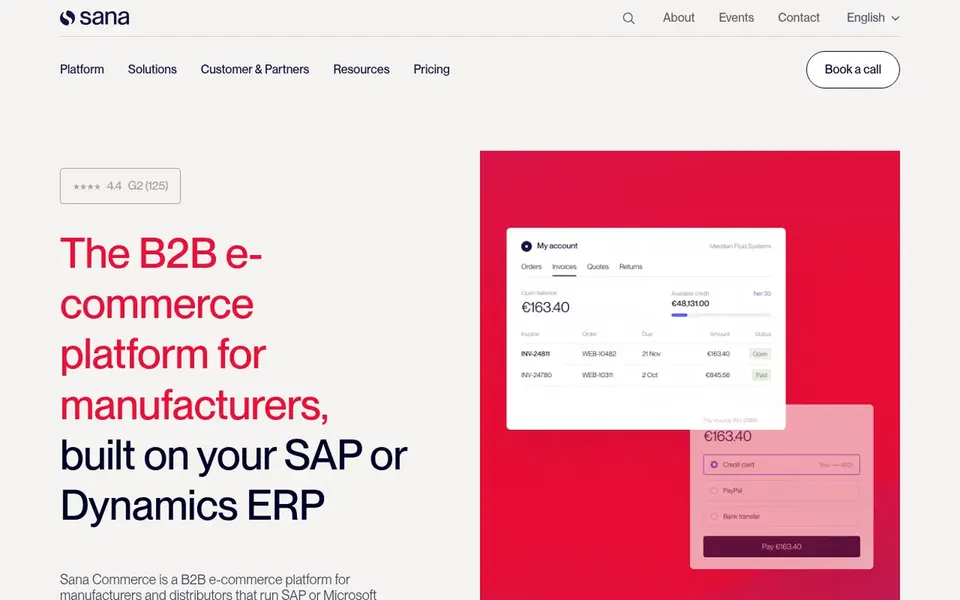
The list opens with Sana Commerce, aimed at SAP and Dynamics connected B2B portals.
Shopify Plus comes with a trade-off: complicated B2B logic may need workarounds.
Sana Commerce, Znode and the 4 others all sell by quote; expect sales conversations before you see a price.
Znode fits adaptable B2B portals for manufacturers.
A permanent free plan is missing from all 6 tools, Sana Commerce and Znode included; plan for a trial or a premium start.
Sana Commerce is aimed squarely at SAP and Dynamics connected B2B portals. Organizations wanting a portal decoupled from a specific ERP may look elsewhere.
Choose Sana Commerce when your ERP is the source of truth and you want the portal to reflect it. This comparison lists no price for Sana Commerce; ask the vendor. As for free access: Not stated.
Best for: Quick launches and direct-to-buyer growth
Shopify Plus serves quick launches and direct-to-buyer growth. Wholesale brands that already sell direct and want a consistent commerce foundation across channels often evaluate it.
Also, brands whose portal is essentially an ERP front end should weigh ERP-native choices. From a buyer's view, intricate wholesale requirements, like ERP-driven pricing or deep account structures, can need additional configuration or apps. Shopify Plus does not show a starting price in this comparison, so check the vendor site for current pricing. Free access: Not stated.
Trade-offs to know: Less ERP-native than some rivals.
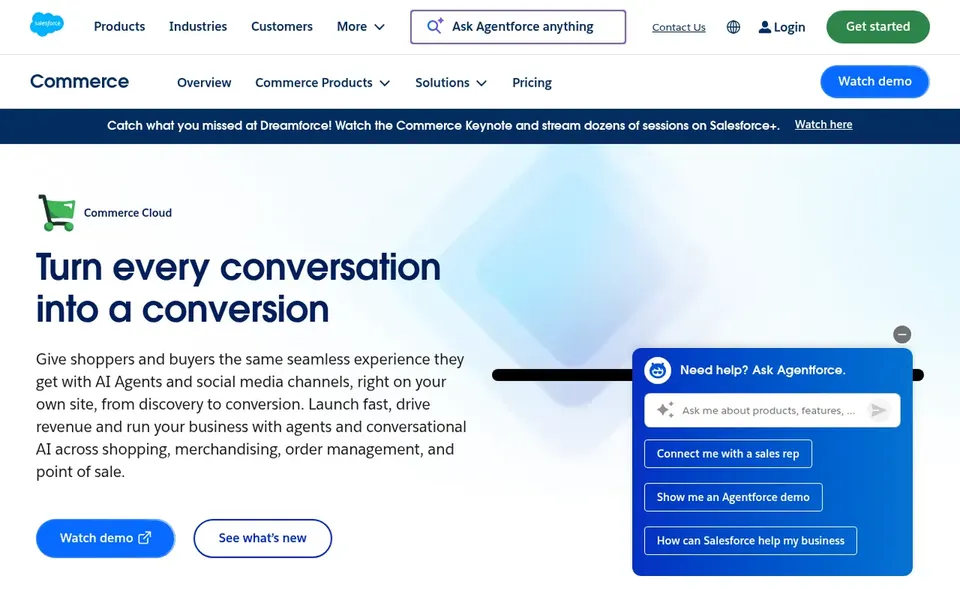
Salesforce Commerce Cloud was built for brands inside the Salesforce ecosystem. Salesforce Commerce Cloud is a commerce product from Salesforce targeted at brands that want storefronts and B2B buying tied to a wider customer product. For everyday use, teams that require personalized buyer journeys across regions and channels will find the scope relevant.
Drawbacks to consider: Heavier setup for small catalogs.
Brands with a small catalog or a single straightforward portal may find lighter B2B products quicker to launch. In practice, choose Salesforce Commerce Cloud when commerce is part of a broader product strategy. Pricing for Salesforce Commerce Cloud is not stated here, so ask the vendor for current figures. Free access: Not stated.
Best for: Scalable multi-channel wholesale storefronts
BigCommerce is designed for scalable multi-channel wholesale storefronts. Wholesale brands that want a hosted system with room to add channels often consider it. Brands with highly specialized distributor workflows should compare dedicated B2B products.
Where it falls short: Fit depends on catalog complexity.
Very deep B2B requirements, for example intricate account hierarchies, may need extensions or partner tools. Beyond that, pick BigCommerce when scalability and multi-channel reach matter more than bespoke portal logic. This comparison lists no price for BigCommerce; ask the vendor. Free access: Not stated.
Think of Magento Commerce for enterprise B2B and B2C storefronts. Wholesale brands with complex catalogs, several regions and mixed direct and trade selling commonly shortlist it for that breadth. It rewards teams with development capacity, since customization and integrations generally need technical resources.
Limits to weigh: Technical resources required.
On top of that, smaller wholesalers wanting a fast supplier portal may prefer a more straightforward hosted choice. Magento Commerce, now positioned as Adobe Commerce, is an enterprise ecommerce product for B2B and B2C brands. No starting price is listed for Magento Commerce here; confirm pricing on the vendor site. Free options: Not stated.
Znode makes the most sense for adaptable B2B portals for manufacturers. Wholesale brands that want a B2B-first tool instead of a consumer product adapted for trade should consider it.
Worth adding: market presence is narrower than the largest systems. Znode is a B2B ecommerce platform for manufacturers and distributors, marketed as adaptable and scalable with distributed SaaS for enterprise speed and control. No starting price is listed for Znode here; confirm pricing on the vendor site. Free access: Not stated.
Ask each vendor, from Sana Commerce to Znode, for a written quote; none of them publishes a starting price.
Before choosing Sana Commerce, weigh its main limit: tied to ERP partnership fit.
Get the contract term, renewal terms and any onboarding fees from Shopify Plus in writing.
Before rolling out Sana Commerce, verify the integrations your workflow depends on.
Test how quickly BigCommerce answers a pre-sales question; it hints at how support will feel later.
How we picked
Ainotely used vendor pricing pages and product documentation as the base, then compared plans, free access and documented limits for 6 tools. Figures are shown as the vendors publish them. Billing terms, seat minimums and add-ons can change the real cost. Position on the page reflects fit for a typical buyer first, with price clarity and free access breaking ties. Treat it as a guide, not a ruling. This applies to all 6 supplier portal software for wholesale brands options compared here.
Every price and plan detail on this page comes from the vendors’ own websites. We did not run hands-on tests unless the text says so, and we do not publish star ratings or review scores. See how we score and our disclosure.
Keep your shortlist in one place
Paste prices, trial dates and notes from this guide into Ainotely, our AI note app. It files them into a topic and pulls out tasks like “cancel trial by Friday”. Free 7-day trial, no card needed.
How are the tools for supplier portal software for wholesale brands ordered?
The order follows typical fit for supplier portal software for wholesale brands, with Sana Commerce first and Znode last, then price clarity and free access. It is editorial judgement, not a score, so another team could rank the tools differently.
Is Sana Commerce the right pick for everyone comparing supplier portal software for wholesale brands?
No single tool suits every team. Sana Commerce comes first because it fits SAP and Dynamics connected B2B portals, while Shopify Plus suits fast launches and direct-to-buyer growth and Salesforce Commerce Cloud suits brands inside the Salesforce ecosystem. Match the tool to your own size, budget and workflow before deciding.
Does any tool for supplier portal software for wholesale brands here have a free plan?
A permanent free plan is not offered by Sana Commerce, Znode or the other tools here. Plan a short evaluation period instead.
What should a wholesale supplier portal do first?
Most value comes from connecting the portal to the system that already holds that data, so check ERP integration before storefront features.
Can I try these tools before paying?
Not by default. None of the tools, from Sana Commerce to Znode, lists a free plan or a free trial here, so ask each vendor for a demo before committing.