Best Supplier Risk Management Software in 2026: 8 Tools Compared

- Everstream, Interos, and Resilinc lead on supply chain monitoring and disruption alerts.
- Prewave and Aravo suit teams that want risk scoring across suppliers and third parties.
- Coupa fits buyers who already use Coupa for procurement and want risk data in that flow.
- Most pricing is by quote and depends on supplier count and monitoring depth.
- Start with your most critical suppliers, since monitoring everything at once spreads effort thin.
Quick comparison
| Product | Ideal for | Price from | Free version | |
|---|---|---|---|---|
 Everstream Analytics | Supply chain risk monitoring | See website | No | Visit |
 Interos | Supplier risk mapping | See website | No | Visit |
 Resilinc | Supply chain resilience platform | See website | No | Visit |
 Prewave | AI supplier risk monitoring | See website | No | Visit |
 Aravo | Third-party risk management | See website | No | Visit |
 Coupa | Procurement with supplier risk | See website | No | Visit |
 Riskmethods | Supply chain risk intelligence | See website | No | Visit |
 Assent | Supply chain compliance and risk | See website | No | Visit |
The best supplier risk management software
We weighed official feature pages, pricing, app store listings, privacy policies, and public reviews before ranking these options. The notes below give each option a fair hearing, including where it falls short.
Everstream Analytics
Ideal for: Supply chain risk monitoring
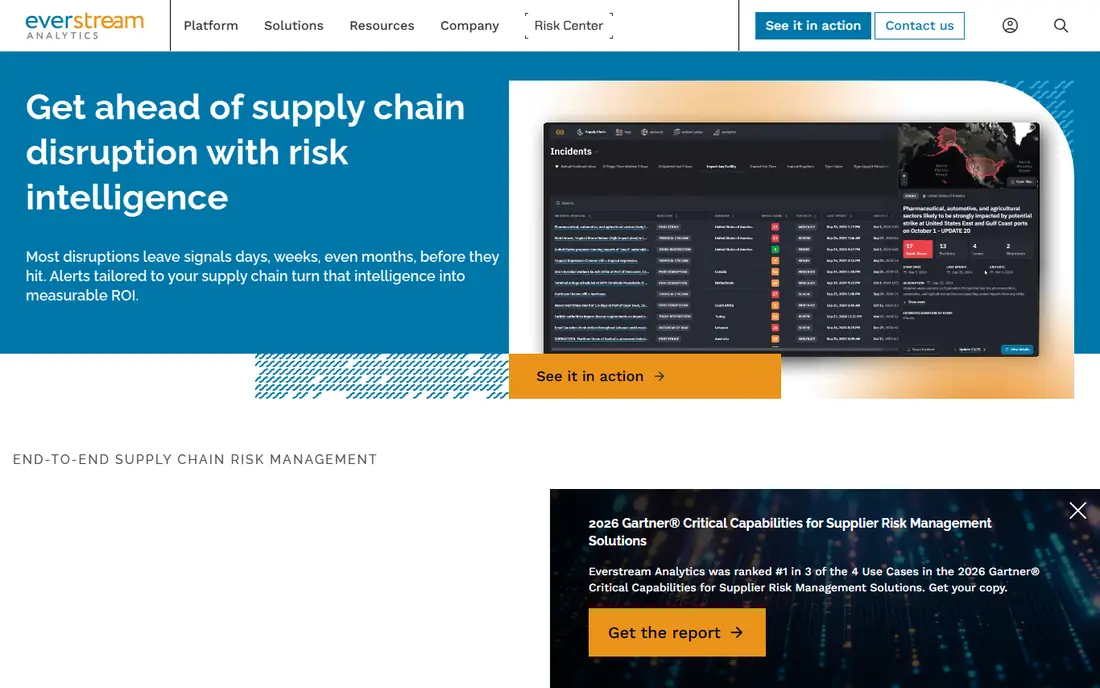
If Supply chain risk monitoring is the job, start here: it monitors supply chain risk worldwide and sends disruption alerts tied to real events. Risk analytics help teams see which suppliers and routes face the most exposure. It fits readers who want a practical option without a long setup, and it pairs well with the other choices on this list for comparison.
The honest catch is that quote-based pricing and a planned setup suit larger buyers. Pricing is quoted rather than published as a single list price, so check the vendor site for the current figure for your setup. That balance of strengths and limits is what kept it on the list, even though it is not the right pick for every reader.
- Disruption alerts
- Risk analytics
- Global coverage
- Quote-based pricing
- Setup takes planning
Interos
Ideal for: Supplier risk mapping
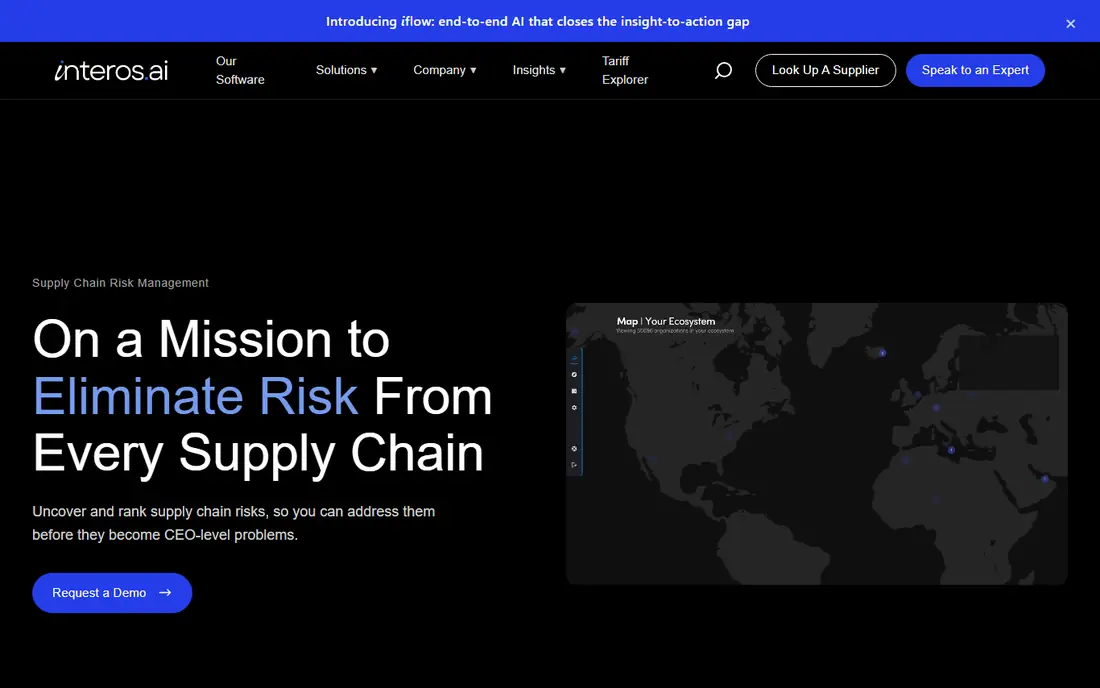
This option suits Supplier risk mapping well, since it maps suppliers across tiers, so risk hidden two or three levels down becomes visible. Risk scoring across that map helps teams prioritize the suppliers that matter most. It fits readers who want a practical option without a long setup, and it pairs well with the other choices on this list for comparison.
What holds it back a little is that quote-based pricing and an enterprise focus make it a larger-buyer tool. Pricing is quoted rather than published as a single list price, so check the vendor site for the current figure for your setup. That balance of strengths and limits is what kept it on the list, even though it is not the right pick for every reader.
- Multi-tier supplier mapping
- Risk scoring
- Alerts
- Quote-based pricing
- Enterprise focus
Resilinc
Ideal for: Supply chain resilience platform
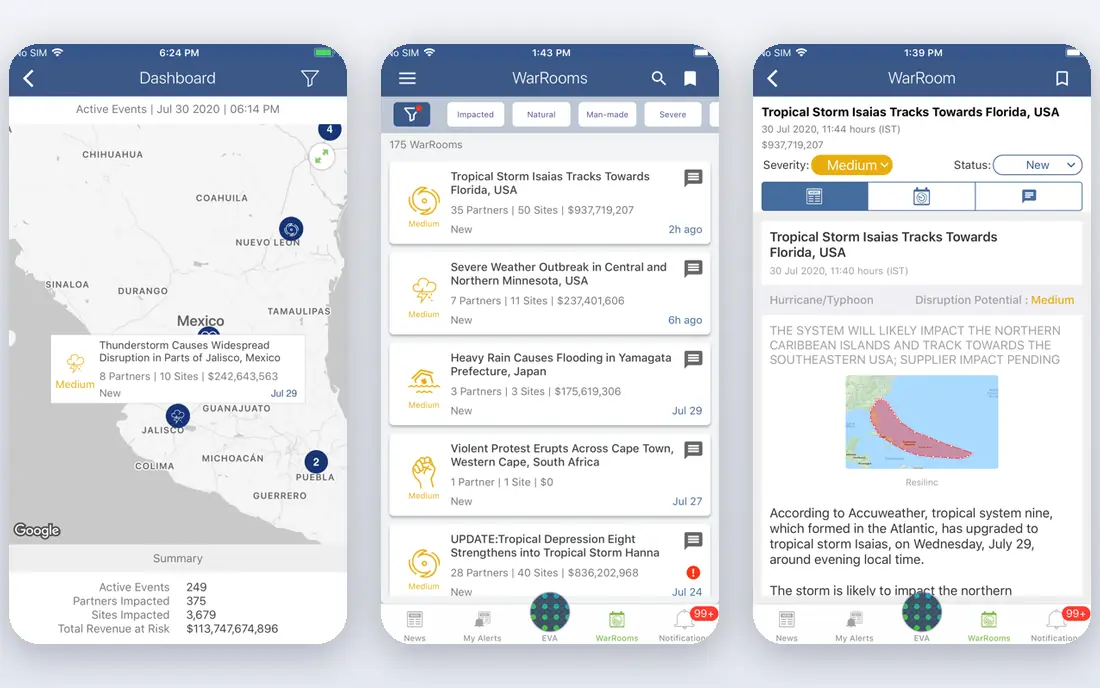
Buyers focused on Supply chain resilience platform will find a lot to like, as it monitors suppliers and sends disruption alerts, with tools for collaborating on responses. Collaboration features help buyers and suppliers share information during a disruption. It fits readers who want a practical option without a long setup, and it pairs well with the other choices on this list for comparison.
The downside to weigh is that quote-based pricing and implementation time suit larger programs. Pricing is quoted rather than published as a single list price, so check the vendor site for the current figure for your setup. That balance of strengths and limits is what kept it on the list, even though it is not the right pick for every reader.
- Supplier monitoring
- Disruption alerts
- Collaboration tools
- Quote-based pricing
- Implementation takes time
Prewave
Ideal for: AI supplier risk monitoring
For teams or readers weighing AI supplier risk monitoring, this is a strong candidate because it uses AI to monitor supplier risk and send alerts drawn from public and supplier data. Supplier scoring gives a clear starting point for deeper checks. It fits readers who want a practical option without a long setup, and it pairs well with the other choices on this list for comparison.
Before you commit, note that quote-based pricing applies, and it has European roots that suit buyers there. Pricing is quoted rather than published as a single list price, so check the vendor site for the current figure for your setup. That balance of strengths and limits is what kept it on the list, even though it is not the right pick for every reader.
- AI risk alerts
- Supplier scoring
- Multi-tier view
- Quote-based pricing
- European roots
Aravo
Ideal for: Third-party risk management
When Third-party risk management matters most, this option stands out for it manages the third-party lifecycle, from onboarding assessments to ongoing risk workflows. That lifecycle view suits teams handling suppliers, vendors, and partners together. It fits readers who want a practical option without a long setup, and it pairs well with the other choices on this list for comparison.
One limitation worth knowing is that quote-based pricing and a broad scope take configuration time. Pricing is quoted rather than published as a single list price, so check the vendor site for the current figure for your setup. That balance of strengths and limits is what kept it on the list, even though it is not the right pick for every reader.
- Third-party lifecycle
- Risk assessments
- Workflows
- Quote-based pricing
- Broad scope to configure
Coupa
Ideal for: Procurement with supplier risk
For Procurement with supplier risk, this one earns a close look because it pairs procurement with supplier risk data, so risk sits inside the buying workflow. Spend visibility helps teams link risk to actual purchasing volume. It fits readers who want a practical option without a long setup, and it pairs well with the other choices on this list for comparison.
The trade-off is that enterprise pricing applies, and risk depth varies by module. Pricing is quoted rather than published as a single list price, so check the vendor site for the current figure for your setup. That balance of strengths and limits is what kept it on the list, even though it is not the right pick for every reader.
- Procurement plus risk data
- Spend visibility
- Integrations
- Enterprise pricing
- Risk depth varies by module
Riskmethods
Ideal for: Supply chain risk intelligence
If Supply chain risk intelligence is the job, start here: it monitors supply chain risk with supplier scoring and alerts for disruption events. Its risk intelligence draws on many sources to flag problems early. It fits readers who want a practical option without a long setup, and it pairs well with the other choices on this list for comparison.
The honest catch is that quote-based pricing applies, and it now sits inside Sphera, so check the current product name. Pricing is quoted rather than published as a single list price, so check the vendor site for the current figure for your setup. That balance of strengths and limits is what kept it on the list, even though it is not the right pick for every reader.
- Risk monitoring
- Supplier scoring
- Alerts
- Quote-based pricing
- Now part of Sphera
Assent
Ideal for: Supply chain compliance and risk
This option suits Supply chain compliance and risk well, since it focuses on supply chain compliance data, with supplier surveys and risk reporting. That compliance strength suits regulated industries with strict product rules. It fits readers who want a practical option without a long setup, and it pairs well with the other choices on this list for comparison.
What holds it back a little is that quote-based pricing applies, and the focus leans compliance-heavy. Pricing is quoted rather than published as a single list price, so check the vendor site for the current figure for your setup. That balance of strengths and limits is what kept it on the list, even though it is not the right pick for every reader.
- Compliance data
- Supplier surveys
- Risk reporting
- Quote-based pricing
- Compliance-heavy focus
How we picked these
We started from the topic itself and kept only products that exist, work in October 2026, and truly fit what a reader searching this topic would want. We compared official feature pages, pricing pages, app store listings, privacy policies, and public reviews, and we left out products whose pricing or core features we could not verify. Where a price was not published clearly, we wrote See website rather than guessing a figure.
We also gave weight to fit over fame. A well-known name stayed on the list only if it matched the topic, and a smaller option earned a place when it solved the same problem well. We did not claim hands-on testing that did not happen, and we noted honest weaknesses alongside the strengths for every option.
How to choose supplier risk software
Start with critical suppliers. List the suppliers whose failure would stop production or breach a contract, then check monitoring depth for those names first. A tool that covers thousands of minor suppliers but misses your key ones is not doing its job.
Next, check alert quality on a trial. Feed the tool your supplier list and see whether alerts are timely, specific, and actionable. Vague alerts that arrive late will be ignored, however broad the coverage claims to be.
Finally, confirm who acts on alerts. Monitoring without an owner and a response plan is just a feed. Assign owners, set response steps, and review alert outcomes monthly so the system improves.
Frequently asked questions
What is supplier risk management software?
It is software that monitors suppliers for financial, operational, geographic, and compliance risks, and alerts buyers to disruptions. It helps teams act before a supplier problem becomes a production stop.
What risks does it track?
Common risks include financial distress, natural disasters, political events, cyber incidents, and compliance failures. The best tools combine several risk types in one supplier score.
Do I need multi-tier visibility?
It helps, since many disruptions start with a sub-supplier you never contracted with directly. Multi-tier mapping shows those hidden links, though it costs more to maintain.
How is pricing usually set?
Pricing is usually by quote, based on supplier count, monitoring depth, and modules. Ask for a quote at your supplier count before comparing vendors.
Can it replace supplier audits?
No, it complements audits. Monitoring flags problems between audits, while audits check facts on the ground that public data cannot confirm.