7 Supply Chain Collaboration Software Options Ranked for 2026

- 1
 Infor NexusGlobal trade visibility on one networkVisit
- 2
 SAP Business NetworkTrading-partner collaboration inside SAPVisit
- 3
 E2openMulti-tier supply chain networksVisit
- 4
 o9 SolutionsIntegrated business planning at scaleVisit
- 5
 Blue YonderRetail and manufacturing planning plus executionVisit
- Infor Nexus sits first on this list: global trade visibility on one network.
- A permanent free plan is missing from all 7 tools, Infor Nexus and TraceLink included; plan for a trial or a premium start.
- A fair warning about SAP Business Network: most solid inside the SAP ecosystem.
- No starting price is shown for any of the 7 tools, Infor Nexus and TraceLink included, so plan time for sales calls.
Direct answer
Infor Nexus comes first here, mainly for global trade visibility on one network. Alternatives: SAP Business Network for trading-partner collaboration inside SAP, and E2open for multi-tier supply chain networks. All 7 tools are compared below on price, free plan and limits.
Quick comparison
| Product | Ideal for | Price from | Free version | |
|---|---|---|---|---|
| Infor Nexus | Global trade visibility on one network | See website | No | Visit |
| SAP Business Network | Trading-partner collaboration inside SAP | See website | No | Visit |
| E2open | Multi-tier supply chain networks | See website | No | Visit |
| o9 Solutions | Integrated business planning at scale | See website | No | Visit |
| Blue Yonder | Retail and manufacturing planning plus execution | See website | No | Visit |
 Kinaxis | Quick concurrent planning and scenarios | See website | No | Visit |
 TraceLink | Pharma supply chain compliance | See website | No | Visit |
The best supply chain collaboration software
Short on time? The summary and table above give the quick view of 7 tools for supply chain collaboration software, and the profiles that follow give the detail behind each entry.
Infor Nexus
Ideal for: Global trade visibility on one network
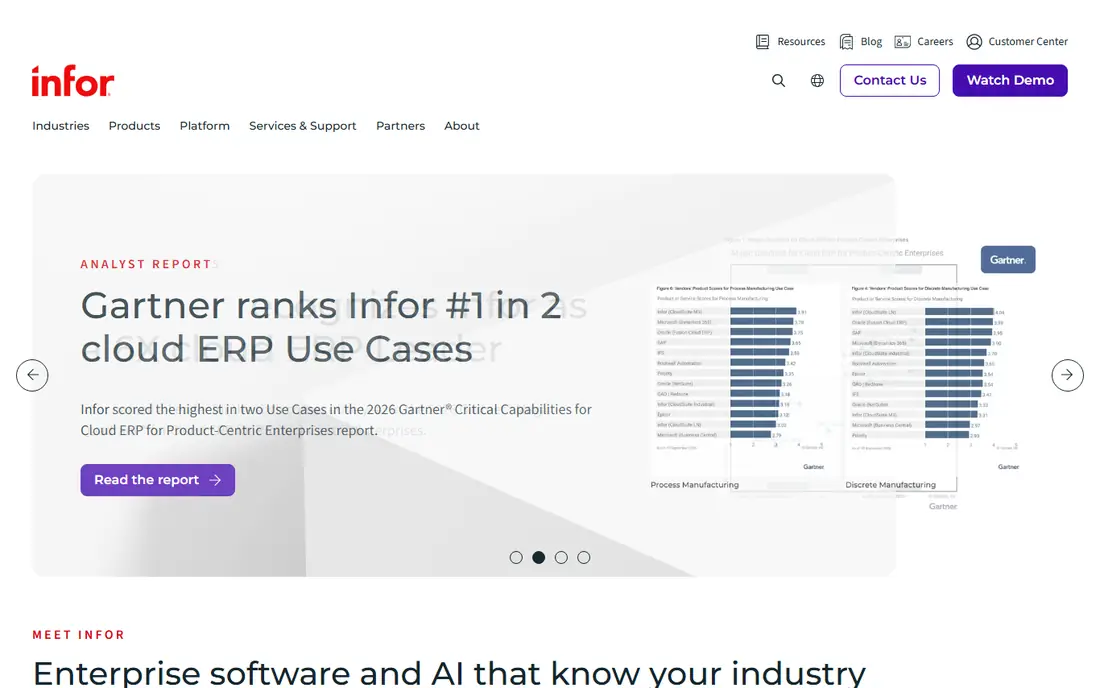
Choose Infor Nexus for global trade visibility on one network. From order placement through production milestones to shipment and delivery, every party works from shared status and documents. Infor Nexus is enterprise software with enterprise sales cycles.
It shines when international complexity is the core problem. Domestic-focused firms with straightforward logistics may find lighter visibility tools sufficient. But if your inbound supply chain spans continents and your planners are blind between order and arrival, the network model earns its keep. No starting price is listed for Infor Nexus here; confirm pricing on the vendor site. There is no free plan with Infor Nexus.
Where it falls short: Enterprise focus with quote-based pricing.
- Solid purchase order and shipment visibility
- Backed by Infor and Koch Industries
- Most valuable for firms with heavy international sourcing
SAP Business Network
Ideal for: Trading-partner collaboration inside SAP
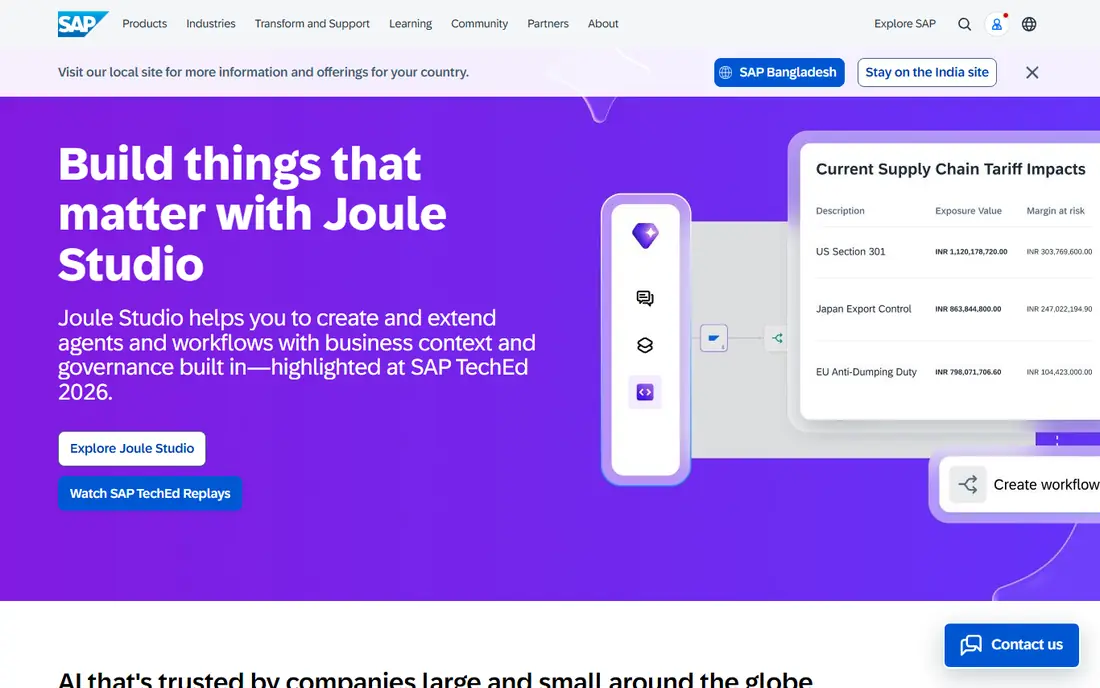
Think of SAP Business Network for trading-partner collaboration inside SAP. Thousands of suppliers already transact on the network through Ariba, which lowers the onboarding barrier for new buyers. For everyday use, if you are not, weigh the integration cost honestly.
SAP Business Network is at its best when your company already runs SAP. Non-SAP businesses can use it, but they will not get the same integration payoff, and SAP licensing is famously intricate. From a buyer's view, purchase orders, invoices, shipment notices, and payments can flow between firms with less manual reconciliation. The main limit is ecosystem gravity. SAP Business Network does not show a starting price in this comparison, so check the vendor site for current pricing. SAP Business Network has no free tier.
Where it is weaker: Most solid inside the SAP ecosystem.
- Asset collaboration
- Handles procurement, logistics
- Pricing and licensing can be complicated
E2open
Ideal for: Multi-tier supply chain networks
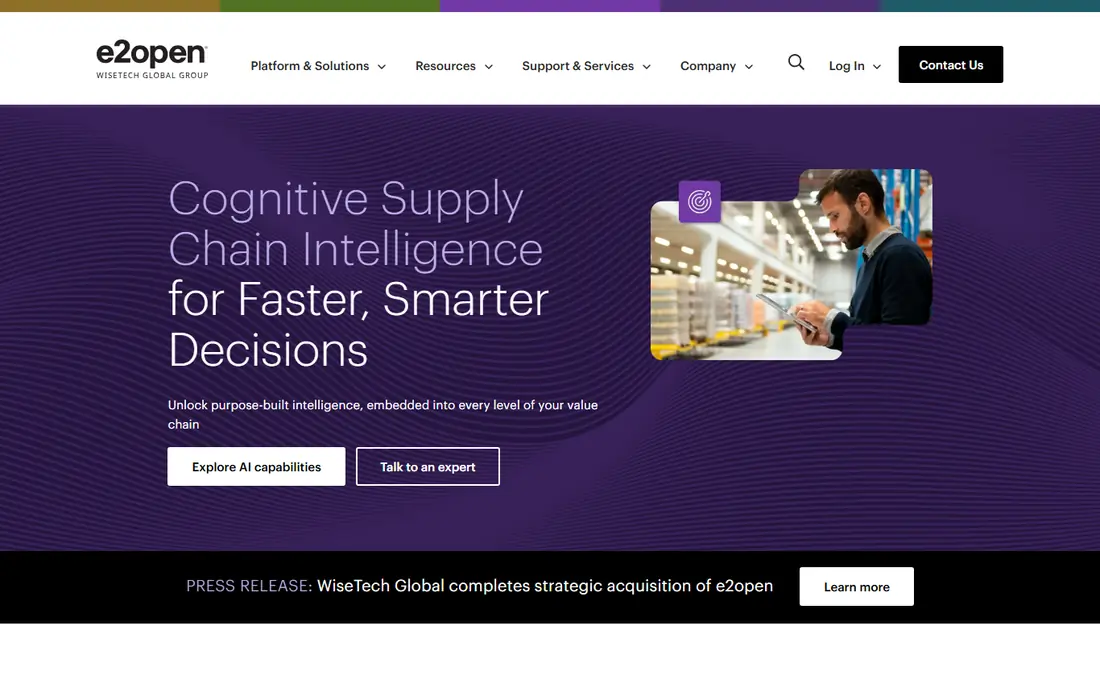
For multi-tier supply chain networks, E2open is a natural candidate. E2open sells to enterprises, pricing is quote-based, and onboarding a network of partners takes real effort. From a buyer's view, E2open is built around a straightforward idea: every trading partner should work from the same data.
Reasons to shortlist it: Spans planning, execution, trade.
Downsides: Enterprise pricing with no public plans. Rather than each company keeping its own spreadsheet of orders, forecasts, and shipments, E2open puts suppliers, contract manufacturers, logistics providers, and distributors on a single multi-enterprise network. In practice, when a forecast changes or a shipment is delayed, everyone entitled to see it sees it at once. That network model is what separates E2open from planning-only tools. This comparison lists no price for E2open; ask the vendor. No free plan comes with E2open.
- One network connecting suppliers
- Capable multi-tier visibility
- Not a fast rollout
o9 Solutions
Ideal for: Integrated business planning at scale
Where o9 Solutions fits: integrated business planning at scale. The modeling adaptability is a genuine strength. That appeals to large, complicated enterprises where off-the-shelf planning logic never quite suits. o9 Solutions positions its system as the digital brain of the enterprise, connecting commercial, supply chain, and financial planning in one model.
In daily use, the pitch is integration: rather than demand planning, supply planning, and financial planning running as separate exercises that get reconciled quarterly, o9 lets them run on shared data with shared scenarios. Beyond that, businesses that want a customizable planning system and have the team to wield it will get the most from o9. Pricing for o9 Solutions is not stated here, so ask the vendor for current figures. o9 Solutions has no permanent free option.
Points against: Newer vendor means a smaller partner ecosystem than legacy rivals.
- Expanding enterprise customer base
- Capable scenario and optimization modeling
- Quote-based pricing with significant services component
Blue Yonder
Ideal for: Retail and manufacturing planning plus execution
Blue Yonder is designed for retail and manufacturing planning plus execution. Demand planning, replenishment, warehouse management, transportation, and labor management all live in one portfolio.
For everyday use, collaboration features let retailers and suppliers align on forecasts and replenishment plans, which is the core of programs like vendor-managed inventory. As for the details, Blue Yonder suits buyers who want a long-term system, not a fast fix. No starting price is listed for Blue Yonder here; confirm pricing on the vendor site. There is no free plan with Blue Yonder.
What to check first: Large implementations with long timelines.
- Deep retail and CPG experience
- AI-driven forecasting
- Breadth can mean complexity for narrower needs
Kinaxis
Ideal for: Quick concurrent planning and scenarios
Choose Kinaxis for quick concurrent planning and scenarios. Kinaxis RapidResponse is the tool planners reach for when the plan changes quicker than the planning cycle. Its concurrent planning engine lets teams model a supply disruption, a demand spike, or a capacity constraint and see the ripple effects across the plan in one session.
That speed is the product's identity. In daily use, for industries with volatile demand or long lead times, electronics, automotive, and industrial manufacturing particularly, that capability is hard to replace with email and spreadsheets. Pricing for Kinaxis is not stated here, so ask the vendor for current figures. Kinaxis has no permanent free option.
Where it falls short: Provides the most value when planning teams are mature enough to use it completely.
- Used by large global manufacturers
- Capable in demand, supply, S&OP
- Quote-based enterprise pricing
TraceLink
Ideal for: Pharma supply chain compliance
Think of TraceLink for pharma supply chain compliance. It offers supply chain collaboration specifically for the pharmaceutical industry, centered on track and trace, serialization, and regulatory compliance. The specialization is also the limitation.
Drawbacks to consider: Narrow industry focus.
But if you operate in pharma, few vendors understand your compliance burden the way TraceLink does. Its prebuilt trading-partner network shortens onboarding substantially. This comparison lists no price for TraceLink; ask the vendor. TraceLink has no permanent free option.
- Purpose-built for pharmaceutical track and trace
- Deep serialization and regulatory compliance
- Overkill outside life sciences and regulated distribution
How the list was put together
For each of the 7 tools we noted price, free plan or trial, fit for supply chain collaboration software and the main limit, using vendor pages and documentation. Figures are shown as the vendors publish them. Billing terms, seat minimums and add-ons can change the real cost. We ordered the tools by general fit, then by how clearly pricing is shown, then by free access. A buyer with unusual needs may reorder them.
Questions to settle before buying
- Confirm the entry price with every vendor: no tool from Infor Nexus to TraceLink shows a fixed starting price.
- Read the limits listed for Infor Nexus first: enterprise focus with quote-based pricing.
- Pick one real project and run it in SAP Business Network first; a small pilot shows fit faster than a checklist.
- Ask whether o9 Solutions integrates with your current software, and whether that comes standard or as an add-on.
- Ask E2open about contract length, onboarding fees and user minimums before you sign.
Frequently asked questions
How are the tools for supply chain collaboration software ordered?
The order follows typical fit for supply chain collaboration software, with Infor Nexus first and TraceLink last, then price clarity and free access. It is editorial judgement, not a score, so another team could rank the tools differently.
Does any tool for supply chain collaboration software here have a free plan?
A permanent free plan is not offered by Infor Nexus, TraceLink or the other tools here. Plan a short evaluation period instead.
Is Infor Nexus the right pick for everyone comparing supply chain collaboration software?
No single tool suits every team. Infor Nexus comes first because it fits global trade visibility on one network, while SAP Business Network suits trading-partner collaboration inside SAP and E2open suits multi-tier supply chain networks. Match the tool to your own size, budget and workflow before deciding.
How much does supply chain collaboration software cost?
Expect the first-year total, including services, to be a several of the license fee. Smaller point options exist below this level, but the network products here are priced for mid-market and enterprise buyers.
Can small companies use these tools?
Small firms with more straightforward supply chains normally do better with lighter tools, like inventory management software with supplier portals, or the collaboration features inside their accounting or ERP system. The products here earn their cost when complexity, partner counts, or regulatory demands are high.
Do our suppliers have to pay to join the network?
Others let suppliers join free and charge only the buying organization. Ask this explicitly during evaluation, since supplier fees are a typical source of friction after the contract is signed.