Best supply chain management software in 2026: 8 Options Compared

- 1
 Oracle SCM CloudLarge firms that want supply chain inside OracleVisit
- 2
 SAP S/4HANA Supply ChainCompanies already running SAPVisit
- 3
 Blue YonderFirms focused on demand planning and logisticsVisit
- 4
 KinaxisTeams that need fast what if planningVisit
- 5
 Manhattan AssociatesRetailers and distributors with complex warehousesVisit
- Prices and free plans vary widely across the best supply chain management software on this list, so check the current plan page before you pay.
- The best choice depends on how you will actually use it each week, not on the longest feature list.
- Start with a free plan or trial where one exists, then upgrade only when you hit a real limit.
- Read the privacy, cancellation and renewal terms, especially for subscriptions that renew on their own.
Quick comparison
| Product | Ideal for | Price from | Free version | |
|---|---|---|---|---|
| Oracle SCM Cloud | Large firms that want supply chain inside Oracle | See website | No | Visit |
| SAP S/4HANA Supply Chain | Companies already running SAP | See website | No | Visit |
| Blue Yonder | Firms focused on demand planning and logistics | See website | No | Visit |
| Kinaxis | Teams that need fast what if planning | See website | No | Visit |
| Manhattan Associates | Retailers and distributors with complex warehouses | See website | No | Visit |
 Infor SCM | Manufacturers that want industry specific tools | See website | No | Visit |
 E2open | Firms managing a multi partner supply network | See website | No | Visit |
 o9 Solutions | Companies that want AI assisted planning | See website | No | Visit |
The best supply chain management software
We compared official feature pages, pricing pages, app store listings, privacy policies and public reviews to build this list of best supply chain management software. Our pick for most people is the option that gives the clearest value for its price, but the right choice for you depends on your budget, your devices and how often you will use it.
Oracle SCM Cloud
Ideal for: Large firms that want supply chain inside Oracle
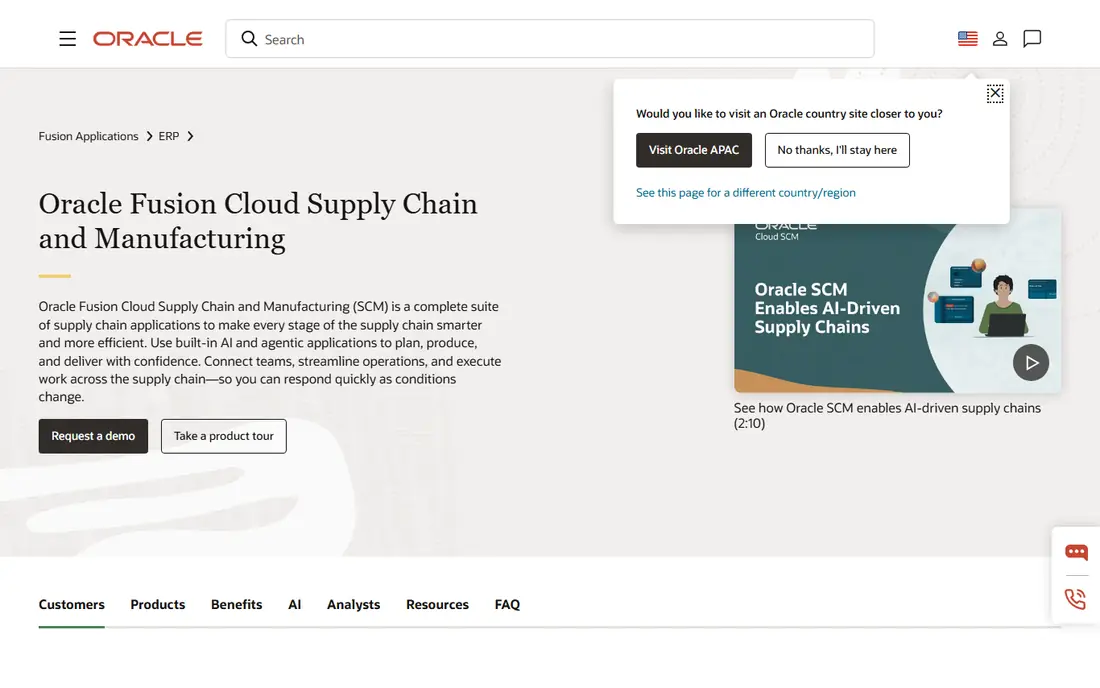
Oracle SCM Cloud suits large firms that already run Oracle systems and need supply chain work in the same place. Its planning, logistics and procurement tools share data across the business, which helps when orders, stock and suppliers all affect each other.
The catch is scale, since pricing and setup reflect an enterprise product, so smaller firms may find it more than they need. That trade off matters most if large firms that want supply chain inside oracle is your main use case, so weigh it against the strengths above before you decide. In practice, the best fit is the product whose limits you can live with, not the one with the longest list of features.
Before you commit, check the current plan page for the features that matter most to you, since entry plans often leave out items shown in marketing. Look at renewal terms, cancellation steps and any limits on users, seats or usage, and try a free plan or trial first when one is offered.
- Deep planning, logistics and procurement in one suite
- Strong for global operations
- Mature integrations
- Enterprise pricing and long setup
- Complex for small teams
SAP S/4HANA Supply Chain
Ideal for: Companies already running SAP
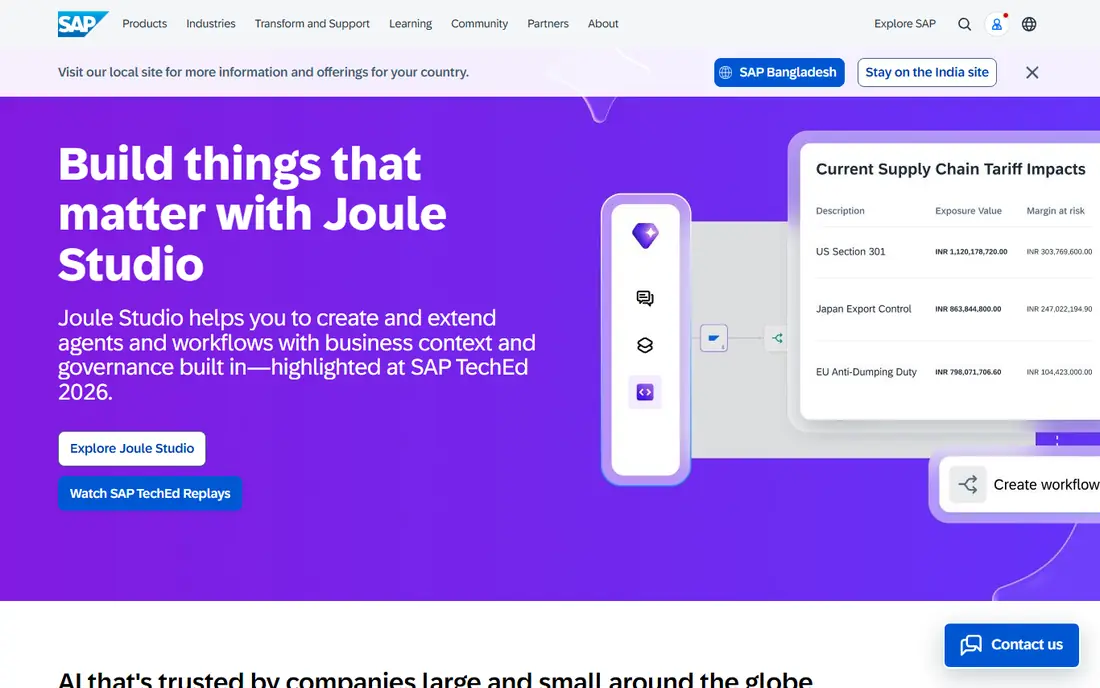
SAP S/4HANA Supply Chain fits companies whose finance and manufacturing already live in SAP. Keeping supply chain data in the same system as finance cuts manual handoffs and gives planners a single view of stock and demand.
Implementation is a serious project, and it needs skilled staff, so budget for time and training as well as licences. That trade off matters most if companies already running sap is your main use case, so weigh it against the strengths above before you decide. In practice, the best fit is the product whose limits you can live with, not the one with the longest list of features.
It also pays to check how the product handles your data, including what it stores, how long it keeps it and whether you can export it. A clear privacy policy and simple export options matter more over time than a long list of features you may never open.
- Tight link to SAP finance and manufacturing
- Strong planning and warehouse tools
- Global reach
- High cost and implementation effort
- Needs skilled staff
Blue Yonder
Ideal for: Firms focused on demand planning and logistics
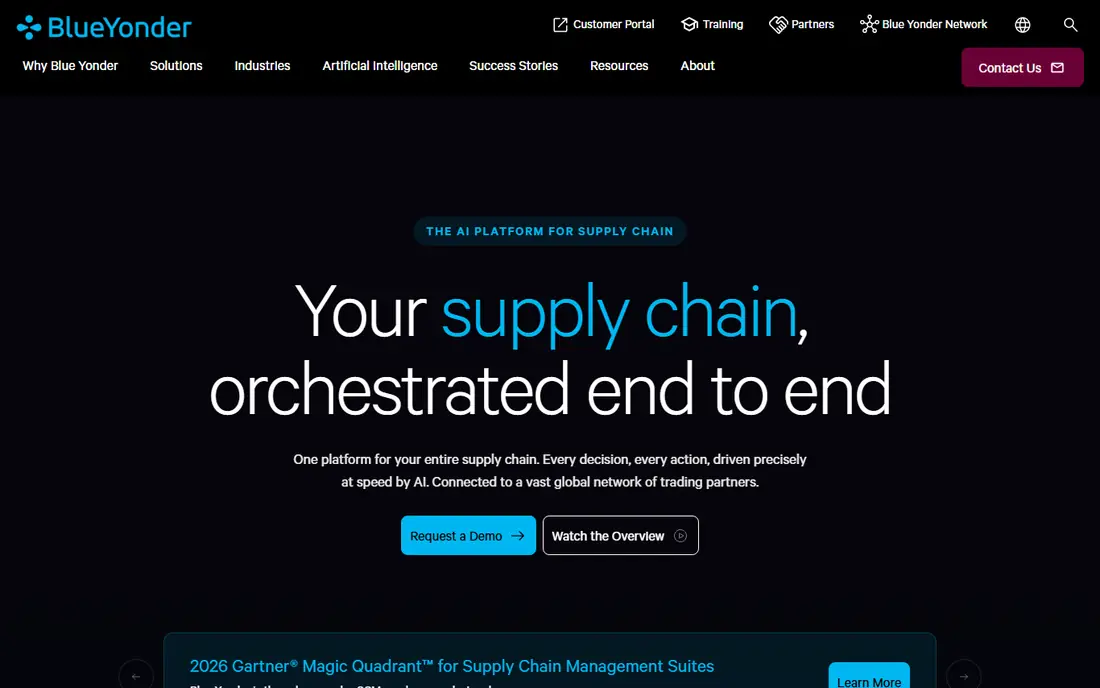
Blue Yonder is a strong pick when forecasting and warehouse work drive the buying decision. Its planning tools help firms match stock to demand more closely, which matters when margins are thin and stockouts are costly.
Pricing is enterprise level and setup takes time, so it suits firms with a clear planning problem rather than a general need. That trade off matters most if firms focused on demand planning and logistics is your main use case, so weigh it against the strengths above before you decide. In practice, the best fit is the product whose limits you can live with, not the one with the longest list of features.
Finally, think about support and fit with the tools you already use. A product that works well with your current setup and offers help when something breaks will save more time than a slightly cheaper option that leaves you on your own.
- Strong demand forecasting and warehouse management
- Used by large retailers and manufacturers
- Cloud based
- Enterprise pricing
- Setup can be lengthy
Kinaxis
Ideal for: Teams that need fast what if planning
Kinaxis stands out for teams that test scenarios before they commit to a plan. Planners can change a demand or supply assumption and see the effect across the network quickly, which speeds up decisions in a disruption.
It is priced for larger firms, and new planners should allow time to learn how its concurrent planning model works. That trade off matters most if teams that need fast what if planning is your main use case, so weigh it against the strengths above before you decide. In practice, the best fit is the product whose limits you can live with, not the one with the longest list of features.
Before you commit, check the current plan page for the features that matter most to you, since entry plans often leave out items shown in marketing. Look at renewal terms, cancellation steps and any limits on users, seats or usage, and try a free plan or trial first when one is offered.
- Concurrent planning with quick scenario testing
- Clear supply chain visibility
- Strong for complex networks
- Enterprise pricing
- Learning curve for new planners
Manhattan Associates
Ideal for: Retailers and distributors with complex warehouses
Manhattan Associates fits retailers and distributors whose warehouses and transport networks are the hard part. Its warehouse and transport tools handle high volume fulfilment well, which is why large operators keep choosing it.
This is an enterprise product with a major implementation, so it is not a quick buy for a small warehouse. That trade off matters most if retailers and distributors with complex warehouses is your main use case, so weigh it against the strengths above before you decide. In practice, the best fit is the product whose limits you can live with, not the one with the longest list of features.
It also pays to check how the product handles your data, including what it stores, how long it keeps it and whether you can export it. A clear privacy policy and simple export options matter more over time than a long list of features you may never open.
- Leading warehouse and transport management
- Strong order fulfilment
- Proven at scale
- Enterprise focus
- Implementation is a major project
Infor SCM
Ideal for: Manufacturers that want industry specific tools
Infor SCM suits manufacturers that want tools shaped around their industry rather than a generic suite. Its industry focus shows in workflows and templates that match how specific sectors plan and produce.
Pricing is quoted per deal, so you will need a conversation before you can compare costs fairly. That trade off matters most if manufacturers that want industry specific tools is your main use case, so weigh it against the strengths above before you decide. In practice, the best fit is the product whose limits you can live with, not the one with the longest list of features.
Finally, think about support and fit with the tools you already use. A product that works well with your current setup and offers help when something breaks will save more time than a slightly cheaper option that leaves you on your own.
- Industry focused supply chain tools
- Cloud deployment
- Good manufacturing depth
- Pricing is custom
- Smaller vendor ecosystem than SAP or Oracle
E2open
Ideal for: Firms managing a multi partner supply network
E2open fits firms whose supply chain spans many partners, suppliers and carriers. Its network approach gives each partner a shared view of orders and shipments, which cuts the email chasing that slows global trade.
A simple supply chain will not need this depth, and the price reflects a network product, so check fit before committing. That trade off matters most if firms managing a multi partner supply network is your main use case, so weigh it against the strengths above before you decide. In practice, the best fit is the product whose limits you can live with, not the one with the longest list of features.
Before you commit, check the current plan page for the features that matter most to you, since entry plans often leave out items shown in marketing. Look at renewal terms, cancellation steps and any limits on users, seats or usage, and try a free plan or trial first when one is offered.
- Network based visibility across partners
- Strong for global trade and logistics
- Collaborative planning
- Complex for firms with a simple supply chain
- Enterprise pricing
o9 Solutions
Ideal for: Companies that want AI assisted planning
o9 Solutions is worth a look for firms that want planning, finance and operations in one view. Its integrated planning model links demand, supply and finance, so a change in one area shows up in the others.
It is enterprise priced and younger than SAP or Oracle, so ask for customer references in your industry. That trade off matters most if companies that want ai assisted planning is your main use case, so weigh it against the strengths above before you decide. In practice, the best fit is the product whose limits you can live with, not the one with the longest list of features.
It also pays to check how the product handles your data, including what it stores, how long it keeps it and whether you can export it. A clear privacy policy and simple export options matter more over time than a long list of features you may never open.
- Integrated planning across demand, supply and finance
- Scenario tools
- Modern interface
- Enterprise pricing
- Newer than the largest rivals
How we picked these
We started from the topic itself, best supply chain management software, and kept only products that exist, work in October 2026 and truly fit it. For each one we checked its official website, its pricing and plan pages, its app store listing where one exists, and its privacy policy, then compared what each plan actually includes rather than trusting marketing summaries.
We also weighed public reviews and known drawbacks, and we left out products we could not verify or that only partly matched the topic. Prices change often, so treat the figures here as a starting point and confirm the current price on the official site before you buy.
What to check before you choose
Start by listing the two or three things you need most, then match those needs against the plan you would actually buy, not the top tier. Check device support, limits on users or usage, and whether your data can be exported if you later switch.
Try before you pay
Use a free plan or trial to test the daily workflow, not just the sign up page. If the trial feels awkward in the first few days, that feeling rarely improves after you pay, and a simpler rival may serve you better.
Watch the total cost
Add up per user fees, add ons and renewal prices, and check whether the price changes after an introductory period. A low starting price can grow quickly once seats, storage or premium features are added.
Frequently asked questions
What about top supply chain management software?
There is no single winner, because the right pick depends on your budget and how you will use it. The comparison table above shows the strongest fit for each use case, and the product write ups explain the honest limits of each one. Start with the option whose best for description matches your situation, then test it before you commit. This article also covers related searches such as top supply chain management software, so the same comparison applies when you search with those words.
Is there a free option among the best supply chain management software?
Yes, several options on this list offer a free plan or a free trial, as shown in the comparison table. Free plans usually limit features, users or usage, so check what is included before you rely on one. If a free plan covers your daily needs, there is no need to pay for more.
How should I choose between these best supply chain management software?
List the features you will use every week, then compare the plan you would actually buy across two or three finalists. Check pricing, device support, privacy terms and cancellation steps, and try a trial where one exists. The option that fits your workflow is usually better than the one with the most features.
Do prices for best supply chain management software change often?
Yes, vendors change prices and plan limits from time to time, and introductory offers come and go. That is why we show See website where a price could not be confirmed on the day of writing, and why you should confirm the current price on the official site before you pay.
Which option is easiest for a beginner?
The simplest pick is usually the one with a clear free plan, a short setup and good help pages, rather than the most powerful tool on the list. Read the write up for the option aimed at beginners, try it for a few days, and switch if the daily workflow feels harder than it should.