Best Supply Chain Planning Software in 2026: 8 Tools Compared

- 1
 Oracle SCM CloudLarge firms planning end to end supply chainsVisit
- 2
 SAP Integrated Business PlanningSAP users who need integrated planningVisit
- 3
 KinaxisTeams that need fast what if planningVisit
- 4
 Blue YonderRetail and manufacturing planning at scaleVisit
- 5
 o9 SolutionsFirms that want AI assisted planningVisit
- Oracle SCM Cloud is our first suggestion for most readers because it covers the core needs well and its pricing is easy to understand.
- Prices and free plans differ a lot, so check the official pricing page for SAP Integrated Business Planning and Kinaxis before you commit.
- The best choice depends on your budget, your team size, and how much setup time you can spare.
- Every option below has a clear drawback, and we name it, so you can weigh it against the strengths.
Quick comparison
| Product | Ideal for | Price from | Free version | |
|---|---|---|---|---|
| Oracle SCM Cloud | Large firms planning end to end supply chains | See website | No | Visit |
| SAP Integrated Business Planning | SAP users who need integrated planning | See website | No | Visit |
| Kinaxis | Teams that need fast what if planning | See website | No | Visit |
| Blue Yonder | Retail and manufacturing planning at scale | See website | No | Visit |
| o9 Solutions | Firms that want AI assisted planning | See website | No | Visit |
 Anaplan | Teams that want flexible connected planning | See website | Free trial | Visit |
 E2open | Multi enterprise supply chain networks | See website | No | Visit |
 Infor SCM | Manufacturers using Infor systems | See website | No | Visit |
The best supply chain planning software
We compared official feature pages, pricing, app store listings, privacy policies, and public reviews to build this list for best supply chain planning software. The options below cover different budgets and needs, and none of them is right for everyone.
Oracle SCM Cloud
Ideal for: Large firms planning end to end supply chains

For readers who want a solid starting point, this option covers the basics well without forcing a long setup. Oracle SCM Cloud is a good fit for large firms planning end to end supply chains. Oracle covers demand, supply, inventory, and logistics planning in one suite, which helps large teams keep plans in one place. Its official pages describe the core features in plain terms, and the pricing page makes it possible to compare plans before you sign up.
The honest catch is this: Setup can be long, and smaller firms may find the scope and cost hard to justify. That does not make Oracle SCM Cloud a poor choice, but it does mean you should test it with your own workflow before you rely on it. Start with the free plan or trial where one is offered, and check how it handles your most common task.
- Broad planning coverage
- Strong inventory and demand tools
- Large partner network
- Complex setup
- Pricing needs a sales quote
- Heavy for small teams
SAP Integrated Business Planning
Ideal for: SAP users who need integrated planning
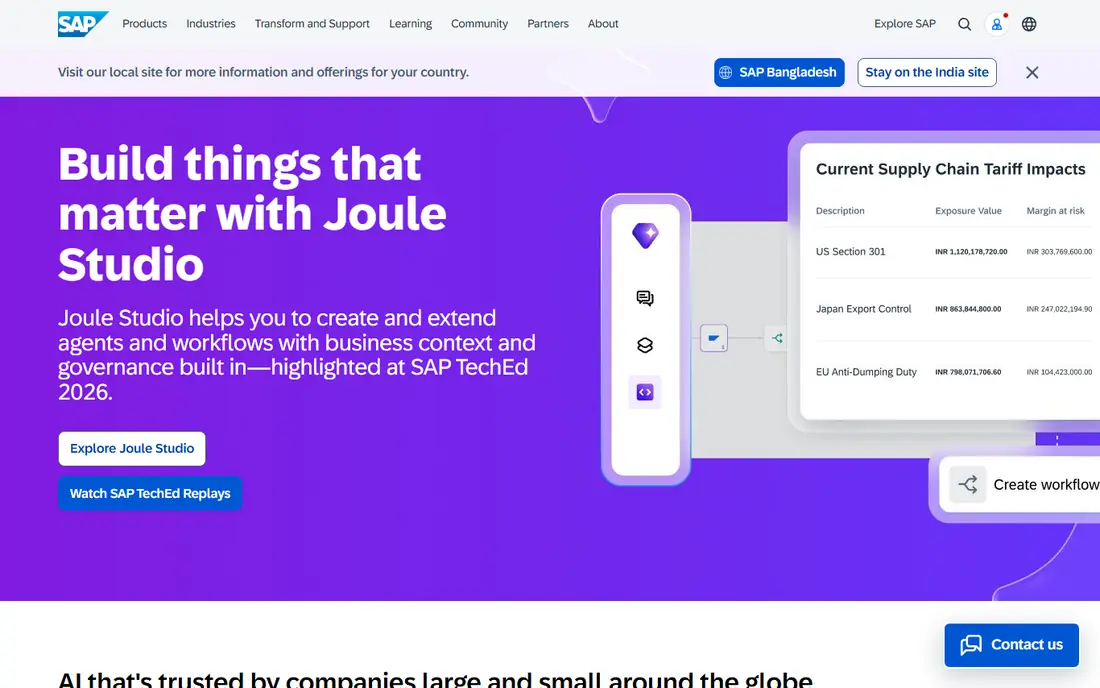
This one stands out for a particular kind of reader, and its strengths are easy to see once you compare the details. SAP Integrated Business Planning is a good fit for sap users who need integrated planning. SAP IBP links sales, operations, and finance planning, which helps firms that already run SAP avoid separate tools. Its official pages describe the core features in plain terms, and the pricing page makes it possible to compare plans before you sign up.
The honest catch is this: The learning curve is real, and firms without SAP experience may need outside help to get value. That does not make SAP Integrated Business Planning a poor choice, but it does mean you should test it with your own workflow before you rely on it. Start with the free plan or trial where one is offered, and check how it handles your most common task.
- Deep SAP integration
- Strong forecasting tools
- Used by many large firms
- Steep learning curve
- Implementation can be costly
- Needs skilled admins
Kinaxis
Ideal for: Teams that need fast what if planning
If your main need is clear and specific, this option deserves a close look for that reason alone. Kinaxis is a good fit for teams that need fast what if planning. Kinaxis is known for concurrent planning, so a change in demand can be tested against supply in the same model. Its official pages describe the core features in plain terms, and the pricing page makes it possible to compare plans before you sign up.
The honest catch is this: Its depth is also its cost, in both price and the time needed to model a network well. That does not make Kinaxis a poor choice, but it does mean you should test it with your own workflow before you rely on it. Start with the free plan or trial where one is offered, and check how it handles your most common task.
- Fast scenario planning
- Clear supply chain visibility
- Strong for complex networks
- Enterprise pricing
- Onboarding takes time
- Smaller firms may not need its depth
Blue Yonder
Ideal for: Retail and manufacturing planning at scale
This option is worth considering when you want a balance between price, features, and ease of use. Blue Yonder is a good fit for retail and manufacturing planning at scale. Blue Yonder has long experience in retail planning, which helps with seasonal demand and store replenishment. Its official pages describe the core features in plain terms, and the pricing page makes it possible to compare plans before you sign up.
The honest catch is this: Deployments can be complex, so buyers should confirm scope, timeline, and support before signing. That does not make Blue Yonder a poor choice, but it does mean you should test it with your own workflow before you rely on it. Start with the free plan or trial where one is offered, and check how it handles your most common task.
- Strong demand and replenishment planning
- Retail experience
- Broad suite
- Complex to deploy
- Pricing is quote based
- Support can vary by module
o9 Solutions
Ideal for: Firms that want AI assisted planning
For readers who want a solid starting point, this option covers the basics well without forcing a long setup. o9 Solutions is a good fit for firms that want ai assisted planning. o9 brings demand, supply, and financial planning into one platform, which helps leaders test trade offs in one view. Its official pages describe the core features in plain terms, and the pricing page makes it possible to compare plans before you sign up.
The honest catch is this: It is aimed at larger firms, and smaller teams may find the effort and price out of reach. That does not make o9 Solutions a poor choice, but it does mean you should test it with your own workflow before you rely on it. Start with the free plan or trial where one is offered, and check how it handles your most common task.
- Integrated business planning
- Scenario tools
- Modern interface
- Enterprise focus
- Implementation effort is high
- Not a small business tool
Anaplan
Ideal for: Teams that want flexible connected planning
This one stands out for a particular kind of reader, and its strengths are easy to see once you compare the details. Anaplan is a good fit for teams that want flexible connected planning. Anaplan lets teams build connected planning models that link finance, sales, and operations without rigid templates. Its official pages describe the core features in plain terms, and the pricing page makes it possible to compare plans before you sign up.
The honest catch is this: That flexibility needs modelling skill, and a poorly built model can become hard to maintain. That does not make Anaplan a poor choice, but it does mean you should test it with your own workflow before you rely on it. Start with the free plan or trial where one is offered, and check how it handles your most common task.
- Flexible modelling
- Connects finance and operations
- Good for custom plans
- Building models needs skill
- Pricing is quote based
- Can grow complex
E2open
Ideal for: Multi enterprise supply chain networks
If your main need is clear and specific, this option deserves a close look for that reason alone. E2open is a good fit for multi enterprise supply chain networks. E2open focuses on networks of partners, which helps firms that must coordinate with many suppliers and carriers. Its official pages describe the core features in plain terms, and the pricing page makes it possible to compare plans before you sign up.
The honest catch is this: Its broad range can be hard to scope, so buyers should define which modules they need first. That does not make E2open a poor choice, but it does mean you should test it with your own workflow before you rely on it. Start with the free plan or trial where one is offered, and check how it handles your most common task.
- Network wide visibility
- Partner collaboration
- Broad logistics coverage
- Complex product range
- Enterprise pricing
- Setup needs planning
Infor SCM
Ideal for: Manufacturers using Infor systems
This option is worth considering when you want a balance between price, features, and ease of use. Infor SCM is a good fit for manufacturers using infor systems. Infor SCM suits manufacturers that already use Infor, because planning and production data stay close together. Its official pages describe the core features in plain terms, and the pricing page makes it possible to compare plans before you sign up.
The honest catch is this: Outside that setting, its fit is weaker, and buyers should check integration costs carefully. That does not make Infor SCM a poor choice, but it does mean you should test it with your own workflow before you rely on it. Start with the free plan or trial where one is offered, and check how it handles your most common task.
- Manufacturing planning depth
- Industry specific tools
- ERP links
- Best with Infor ERP
- Quote based pricing
- Smaller scope outside manufacturing
How we picked these
We compared official feature pages, pricing pages, app store listings, privacy policies, and public reviews for each option. We looked for products that exist and work in October 2026, that truly fit the topic, and that publish enough detail for a reader to judge them fairly. We did not claim hands-on testing that did not happen, and we did not invent prices, awards, user counts, or ratings.
We also weighed ease of use, support, and the limits of each free plan or trial. A product that hides its pricing or its main limits scored lower in our notes, even when its headline features looked strong. Where a price could not be verified from the vendor, we wrote See website rather than guessing.
What to check before you choose supply chain software
Start with the job you need done most often, not with the longest feature list. For best supply chain planning software, a short list of must have features will narrow this field fast. Write down two tasks you will do every week, then check each shortlisted option against those tasks only.
Check price and the free plan
Compare the starting price with what is included, not just the headline number. Some plans charge per user, some charge per use, and some limit the features that matter most. A free plan is useful only if it covers your core task, so read its limits before you build a routine around it.
Check support, privacy, and exit options
Read the privacy policy and the support pages before you enter personal or business data. Check how you can export your data, cancel, or move to another service. Clear terms and a simple export path are a good sign, and vague terms are a reason to pause.
Try before you commit
Use a trial or free plan with a real task from your own work, not just a demo. Note how long setup takes, whether help is easy to reach, and whether the result meets your standard. If the trial feels awkward for your main task, a cheaper price will not fix that problem over time.
Frequently asked questions
What is supply chain planning software?
For most readers, Kinaxis is a sensible place to start, because its core features are clear and its pricing is easy to compare. Check the free plan or trial first, test it with your own main task, and compare its limits with the other options in this guide before you pay. That short test will tell you more than any feature list alone.
Is supply chain planning software worth it for a small business?
For most readers, Anaplan is a sensible place to start, because its core features are clear and its pricing is easy to compare. Check the free plan or trial first, test it with your own main task, and compare its limits with the other options in this guide before you pay. That short test will tell you more than any feature list alone.
What is the best demand planning software?
For most readers, o9 Solutions is a sensible place to start, because its core features are clear and its pricing is easy to compare. Check the free plan or trial first, test it with your own main task, and compare its limits with the other options in this guide before you pay. That short test will tell you more than any feature list alone.
How much does supply chain planning software cost?
For most readers, Blue Yonder is a sensible place to start, because its core features are clear and its pricing is easy to compare. Check the free plan or trial first, test it with your own main task, and compare its limits with the other options in this guide before you pay. That short test will tell you more than any feature list alone.
Can it work with our current systems?
For most readers, Oracle SCM Cloud is a sensible place to start, because its core features are clear and its pricing is easy to compare. Check the free plan or trial first, test it with your own main task, and compare its limits with the other options in this guide before you pay. That short test will tell you more than any feature list alone.