Best Sustainability Software in 2026: 8 Tools Compared

- Persefoni and Watershed are our top picks for carbon accounting, with strong tools for measuring emissions across a business.
- EcoVadis suits companies that need supplier sustainability ratings, while Greenly and Normative serve smaller teams well.
- Sustain.Life and IBM Envizi cover broader ESG reporting, and Salesforce Net Zero Cloud suits companies already using Salesforce.
- Pricing is usually custom or quote based, so request a demo and a written quote before committing.
- Start with the emissions and reporting rules that apply to you, since the right tool depends on your industry and regulators.
Quick comparison
| Product | Ideal for | Price from | Free version | |
|---|---|---|---|---|
 Persefoni | Carbon accounting for companies | See website | No | Visit |
 Watershed | Enterprise carbon management | See website | No | Visit |
 EcoVadis | Supplier sustainability ratings | See website | No | Visit |
 Greenly | Carbon tracking for small and midsize firms | See website | Free trial | Visit |
 Normative | Carbon accounting for growing firms | See website | No | Visit |
 Sustain.Life | ESG and carbon reporting for teams | See website | Free trial | Visit |
 IBM Envizi | ESG data management at scale | See website | No | Visit |
 Salesforce Net Zero Cloud | Carbon tracking inside Salesforce | See website | No | Visit |
The best sustainability software
Sustainability software helps companies measure emissions, manage ESG data and produce reports for regulators, customers and investors. The tools below differ in focus, from carbon accounting to supplier ratings, so match the tool to the reporting job you actually face.
Persefoni
Ideal for: Carbon accounting for companies
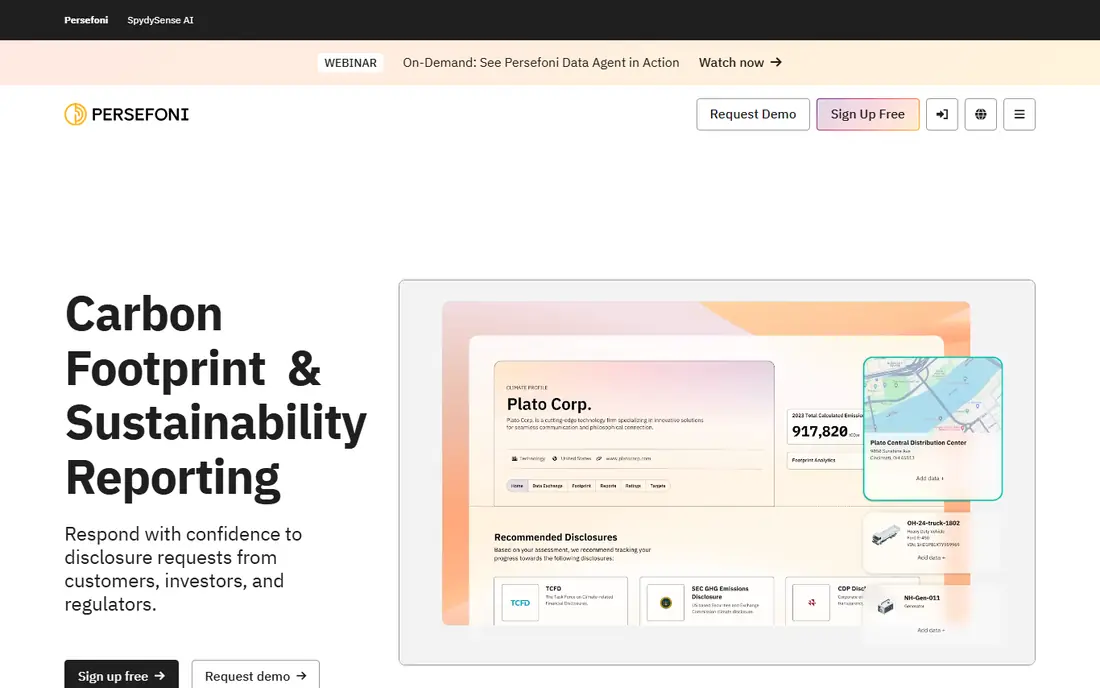
Persefoni is a carbon management platform built for companies that need credible, audit ready emissions data. It helps teams measure scope 1, 2 and 3 emissions, track progress against targets, and produce reports that investors and regulators can trust. That rigor is why it appears on so many enterprise shortlists.
Pricing is enterprise level and implementation takes time, since good carbon data needs clean inputs from across the business. For a large company facing disclosure rules, Persefoni is a strong choice. For a small team, Greenly or Normative may be a better first step.
- Strong carbon footprint measurement
- Audit ready reporting
- Good for investors and regulators
- Enterprise pricing
- Implementation takes time
Watershed
Ideal for: Enterprise carbon management
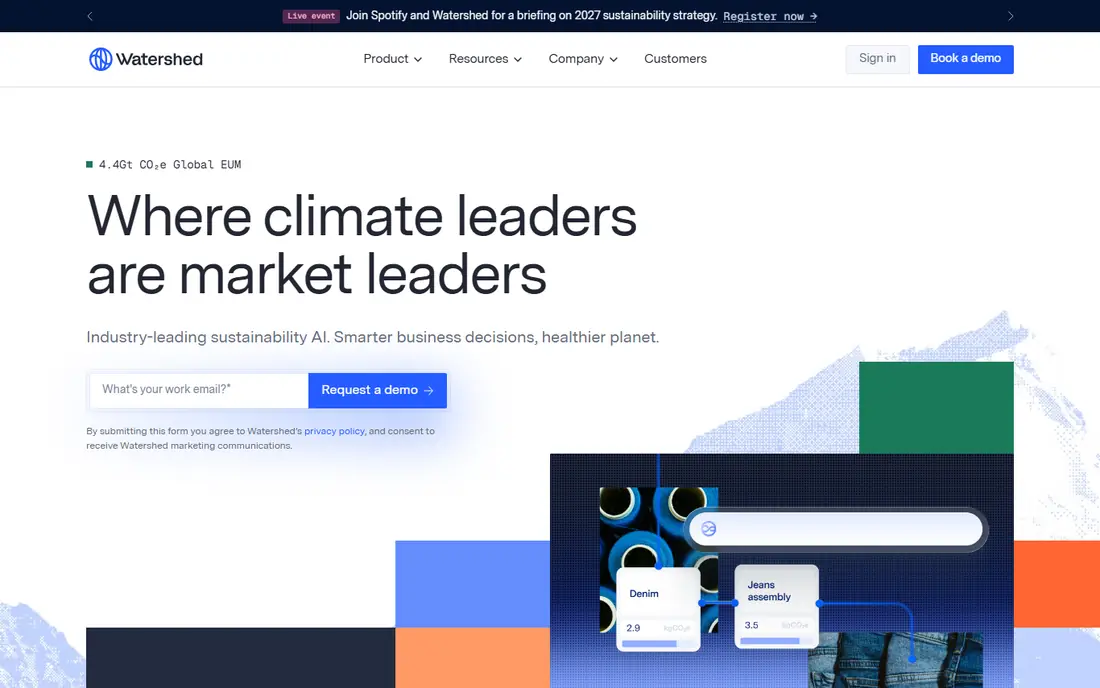
Watershed helps large companies measure their full carbon footprint, including supply chain emissions, and track progress toward reduction targets. Its tools cover data collection, emissions factors and reporting, with a focus on accuracy and auditability.
The platform is aimed at enterprises, so smaller companies may find it more than they need. Implementation also takes effort, since supply chain data is rarely tidy. For a large company with complex operations, Watershed is one of the strongest carbon tools available.
- Detailed emissions measurement
- Supply chain tools
- Target tracking
- Enterprise pricing
- Best for larger companies
EcoVadis
Ideal for: Supplier sustainability ratings

EcoVadis rates suppliers on sustainability practices, covering environment, labor, ethics and procurement. Buyers use those ratings to choose suppliers and track improvement, while suppliers use the assessment to show customers their progress. That two sided model is why EcoVadis ratings are widely recognized in procurement.
The assessment process takes time and effort, and pricing is quote based. For a company that buys from many suppliers, EcoVadis gives a consistent way to compare them. For a company focused only on its own emissions, a carbon tool such as Persefoni is a better fit.
- Widely recognized supplier ratings
- Broad industry coverage
- Helps procurement teams
- Ratings process takes time
- Pricing is quote based
Greenly
Ideal for: Carbon tracking for small and midsize firms
Greenly is designed for small and midsize companies that want carbon tracking without an enterprise project. It imports data from accounting and banking tools, estimates emissions, and gives guidance on reduction actions. That automation lowers the barrier for a team without a dedicated sustainability department.
Larger companies with complex supply chains may need deeper tools, and some features sit on higher plans. For a growing company starting its sustainability reporting, Greenly is an accessible and practical choice.
- Friendly for smaller teams
- Automated data imports
- Clear reduction guidance
- Less depth for complex enterprises
- Some features need higher plans
Normative
Ideal for: Carbon accounting for growing firms
Normative offers carbon accounting grounded in scientific emissions data, with tools for measuring a company footprint and engaging suppliers. Its reporting features help companies produce credible disclosures, and its methodology appeals to teams that want rigor without enterprise complexity.
Pricing is quote based, and good results need clean activity data from your systems. For a growing company that wants solid carbon accounting and plans to expand reporting over time, Normative is a strong middle ground between small business tools and enterprise platforms.
- Science based carbon accounting
- Supplier data tools
- Good reporting features
- Pricing is quote based
- Implementation needs clean data
Sustain.Life
Ideal for: ESG and carbon reporting for teams
Sustain.Life covers carbon measurement, ESG reporting and compliance in a single platform aimed at midsize companies. That breadth suits teams that need to report on several topics at once, rather than buying a separate tool for each one. The interface is friendly, and the trial lets you test the workflow.
For deep carbon accounting, a specialist such as Persefoni may go further. For a team that needs solid coverage across ESG topics with one vendor, Sustain.Life is a practical choice. Request a quote for the modules you need, since pricing varies.
- Covers carbon, ESG and compliance in one tool
- Friendly interface
- Good for midsize firms
- Less specialized for deep carbon work
- Pricing varies by module
IBM Envizi
Ideal for: ESG data management at scale
IBM Envizi helps large organizations capture ESG data across many sites, systems and suppliers, then report against common frameworks. Its strength is scale: energy, waste, water and emissions data from hundreds of locations can be gathered into one system with audit trails.
That scale brings complexity, and setup is an enterprise project. Small teams will find it heavy. For a large company with many sites and formal reporting duties, Envizi is a proven choice, especially if the company already uses IBM systems.
- Strong data capture across many sites
- ESG reporting frameworks
- IBM support and scale
- Enterprise pricing and setup
- Complexity for small teams
Salesforce Net Zero Cloud
Ideal for: Carbon tracking inside Salesforce
Salesforce Net Zero Cloud tracks carbon emissions and sustainability data inside the Salesforce platform, with dashboards for progress against targets and tools for supplier data. Companies already using Salesforce for sales or service get a natural fit, since data and users already live there.
If you do not use Salesforce, the value drops, since you would adopt a whole platform for one job. Pricing is quote based. For a Salesforce customer that needs carbon tracking, Net Zero Cloud is the most convenient choice in this list.
- Integrates with Salesforce data
- Good dashboards
- Supplier and emissions tracking
- Needs a Salesforce setup
- Pricing is quote based
How we picked these
We compared official feature pages, pricing pages and public reviews for each tool, focusing on software that is still maintained and works in October 2026. We favored tools with credible emissions methodology, reporting against recognized frameworks, and a track record with real companies. We left out tools that only produced marketing pages, tools with no clear methodology, and tools that had been discontinued. Prices are often quote based, so request a written quote before committing.
How to choose sustainability software
Start with your reporting duty. List the frameworks, regulators and customers that ask for your data, and check which tools support those formats natively. A tool that cannot produce the report you owe is a poor fit no matter how good its dashboards look.
Next, audit your data before buying. Gather your energy bills, travel records, procurement data and supplier lists, and test how easily each tool imports them. The best tool for you is often the one that handles your messiest data source with the least manual work.
Finally, plan for verification. Ask vendors how their emissions factors are sourced, whether reports are audit ready, and what support they offer during your first reporting cycle. A demo with your real data tells you more than a sales deck, so insist on one before signing.
A sustainability tool is only as credible as the data behind it, so ask vendors how their emissions factors are chosen and updated, and whether their methodology has been reviewed by an independent party. Request a sample report in the format your regulator or largest customer requires, and check whether the tool can restate past years when factors change, since restatement is common as methods improve. Also confirm who owns your data if you leave, and how you export a full history, because switching vendors should not mean losing years of emissions records.
Employee engagement is often the difference between a sustainability report that gets filed and one that changes behavior. Share results with staff in plain language, celebrate teams that cut waste or energy use, and invite suggestions for the next reduction target. Software can track the numbers, but people make the reductions, and a dashboard nobody outside the sustainability team sees will not change daily habits. A short quarterly update to the whole company keeps the effort visible and honest.
Frequently asked questions
What is the best sustainability software?
Persefoni and Watershed lead for carbon accounting, while EcoVadis leads for supplier ratings. The right choice depends on your main job, so a company focused on emissions should shortlist carbon tools, while a procurement team should start with EcoVadis.
How much does sustainability software cost?
Most enterprise tools use quote based pricing that depends on company size, sites and modules. Small business tools such as Greenly offer clearer starting prices and trials. Always request a written quote for your exact scope.
Do small businesses need sustainability software?
Not always. A small business with simple operations can start with a spreadsheet and utility data. Software becomes useful when reporting grows, suppliers ask for data, or manual tracking takes too much time.
What is the difference between carbon accounting and ESG software?
Carbon accounting measures greenhouse gas emissions, while ESG software covers broader environmental, social and governance data. Some tools, such as Sustain.Life and IBM Envizi, cover both, while others specialize in carbon alone.
Can sustainability software help with compliance?
Yes, good tools map your data to reporting frameworks and produce audit ready reports. They do not replace professional advice, so check your specific regulatory duties with a qualified advisor before filing.