Best Telematics Companies in 2026: 8 Companies Compared

- 1
 SamsaraAll-in-one fleet platformVisit
- 2
 GeotabData depth and integrationsVisit
- 3
 Verizon ConnectLarge fleets and complianceVisit
- 4
 GPS TrackitAffordable GPS trackingVisit
- 5
 Teletrac NavmanFleet and compliance toolsVisit
- Samsara is our pick for most fleets because it combines GPS tracking, safety cameras, and compliance in one platform.
- Geotab suits fleets that want deep data, integrations, and an open platform for custom reporting.
- Verizon Connect fits large fleets that need scale, support, and proven compliance tools.
-
Hardware, contracts, and camera options differ a lot, so compare total cost and install effort, not just the monthly fee.
-
Camera footage and driver coaching together reduce incidents more than tracking alone, so weigh safety tools heavily.
Quick comparison
| Product | Ideal for | Price from | Free version | |
|---|---|---|---|---|
| Samsara | All-in-one fleet platform | See website | Free trial | Visit |
| Geotab | Data depth and integrations | See website | Free trial | Visit |
| Verizon Connect | Large fleets and compliance | See website | Free trial | Visit |
| GPS Trackit | Affordable GPS tracking | See website | Free trial | Visit |
| Teletrac Navman | Fleet and compliance tools | See website | Free trial | Visit |
 Omnitracs | Long-haul trucking fleets | See website | Free trial | Visit |
 Fleet Complete | Mid-size fleet tracking | See website | Free trial | Visit |
 Azuga | Small fleets and safety rewards | See website | Free trial | Visit |
The best telematics companies
Telematics systems track vehicles, drivers, and cargo through GPS devices, sensors, and software. The best platforms turn that data into safer driving, lower fuel use, and simpler compliance. We compared official feature pages, pricing pages, and public reviews for the options below.
Samsara
Ideal for: All-in-one fleet platform
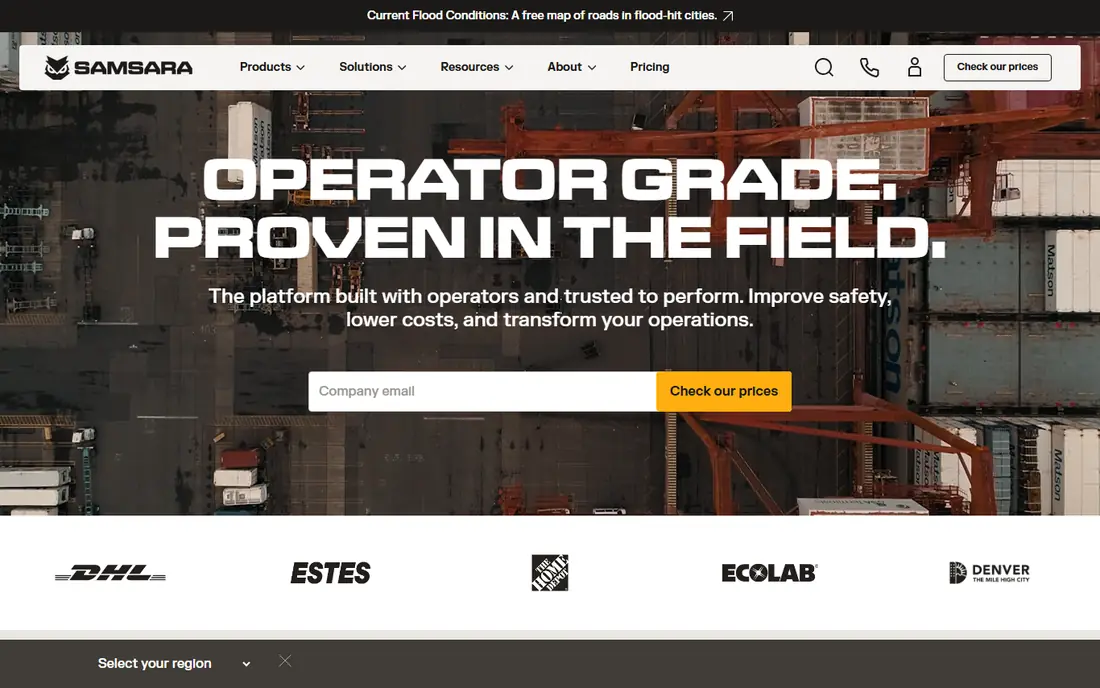
Samsara is the most complete telematics platform for many fleets. It combines live GPS tracking, AI dash cameras, driver safety scoring, electronic logging, and maintenance alerts in one dashboard. Safety managers get event alerts for harsh braking, speeding, and collisions, plus video context that helps with coaching and claims.
Pricing is premium, and hardware plus contract terms vary with fleet size and camera choices. Small fleets should request a full quote before judging cost. For a fleet that wants tracking, safety, and compliance without stitching tools together, Samsara is the strongest overall pick here.
- GPS, cameras, and compliance in one dashboard
- Strong safety alerts
- Modern interface
- Premium pricing
- Hardware and contract terms vary by fleet size
Geotab
Ideal for: Data depth and integrations
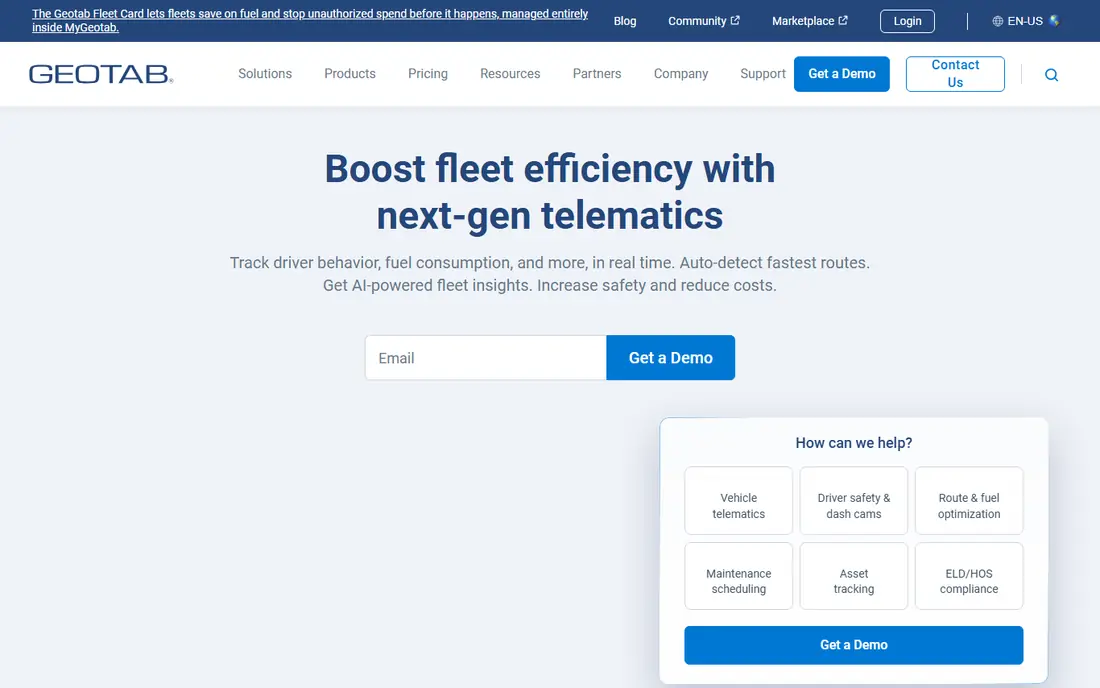
Geotab is known for data depth. Its platform tracks location, engine diagnostics, fuel use, and driver behavior, and its marketplace offers many integrations for maintenance, routing, and business software. Fleets that want custom reports or that connect telematics to other systems will find Geotab flexible.
That depth comes with a learning curve, especially for advanced reporting. Pricing varies by reseller and hardware, so quotes differ. For data-driven fleets and businesses with integration needs, Geotab is a powerful, open choice.
- Deep vehicle data and reporting
- Large integration marketplace
- Flexible hardware options
- Learning curve for advanced reporting
- Partner pricing varies
Verizon Connect
Ideal for: Large fleets and compliance
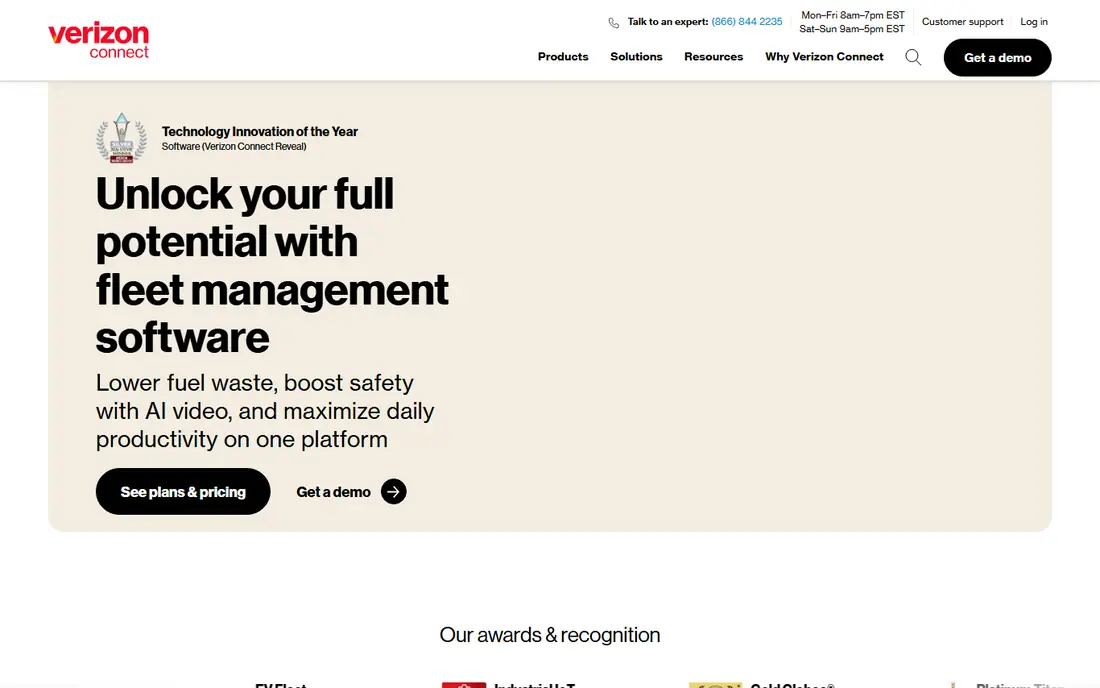
Verizon Connect serves large fleets with GPS tracking, routing, compliance, and electronic logging tools backed by a major carrier network. Its scale suits fleets with hundreds of vehicles, and its compliance features cover hours-of-service rules that long-haul operators must meet. Support resources are broad.
Enterprise pricing and contract terms can be heavy for small fleets, and some users find the interface dense. For a large fleet that values scale, reliability, and compliance depth, Verizon Connect remains a safe, proven pick.
- Proven at scale
- Compliance and ELD tools
- Broad support network
- Enterprise pricing and contracts
- Interface feels heavy to some users
GPS Trackit
Ideal for: Affordable GPS tracking
GPS Trackit focuses on affordable, straightforward GPS tracking for small and mid-size fleets. Dashboards show live vehicle locations, speed, and basic history without a steep learning curve. For businesses that mainly need to know where vehicles are and how they are used, that simplicity is enough.
Advanced safety cameras and deep analytics trail Samsara and Geotab. If you need AI video coaching or complex compliance workflows, look higher on this list. For budget-conscious fleets that want reliable tracking first, GPS Trackit is a practical choice.
- Lower-cost tracking
- Simple dashboards
- No-frills fleet visibility
- Fewer advanced safety camera options
- Reporting depth trails leaders
Teletrac Navman
Ideal for: Fleet and compliance tools
Teletrac Navman offers GPS tracking, compliance tools, and driver behavior insights for fleets across industries. Its platform covers location, routing, and hours-of-service needs, with safety reporting that helps managers coach drivers. As an established vendor, it suits fleets that want a proven partner.
Pricing varies by region and plan, so get a local quote. Product lines and interfaces also differ, which can confuse buyers comparing options. For fleets that want tracking plus compliance from one established vendor, Teletrac Navman deserves a quote.
- GPS tracking plus compliance
- Driver behavior insights
- Established fleet vendor
- Pricing varies by region and plan
- Interface varies by product line
Omnitracs
Ideal for: Long-haul trucking fleets
Omnitracs has a long history in trucking telematics, with electronic logging, fleet management, and compliance tools built for long-haul operations. Its platform handles hours-of-service rules, driver messaging, and vehicle data that trucking fleets rely on daily. That specialization is its strength.
General service fleets may find Omnitracs more trucking-centered than they need, and pricing is quote-based. For a trucking fleet that wants a vendor steeped in that world, Omnitracs is a credible, experienced option.
- Trucking-focused compliance
- ELD and fleet management
- Long industry history
- Trucking focus limits general fleet appeal
- Pricing is quote-based
Fleet Complete
Ideal for: Mid-size fleet tracking
Fleet Complete offers GPS tracking, fleet management, and asset tracking for mid-size fleets, with mobile-friendly dashboards for managers on the move. Asset tracking helps businesses that manage trailers, equipment, and vehicles together. The platform covers the core telematics needs without excessive complexity.
Its US presence is smaller than Samsara or Verizon Connect, and feature depth varies by plan. Fleets that want a mid-size, straightforward platform with asset tracking should include Fleet Complete in their shortlist and compare plan details carefully.
- GPS tracking and fleet tools
- Asset tracking options
- Mobile-friendly dashboards
- Smaller US presence than leaders
- Feature depth varies by plan
Azuga
Ideal for: Small fleets and safety rewards
Azuga targets small fleets with GPS tracking, driver safety scoring, and a rewards program that encourages safer driving. Managers get behavior insights and can recognize good drivers, which helps small teams build a safety culture without a large safety staff. Pricing is positioned for smaller fleets.
Scale and advanced analytics trail the enterprise leaders. Large fleets with complex compliance needs will want a deeper platform. For a small fleet that wants tracking plus a friendly safety program, Azuga is an appealing, affordable pick.
- Driver safety scoring and rewards
- Simple GPS tracking
- Accessible pricing
- Smaller scale than enterprise rivals
- Advanced analytics are limited
How we picked these
We compared official feature pages, pricing pages, and public reviews, and we kept only telematics companies serving US fleets in October 2026 with real GPS tracking and fleet software. We favored platforms with safety tools, compliance support, and clear hardware options. We left out consumer-only trackers and vendors with no fleet platform.
What to check before you choose a telematics company
Start with fleet size and use. A ten-vehicle service fleet needs different tools than a five-hundred-truck carrier, and paying for enterprise depth you will not use wastes money. List your must-haves: live tracking, cameras, ELD compliance, maintenance alerts, or integrations.
Next, compare total cost. Hardware, installation, monthly fees, camera add-ons, and contract length all affect the real price. Ask about install effort too, since plug-in devices differ from hardwired camera systems. Finally, run a pilot with a few vehicles. Driver acceptance, dashboard clarity, and support responsiveness show up fast in a pilot and matter as much as any feature list.
Driver privacy deserves attention during rollout. Explain what the system tracks, who sees the data, and how safety scores are used, since drivers accept cameras and scoring far more readily when the rules are transparent. A written policy that covers personal use, data retention, and coaching steps prevents disputes later and keeps the program focused on safety rather than surveillance.
Questions to ask before you commit
Ask vendors about data ownership and export if you switch providers, since years of fleet history lose value when locked in a proprietary system. Confirm export formats, historical data access, and costs for full data retrieval. Portability terms belong in the contract before installation, not during an exit dispute.
Ask how safety scoring models are built and whether drivers can dispute scores, since opaque scoring breeds resentment and legal risk. Confirm scoring factors, appeal processes, and how scores affect employment decisions. Transparent, fair scoring programs improve safety, while secret scoring programs damage trust.
Frequently asked questions
What is the best telematics company for small fleets?
Azuga and GPS Trackit suit small fleets well, with accessible pricing and simpler dashboards. Samsara also works for small fleets that want cameras and safety tools, but at premium pricing. Compare quotes for your vehicle count before deciding.
What is the best telematics company overall?
Samsara is our pick for most fleets because it combines GPS tracking, safety cameras, and compliance in one modern platform. Geotab suits data-heavy fleets, while Verizon Connect suits large fleets that need scale and proven compliance tools.
Do telematics companies require long contracts?
Contract terms vary. Some vendors offer flexible terms, while others tie pricing to multi-year agreements and hardware bundles. Ask about contract length, early termination, hardware ownership, and what happens to your data if you leave.
Can telematics improve driver safety?
Yes, when paired with coaching. Safety scoring, speed alerts, and camera events help managers spot risky patterns and coach drivers with real examples. The best results come from fair, transparent programs that reward good driving, not just punish mistakes.
What hardware does a telematics system need?
Most systems use a plug-in or hardwired GPS device in each vehicle, plus optional dash cameras and sensors. Plug-in devices install fast, while camera systems need more install time. Confirm install options and downtime with the vendor before rollout.
How long does telematics installation take per vehicle?
Plug-in GPS devices often install in under an hour per vehicle, while hardwired camera systems take longer and may need a professional installer. Ask vendors for install time, vehicle downtime, and whether installation is included in the quote. Pilot installs on a few vehicles reveal the real timeline before a full rollout.