Our first pick is Amwell, best for Payers and providers building care programs. Listed starting prices: VSee from $29 per month per provider. Chiron Health is better for reimbursement-focused video visits, and Teladoc Health is better for organizations seeking virtual care services. Prices, free plans and limits for all 6 tools follow.
Ainotely compared 6 telemedicine software for clinics. The goal is a practical shortlist: published prices, free plan facts, best-fit use cases and honest limits for every entry.
Key takeaways
Top of the list is Amwell, which targets Payers and providers building care programs.
One limit worth knowing about VSee: may need more setup guidance.
Zoom for Healthcare is the one to check for clinics already comfortable with Zoom.
Best for: Payers and providers building care programs
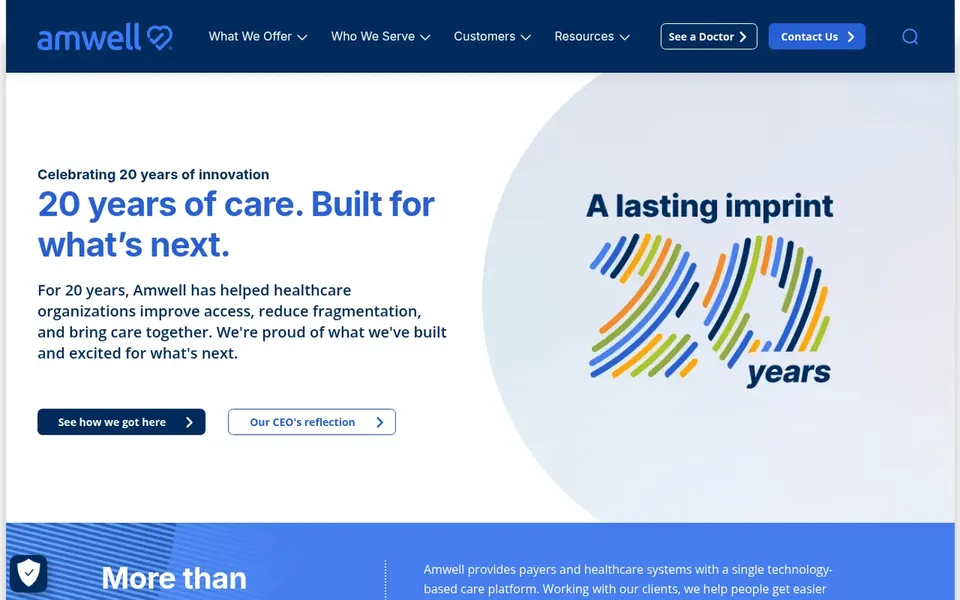
Amwell is designed for Payers and providers building care programs. Choose it when program coordination and partner alignment matter more than minimal setup.
More specifically, clinics connected to bigger networks or payer initiatives may see value in this model. Also, Amwell positions itself as a partner in care delivery, supporting payers and providers with a technology-based system intended to boost access across programs and partners. Check the vendor site for Amwell pricing; none is listed in this comparison. Trial and free access: Not stated.
Drawbacks to consider: May need more planning to adopt.
Choose Chiron Health for reimbursement-focused video visits. It suits practices where reimbursement clarity is a primary concern.
Choose Chiron Health when straightforward compliant video and reimbursement support are the central goals. This comparison lists no price for Chiron Health; ask the vendor. On free options: Not stated.
Downsides: Less emphasis on enterprise integration.
Best for: Organizations seeking virtual care services
Teladoc Health is aimed squarely at organizations seeking virtual care services. Clinics exploring partnerships or broader virtual care programs may find its range handy.
Where it falls short: May be more than small clinics need.
For everyday use, evaluate whether your priority is a light visit tool or a larger virtual care arrangement before choosing it. From a buyer's view, a small clinic wanting only straightforward video appointments may find this offering broader than necessary. This comparison lists no price for Teladoc Health; ask the vendor. On free options: Free trial.
Best for: HIPAA-compliant telemedicine deployments
VSee is a good fit for HIPAA-compliant telemedicine deployments. Clinics wanting a telemedicine system with a compliance-first orientation may find it relevant.
Watch-outs: May need more setup guidance.
VSee describes itself as a HIPAA-compliant telemedicine solution with deployments in demanding environments, including use aboard the International Space Station and by large organizations. Consider VSee when compliance and telemedicine depth outweigh minimal configuration. What you pay to start with VSee: $29 per month per provider. Free access exists with VSee.
Best for: Straightforward browser-based video visits
For straightforward browser-based video visits, Doxy.me is a natural candidate. Clinics needing extensive EHR integration or complicated virtual care programs may find Doxy.me less suited to advanced workflows.
Its short sign-up process and patient-friendly access make it a practical fit for small and midsize clinics that want to start virtual visits without a heavy technical rollout. Pricing for Doxy.me is not stated here, so ask the vendor for current figures. Free plan details: Not stated.
Zoom for Healthcare makes the most sense for clinics already comfortable with Zoom. Clinics already using Zoom for meetings may appreciate the familiar interface and the capacity to extend it to patient visits.
Check the vendor site for Zoom for Healthcare pricing; none is listed in this comparison. Trial and free access: Not stated.
Honest limits: Needs configuration for healthcare use.
Confirm the entry price on the vendor page. For Amwell, Chiron Health, Teladoc Health and others that means a quote rather than a fixed price.
Look at the free plan from VSee closely: its caps decide whether it is usable for real work.
Use real work to test the free trial from Teladoc Health, rather than a demo project.
Before choosing Amwell, weigh its main limit: orientation toward bigger organizations.
The entry price of Amwell is only the starting point; model the full cost with seats and extras.
Involve the people who will use Teladoc Health daily; a short pilot beats a long feature checklist.
How we picked
Selection started from tools commonly considered for telemedicine software for clinics, then narrowed to 6 that have clear pricing information or a clear quote process. Seat minimums, billing terms and add-ons can move the real cost, so the starting prices here are a guide and not a quote. Order on the page follows fit for the typical buyer first, then price transparency and free access. Your own requirements should decide the final pick.
Every price and plan detail on this page comes from the vendors’ own websites. We did not run hands-on tests unless the text says so, and we do not publish star ratings or review scores. See how we score and our disclosure.
Keep your shortlist in one place
Paste prices, trial dates and notes from this guide into Ainotely, our AI note app. It files them into a topic and pulls out tasks like “cancel trial by Friday”. Free 7-day trial, no card needed.
How can clinics compare telemedicine vendors fairly?
Start with your must-haves, like compliance, integration and patient access, then check each vendor's documented features and limits. Request demonstrations and confirm details straight with vendors.
What is the cheapest option for telemedicine software for clinics in this list?
On published monthly entry prices, VSee is the lowest here at $29 per month per provider. Entry price is only part of the cost, because seats, add-ons and billing terms can change the total. All 6 picks in this Telemedicine software for clinics comparison show their pricing, free plan details and main limits on the cards above.
Can I try these tools before paying?
Often, yes. VSee has a free plan and Teladoc Health offers a free trial. Use your own data and a real task during the test, and check what the free tier or trial limits before you rely on it.
Which options for telemedicine software for clinics have a free plan?
VSee is the only tool in this list with a free plan. Free plans usually cap users, projects or features, so check the limits on the vendor page. One other tool offers a trial instead.
Do these tools publish their prices?
Not all of them. Amwell, Chiron Health, Teladoc Health and others publish no starting price, so expect a quote request for those. The rest, VSee included, show a starting price, though seats and billing terms still change the final cost.