Best timekeeping software for small business in 2026: 8 options compared

- 1
 ClockifyFree time tracking for teamsVisit
- 2
 Toggl TrackSimple time tracking and reportsVisit
- 3
 QuickBooks TimeTime tracking inside QuickBooksVisit
- 4
 HomebaseScheduling plus time clocksVisit
- 5
 DeputyScheduling and time trackingVisit
- Our pick for most people is Clockify, because it covers the core needs of this topic with a clear free or low-cost starting point.
- Toggl Track is a strong second choice when you want a different balance of price, features or support.
- Prices and free plans change often, so check the official site for the plan you actually need before you commit.
- The best option depends on your budget, your team size or household, and how much setup time you are willing to spend.
- Shortlist two or three names from this list, try the free option or trial where one exists, and only then pay for a longer plan.
Quick comparison
| Product | Ideal for | Price from | Free version | |
|---|---|---|---|---|
| Clockify | Free time tracking for teams | Free | Yes | Visit |
| Toggl Track | Simple time tracking and reports | See website | Yes | Visit |
| QuickBooks Time | Time tracking inside QuickBooks | See website | Free trial | Visit |
| Homebase | Scheduling plus time clocks | See website | Yes | Visit |
| Deputy | Scheduling and time tracking | See website | Free trial | Visit |
 Hubstaff | Time tracking with activity data | See website | Free trial | Visit |
 TimeCamp | Automatic time tracking | See website | Yes | Visit |
 Harvest | Time tracking and invoicing | See website | Free trial | Visit |
The best timekeeping software for small business
We compared official feature pages, pricing pages, app store listings, privacy policies and public reviews to build this list of best timekeeping software for small business. Every option below is offered in October 2026 as far as its official site shows, and each one fits the topic directly. Use the table above to narrow the field, then read the write-ups for the trade-offs that matter.
Clockify
Ideal for: Free time tracking for teams
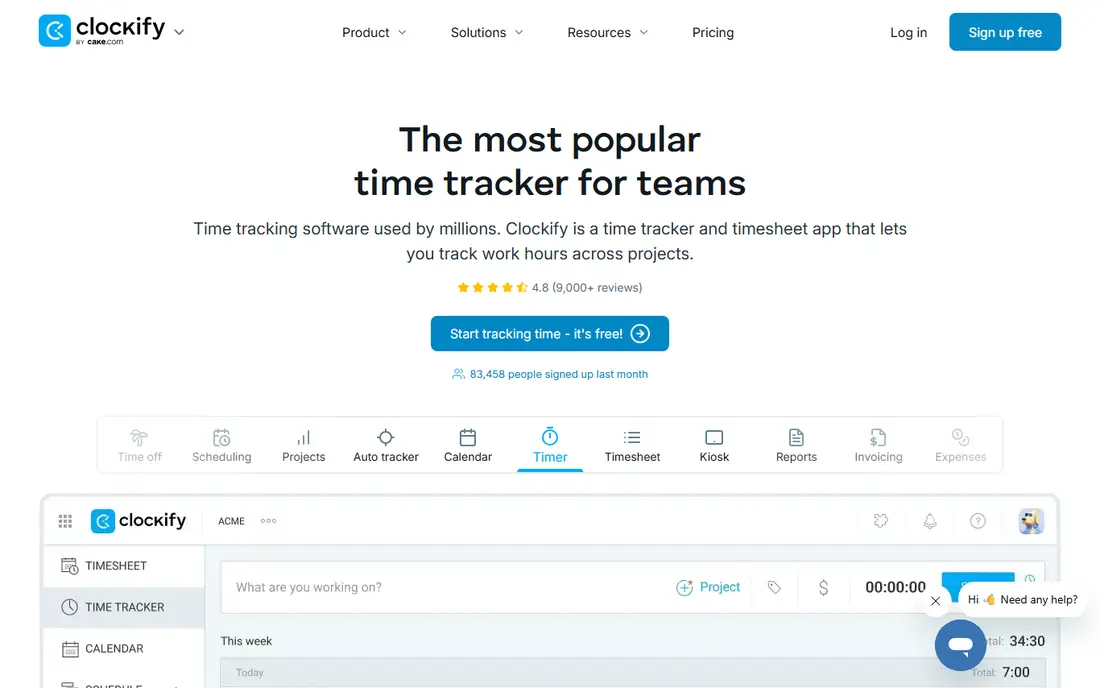
For readers who want free time tracking for teams, Clockify is a strong place to start. Clockify is a free time tracker with timers, timesheets and reports for teams. The strengths to weigh are free tier for unlimited users; timers and reports; simple setup The honest catch is worth stating plainly. The limits we noted are advanced payroll and scheduling need paid plans; interface is basic Check the current price and plan limits on the official site before you pay. If Clockify matches your budget and your main use case, it is a sensible choice. If one of its limits touches the feature you need most, move to the next option instead.
- Free tier for unlimited users
- Timers and reports
- Simple setup
- Advanced payroll and scheduling need paid plans
- Interface is basic
Toggl Track
Ideal for: Simple time tracking and reports
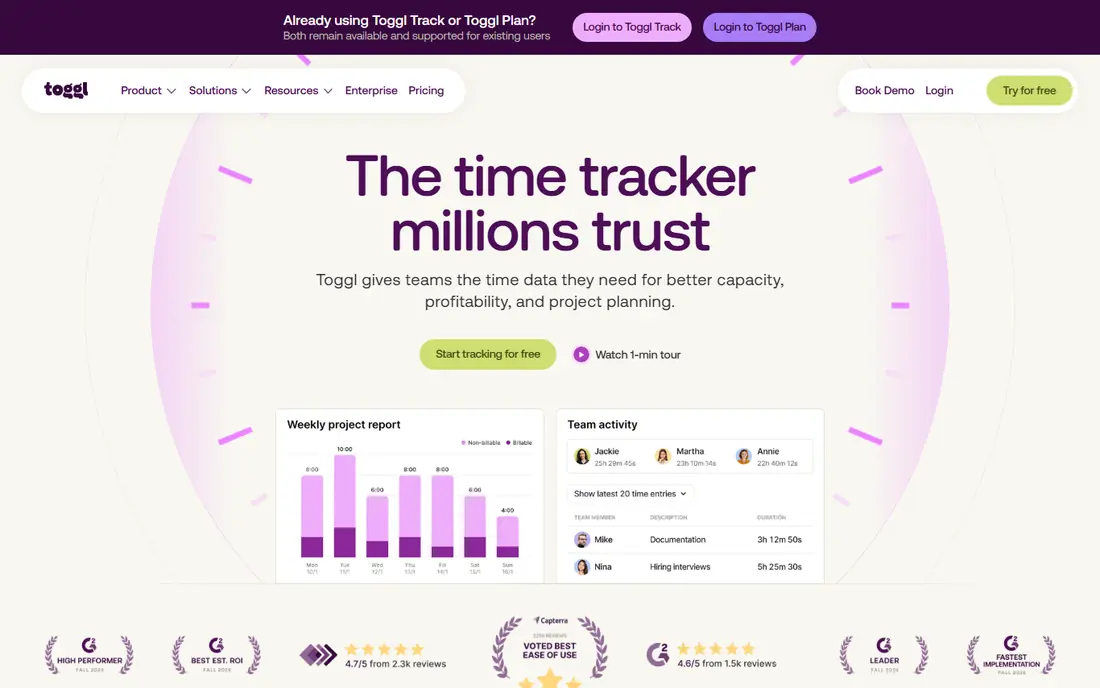
Toggl Track suits readers who need simple time tracking and reports, and it earns its place here on practical grounds. Toggl Track is a simple time tracking app with timers, projects and reports. The strengths to weigh are simple timers; strong reports; integrations The honest catch is worth stating plainly. The limits we noted are free plan limits features; payroll is not built in Check the current price and plan limits on the official site before you pay. If Toggl Track matches your budget and your main use case, it is a sensible choice. If one of its limits touches the feature you need most, move to the next option instead.
- Simple timers
- Strong reports
- Integrations
- Free plan limits features
- Payroll is not built in
QuickBooks Time
Ideal for: Time tracking inside QuickBooks
If time tracking inside quickbooks is the priority, QuickBooks Time deserves a close look. QuickBooks Time, formerly TSheets, tracks employee time with GPS and QuickBooks integration. The strengths to weigh are gps time tracking; quickbooks payroll link; scheduling The honest catch is worth stating plainly. The limits we noted are paid after trial; best value inside quickbooks Check the current price and plan limits on the official site before you pay. If QuickBooks Time matches your budget and your main use case, it is a sensible choice. If one of its limits touches the feature you need most, move to the next option instead.
- GPS time tracking
- QuickBooks payroll link
- Scheduling
- Paid after trial
- Best value inside QuickBooks
Homebase
Ideal for: Scheduling plus time clocks
Homebase is worth shortlisting when scheduling plus time clocks matters most to you. Homebase offers scheduling, time clocks, hiring and team messaging for hourly teams. The strengths to weigh are scheduling, time clocks and hiring in one place; free tier The honest catch is worth stating plainly. The limits we noted are payroll is an add-on; advanced reporting needs paid plans Check the current price and plan limits on the official site before you pay. If Homebase matches your budget and your main use case, it is a sensible choice. If one of its limits touches the feature you need most, move to the next option instead.
- Scheduling, time clocks and hiring in one place
- Free tier
- Payroll is an add-on
- Advanced reporting needs paid plans
Deputy
Ideal for: Scheduling and time tracking
Readers focused on scheduling and time tracking will find Deputy easy to compare with the rest of this list. Deputy combines staff scheduling, time tracking and labour cost management. The strengths to weigh are scheduling with time tracking; labour cost controls; mobile app The honest catch is worth stating plainly. The limits we noted are pricing is per user; setup takes time for larger teams Check the current price and plan limits on the official site before you pay. If Deputy matches your budget and your main use case, it is a sensible choice. If one of its limits touches the feature you need most, move to the next option instead.
- Scheduling with time tracking
- Labour cost controls
- Mobile app
- Pricing is per user
- Setup takes time for larger teams
Hubstaff
Ideal for: Time tracking with activity data
Among the options here, Hubstaff is the one to check first for time tracking with activity data. Hubstaff tracks time, activity and location for remote and field teams, with payroll options. The strengths to weigh are time tracking with screenshots option; payroll; gps The honest catch is worth stating plainly. The limits we noted are activity monitoring raises privacy questions; needs clear team policies Check the current price and plan limits on the official site before you pay. If Hubstaff matches your budget and your main use case, it is a sensible choice. If one of its limits touches the feature you need most, move to the next option instead.
- Time tracking with screenshots option
- Payroll
- GPS
- Activity monitoring raises privacy questions
- Needs clear team policies
TimeCamp
Ideal for: Automatic time tracking
For automatic time tracking, TimeCamp offers a clear and practical route. TimeCamp tracks time automatically and manually, with invoicing and reports. The strengths to weigh are automatic tracking; invoicing; free tier The honest catch is worth stating plainly. The limits we noted are interface is less polished; advanced features are paid Check the current price and plan limits on the official site before you pay. If TimeCamp matches your budget and your main use case, it is a sensible choice. If one of its limits touches the feature you need most, move to the next option instead.
- Automatic tracking
- Invoicing
- Free tier
- Interface is less polished
- Advanced features are paid
Harvest
Ideal for: Time tracking and invoicing
Harvest rounds out the list for readers who need time tracking and invoicing, and it does so without fuss. Harvest tracks time by project and client and turns tracked time into invoices. The strengths to weigh are clean timers; invoicing from tracked time; reports The honest catch is worth stating plainly. The limits we noted are free plan limits seats and projects; scheduling is basic Check the current price and plan limits on the official site before you pay. If Harvest matches your budget and your main use case, it is a sensible choice. If one of its limits touches the feature you need most, move to the next option instead.
- Clean timers
- Invoicing from tracked time
- Reports
- Free plan limits seats and projects
- Scheduling is basic
How we picked these
We started from the main topic, best timekeeping software for small business, and kept only products that fit it directly and are offered in October 2026. We compared official feature pages and pricing pages, app store listings where the product is an app, privacy and terms pages, and public reviews. We did not claim hands-on testing that did not happen, and we did not add products that only touch the topic in passing. Where a price could not be verified from the vendor site, we wrote See website rather than guessing a number. We also looked for a mix of well-known leaders and smaller options. A product stayed on the list only if its official homepage loaded and belonged to that product, and if its strengths and limits could be stated in plain terms.
What to check before you pick timekeeping software
Start by writing down the one job you need this product to do, then check that job against the free plan or the cheapest paid plan, not against the most expensive plan on the page. Many buyers pay for features they never open, while the plan they actually need is one step lower. Read the limits on seats, storage, exports, support hours and cancellation, because those limits decide whether a product stays useful after the first month. Next, compare two or three finalists side by side on the same task. Try the sign-up flow, the main screen and the export or sharing step, and note how long each step takes. Check the privacy policy for what data is collected and whether you can delete your account and your data. For services that handle money, health details, location or identity documents, that check matters more than a small price difference.
Frequently asked questions
What is the best option for best timekeeping software for small business?
For most readers, Clockify is the best starting point, because it covers the core needs of this topic in a clear way. Toggl Track is a good second choice if you want different pricing or features. Shortlist two options and compare them on the feature you will use most before you pay.
Is there a free option for best timekeeping software for small business?
Yes, several options on this list offer a free plan, a free tier or a free trial, but the limits differ a lot. Check what the free plan includes and whether it asks for a card up front. If it covers your main task, there is no need to pay for a higher plan at first.
How much do these options cost?
Costs range from free to paid monthly or annual plans, and some business options are priced by quote. We marked prices we could not verify as See website, so check the official pricing page. Compare the yearly total, including add-ons and renewal prices, rather than the headline monthly figure alone.
How do I choose between the options on this list?
Start with your main use case, your budget and how many people will use the product. Then check the free plan or trial, the limits that affect your use case, and the privacy and cancellation terms. Pick the option with the fewest deal-breaking limits for your situation.
Are these options still available in October 2026?
Yes, each option on this list was checked against its official homepage and is offered in October 2026 as far as its official site shows. Features and prices can still change, so confirm the plan details on the official site before you sign up.