Best Tools for API Threat Detection in 2026: 7 Tools Compared

- 1
 Salt SecurityBehavior-based API protectionVisit
- 2
 Traceable AIAPI discovery and risk scoringVisit
- 3
 WallarmDetection plus blocking in one platformVisit
- 4
 CequenceBot and API abuse defenseVisit
- 5
 Imperva API SecurityTeams already using ImpervaVisit
- Discovery comes first, since shadow and forgotten APIs are a common entry point in breaches.
- Salt Security, Traceable AI and Cequence lead on behavior-based detection rather than simple signature matching.
- Wallarm and Imperva suit teams that want detection plus blocking in one platform.
- Most of these tools are enterprise priced, so expect a sales conversation rather than a simple signup.
Quick comparison
| Product | Ideal for | Price from | Free version | |
|---|---|---|---|---|
| Salt Security | Behavior-based API protection | See website | No | Visit |
| Traceable AI | API discovery and risk scoring | See website | No | Visit |
| Wallarm | Detection plus blocking in one platform | See website | Free trial | Visit |
| Cequence | Bot and API abuse defense | See website | No | Visit |
| Imperva API Security | Teams already using Imperva | See website | No | Visit |
 Akamai API Security | Large-scale API estates | See website | No | Visit |
 42Crunch | API security testing and posture | See website | Free trial | Visit |
The best tools for API threat detection
APIs now carry most of the traffic between apps, and attackers know it. The tools below watch for broken access controls, leaked data, bot abuse and unusual patterns, and several can block bad requests in real time. We focused on tools that discover shadow APIs as well as guard known ones, since an API you do not know about cannot be protected.
Salt Security
Ideal for: Behavior-based API protection
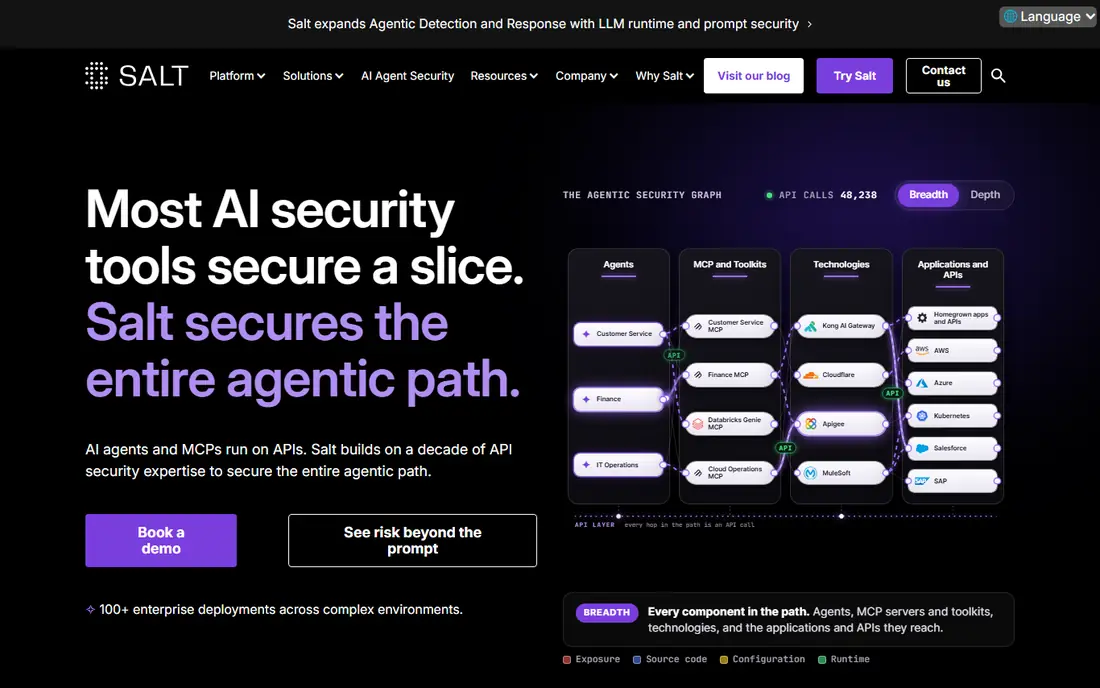
Salt Security is one of the best-known names in API protection. It discovers APIs, builds a baseline of normal behavior for each one, and flags attacks that use valid credentials but abnormal patterns, such as scraping or broken access control abuse. It can block malicious traffic inline once tuned.
The main costs are price and patience. Salt is enterprise priced, and its behavior models need real traffic history before they become accurate. Teams that can invest in the rollout get strong coverage for business-logic attacks that signature tools miss.
For readers focused on behavior-based API protection, Salt Security is worth a trial before deciding, since the free tier or trial shows its real feel fast. Check the current plan details on the vendor site, since prices and limits change, and confirm that the version you need works on your devices.
- Discovers APIs and maps behavior
- Detects business-logic abuse
- Blocks in real time
- Enterprise pricing
- Setup needs API traffic history to learn baselines
Traceable AI
Ideal for: API discovery and risk scoring
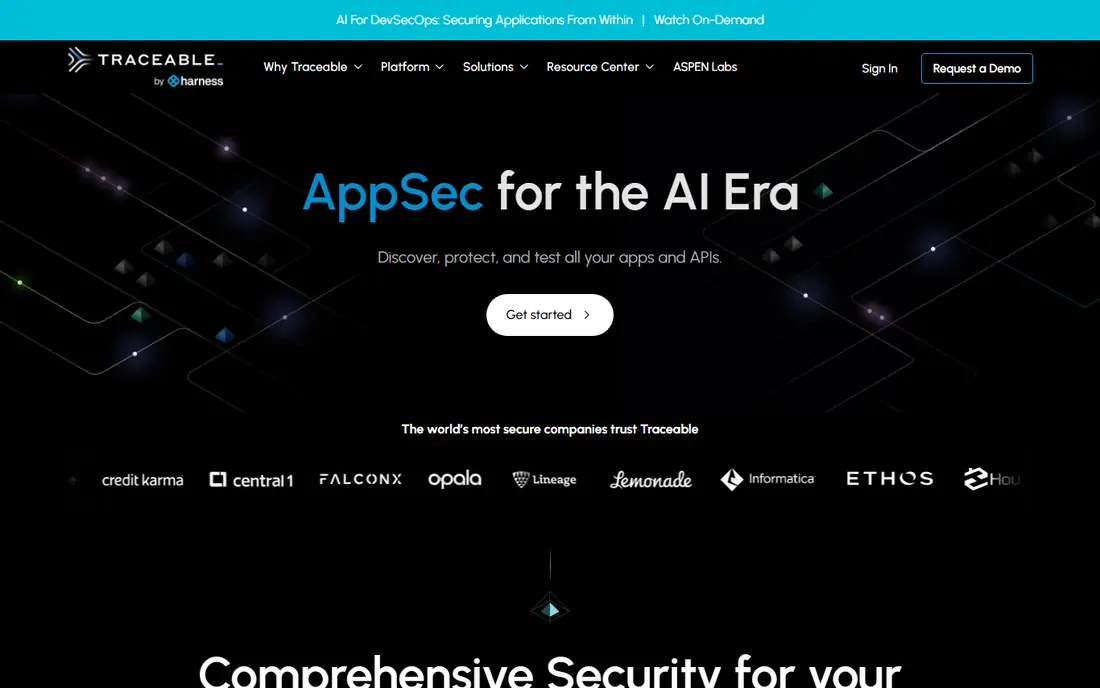
Traceable AI combines discovery, risk scoring and sensitive-data tracking in one platform. It maps your API inventory, scores endpoints by risk, and watches for data exposure and abuse patterns. Its gateway integrations let teams enforce findings without rebuilding their stack.
It is built for enterprise environments, so smaller teams may find the platform and pricing heavier than they need. It also works best when paired with a team that can act on its risk scores. For organizations with large API estates, the inventory view alone is valuable.
We would shortlist Traceable AI for aPI discovery and risk scoring, and compare it directly with the two options nearest it in price before paying. Check the current plan details on the vendor site, since prices and limits change, and confirm that the version you need works on your devices.
- Discovers and inventories APIs
- Risk scoring and sensitive-data tracking
- Integrates with gateways
- Enterprise focus
- Smaller teams may find it heavy
Wallarm
Ideal for: Detection plus blocking in one platform
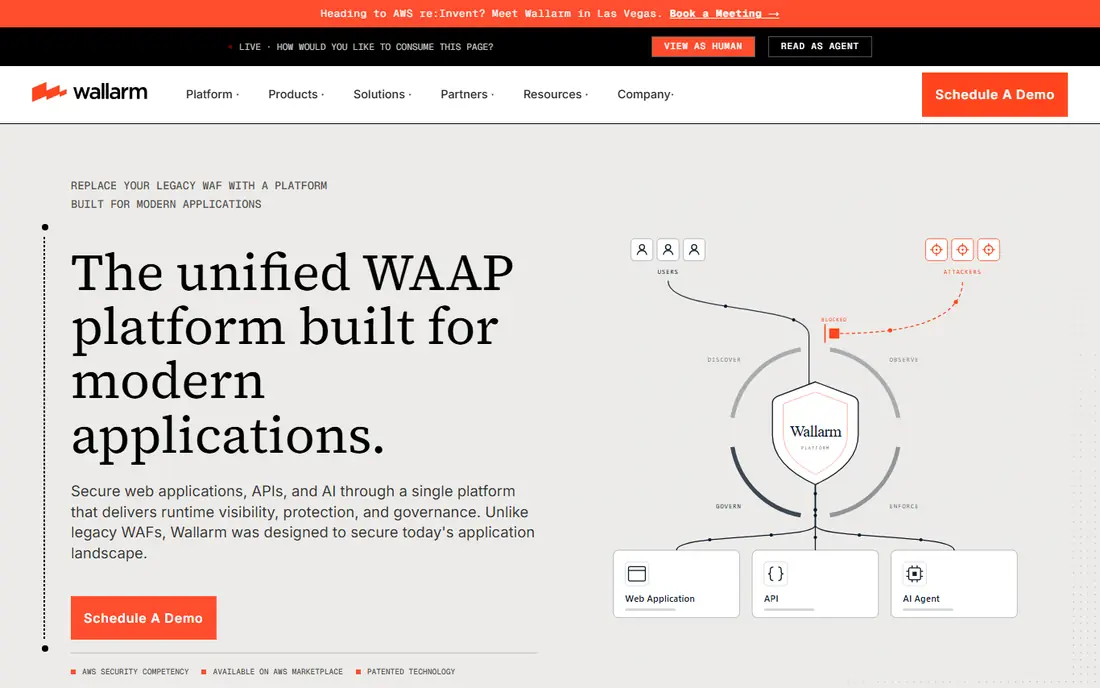
Wallarm covers the full loop from discovery to blocking, with both cloud and self-hosted deployment options. Its attack analytics give security teams detail on what was blocked and why, which helps when developers ask whether a block was correct. The platform also handles web apps alongside APIs.
Blocking in production needs tuning, and an aggressive rule can interrupt real users, so plan a monitor-only phase first. Pricing varies by deployment model, so get a quote for your traffic level. Teams that want one platform for detection and enforcement will like the completeness.
If detection plus blocking in one platform is your main need, Wallarm deserves a place on a shortlist, provided you test the catch described above first. Check the current plan details on the vendor site, since prices and limits change, and confirm that the version you need works on your devices.
- API discovery and attack blocking
- Cloud and self-hosted options
- Detailed attack analytics
- Tuning needed to avoid false blocks
- Pricing varies by deployment
Cequence
Ideal for: Bot and API abuse defense
Cequence focuses on the automated side of API abuse: bots, scraping and credential attacks that hit APIs at machine speed. Its behavioral detection separates real users from automated traffic without relying only on signatures, and it builds an inventory of APIs and their risk as it watches traffic.
It shines most for services with heavy bot traffic, such as retail, travel and media APIs. Smaller internal API estates may get less value from its bot focus. For public-facing APIs under constant automated pressure, it is a strong specialist pick.
Our view is that Cequence earns its place here for bot and API abuse defense, even with the limits noted above. Check the current plan details on the vendor site, since prices and limits change, and confirm that the version you need works on your devices.
- Behavioral bot detection
- API inventory and risk
- Blocks automated abuse
- Strongest for bot-heavy traffic
- Less suited to small API estates
Imperva API Security
Ideal for: Teams already using Imperva
Imperva API Security discovers APIs and applies a positive security model, meaning it learns what valid traffic looks like and challenges the rest. Teams already using Imperva's web firewall get a natural extension, with shared policies and reporting across web and API traffic.
Buyers outside the Imperva ecosystem should compare carefully, since some value comes from integration. It is also an enterprise product with enterprise pricing. For existing Imperva customers, though, it is the simplest way to add dedicated API coverage.
For readers focused on teams already using Imperva, Imperva API Security is worth a trial before deciding, since the free tier or trial shows its real feel fast. Check the current plan details on the vendor site, since prices and limits change, and confirm that the version you need works on your devices.
- Discovers APIs
- Positive security model
- Integrates with Imperva WAF
- Best value inside the Imperva ecosystem
- Standalone buyers should compare
Akamai API Security
Ideal for: Large-scale API estates
Akamai API Security, which absorbed Noname Security, brings API discovery and behavior analytics to Akamai's large edge network. That scale suits companies with heavy global traffic, and its analytics cover abuse patterns across many endpoints at once. It also benefits from Akamai's broader security portfolio.
The breadth can feel complex for teams that only need API detection, and pricing is enterprise level. It fits organizations that already use Akamai or run APIs at large scale, where edge enforcement and global visibility matter most.
We would shortlist Akamai API Security for large-scale API estates, and compare it directly with the two options nearest it in price before paying. Check the current plan details on the vendor site, since prices and limits change, and confirm that the version you need works on your devices.
- Built on Akamai edge network
- Discovery and behavior analytics
- Strong scale
- Enterprise pricing
- Breadth can feel complex
42Crunch
Ideal for: API security testing and posture
42Crunch takes a different angle: it tests your API definitions against security standards before and during development, scoring posture and flagging issues such as weak authentication or data exposure in the contract itself. Its continuous integration support catches problems before they reach production.
It is more testing-focused than a real-time blocking tool, so teams that need live attack blocking should pair it with another option here. It also works best when teams maintain accurate API specifications. For shifting security left into development, it is a practical and affordable complement.
If aPI security testing and posture is your main need, 42Crunch deserves a place on a shortlist, provided you test the catch described above first. Check the current plan details on the vendor site, since prices and limits change, and confirm that the version you need works on your devices.
- Tests API contracts against security standards
- Posture scoring
- CI integration
- More testing-focused than real-time blocking
- Needs API specs
How we picked these
We compared official feature pages, pricing pages, app store listings, privacy policies and public reviews for each option below. We checked that each product is still available and that its stated plans match what the vendor publishes. We did not run hands-on tests, so our picks rest on documented features, pricing and the fit for the reader described in each section, not on lab results. Where a price could not be confirmed on the vendor site at the time of writing, we wrote See website rather than guessing. We also looked at how each option handles the everyday details that decide whether a tool gets used: setup time, device support, what happens when you cancel or downgrade, and whether help is available when something breaks. A product that looks strong on a feature list but is hard to set up, hard to leave, or poorly supported will cost more in time than it saves, so we weighed those practical points alongside price and features. Where reviewers or users reported a recurring problem, we noted it in the honest catch for that product, rather than leaving it out because the vendor page did not mention it.
How to choose API threat detection for your stack
Start by counting your APIs, including internal and partner-facing ones, and check whether the tool discovers them automatically. Decide whether you need blocking or only detection, since blocking in production needs careful tuning to avoid breaking real traffic. Look at how the tool fits your gateway and cloud setup, and whether its alerts give your team enough detail to fix the issue rather than just naming it. Finally, run a trial against a staging environment first, because a noisy detector that cries wolf will be ignored.
A final check before you commit
Run a short trial on a real task before you pay for a year or move a whole team. Use the free plan or trial to complete one full job, from setup to export or delivery, and note where you got stuck. Check the cancellation path too: can you leave and keep your data, or does leaving mean starting over? Read the pricing page for renewal rates, not just the first-year offer, and confirm what support you get on the plan you will actually buy. Finally, ask one current user about the worst part of the product, since that answer tells you more than any feature list. If the trial feels good on a real task and the exit path is clear, the choice is much safer.
Frequently asked questions
What is API threat detection?
API threat detection watches API traffic for attacks and abuse, such as broken access controls, data scraping, credential stuffing and unusual request patterns. Good tools learn normal behavior for each API, then flag or block traffic that departs from it.
How is API security different from a web firewall?
A web application firewall checks requests against known attack patterns. API tools add discovery of all APIs, schema checks, per-user behavior analysis and business-logic abuse detection, which matters because many API attacks use valid-looking requests.
Do I need API threat detection if I already have a gateway?
Gateways handle routing, rate limits and authentication, but they rarely analyze behavior across users and time. Detection tools add that layer, and several integrate with gateways rather than replacing them.
What are shadow APIs?
Shadow APIs are endpoints that exist but are not tracked by the security team, such as old versions, test endpoints or services launched without review. Discovery features exist because these forgotten endpoints are a frequent target.
Are these tools only for large companies?
Most are priced for mid-size and enterprise teams, though some offer trials and lighter plans. Small teams can start with gateway rate limits, authentication checks and schema validation, then add a dedicated tool as API traffic grows.