Best Tools for Digital Marketing in 2026: 8 Tools Compared

- Semrush and Ahrefs are our picks for SEO research, while Mailchimp and HubSpot suit email and CRM led marketing.
- Canva is the easiest design tool for social content, and Buffer or Hootsuite handle scheduling.
- Google Analytics is free and essential for measuring traffic, even if you use paid tools for other jobs.
- No single tool covers all of digital marketing well, so build a small stack around your main channels.
- Free plans are useful for starting, but limits on keywords, contacts and reports matter as you grow.
Quick comparison
| Product | Ideal for | Price from | Free version | |
|---|---|---|---|---|
 Semrush | SEO and marketing research | See website | Yes | Visit |
 Ahrefs | Backlink and keyword research | See website | Yes | Visit |
 Mailchimp | Email marketing | Free | Yes | Visit |
 HubSpot | CRM and marketing hub | Free | Yes | Visit |
 Canva | Social design | Free | Yes | Visit |
 Buffer | Social scheduling | Free | Yes | Visit |
 Google Analytics | Web analytics | Free | Yes | Visit |
 Hootsuite | Social management | See website | Free trial | Visit |
The best tools for digital marketing
Digital marketing covers SEO, social media, email, content, paid ads and analytics, and no single tool does all of it well. We compared official feature pages, pricing, app listings and public reviews to find tools that still serve marketers well in October 2026, with a focus on tools that work together as a small stack rather than a single all in one promise.
Semrush
Ideal for: SEO and marketing research

Semrush is the most complete marketing research tool on this list, covering keyword research, site audits, backlink analysis, content ideas and advertising research in one platform. Marketers use it to find keywords, audit technical SEO, track rankings and study competitors, which makes it a strong hub for SEO led marketing. Its reports are detailed enough for agencies and in house teams alike.
Full data needs a paid plan, and the interface can overwhelm beginners who only need basic keyword research. The free tier lets you test core features with limited reports, so start there and upgrade when keyword and audit limits start slowing your work.
- Broad SEO, content and advertising research
- Site audits
- Competitor analysis
- Paid plans needed for full data
- Interface can overwhelm beginners
- Limits by plan
Ahrefs
Ideal for: Backlink and keyword research
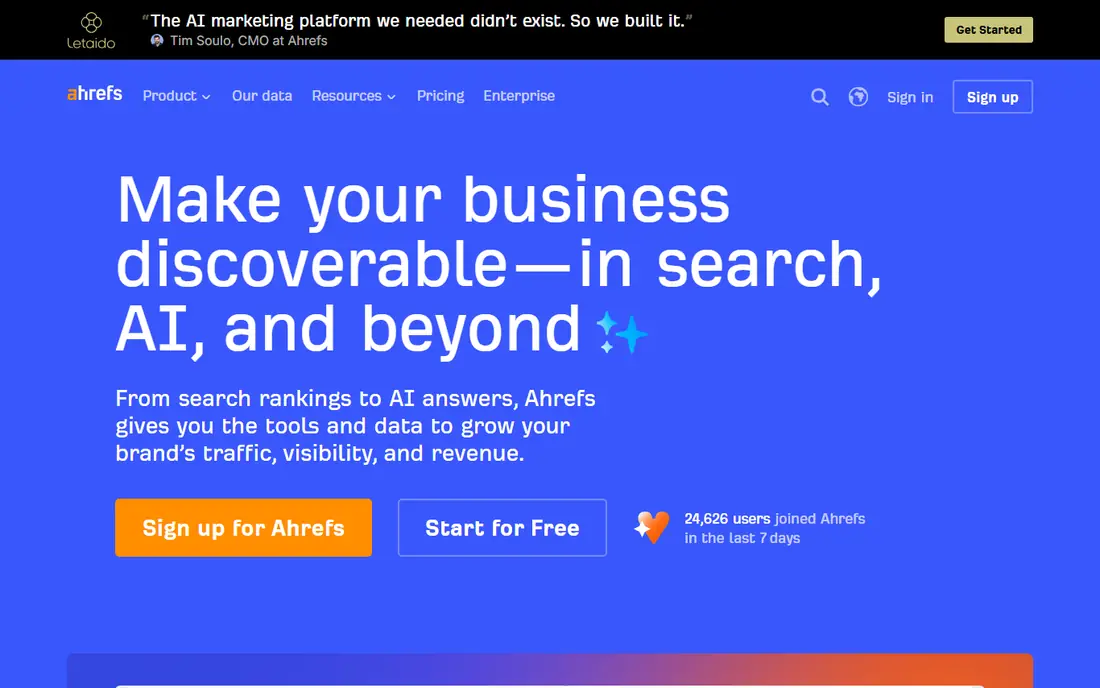
Ahrefs is best known for its backlink database, which is one of the largest and most frequently updated in the industry. Its Keyword Explorer, Site Audit and Rank Tracker complement that strength, making Ahrefs a top choice for SEO professionals who need reliable link and keyword data. Many agencies use Ahrefs alongside Semrush for cross checking.
Entry pricing is higher than some rivals, and free tools are limited to basic checks, so small businesses may start with Semrush's free tier or Google tools instead. If backlinks and competitive SEO are central to your marketing, Ahrefs is worth the investment for its data quality alone.
- Excellent backlink database
- Keyword explorer
- Site audit and rank tracking
- Higher entry price than some rivals
- Free tools limited
- Learning curve for new users
Mailchimp
Ideal for: Email marketing
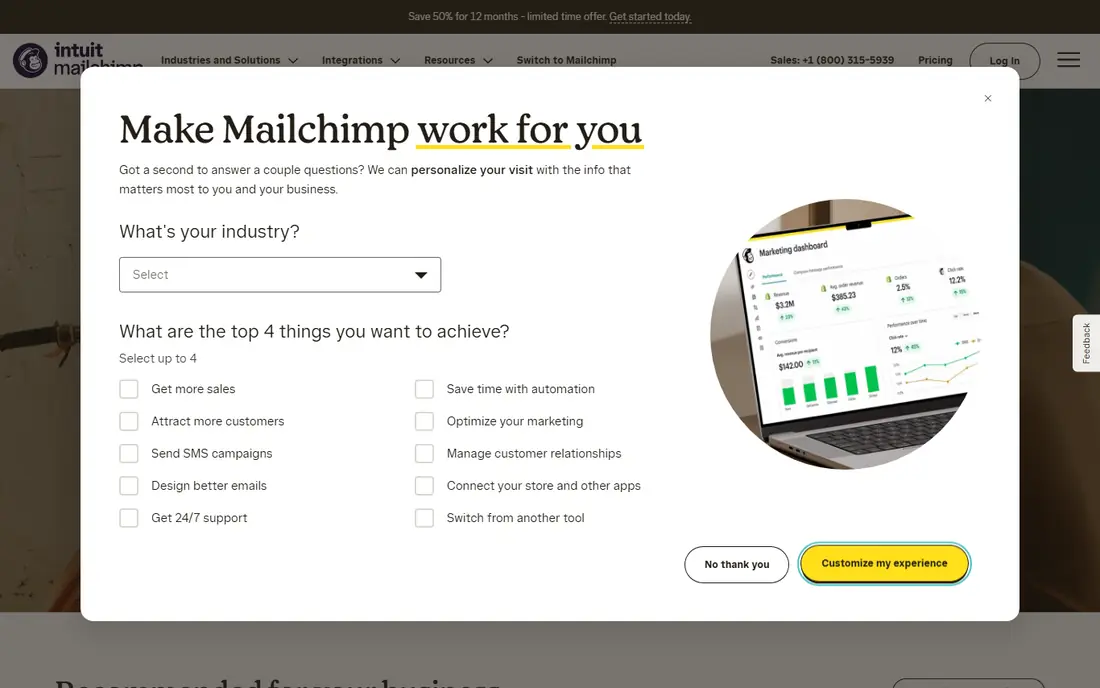
Mailchimp remains the easiest email marketing tool for small businesses, with a drag and drop builder, templates, automation and segmentation that do not require design or coding skills. The free plan covers small lists and basic campaigns, which is enough to start building an audience and testing email as a channel. Paid plans add advanced automation, A/B testing and support.
Pricing rises with contact count, so large lists can become expensive, and some advanced features sit on higher tiers. For small to midsize lists, Mailchimp is a practical choice, but compare it with HubSpot or a dedicated email tool if your list grows large or you need complex automation.
- Easy email builder
- Automation and segmentation
- Free plan for small lists
- Pricing rises with contacts
- Advanced features need paid plans
- Support varies by plan
HubSpot
Ideal for: CRM and marketing hub
HubSpot is the best hub for teams that want CRM, email, landing pages, social and reporting in one system. The free CRM tracks contacts, deals and conversations, while paid Marketing Hub adds automation, A/B testing and advanced reporting. That integration means a lead from a form, email or social post flows into the same record, which helps sales and marketing work together.
Paid hubs can become expensive as contacts and features grow, and the ecosystem encourages staying within HubSpot for everything. For teams that already use HubSpot CRM, adding Marketing Hub is natural, but small businesses should start free and upgrade only for features they will actually use.
- Free CRM
- Marketing, sales and service in one system
- Good reporting
- Paid hubs can be expensive
- Ecosystem lock in
- Learning curve for full setup
Canva
Ideal for: Social design
Canva is the easiest design tool for marketers who are not designers, with templates for social posts, ads, presentations and videos that can be customised in minutes. The free plan is strong, covering most templates and basic brand tools, while Pro adds brand kits, background remover and premium stock. That speed matters for social teams that publish daily.
Design depth is less than Adobe Illustrator or Photoshop, so professional designers will still need those tools for complex work. For everyday marketing design, though, Canva is fast, collaborative and affordable, and it integrates with scheduling tools like Buffer and Hootsuite.
- Easy design for social, ads and presentations
- Templates
- Free plan is strong
- Design depth less than Adobe tools
- Brand controls need Pro
- Stock limits on free plan
Buffer
Ideal for: Social scheduling
Buffer is the simplest social scheduling tool on this list, with a clean interface for planning, scheduling and analysing posts across major channels. Its free plan covers a small number of channels and scheduled posts, which is enough for a solo marketer or small business starting on social. Paid plans add more channels, analytics and engagement tools.
Listening and engagement features are thinner than Hootsuite's, so teams that need social listening should pair Buffer with a dedicated tool or choose Hootsuite. If your main need is consistent scheduling and simple analytics, Buffer is the easiest and most affordable choice.
- Simple scheduling
- Clean analytics
- Free plan for small accounts
- Listening and engagement thinner than Hootsuite
- Channel limits on free plan
Google Analytics
Ideal for: Web analytics
Google Analytics, now GA4, is free and essential for measuring website marketing, tracking where traffic comes from, which pages convert and how users move through a site. It integrates with Google Ads, Search Console and other Google tools, which makes it the default analytics choice for most websites. Even if you use paid tools for SEO or social, Google Analytics should still be running.
The GA4 interface can confuse users familiar with older Universal Analytics, and privacy rules, especially in the EU, require careful setup around consent and data retention. Take time to set up conversions and events correctly, since bad setup produces misleading reports no matter how good the tool is.
- Free and essential
- Tracks traffic, conversions and user behaviour
- Integrates with Google tools
- Interface can confuse beginners
- Privacy rules vary by region
- GA4 learning curve
Hootsuite
Ideal for: Social management
Hootsuite is the most complete social management tool here, with scheduling, streams for monitoring, analytics and team workflows in one dashboard. It suits teams managing several accounts and channels, where approvals, assignments and reporting matter as much as posting. Its listening streams also give basic social listening without a separate tool.
Price is higher than Buffer, and there is no permanent free plan, only a trial, so small teams should weigh cost against need. If you manage many accounts and need team workflows and reporting, Hootsuite is worth it, but solo marketers may prefer Buffer's simplicity and free plan.
- Wide channel support
- Scheduling, listening and analytics
- Team workflows
- Higher price than Buffer
- Interface can feel busy
- Free trial only, not a permanent free plan
How we picked these
We compared official feature pages, pricing pages and public reviews, and we only included tools that still serve digital marketers in October 2026. We favoured tools that cover distinct channels, from SEO and email to design, social and analytics, and we noted free limits honestly, since a free plan that covers only a few keywords or contacts is different from a genuinely usable free tier.
How to build a digital marketing stack
Start with measurement, then add one tool per main channel. Install Google Analytics and Search Console first, so you can measure traffic and search performance from day one. Add Semrush or Ahrefs for SEO, Mailchimp or HubSpot for email, Canva for design and Buffer or Hootsuite for social, depending on your channels and team size.
Avoid buying every tool at once. Use free plans to test whether a channel actually drives results for your business, then upgrade the tools for channels that work. Review your stack every six months, since unused subscriptions add up, and a tool that was essential last year may be redundant if your strategy has changed.
Frequently asked questions
What are the best tools for digital marketing for small businesses?
Google Analytics, Canva, Mailchimp and Buffer offer strong free plans for small businesses, with Semrush free tools for basic SEO research. Start with those, then add paid tools for channels that prove effective.
Is Semrush or Ahrefs better for SEO?
Semrush is broader, covering SEO, content and advertising research, while Ahrefs is stronger for backlink data. Many professionals use both, but small businesses can start with one and cross check with free Google tools.
Do I need HubSpot for digital marketing?
No, HubSpot is useful if you want CRM, email and reporting in one system, but small businesses can use Mailchimp for email, Google Analytics for measurement and Buffer for social without HubSpot.
What is the best free digital marketing tool?
Google Analytics is the best free tool, since it measures traffic and conversions for any website. Canva free and Mailchimp free are also strong for design and email on small lists.
How many marketing tools do I need?
Most small businesses need four to five: analytics, SEO research, email, design and social scheduling. Larger teams add listening, CRM and paid ad tools as channels grow.