For HR, payroll, and workforce operations together, UKG Pro is where this list starts. Look at Oracle HCM Cloud for Cloud HR with decision support and analytics, and at Workday HCM for large enterprises wanting unified HR and finance. Details, prices and limits for the rest of the 6 tools are below.
If you are comparing tools for employee Self-Service in HR, this page covers 6 tools in one place: what each is best for, what it costs to start, whether it has a free plan, and the main limit to know about.
Key takeaways
UKG Pro sits first on this list: HR, payroll, and workforce operations together.
What to know about Oracle HCM Cloud first: wide suite needs planning.
None of the 6 tools, from UKG Pro to SAP SuccessFactors, has a free plan, so budget for a subscription or use a trial.
For talent-heavy HR operations at scale, SAP SuccessFactors is worth a look.
Best for: HR, payroll, and workforce operations together
Choose UKG Pro for HR, payroll, and workforce operations together. The most solid results come when HR, payroll, and workforce modules are used together, so partial adoption may limit the benefit.
The main drawbacks: Full value needs several modules.
Best features of UKG Pro: workforce management combined.
As for the details, employee self-service includes the everyday tasks staff expect, like viewing pay information and managing schedules. Check the vendor site for UKG Pro pricing; none is listed in this comparison. Free plan details: Not stated.
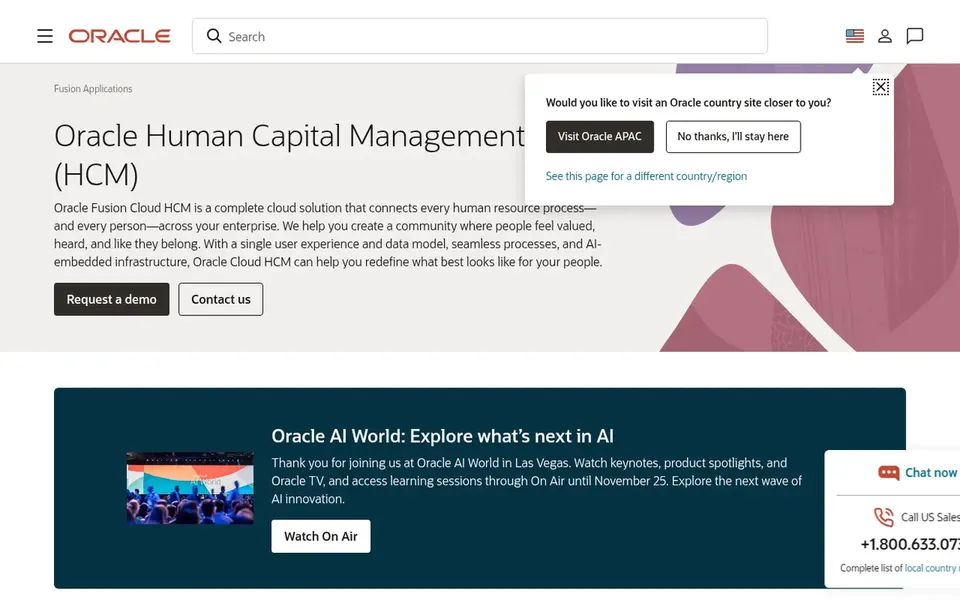
Best for: Cloud HR with decision support and analytics
Oracle HCM Cloud works best for Cloud HR with decision support and analytics. Self-service for employees and managers is part of the wider cloud HR offering.
Since the suite spans plenty of modules, teams have to plan which capabilities to adopt and in what order. If you need a narrow self-service and payroll tool, a simpler choice here may serve you better. This comparison lists no price for Oracle HCM Cloud; ask the vendor. Free access: Not stated.
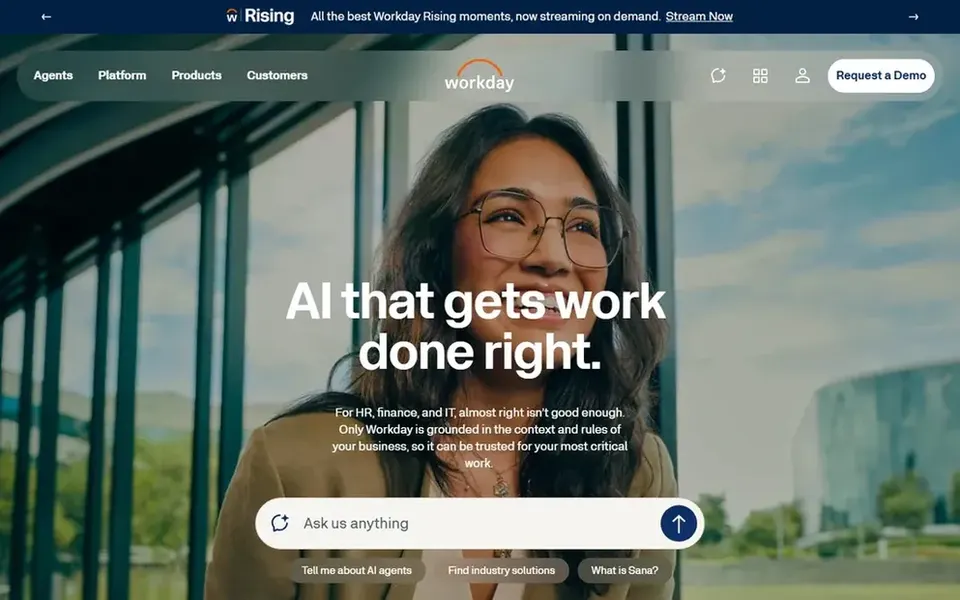
Best for: Large enterprises wanting unified HR and finance
Where Workday HCM fits: large enterprises wanting unified HR and finance. The product is made for enterprise scale, so smaller teams may find the scope and setup heavier than needed.
Downsides: Enterprise-focused complexity.
Beyond that, the vendor flags agentic AI and its Sana assistant as ways to simplify everyday work. No starting price is listed for Workday HCM here; confirm pricing on the vendor site. On free options: Not stated.
Best for: Payroll-led HR self-service for expanding businesses
ADP Workforce Now is aimed squarely at payroll-led HR self-service for expanding businesses. ADP Workforce Now sits within ADP's payroll, tax, HR, and HCM options for firms of every size, with products built to scale as headcount grows. On top of that, if a single connected record across all HR functions is essential, compare a single-database choice.
On top of that, employee self-service is anchored in payroll and HR administration, handling the tasks staff most frequently deal with themselves. Capabilities can differ based on which products and modules you adopt, so teams should map needs before choosing. Pricing for ADP Workforce Now is not stated here, so ask the vendor for current figures. Trial and free access: Not stated.
Watch-outs: Less unified than single-database tools.
Best for: Single-database HR and payroll automation
Paycom makes the most sense for single-database HR and payroll automation. Self-service is central to the design, with employees handling much of their own information and payroll-related tasks. Also, heavy automation can need change management so employees and managers adopt new habits.
Beyond that, Paycom is HR and payroll software that emphasizes full-solution automation across the whole employee life cycle, helping employees and leaders work smarter from a single database. For everyday use, if your organization prefers a best-of-breed mix of systems, a system designed for integration across vendors may be a better match. Paycom shows no starting price here, so confirm the cost on the vendor site. Free options: Not stated.
What to check first: Automation style may need change management.
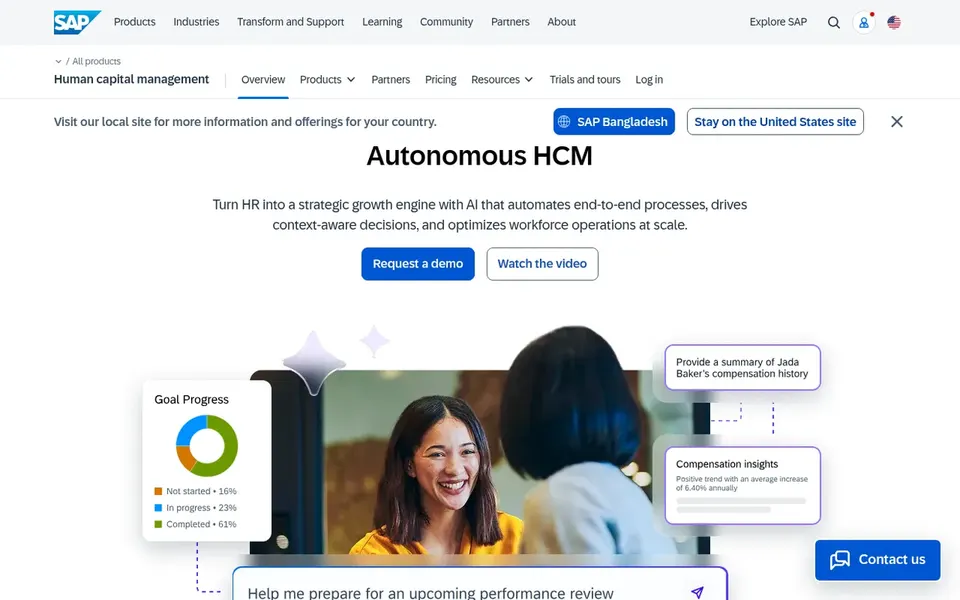
In short, SAP SuccessFactors is for talent-heavy HR operations at scale. Organizations outside SAP environments may prefer a product with more straightforward administration.
Drawbacks to consider: Best value inside SAP ecosystems.
In practice, employee self-service sits within a broader suite including core HR and talent. In daily use, consider a more payroll-centric tool if self-service is your only near-term goal. SAP SuccessFactors does not show a starting price in this comparison, so check the vendor site for current pricing. On free options: Not stated.
Confirm the entry price with every vendor: no tool from UKG Pro to SAP SuccessFactors shows a fixed starting price.
Before choosing UKG Pro, weigh its main limit: full value needs several modules.
Check how data leaves Paycom: formats, limits and whether exports are available on every plan.
Confirm that Oracle HCM Cloud connects to the apps your team already uses, on the plan you would actually buy.
Pick one real project and run it in ADP Workforce Now first; a small pilot shows fit faster than a checklist.
How we picked
For each of the 6 tools we noted price, free plan or trial, fit for tools for employee Self-Service in HR and the main limit, using vendor pages and documentation. Figures are shown as the vendors publish them. Billing terms, seat minimums and add-ons can change the real cost. We ordered the tools by general fit, then by how clearly pricing is shown, then by free access. A buyer with unusual needs may reorder them.
Every price and plan detail on this page comes from the vendors’ own websites. We did not run hands-on tests unless the text says so, and we do not publish star ratings or review scores. See how we score and our disclosure.
Keep your shortlist in one place
Paste prices, trial dates and notes from this guide into Ainotely, our AI note app. It files them into a topic and pulls out tasks like “cancel trial by Friday”. Free 7-day trial, no card needed.
How do these systems differ for payroll-heavy organizations?
Broader suites like Workday HCM and Oracle HCM Cloud lead with connected HR data. Match the system to whichever function drives most employee questions.
What is the difference between a single database and integrated modules?
A single database, as Paycom describes, keeps HR and payroll records in one place, which can cut duplicate data entry. Ask vendors how data flows between functions to judge which model fits your operations.
Does any tool for tools for employee Self-Service in HR here have a free plan?
A permanent free plan is not offered by UKG Pro, SAP SuccessFactors or the other tools here. Plan a short evaluation period instead. All 6 picks in this tools for employee Self-Service in HR comparison show their pricing, free plan details and main limits on the cards above.
Can I try these tools before paying?
Not by default. None of the tools, from UKG Pro to SAP SuccessFactors, lists a free plan or a free trial here, so ask each vendor for a demo before committing. For the full picture, the cards above cover all 6 entries of this tools for employee Self-Service in HR list, including price, free plan and limits.
How are the tools for tools for employee Self-Service in HR ordered?
UKG Pro sits first and SAP SuccessFactors last because the order follows typical fit for tools for employee Self-Service in HR, then price clarity and free access. It is a judgement call, so read each profile for fit and limits.
What should an employee self-service tool manage?
Most systems include personal details, pay information, benefits enrollment, time off requests, and document access. Manager self-service typically layers on approvals and team data. In daily use, confirm the specific tasks your workforce needs before shortlisting.