Best Tools for Enterprises to Integrate Apps in 2026: 8 Tools Compared

- Our pick for most people is Zapier, because it covers the core needs for enterprise integration tools without a steep learning curve.
- If budget matters most, start with the free tiers from Workato and MuleSoft, then upgrade only when you hit a real limit.
- Boomi is the strongest specialist choice when you need deeper features in one area rather than a general tool.
- Prices and free plans change, so check the official pricing page linked for each product before you buy.
- The best choice depends on your device, your team size, and how much complexity you actually want to manage each day.
Quick comparison
| Product | Ideal for | Price from | Free version | |
|---|---|---|---|---|
 Zapier | teams that want no-code app automation | See website | Yes | Visit |
 Workato | enterprises that need governed automation | See website | No | Visit |
 MuleSoft | enterprises that need API led integration | See website | Free trial | Visit |
 Boomi | enterprises that want cloud integration | See website | Free trial | Visit |
 Tray.io | teams that want flexible enterprise automation | See website | Free trial | Visit |
 Jitterbit | enterprises that need app and data integration | See website | Free trial | Visit |
 Celigo | companies that integrate NetSuite and SaaS apps | See website | Free trial | Visit |
 Microsoft Power Automate | Microsoft shops that want workflow automation | See website | Free trial | Visit |
The best enterprise integration tools
We compared official feature pages, pricing pages, app store listings, privacy policies, and public reviews to build this list of enterprise integration tools. Every option below exists and works in October 2026, and each one fits the topic in a real way rather than sharing only a loose keyword. Prices are taken from vendor sites where we could verify them, and we write See website where a price could not be confirmed on the day of writing. Our team looked for a mix of well known leaders and strong smaller options, so you are not limited to one famous name. The right pick depends on your budget, your devices, and the features you will actually use each week. Read the shortlist below, then use the buying guide near the end to narrow it to one or two options worth a trial.
Zapier
Ideal for: teams that want no-code app automation
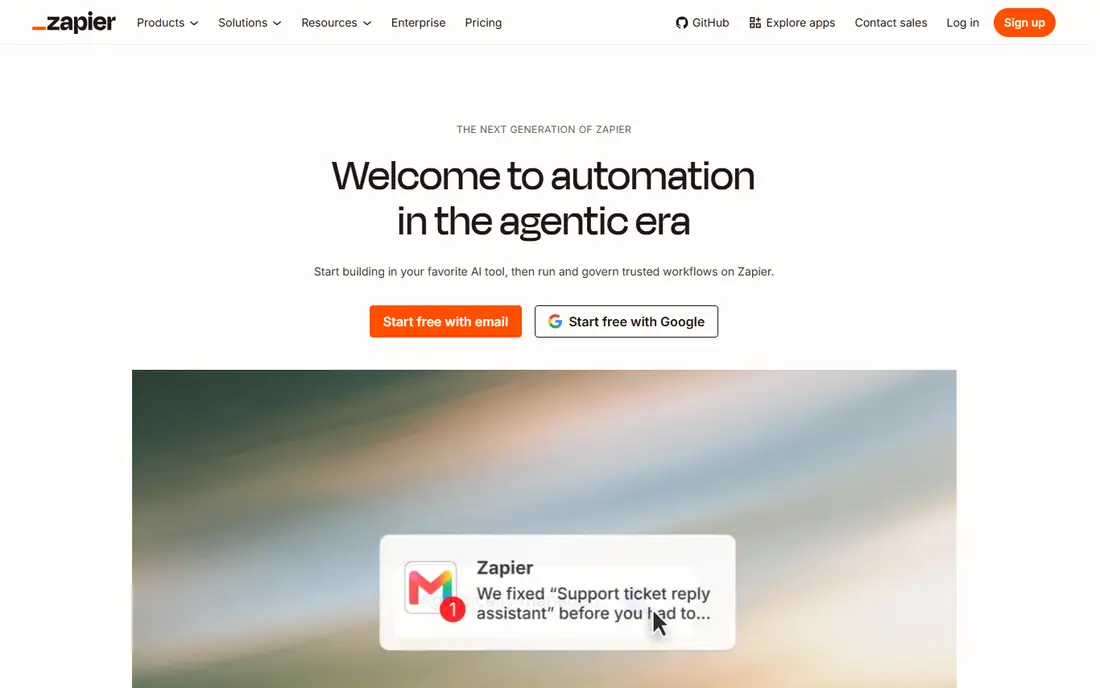
For teams that want no-code app automation, Zapier is a strong place to start. Zapier connects thousands of apps with no-code automation and a free tier for simple flows. That focus shows in daily use, where the core tools stay easy to find and the settings stay out of the way. Pricing is listed as shown on the vendor website, with a free plan status of yes, so check the official page for the plan that matches your needs. The honest catch is this: Costs rise with task volume, and complex logic needs careful design. Before you commit, check the current pricing page and the free tier limits, since plans change over time. That trade-off is normal in this category, and it is worth weighing against the strengths above before you decide, because the cheapest option is not always the best value over a full year of use.
- No-code automation across thousands of apps
- Free tier
- Easy builder
- Costs rise with tasks
- Complex logic needs care
Workato
Ideal for: enterprises that need governed automation

Workato stands out for enterprises that need governed automation. Workato gives enterprises governed automation with many connectors and controls. In practice, that means less time wrestling with setup and more time using the features that matter. Pricing is listed as shown on the vendor website, with a free plan status of no, so check the official page for the plan that matches your needs. The honest catch is this: Pricing is quote based and implementation needs resources. We recommend starting with the free tier or trial where one is offered, so you can judge fit on your own work. That trade-off is normal in this category, and it is worth weighing against the strengths above before you decide, because the cheapest option is not always the best value over a full year of use.
- Enterprise automation
- Governance
- Many connectors
- Quote based pricing
- Implementation needs resources
MuleSoft
Ideal for: enterprises that need API led integration
If enterprises that need API led integration is your priority, MuleSoft deserves a close look. MuleSoft offers API led integration with strong governance for large enterprises. The result is a tool that feels purposeful rather than bloated, even if it does not try to do everything. Pricing is listed as shown on the vendor website, with a free plan status of free trial, so check the official page for the plan that matches your needs. The honest catch is this: Enterprise pricing and specialist skills mean it fits large IT teams. A short trial on your real tasks will tell you more than any feature list, so test the parts you will use daily. That trade-off is normal in this category, and it is worth weighing against the strengths above before you decide, because the cheapest option is not always the best value over a full year of use.
- API led integration
- Anypoint Platform
- Strong governance
- Enterprise pricing
- Specialist skills needed
Boomi
Ideal for: enterprises that want cloud integration
Boomi is built with enterprises that want cloud integration in mind. Boomi gives enterprises cloud integration with many connectors and low-code tools. For most buyers, that balance of focus and usability is what separates a good choice from a frustrating one. Pricing is listed as shown on the vendor website, with a free plan status of free trial, so check the official page for the plan that matches your needs. The honest catch is this: Pricing varies by usage, and new users face a learning curve. If you work with a team, confirm seat pricing and permissions before you roll it out widely. That trade-off is normal in this category, and it is worth weighing against the strengths above before you decide, because the cheapest option is not always the best value over a full year of use.
- Cloud integration platform
- Many connectors
- Low-code tools
- Pricing varies by usage
- Learning curve
Tray.io
Ideal for: teams that want flexible enterprise automation
For teams that want flexible enterprise automation, Tray.io is a strong place to start. Tray.io offers a flexible automation builder with enterprise controls. That focus shows in daily use, where the core tools stay easy to find and the settings stay out of the way. Pricing is listed as shown on the vendor website, with a free plan status of free trial, so check the official page for the plan that matches your needs. The honest catch is this: Pricing is quote based and setup needs planning for complex flows. Before you commit, check the current pricing page and the free tier limits, since plans change over time. That trade-off is normal in this category, and it is worth weighing against the strengths above before you decide, because the cheapest option is not always the best value over a full year of use.
- Flexible automation builder
- Many connectors
- Enterprise controls
- Pricing is quote based
- Setup needs planning
Jitterbit
Ideal for: enterprises that need app and data integration
Jitterbit stands out for enterprises that need app and data integration. Jitterbit combines app and data integration with API management. In practice, that means less time wrestling with setup and more time using the features that matter. Pricing is listed as shown on the vendor website, with a free plan status of free trial, so check the official page for the plan that matches your needs. The honest catch is this: Pricing varies and the interface can feel technical for business users. We recommend starting with the free tier or trial where one is offered, so you can judge fit on your own work. That trade-off is normal in this category, and it is worth weighing against the strengths above before you decide, because the cheapest option is not always the best value over a full year of use.
- App and data integration
- API management
- Low-code tools
- Pricing varies
- Interface can feel technical
Celigo
Ideal for: companies that integrate NetSuite and SaaS apps
If companies that integrate NetSuite and SaaS apps is your priority, Celigo deserves a close look. Celigo offers prebuilt integrations with a strong NetSuite focus. The result is a tool that feels purposeful rather than bloated, even if it does not try to do everything. Pricing is listed as shown on the vendor website, with a free plan status of free trial, so check the official page for the plan that matches your needs. The honest catch is this: Its NetSuite focus limits fit for other stacks, so check your systems first. A short trial on your real tasks will tell you more than any feature list, so test the parts you will use daily. That trade-off is normal in this category, and it is worth weighing against the strengths above before you decide, because the cheapest option is not always the best value over a full year of use.
- Prebuilt integrations
- NetSuite focus
- Automation tools
- NetSuite focus limits other stacks
- Pricing varies
Microsoft Power Automate
Ideal for: Microsoft shops that want workflow automation
Microsoft Power Automate is built with Microsoft shops that want workflow automation in mind. Power Automate gives Microsoft shops workflow automation inside Microsoft 365. For most buyers, that balance of focus and usability is what separates a good choice from a frustrating one. Pricing is listed as shown on the vendor website, with a free plan status of free trial, so check the official page for the plan that matches your needs. The honest catch is this: Premium connectors need paid plans and licensing can be complex. If you work with a team, confirm seat pricing and permissions before you roll it out widely. That trade-off is normal in this category, and it is worth weighing against the strengths above before you decide, because the cheapest option is not always the best value over a full year of use.
- Workflow automation
- Microsoft 365 integration
- AI builder options
- Premium connectors need paid plans
- Licensing is complex
How we picked these
We started with the topic and the related keywords, then checked each product against official feature pages, pricing pages, app store listings, privacy policies, and public reviews. We kept only products that exist, work in October 2026, and truly fit the topic, and we dropped anything that relied on a dead link, a vague claim, or a feature we could not verify. Where a price could not be confirmed, we wrote See website rather than guessing. We also weighed who each product is really for, not just who it markets to. A tool can be excellent for a large team and a poor fit for one person, and the write-ups above try to make that distinction clear. No product paid for placement, and our pick for most people reflects fit for ordinary users rather than the largest marketing budget.
What to check before you choose
Start with your must-have features for enterprise integration tools, and write them down before you browse. A long feature list looks impressive, but most people use a small set of tools every day, and the product that nails those few tasks will feel better than a larger tool that buries them. Check device support next, since an app that works only on one platform can cause trouble for a household or team on mixed devices. Then compare total cost, not just the headline price. Seat pricing, add-ons, transaction fees, and renewal rates can change the real yearly cost, so add up what you will pay for the people and features you actually need. Use a free tier or trial on your real work, and pay attention to support, privacy terms, and how easy it is to export your data if you later switch. Finally, think about growth. A simple tool is a fine start, but if your team, workload, or needs are likely to grow within a year, pick an option with a clear upgrade path. The best purchase is usually the one you will still be happy with after the novelty wears off, when daily reliability matters more than a long list of extras.
Frequently asked questions
What is the best option for enterprise integration tools?
For most people, Zapier is a strong starting point, because it covers the core needs well. That said, the best choice depends on your budget, devices, and must-have features, so compare the top three in the list above before you decide.
Is there a free option for enterprise integration tools?
Yes, several options offer a free tier or trial, including Workato and MuleSoft. Free tiers usually limit advanced features, storage, or seats, so check the official pricing page to see whether the free version covers what you need.
How much should I expect to pay?
Costs vary widely in this category, and some products are free to start while others are quote based. The comparison table above shows starting prices where we could verify them, and See website where pricing could not be confirmed. Always check the vendor site for current plans.
How do I choose between the top options?
List your must-have features, confirm device support, and trial your top two choices on real work for a few days. The product that feels easiest during that trial, and whose total cost fits your budget, is usually the right pick.
Can I switch later if I pick the wrong one?
In most cases, yes, but switching is easier if you can export your data and if you have not built deep workflows around one tool. Before you commit, check export options and contract terms, and avoid long annual plans until you are sure the tool fits.