Best Tools for SEO for Manufacturing in 2026: 8 Tools Compared

- Semrush is our pick for most manufacturers because it covers keyword research, audits, tracking, and competitive analysis in one toolkit.
- Ahrefs suits teams that prioritize backlink analysis and content research.
- Screaming Frog suits technical teams that need deep site crawls and audit detail.
-
Manufacturing SEO depends on product and capability pages, local visibility, and technical health, so match tools to those jobs.
-
Technical product pages with specs, tolerances, and certifications convert industrial buyers better than generic service pages.
Quick comparison
| Product | Ideal for | Price from | Free version | |
|---|---|---|---|---|
 Semrush | All-in-one SEO toolkit | See website | Free trial | Visit |
 Ahrefs | Backlinks and content research | See website | Free trial | Visit |
 Moz | Keyword and rank tracking | See website | Free trial | Visit |
 Screaming Frog | Technical site crawls | See website | Yes | Visit |
 Surfer | Content optimization | See website | Free trial | Visit |
 BrightEdge | Enterprise SEO platform | See website | Free trial | Visit |
 Conductor | Enterprise content and SEO | See website | Free trial | Visit |
 seoClarity | Enterprise SEO analytics | See website | Free trial | Visit |
The best tools for seo for manufacturing
Manufacturing SEO is specific: buyers search for capabilities, materials, tolerances, certifications, and parts, often with technical terms. The best tools help firms research those keywords, fix technical issues, and track rankings for product and service pages. We compared official feature pages, pricing pages, and public reviews for the options below.
Semrush
Ideal for: All-in-one SEO toolkit
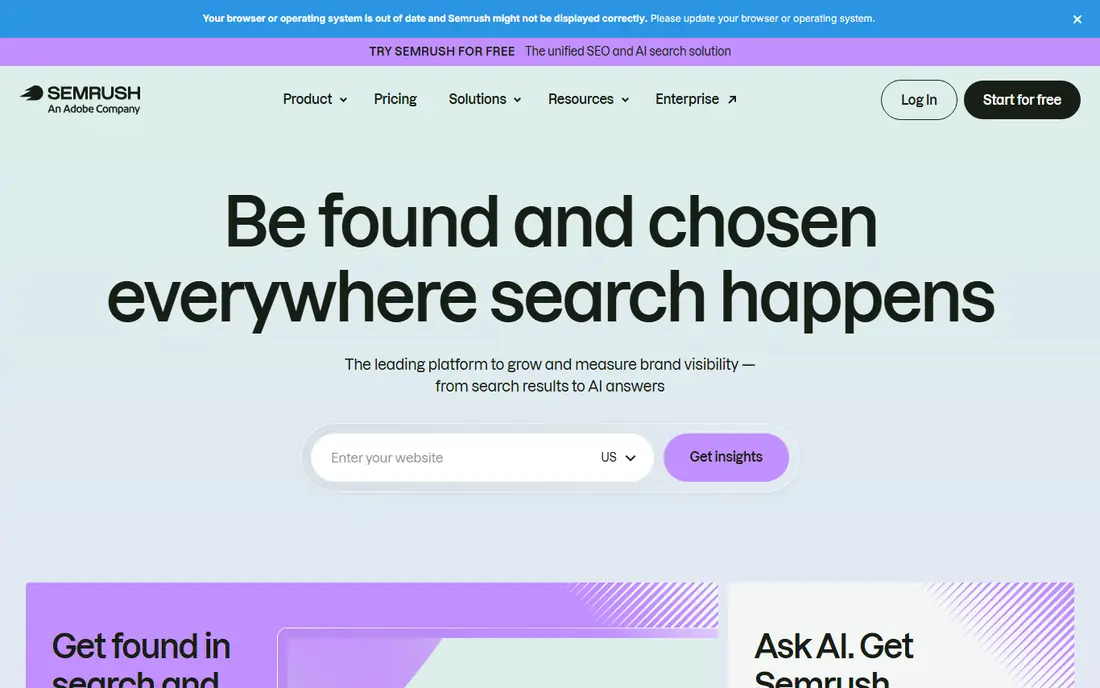
Semrush covers keyword research, site audits, rank tracking, backlink analysis, and content tools in one platform. Manufacturers can research technical buyer terms, audit large product catalogs, track rankings by product line, and compare competitors. That breadth suits marketing teams that handle SEO alongside other duties.
Pricing rises with projects and limits, and the depth can overwhelm beginners. For most manufacturers that want one toolkit for the core SEO jobs, Semrush is our top pick.
- Keyword research, audits, and tracking in one place
- Competitive analysis
- Content tools
- Price rises with projects
- Depth can overwhelm beginners
Ahrefs
Ideal for: Backlinks and content research

Ahrefs is known for its backlink index and content research. Manufacturers can find who links to competitors, spot content gaps for capability pages, and research keywords with strong data. Site audit tools cover technical health, though Semrush edges it on all-in-one breadth.
Pricing sits at the higher end, and beginners may need time to learn the toolset. For teams that prioritize links and content research, Ahrefs is an excellent choice.
- Strong backlink index
- Content gap analysis
- Keyword research depth
- Higher pricing tiers
- Audit tools trail Semrush slightly
Moz
Ideal for: Keyword and rank tracking
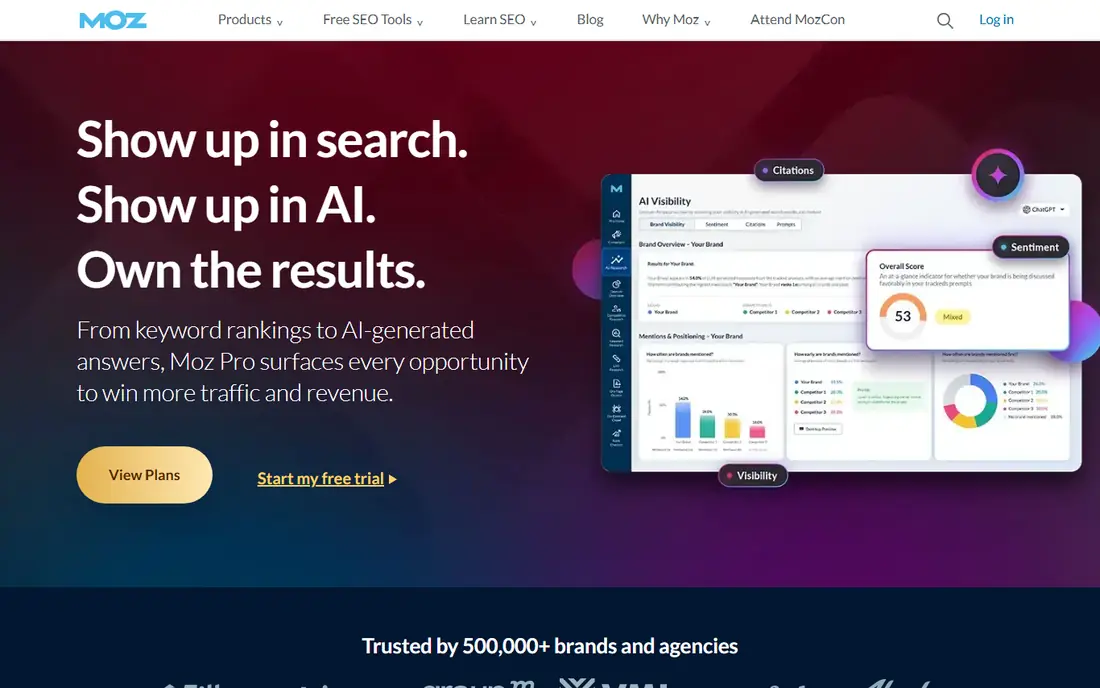
Moz offers friendly keyword research, rank tracking, and site audits, plus local SEO tools that help manufacturers with plants and service areas. The interface is approachable for teams new to SEO, and training resources are strong. That guidance helps smaller marketing teams.
Backlink data trails Ahrefs, and advanced enterprise features are fewer than Semrush. For a manufacturer starting SEO or tracking local visibility, Moz is a friendly, capable pick.
- Friendly keyword tools
- Rank tracking
- Local SEO support
- Backlink data trails Ahrefs
- Advanced features are fewer
Screaming Frog
Ideal for: Technical site crawls
Screaming Frog is a desktop crawler that audits websites in depth: broken links, redirect chains, duplicate titles, missing metadata, and large product catalog issues. Technical teams use it to find problems that hurt rankings and user experience. The free version covers small sites, and the paid version scales well.
It is a desktop tool with a learning curve, and it does not track rankings on its own. Pair it with Semrush, Ahrefs, or Moz for full SEO coverage. For technical audits, Screaming Frog is essential and affordable.
- Deep technical crawls
- Finds broken links and duplicate content
- Affordable
- Desktop tool with a learning curve
- No rank tracking built in
Surfer
Ideal for: Content optimization
Surfer helps writers optimize product and capability pages with content scores, keyword suggestions, and SERP analysis. Manufacturers can build briefs for technical pages that match what buyers and search engines expect. The guidance is clear and practical for non-SEO writers.
Surfer focuses on content, so keyword research and audits need another tool. For a manufacturer investing in capability and product content, Surfer is a strong companion tool.
- Content scoring and briefs
- SERP analysis
- Clear writing guidance
- Content-only focus
- Needs keyword data from another tool
BrightEdge
Ideal for: Enterprise SEO platform
BrightEdge is an enterprise SEO platform with reporting, AI insights, and large-site management for manufacturers with big catalogs and many product lines. Teams can track performance by product group, spot opportunities, and report results to leadership clearly.
Enterprise pricing and implementation make BrightEdge heavy for small firms. For a large manufacturer with complex SEO reporting needs, BrightEdge is a powerful choice.
- Enterprise reporting
- AI insights
- Large-site management
- Enterprise pricing
- Implementation takes time
Conductor
Ideal for: Enterprise content and SEO
Conductor combines SEO, content, and market insights in an enterprise platform. Manufacturers can research buyer demand, plan content for capabilities and products, and measure performance in one system. Reporting suits leadership and cross-team use.
Enterprise pricing and a learning curve limit small-firm fit. For a large manufacturer that wants content and SEO together, Conductor is a strong platform.
- Content and SEO in one platform
- Market insights
- Enterprise reporting
- Enterprise pricing
- Learning curve for full platform
seoClarity
Ideal for: Enterprise SEO analytics
seoClarity offers deep SEO analytics with rank tracking at scale and content insights for large sites. Manufacturers with many product pages can track visibility by segment, spot technical issues, and measure content impact. The analytics depth suits data-driven teams.
Enterprise pricing and a smaller community than Semrush limit broad appeal. For a large manufacturer that wants analytics depth, seoClarity is a capable choice.
- Deep SEO analytics
- Rank tracking at scale
- Content insights
- Enterprise pricing
- Smaller community than Semrush
How we picked these
We compared official feature pages, pricing pages, and public reviews, and we kept only SEO tools serving manufacturers in October 2026 with real keyword, audit, or tracking features. We favored tools with technical audit depth, product-page support, and local SEO options. We left out generic marketing tools with no SEO depth and rank trackers with no audit or research tools.
We also reviewed how each tool handles large catalogs, since manufacturers often have thousands of product pages with thin content. Bulk audit views, template-level fixes, and duplicate content detection matter far more than single-page scores when the catalog is large. Confirm bulk capabilities during a trial with your real site structure.
What to check before you choose an SEO tool
Start with your pages. Manufacturers win through capability pages, product pages, and technical content, so your tool must research buyer terms for those pages and audit large catalogs well. Check keyword data for your niche terms, not just broad consumer keywords.
Next, test technical audit quality on your real site. Run a crawl, review the issues found, and check whether fixes are prioritized clearly. Finally, confirm reporting fits your team: plant managers, sales leaders, and marketers need different views, and a tool that only serves SEO specialists will gather dust.
Content planning should start from sales conversations, not keyword tools alone. Ask your sales team which questions buyers ask before requesting a quote, then build capability pages that answer those questions with specs, materials, tolerances, and lead times. Keyword tools refine that list, but sales insight keeps content relevant to real buyers.
Local and technical SEO also interact for manufacturers with several plants. Location pages for each facility, consistent business listings, and clear service-area content help regional buyers find the right plant, while technical fixes keep those pages crawlable. A tool that covers both local and technical work saves a separate subscription.
Questions to ask before you commit
Ask vendors how they handle keyword data for technical industrial terms, since generic keyword tools undercount niche B2B searches. Confirm data sources, search volume methods, and whether long-tail technical terms show usable data. A tool blind to your niche terms misguides content planning.
Ask about competitor tracking for industrial rivals, including which competitors the tool can monitor and how it handles private or distributor-heavy markets. Confirm that tracking covers the rivals that actually win your deals, not just the largest brands. Relevant competitor sets beat broad market data for manufacturers.
Ask how reporting connects SEO work to quote requests, since leadership funds SEO that produces inquiries, not rankings alone. Confirm goal tracking, form attribution, and call tracking integration, and agree on success metrics before the first content sprint. Clear attribution protects SEO budgets during slow quarters.
Frequently asked questions
What is the best tool for SEO for manufacturing?
Semrush is our pick for most manufacturers because it covers research, audits, tracking, and competitive analysis in one toolkit. Ahrefs suits link and content research, while Screaming Frog is essential for technical audits.
What keywords do manufacturers target for SEO?
Manufacturers target capability terms such as CNC machining, injection molding, or custom fabrication, plus material, tolerance, certification, and product terms buyers actually search. Long-tail technical terms often convert better than broad industry words.
Do manufacturers need local SEO tools?
Yes, when buyers search by location or when plants serve regional markets. Local SEO tools help manage listings, reviews, and location pages. Moz offers useful local features, and Semrush and BrightEdge support location tracking too.
How long does manufacturing SEO take to work?
Technical fixes can help within weeks, while rankings for competitive capability terms often take months of content and link work. Set expectations by page type, and track leads and quote requests alongside rankings to judge real value.
Should manufacturers hire an agency or use SEO tools in-house?
In-house tools suit firms with marketing staff and steady content capacity. Agencies suit firms that need strategy, content, and link building without hiring. Many firms combine both: tools for tracking and audits, plus agency help for content and outreach.
How do manufacturers measure SEO success?
Measure quote requests, contact form submissions, and phone calls from organic search alongside rankings, since rankings alone do not pay for marketing. Track performance by product line and capability page, so you can see which content drives real inquiries. Review results quarterly, since industrial buying cycles are long and early traffic signals precede deals.