Best Trucking Management Software in 2026: 8 Tools Compared

- 1
 SamsaraELD plus fleet managementVisit
- 2
 MotiveELD and fleet safetyVisit
- 3
 TruckingOfficeSmall carrier dispatchVisit
- 4
 Tailwind TMSSmall carrier TMSVisit
- 5
 ProTransportBroker and carrier TMSVisit
- Samsara and Motive lead for ELD, safety, and fleet tracking plus management tools.
- TruckingOffice and Tailwind TMS suit small carriers that need dispatch and billing simply.
- ProTransport and Descartes Aljex fit brokers and carriers with TMS depth.
- McLeod and Trimble serve large fleets with enterprise TMS and dispatch.
- Check ELD compliance, dispatch workflows, and accounting links before choosing.
Quick comparison
| Product | Ideal for | Price from | Free version | |
|---|---|---|---|---|
| Samsara | ELD plus fleet management | See website | No | Visit |
| Motive | ELD and fleet safety | See website | No | Visit |
| TruckingOffice | Small carrier dispatch | See website | Free trial | Visit |
| Tailwind TMS | Small carrier TMS | See website | Free trial | Visit |
| ProTransport | Broker and carrier TMS | See website | No | Visit |
 Descartes Aljex | TMS for brokers and carriers | See website | No | Visit |
 McLeod Software | Enterprise TMS | See website | No | Visit |
 Trimble | Large fleet TMS and telematics | See website | No | Visit |
The best trucking management software
We compared official feature pages, pricing pages, and public reviews for eight trucking management tools. Trucking management covers dispatch, ELD compliance, routing, driver management, and billing, and the best tool depends on fleet size and whether you are a carrier, broker, or both.
Samsara
Ideal for: ELD plus fleet management
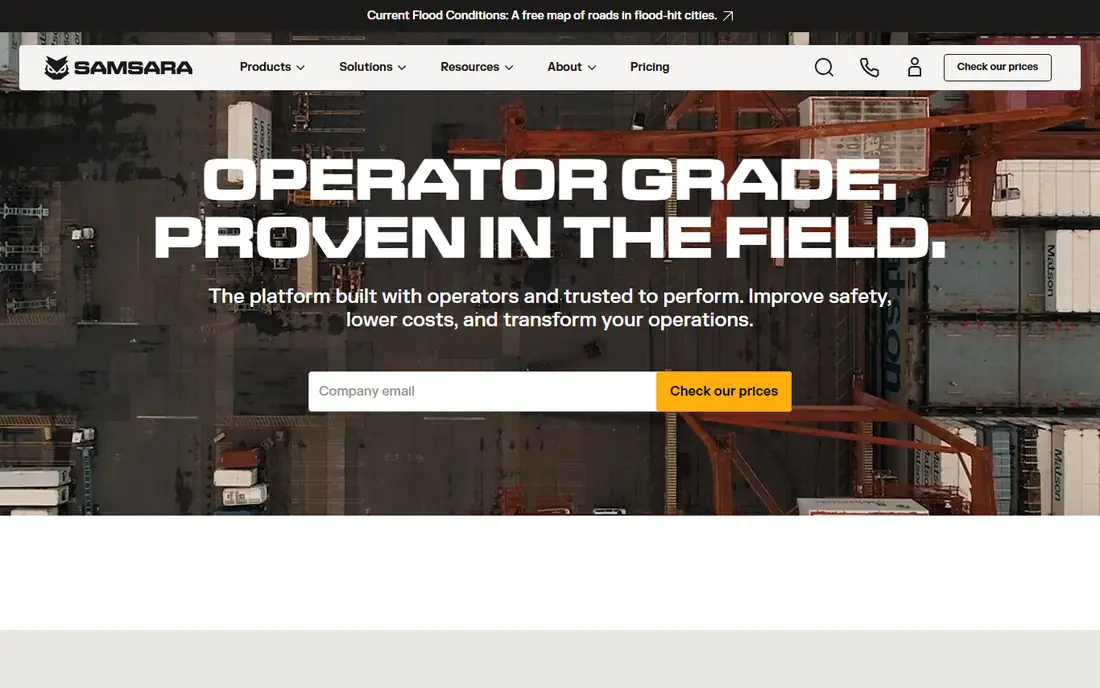
Samsara offers ELD compliance plus fleet management with GPS, safety cameras, maintenance, and routing in one platform. Carriers can track hours of service, vehicle location, and driver safety, while dispatchers manage loads and schedules. The combination suits fleets that want operations plus compliance together.
Pricing is quoted, and hardware per truck adds cost. For a fleet that wants ELD plus broader management in one system, Samsara is a leading choice. Confirm ELD certification and plan features for your fleet size.
- ELD compliance
- GPS and safety tools
- Maintenance and routing
- Pricing is quoted
- Hardware costs add up
Motive
Ideal for: ELD and fleet safety

Motive, formerly KeepTruckin, provides ELD compliance with driver safety, fleet tracking, and maintenance tools. Drivers log hours through an app, while managers review safety events, vehicle health, and dispatch data. The platform suits fleets focused on compliance and safety.
Pricing is quoted, and advanced safety and analytics features need higher plans. For a fleet that prioritizes ELD and safety, Motive offers a strong, driver-friendly platform. Test driver app usability with your drivers during a trial.
- ELD compliance
- Driver safety tools
- Fleet tracking and maintenance
- Pricing is quoted
- Advanced features need higher plans
TruckingOffice
Ideal for: Small carrier dispatch

TruckingOffice gives small carriers simple dispatch, invoicing, IFTA tracking, and expense management in one affordable tool. Owner-operators and small fleets can manage loads, drivers, and billing without enterprise complexity. The interface suits firms that handle dispatch themselves.
Fleet tracking and ELD depth are lighter than Samsara or Motive, so firms needing live telematics should pair tools. For a small carrier that wants dispatch plus billing simply, TruckingOffice offers good value. Check IFTA and reporting features for your states.
- Simple dispatch and billing
- IFTA and expense tracking
- Affordable
- Fleet tracking depth is lighter
- Integrations are narrower
Tailwind TMS
Ideal for: Small carrier TMS
Tailwind TMS offers transportation management for small carriers and brokers, with dispatch, billing, and load board links. Users can manage orders, drivers, and invoices in one system, with reporting for profitability by load. The tool suits growing small fleets that outgrow spreadsheets.
Enterprise dispatch and integration depth are lighter than McLeod or Trimble. For a small carrier or broker that wants TMS basics done well, Tailwind is a practical choice. Test dispatch and billing workflows with real loads.
- TMS for small carriers
- Dispatch and billing
- Load board links
- Enterprise depth is lighter
- Pricing rises with users
ProTransport
Ideal for: Broker and carrier TMS
ProTransport provides TMS for brokers and carriers with dispatch, accounting, and load tracking. Firms can manage orders, carriers, drivers, and billing in one system, with reporting for margins and operations. The tool suits mid-size brokers and carriers with steady volume.
Pricing is quoted, and the interface is functional rather than modern. For a broker or carrier that wants solid TMS depth without enterprise cost, ProTransport is a steady choice. Confirm accounting and load board integrations.
- TMS for brokers and carriers
- Dispatch and accounting
- Load tracking
- Pricing is quoted
- Interface is functional
Descartes Aljex
Ideal for: TMS for brokers and carriers
Descartes Aljex offers TMS for freight brokers and carriers, with dispatch, billing, and integration options through the Descartes network. Brokers can manage loads, carriers, and customer billing, while carriers track dispatch and settlements. The Descartes link adds network and compliance data options.
Pricing is quoted, and setup takes planning for workflows and integrations. For a broker or carrier that values Descartes network links, Aljex offers a strong TMS. Check module coverage for your brokerage or carrier model.
- TMS with Descartes network
- Dispatch and billing
- Integration options
- Pricing is quoted
- Setup takes planning
McLeod Software
Ideal for: Enterprise TMS
McLeod Software serves large carriers and brokers with deep TMS, dispatch, accounting, and fleet management. Firms with many trucks, drivers, and loads value the workflow depth and reporting. The platform handles complex dispatch, settlements, and customer billing at scale.
Pricing is quoted, and implementation is a project. Smaller fleets will find McLeod heavy. For a large carrier or broker that needs enterprise TMS depth, McLeod is a proven choice.
- Deep enterprise TMS
- Dispatch and accounting
- Fleet management
- Pricing is quoted
- Implementation is a project
Trimble
Ideal for: Large fleet TMS and telematics
Trimble offers transportation management plus telematics for large fleets, with routing, safety, and dispatch tools across its product range. Carriers can link TMS data to vehicle telematics, giving managers a full view of loads, drivers, and assets. The scale suits enterprise fleets.
The product range is broad, so buyers should confirm which Trimble products fit their TMS and telematics needs. Pricing is quoted. For a large fleet that wants TMS plus telematics from one vendor family, Trimble offers breadth and scale.
- TMS plus telematics
- Routing and safety tools
- Enterprise scale
- Pricing is quoted
- Product range can confuse buyers
How we picked these
We compared official feature pages, pricing pages, and public reviews for trucking tools in October 2026. We favored tools with dispatch, ELD or telematics links, routing, billing, and driver management, and we mixed small-carrier, broker, and enterprise options. We did not claim hands-on testing, and we list prices as shown on vendor sites, using See website where pricing is quoted.
What to check before you buy
Start with fleet type and size. Owner-operators need simple dispatch and billing, while large fleets need enterprise TMS, ELD, and safety tools. Then check ELD compliance, including certification, driver app usability, and hours-of-service reporting for your operations.
Next, test dispatch and billing with real loads, including settlements, fuel, and IFTA reporting. Confirm integrations with load boards, accounting, fuel cards, and telematics devices. Finally, run a pilot with a subset of trucks and drivers, measure dispatch time and billing accuracy, and confirm support hours before a full rollout.
A final check before you commit
Trials reveal more than demos when they use real work, so set aside time to run a genuine task through each finalist before deciding. Invite the staff who will use the tool daily, not only the person buying it, and collect notes on speed, clarity, and frustration points. A tool that the daily team resists will sit unused, even if managers like its reports, so adoption signals from a trial carry real weight. Keep the trial short and focused, with two or three tasks that mirror a normal week.
When two tools tie on features, choose the one with clearer reporting and simpler admin, since those qualities compound over time. Managers need reports they can read without help, and admins need permission settings they can adjust without vendor support for every change. A tool that is easy to administer stays correct as staff join and leave, while a tool that needs expert help for routine changes slowly drifts out of date. Simplicity in admin is a feature, not a compromise, and it pays off across the whole life of the system.
Finally, confirm the practical details that demos often skip: how users are added and removed, how data is backed up, what happens during an outage, and how billing handles mid-month changes. These details rarely appear in marketing material, yet they shape daily admin work and incident response, so ask for written answers and keep them with the contract. A vendor that answers plainly about outages and billing builds confidence, while vague answers suggest problems that will surface later. Spend twenty minutes on these questions now, and you will save hours of confusion when a real incident or billing dispute arrives.
Also check references from firms of similar size and in a similar line of work, since a vendor that serves large enterprises well may still struggle with small-team needs, and the reverse is true as well. Ask references about onboarding time, support responsiveness, and the one feature they wish worked better, since those answers reveal patterns that no demo will show. If a vendor hesitates to provide references, or only offers very large customers, treat that as useful information about fit for your size. Two short reference calls often save weeks of trial and error, and they give your team confidence that the choice rests on real user experience rather than polished sales material alone.
Frequently asked questions
What is trucking management software?
It manages dispatch, loads, drivers, billing, and fleet operations for carriers and brokers. Some tools add ELD compliance, routing, and safety features for complete fleet management.
Do I need ELD software separately?
Not always. Samsara and Motive combine ELD with fleet management, while TMS tools such as Tailwind and TruckingOffice may need a separate ELD integration. Confirm ELD coverage before buying.
Which tool suits a small trucking company?
TruckingOffice and Tailwind TMS suit small carriers with affordable dispatch and billing. Samsara and Motive suit fleets that also need ELD and safety tools.
Can trucking software handle IFTA reporting?
Many tools support IFTA tracking and reporting, including TruckingOffice and larger TMS platforms. Confirm IFTA features and state coverage for your operations.
How much does trucking management software cost?
Pricing varies by trucks, users, and features, with several enterprise tools quoting per fleet. Ask for a full quote including hardware, ELD, and TMS modules for your fleet size.