How to Pick UGC Platforms for Beginners: 5 Tools Compared

- SARAL takes the first slot, best suited to teams comparing choices in this category.
- SARAL, Billo and the 3 others all sell by quote; expect sales conversations before you see a price.
- Collabstr is the only tool of the 5 with a free plan.
- A fair warning about SARAL: less of a content marketplace, more of an outreach tool.
Direct answer
Our first pick is SARAL, best for teams comparing choices in this category. Insense is the stronger choice for brands ready to scale UGC into premium social, while Collabstr suits running your first creator campaign. Details, prices and limits for the rest of the 5 tools are below.
Quick comparison
| Product | Ideal for | Price from | Free version | |
|---|---|---|---|---|
 SARAL | Teams comparing choices in this category | See website | No | Visit |
 Insense | Brands ready to scale UGC into premium social | See website | No | Visit |
 Collabstr | Running your first creator campaign | See website | Yes | Visit |
 Cohley | Mid-market brands that require compliance handled | See website | No | Visit |
 Billo | UGC video ads backed by performance data | See website | No | Visit |
Every option for UGC platforms for beginners explained
If you are comparing UGC platforms for beginners, this page covers 5 tools in one place: what each is best for, what it costs to start, whether it has a free plan, and the main limit to know about.
SARAL
Ideal for: Teams comparing choices in this category
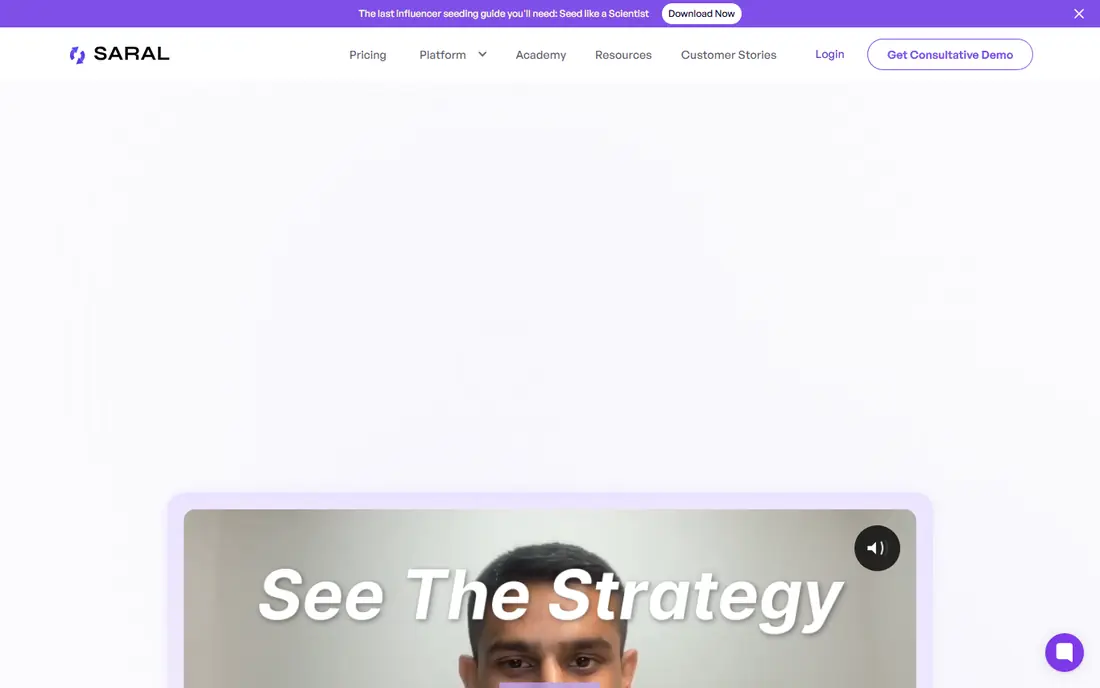
SARAL was built for teams comparing choices in this category. The creator relationship management system keeps conversation history and follow-ups in one place, which matters since seeding is a volume game where organization beats inspiration.
Limits to weigh: You supply the creator list or build it yourself.
SARAL shows no starting price here, so confirm the cost on the vendor site. No free plan comes with SARAL.
- Creator relationship management included
- Purpose-built for influencer seeding at scale
- Less of a content marketplace
Insense
Ideal for: Brands ready to scale UGC into premium social
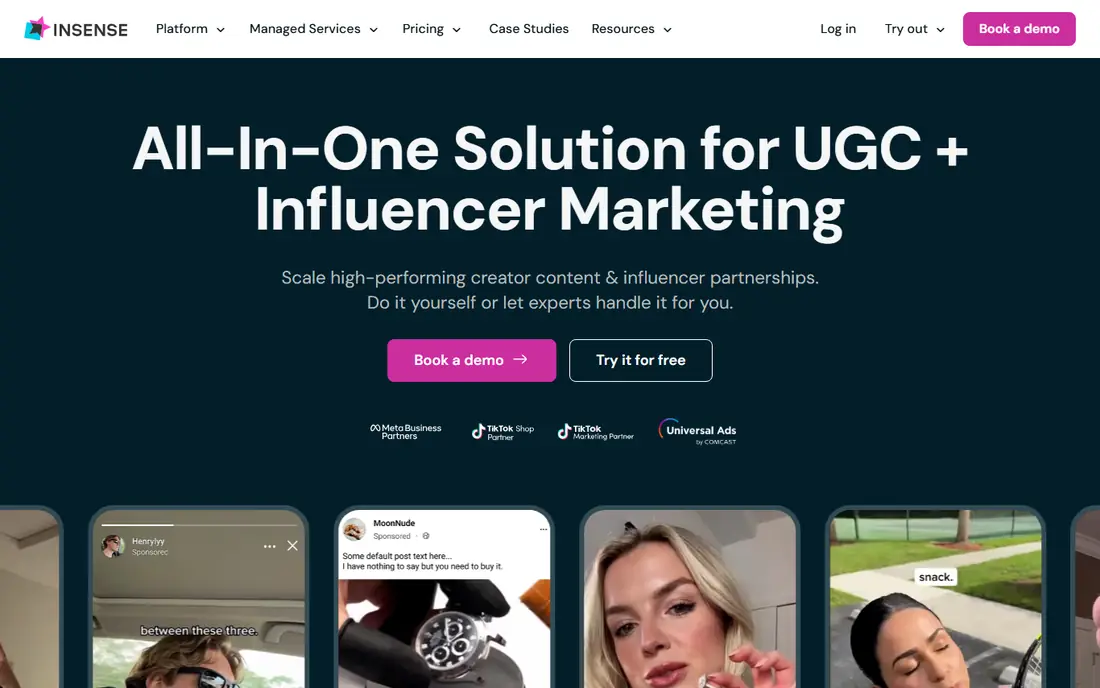
Insense works best for brands ready to scale UGC into premium social. Insense includes the full journey from a brand's first UGC test to a scaled creator program. The self-service marketplace lets you brief creators and receive content within about two weeks, with contracts, payments, and usage rights handled automatically.
On top of that, when you are ready to spend more, the managed service team takes over strategy, sourcing, and execution, and the product supports TikTok Spark Ads and Meta partnership ads for amplifying what works. That range is the selling point and the caveat. More specifically, beginners can absolutely start self-serve, but Insense's pricing and feature set plainly target DTC brands and agencies that will run creator content as a continuing channel instead of a one-off experiment. This comparison lists no price for Insense; ask the vendor. No free plan comes with Insense.
What to check first: Better suited to brands with real budgets.
- Usage rights handled in the workflow
- Meta partnership ads
- Managed services add cost over self-serve
Collabstr
Ideal for: Running your first creator campaign
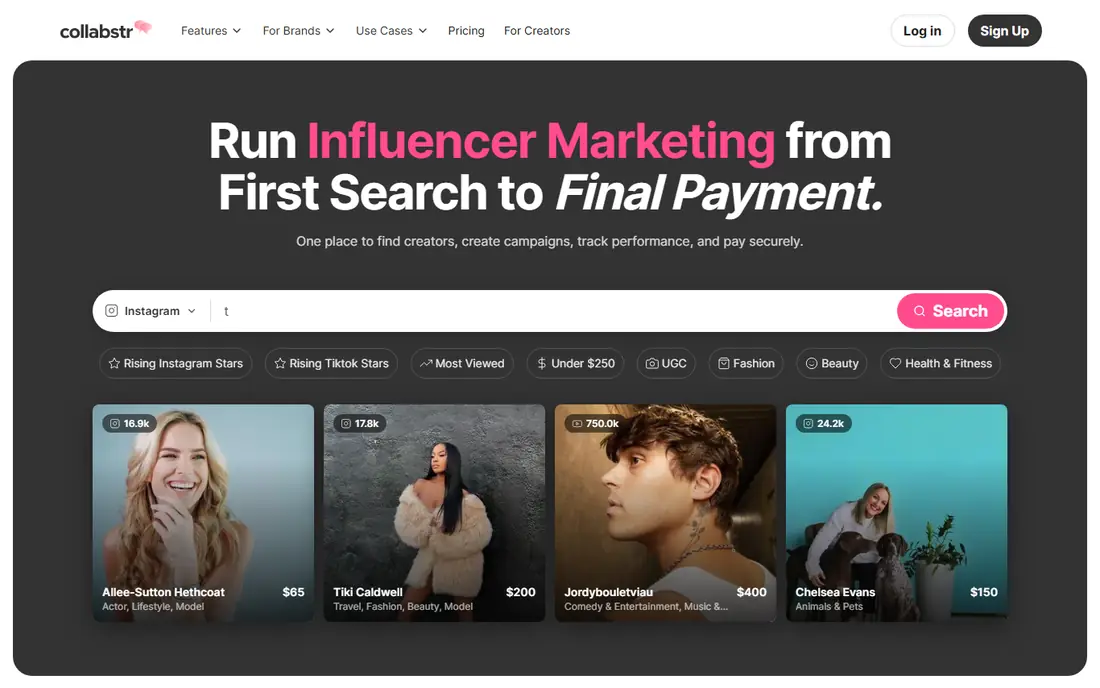
Collabstr is aimed squarely at running your first creator campaign. Collabstr is the closest thing this category has to a self-serve starting line. On top of that, for a first campaign under a few hundred dollars, that is the right level of hand-holding.
The system also deals with the paperwork beginners forget about: contracts, usage rights negotiation, payouts, and tax forms across 150 countries. The honest tradeoff is that a marketplace this large bundles every quality level. Searching the marketplace costs nothing: you filter 1.3M-plus creators by product, niche, audience, and budget, see verified engagement rates and demographics, and read reviews from other brands before spending a dollar. Pricing for Collabstr is not stated here, so ask the vendor for current figures. You can start on Collabstr without paying.
Where it falls short: Quality varies since the marketplace is huge.
- Transparent creator rates before you commit
- Escrow holds funds until you approve content
- You handle the brief and relationship yourself
Cohley
Ideal for: Mid-market brands that require compliance handled
In short, Cohley is for mid-market brands that require compliance handled. Cohley is the system you pick when getting UGC wrong would be pricey.
More specifically, every asset comes with full perpetual usage rights, creators are trained on FTC disclosure requirements before they enter a brief, and AI scoring checks submissions against your brief before they reach your queue. Pricing for Cohley is not stated here, so ask the vendor for current figures. Cohley has no free plan.
Where it falls short: Pricing reflects that positioning.
- 200,000+ vetted creators
- Brand safety and FTC compliance built into the workflow
- Designed for mid-market and enterprise, not solo founders
Billo
Ideal for: UGC video ads backed by performance data
Billo is designed for UGC video ads backed by performance data. The differentiator is the data layer: briefs and creator matching are informed by analysis of over a million Meta ads.
So the guidance on hooks, structure, and creative angles comes from what actually converted instead of guesswork. Pricing for Billo is not stated here, so ask the vendor for current figures. Billo has no permanent free option.
Limits to weigh: Pricing is per project; less handy for organic-only strategies.
- Vetted creator network across niches
- Data-led briefs built on 1.41M analyzed ads
- Geared toward premium social advertisers
Our selection method
Pricing pages, product documentation and feature lists were the main sources, and every entry carries at least one honest drawback. Prices and plan limits come from vendor pages and can change, so confirm them on the vendor site before you buy. Position on the page reflects fit for a typical buyer first, with price clarity and free access breaking ties. Treat it as a guide, not a ruling.
What to check before you buy
- Request quotes from SARAL, Billo and the others; the list shows no fixed prices.
- Test the free plan from Collabstr against your real workload before relying on it.
- Read the limits listed for SARAL first: less of a content marketplace, more of an outreach tool.
- Ask SARAL which support channels and response times come with the plan you would buy.
- A short pilot of Cohley with your real workflow tells you more than a feature table.
Frequently asked questions
Do these tools publish their prices?
No. None of the tools, from SARAL to Billo, shows a fixed starting price here, so budget time for quotes.
Which options for UGC platforms for beginners have a free plan?
Collabstr is the only tool in this list with a free plan. Free plans usually cap users, projects or features, so check the limits on the vendor page.
Can I try these tools before paying?
Often, yes. Collabstr has a free plan. Use your own data and a real task during the test, and check what the free tier or trial limits before you rely on it.
What is an UGC system?
The product generally takes care of creator discovery, briefs, contracts, payments, and usage rights, so you do not have to handle creators over DMs and spreadsheets.
Is SARAL the right pick for everyone comparing UGC platforms for beginners?
No single tool suits every team. SARAL comes first because it fits teams comparing options in this category, while Insense suits brands ready to scale UGC into premium social and Collabstr suits running your first creator campaign. Match the tool to your own size, budget and workflow before deciding.
What is the difference between UGC and influencer marketing?
UGC is content you pay for and typically run as ads yourself; the creator's follower count does not matter much. Influencer marketing pays for access to the creator's audience through posts on their accounts.