Microsoft Defender for Business comes first here, mainly for small businesses inside the Microsoft ecosystem. Listed starting prices: CrowdStrike Falcon from $7.99 per device a month. For a different need, Sophos Intercept X covers detection and response for stretched IT teams and ESET PROTECT covers cross-platform business device security. The remaining 2 options are covered below with prices and limits.
If you are comparing user threat prevention software for remote teams, this page covers 5 tools in one place: what each is best for, what it costs to start, whether it has a free plan, and the main limit to know about.
Key takeaways
The list opens with Microsoft Defender for Business, aimed at small firms inside the Microsoft ecosystem.
Neither Microsoft Defender for Business nor Kaspersky Endpoint Security, nor any of the other 3 tools, has a permanent free plan; trials and quotes are the norm.
A fair warning about CrowdStrike Falcon: wide product can feel complicated for small teams.
CrowdStrike Falcon is the lowest-priced starter here at $7.99 per device per month.
Best for: Small companies inside the Microsoft ecosystem
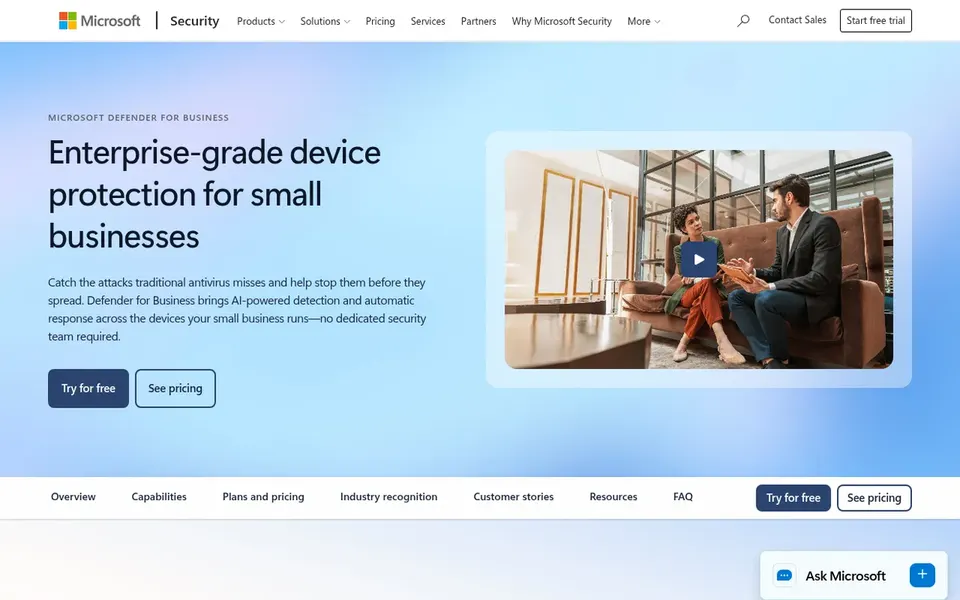
Microsoft Defender for Business is built with small firms inside the Microsoft ecosystem in mind. Remote teams already using Microsoft productivity and management tools get a natural fit, since device protection can sit alongside the systems IT already administers. Its value is closely tied to how much of your stack runs on Microsoft.
Limits to weigh: Restricted appeal outside Microsoft estates.
Mixed or non-Microsoft environments may find the fit less compelling. From a buyer's view, Microsoft Defender for Business is a device security option built to help protect small companies against cybersecurity threats. More specifically, teams needing deep, standalone detection and response workflows across plenty of systems should compare the more specialized endpoint choices here before deciding. Pricing for Microsoft Defender for Business is not stated here, so ask the vendor for current figures. Trial and free access: Not stated.
Best for: Detection and response for stretched IT teams
Think of Sophos Intercept X for detection and response for stretched IT teams. The investigation and response features assume someone has the time and training to use them, so very small teams may pay for capability they seldom touch. Organizations wanting minimal administration should consider more straightforward endpoint protection, while those needing full managed detection should confirm service choices straight with the vendor.
What to check first: Feature depth can overwhelm small teams.
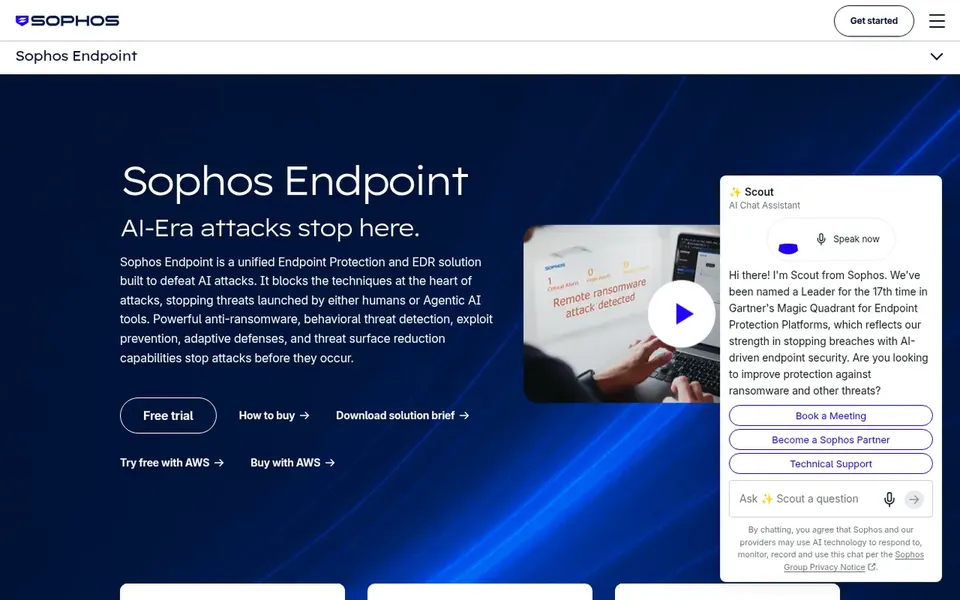
Sophos Endpoint, including Intercept X, gives AI-powered endpoint security targeted at stopping advanced attacks before they affect systems. Detection and response tools let organizations hunt for, investigate and respond to suspicious activity, which matters when remote users create alerts away from central monitoring. Check the vendor site for Sophos Intercept X pricing; none is listed in this comparison. Free access: Not stated.
Think of ESET PROTECT for cross-platform business device security. ESET supplies business security options for company devices across Windows, Android, Mac and Linux operating systems.
Where it shines: Supports Windows, macOS.
Administrators new to the management console should budget time for setup. Teams wanting a single vendor for every security layer may prefer a broader system. Check the vendor site for ESET PROTECT pricing; none is listed in this comparison. As for free access: Free trial.
Points against: Less emphasis on identity protection.
Best for: Cloud-native protection across endpoints and identities
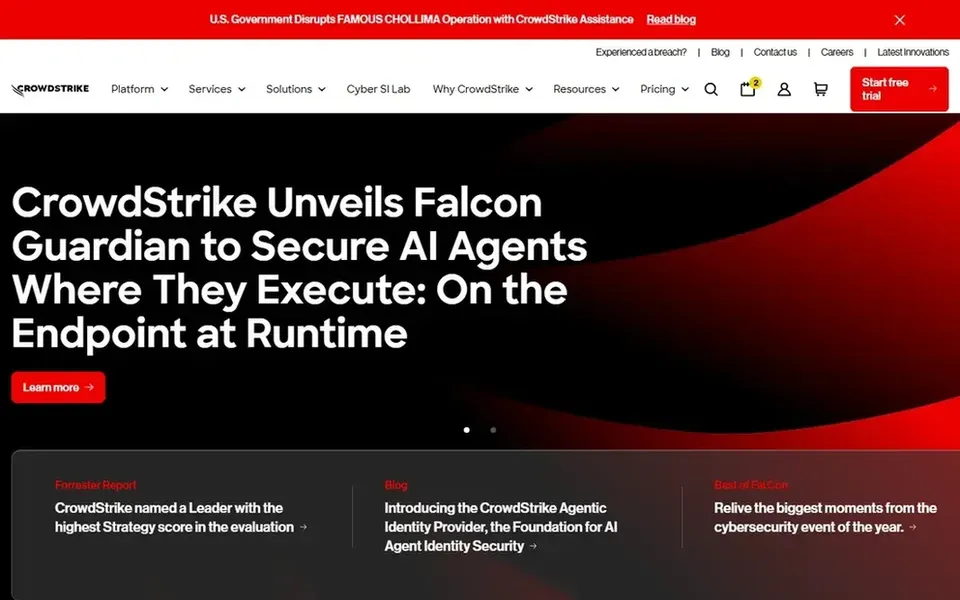
Pick CrowdStrike Falcon if this describes you: cloud-native protection across endpoints and identities. CrowdStrike Falcon is a cloud-native cybersecurity product that guards endpoints, cloud workloads, identities and data.
Best features of CrowdStrike Falcon: identities and data.
The breadth of the system is also its primary hurdle: teams without security specialists may find the console and terminology heavy for daily administration. CrowdStrike Falcon cost at the entry level: $7.99 per device per month. On free options: Free trial.
Downsides: Wide system can feel complex for small teams.
Best for: Companies wanting endpoint plus EDR and XDR
In short, Kaspersky Endpoint Security is for companies wanting endpoint plus EDR and XDR. Kaspersky Endpoint Security sits within Kaspersky Next, the vendor's flagship endpoint, EDR and XDR option for firms.
Strengths: EDR and XDR line.
Trade-offs to know: Full product may exceed entry-level needs.
It safeguards endpoints and aims to stop advanced cyberthreats whereas saving administrative resources, which appeals to remote teams that require solid protection without constant tuning. Worth adding: some organizations face internal or regulatory questions about vendor selection that are unrelated to features, so confirm acceptability before committing. Check the vendor site for Kaspersky Endpoint Security pricing; none is listed in this comparison. Free access: Not stated.
Get a written quote from Microsoft Defender for Business, Sophos Intercept X, ESET PROTECT and Kaspersky Endpoint Security; the list shows no starting price for them.
Run a trial of ESET PROTECT and CrowdStrike Falcon with real work before paying for a year; your own workflow is the best test.
Read the limits listed for Microsoft Defender for Business first: most value relies on Microsoft tooling.
Confirm the exact Microsoft Defender for Business plan that includes your must-have features.
Let daily users try CrowdStrike Falcon on real work; their feedback beats any feature checklist.
How we picked
Each tool was reviewed on what its vendor publishes: price, plan limits, core features and stated drawbacks. We did not run hands-on tests. Prices and plan limits come from vendor pages and can change, so confirm them on the vendor site before you buy. The sequence is a judgement call: typical use case first, then pricing transparency, then free access. Use the profiles to check fit. This applies to all 5 user threat prevention software for remote teams options compared here.
Every price and plan detail on this page comes from the vendors’ own websites. We did not run hands-on tests unless the text says so, and we do not publish star ratings or review scores. See how we score and our disclosure.
Keep your shortlist in one place
Paste prices, trial dates and notes from this guide into Ainotely, our AI note app. It files them into a topic and pulls out tasks like “cancel trial by Friday”. Free 7-day trial, no card needed.
Not all of them. Microsoft Defender for Business, Sophos Intercept X, ESET PROTECT and Kaspersky Endpoint Security publish no starting price, so expect a quote request for those. The rest, CrowdStrike Falcon included, show a starting price, though seats and billing terms still change the final cost.
Does any tool for user threat prevention software for remote teams here have a free plan?
A permanent free plan is not offered by Microsoft Defender for Business, Kaspersky Endpoint Security or the other tools here. ESET PROTECT, CrowdStrike Falcon offer a trial. Plan a short evaluation period instead.
How are the tools for user threat prevention software for remote teams ordered?
The order follows typical fit for user threat prevention software for remote teams, with Microsoft Defender for Business first and Kaspersky Endpoint Security last, then price clarity and free access. It is editorial judgement, not a score, so another team could rank the tools differently.
Can I try these tools before paying?
Often, yes. ESET PROTECT and CrowdStrike Falcon offer a free trial. Use your own data and a real task during the test, and check what the free tier or trial limits before you rely on it. Pricing, free plan details and limits for all 5 tools in this user threat prevention software for remote teams roundup sit on the individual cards above.
What should remote teams look for in threat prevention software?
Prioritize cloud-delivered management so administrators can act from anywhere, wide device and operating system coverage, and protection that follows user identities as well as endpoints.