Best VC Portfolio Value-Add Services in 2026: 8 Services Compared

- Value-add services are how a VC firm helps portfolio companies beyond writing a check, from talent and customers to fundraising and operations.
- Talent platforms like Wellfound and hiring support matter most to early-stage companies, while reporting tools like Visible matter most to funds.
- Carta and Affinity give funds the infrastructure to deliver value-add at scale, rather than ad hoc introductions.
- The best value-add is specific: a hire, a customer, or a follow-on investor, not generic advice.
- Our pick for most funds is a stack of Carta, Affinity, and Wellfound, which covers equity, relationships, and talent together.
Disclaimer: This article is for information only and is not financial or investment advice.
Quick comparison
| Product | Ideal for | Price from | Free version | |
|---|---|---|---|---|
 Carta | Equity infrastructure for value-add | See website | No | Visit |
 Affinity | Relationship-driven introductions | See website | Free trial | Visit |
 Wellfound | Portfolio hiring support | See website | Yes | Visit |
 Visible | Portfolio reporting and health | See website | Free trial | Visit |
 AngelList | Fund and talent infrastructure | See website | No | Visit |
 Harmonic | Sourcing and monitoring value | See website | No | Visit |
 Allocations | Fund infrastructure for emerging funds | See website | No | Visit |
 Seraf | Investor and portfolio management | See website | No | Visit |
The best VC portfolio value-add services
Value-add is the difference between a fund that only invests and a fund that helps companies win. The services below were compared on how they help funds deliver hiring, fundraising, customer introductions, operational support, and reporting to portfolio companies.
Carta
Ideal for: Equity infrastructure for value-add
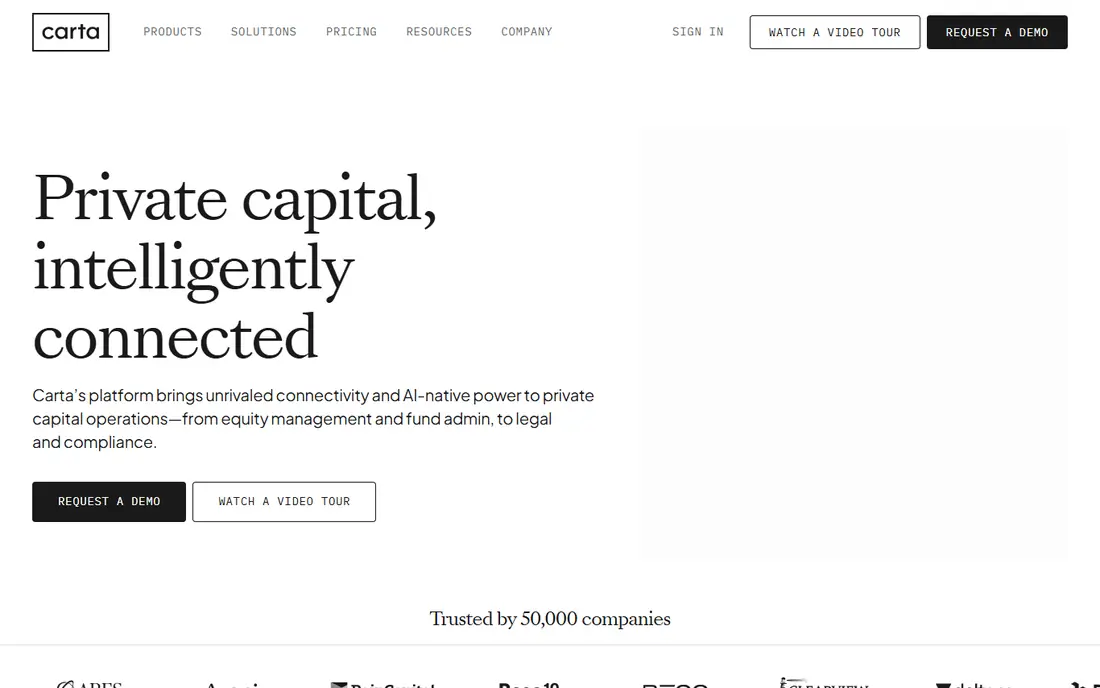
Carta gives funds the equity infrastructure that makes other value-add possible: accurate cap tables, option management, and portfolio reporting. When a fund helps a portfolio company hire, that company needs option grants that work, and when it raises again, it needs clean equity records. Carta provides that foundation, and its widespread startup adoption makes data sharing easier.
Carta alone does not hire people or win customers, so it must pair with talent and relationship tools. As the infrastructure layer of value-add, though, it is essential, and most serious funds treat it as a baseline.
- Clean equity data underpins hiring and fundraising help
- Portfolio reporting
- Widely used by startups
- Infrastructure, not direct company help
- Pricing scales with portfolio
Affinity
Ideal for: Relationship-driven introductions

Affinity turns a firm's network into a usable asset by mapping relationships from email and calendar data and tracking dealflow and introductions. For value-add, that matters: the best introduction is a specific person, not a vague offer to help, and Affinity helps partners find that person quickly. It also tracks whether introductions actually happen, which keeps value-add accountable.
The tool only works if the whole investment team uses it, and pricing is quote-based. For a fund whose value-add rests on its network, Affinity is the system that makes that network actionable.
- Maps who knows whom across the firm
- Tracks introductions
- Helps match founders to the right contacts
- Needs full team adoption
- Pricing is quote-based
Wellfound
Ideal for: Portfolio hiring support
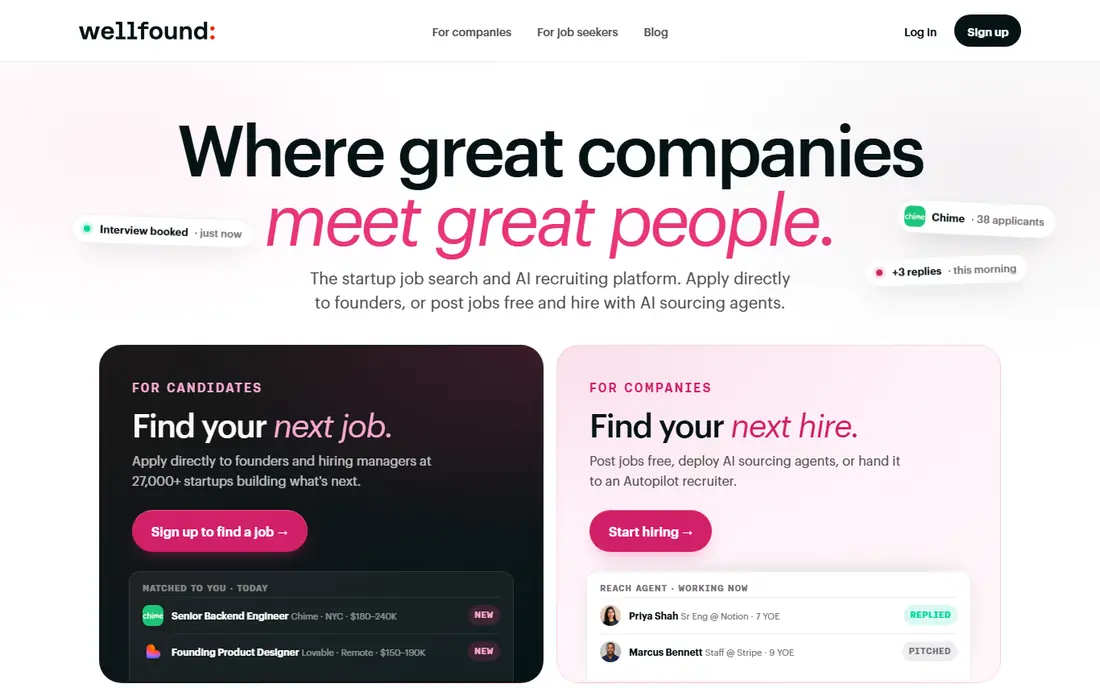
Wellfound, formerly AngelList Talent, is one of the most practical value-add tools a fund can offer portfolio companies: a hiring channel where startups find engineers, operators, and early team members. Funds can recommend it to founders, share portfolio job boards, and help companies reach candidates who actively want startup work. For early-stage companies, hiring is often the binding constraint, so this help is concrete.
It is less suited to later-stage executive searches, where specialist recruiters matter more. For early-stage hiring, though, Wellfound is the most direct talent value-add a fund can provide.
- Startup hiring reach
- Free basic posting
- Helps portfolio companies hire engineers and operators
- Startup-focused, less suited to later-stage executive hiring
- Quality varies by role
Visible
Ideal for: Portfolio reporting and health
Visible helps funds deliver value-add by revealing which companies need help, through regular founder updates and portfolio dashboards. A fund cannot help a struggling company it does not know about, and Visible's update flow surfaces metrics, hiring needs, and fundraising plans early enough to act. That early signal is the practical core of portfolio support.
Its value depends on founders sending updates, and reporting alone does not solve problems: partners must act on what they learn. As the sensing layer for value-add, Visible is a strong tool.
- Regular founder updates reveal problems early
- Clean reporting
- Helps funds spot companies needing help
- Needs founder cooperation
- Reporting alone does not fix problems
AngelList
Ideal for: Fund and talent infrastructure
AngelList gives emerging funds infrastructure that supports value-add: fund administration, special purpose vehicles for follow-on investments, and a talent platform for portfolio hiring. That combination lets a small fund offer professional operations and hiring help without building both in-house. Its startup ecosystem also connects portfolio companies to candidates and investors.
Fees apply to fund products, and large traditional funds may prefer established administrators. For emerging managers building a value-add reputation, AngelList is a practical foundation.
- Fund admin plus talent platform
- Helps emerging funds support portfolios
- SPV and hiring tools
- Fees apply
- Less suited to large traditional funds
Harmonic
Ideal for: Sourcing and monitoring value
Harmonic helps funds add value through data: tracking portfolio companies, spotting growth signals, and finding follow-on or customer opportunities. A fund that knows a portfolio company is hiring fast, raising, or expanding can time its help, whether that means an introduction, a follow-on check, or a customer connection. Its startup database supports that awareness at scale.
Data quality varies for very early companies, and pricing is quote-based. For data-driven funds, Harmonic turns portfolio monitoring into a source of well-timed help.
- Startup data helps funds spot follow-on and customer opportunities
- Portfolio monitoring
- AI sourcing
- Pricing is quote-based
- Data quality varies for early-stage companies
Allocations
Ideal for: Fund infrastructure for emerging funds
Allocations helps emerging funds run professionally, with fund and SPV administration and streamlined investor onboarding. That professionalism is itself a form of value-add: portfolio companies and co-investors trust a fund that operates cleanly, and follow-on vehicles let a fund support winners with more capital. For a new manager, that infrastructure matters.
It does not directly hire or win customers for portfolio companies, so it must pair with talent and relationship tools. As the operational backbone for an emerging fund's value-add, Allocations is a solid choice.
- Streamlined fund and SPV administration
- Helps emerging funds operate professionally
- Investor onboarding
- Fees apply
- Infrastructure, not direct portfolio help
Seraf
Ideal for: Investor and portfolio management
Seraf offers portfolio and investor management for venture funds, angel groups, and family offices, with reporting, document storage, and cap table tools at accessible pricing. It suits smaller funds and angel investors who need organized portfolio tracking without enterprise cost. Its reporting helps funds communicate with limited partners and spot portfolio trends.
It is smaller than Carta, with fewer ecosystem integrations, so large funds may need more. For smaller funds and angel groups building a value-add practice on a budget, Seraf is a practical platform.
- Portfolio and investor management for funds and angels
- Reporting and document storage
- Accessible pricing
- Smaller platform than Carta
- Fewer startup ecosystem integrations
How we picked these
We compared official product pages, pricing pages, and service descriptions for venture capital tools, focusing on how each one helps funds deliver concrete help: hiring, introductions, fundraising, reporting, and monitoring. We favored tools with real use by funds and included both infrastructure platforms and direct help channels like hiring.
What to check before you choose
Define what value-add means for your fund. A seed fund's value is mostly hiring and fundraising help, while a growth fund's value leans toward customers, partnerships, and follow-on capital. Choose tools that support your actual model, not a generic list. Also check whether portfolio founders will actually use the tool: a hiring platform founders ignore adds no value.
Finally, measure value-add: track introductions made, hires completed, and follow-on rounds supported, so you know which tools earn their cost and which are just overhead.
One more factor worth weighing is how the option you choose will feel after the first month, not just on day one. A tool or service that looks strong in a demo can become a burden if setup is fiddly, support is slow, or everyday tasks take more clicks than they should. That is why we suggest using a trial with your real workload, your real data, and the people who will actually use it every day. Watch for friction in the first week, since that friction rarely disappears on its own. Also consider what happens when your needs change: can you upgrade, downgrade, or leave without losing your work? A flexible option that grows with you is usually worth more than a slightly cheaper one that locks you into a plan you will outgrow. Finally, talk to at least one current user if you can, since a short honest conversation often reveals more than a polished sales page.
Frequently asked questions
What counts as real VC value-add?
Concrete help counts: a key hire, a customer introduction, a follow-on investor, or operational advice that changes a decision. Generic advice and occasional check-ins do not, no matter how well-intentioned.
Which tool helps most with portfolio hiring?
Wellfound is the most direct hiring help for early-stage portfolios, thanks to its startup candidate pool and free basic posting. For executive hiring, specialist recruiters matter more than any platform.
Do small funds need value-add tools?
Yes, but they should start lean: Carta for equity, a simple reporting tool like Visible, and Wellfound for hiring cover the essentials. Add relationship and data tools as the portfolio grows.
How do funds measure value-add?
They track introductions, hires, customer connections, and follow-on funding that came through the fund, plus founder satisfaction. Without measurement, value-add stays a slogan rather than a service.
Is value-add more important than capital for founders?
It depends on stage. At seed, capital and hiring help matter most, while at later stages, customers, partnerships, and follow-on support grow in importance. The best funds offer both capital and concrete help.
What is the first step when choosing best vc portfolio value add services?
Start by writing down what you need the product or service to do, how many people will use it, and what budget you can sustain for a year. That short brief makes comparisons far easier, since you can test each option against the same requirements instead of being swayed by the longest feature list. Then run a trial of your top two or three choices with real tasks, and pick the one your team actually enjoys using, since adoption matters as much as features.