Best Virtual Medical Assistant Companies in 2026: 7 Companies Compared

- 1
 Wing AssistantGeneral and medical adminVisit
- 2
 Hello RacheHealthcare phone and adminVisit
- 3
 VMeDxMedical virtual assistantsVisit
- 4
 My Mountain MoverUS-based medical supportVisit
- 5
 MyOutDeskScaled virtual teamsVisit
- Wing and MyOutDesk suit practices that want trained general and medical admin support at scale.
- Hello Rache and VMeDx suit practices that want healthcare-focused assistants for phones, scheduling, and intake.
- My Mountain Mover suits practices that want US-based support with healthcare training.
- 20four7VA and BELAY suit practices that want flexible, vetted assistants for admin and billing tasks.
- HIPAA training, data security, and clear task scope matter more than low hourly price for medical work.
Quick comparison
| Product | Ideal for | Price from | Free version | |
|---|---|---|---|---|
| Wing Assistant | General and medical admin | See website | No | Visit |
| Hello Rache | Healthcare phone and admin | See website | No | Visit |
| VMeDx | Medical virtual assistants | See website | No | Visit |
| My Mountain Mover | US-based medical support | See website | No | Visit |
| MyOutDesk | Scaled virtual teams | See website | No | Visit |
 20four7VA | Flexible vetted assistants | See website | No | Visit |
 BELAY | Vetted US assistants | See website | No | Visit |
The best virtual medical assistant companies
We compared official feature pages, pricing pages, and public reviews for seven virtual medical assistant companies. Our pick for most practices is Hello Rache for its healthcare focus, with Wing close behind for practices that need broad admin support.
Wing Assistant
Ideal for: General and medical admin
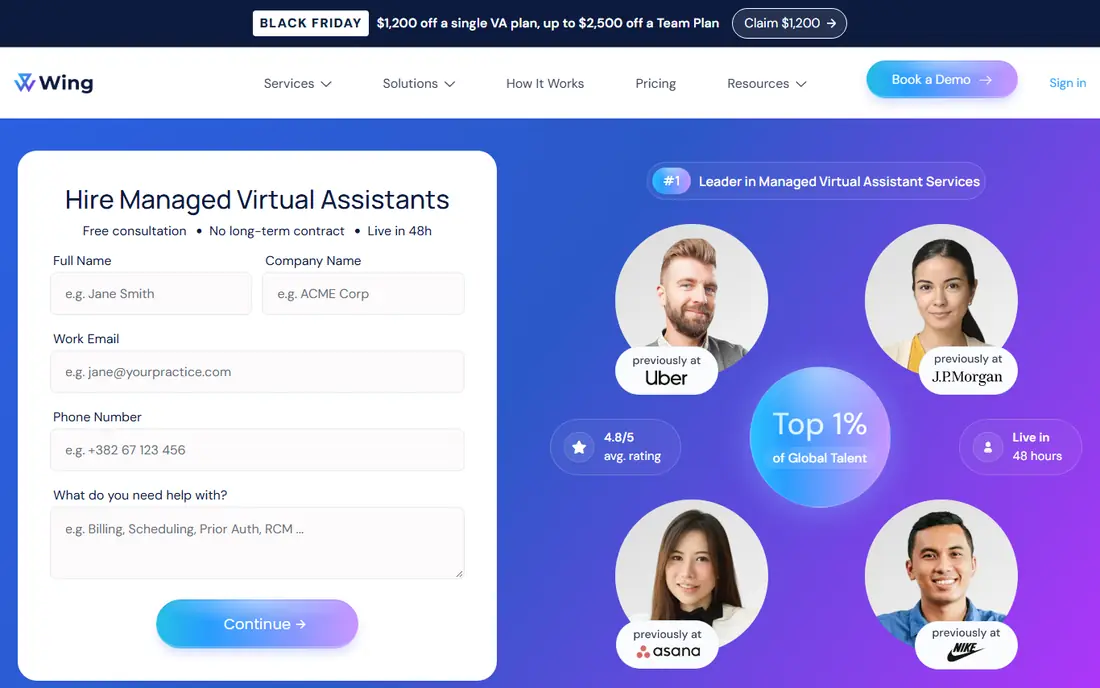
Wing Assistant provides managed virtual assistants for admin, scheduling, inbox, research, and medical office tasks, with a manager who helps match and supervise the assistant. That managed model suits busy practices that do not want to recruit and train alone. Assistants can handle phones, scheduling, data entry, and billing support, freeing clinical staff for patient care.
Medical depth varies by assistant, so practices should state their exact tasks, software, and compliance needs during matching. Pricing is quoted rather than listed. For practices that want broad admin help with management included, Wing is a strong option.
- Managed assistants
- Wide task coverage
- Dedicated manager support
- Quoted pricing
- Medical depth varies by assistant
Hello Rache
Ideal for: Healthcare phone and admin
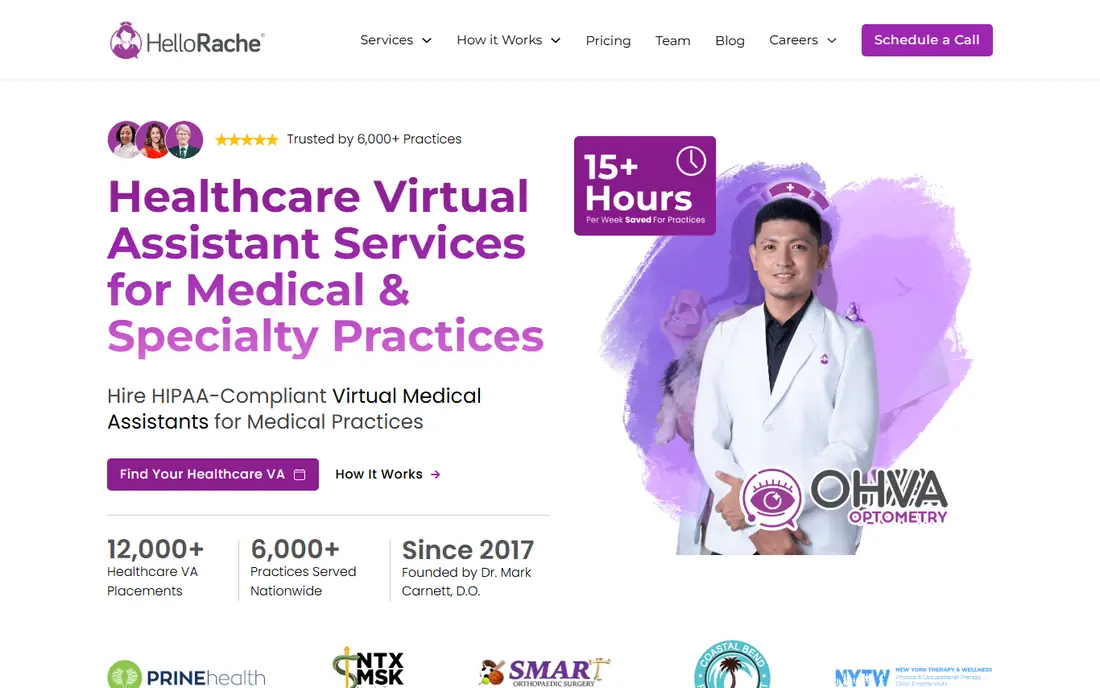
Hello Rache focuses on virtual assistants for healthcare practices, covering phones, scheduling, intake, insurance verification, and admin follow-up. That focus means assistants arrive with healthcare context, which reduces training time on medical office workflows. Practices can use Hello Rache for front-desk coverage without hiring full-time staff for every shift.
The service leans toward phone and admin roles rather than clinical scribing or complex billing. Pricing is quoted. For practices whose main pain is missed calls and scheduling gaps, Hello Rache is our top pick.
- Healthcare-focused assistants
- Phone and scheduling strength
- HIPAA-aware training
- Quoted pricing
- Mainly phone and admin roles
VMeDx
Ideal for: Medical virtual assistants

VMeDx provides virtual medical assistants for practices, covering admin tasks, scribing support, scheduling, and documentation help. Its medical-only focus means assistants are trained for healthcare workflows and terminology, which suits practices that need more than general admin help. VMeDx can support physicians with chart prep, inbox management, and follow-up tasks.
Availability can vary by specialty, so practices should confirm coverage for their field and software. Pricing is quoted. For practices that want assistants who already speak medical workflow, VMeDx is a strong specialist choice.
- Medical-only focus
- Scribing and admin support
- Trained assistants
- Quoted pricing
- Availability varies by specialty
My Mountain Mover
Ideal for: US-based medical support
My Mountain Mover offers US-based virtual medical assistants trained for healthcare offices, covering scheduling, phones, billing support, and admin tasks. US-based support suits practices that want time zone alignment and familiar phone manner for patient calls. The company emphasizes training and matching, so practices get assistants prepared for medical office work.
Scale is smaller than large virtual staffing firms, so availability for very large teams may be limited. Pricing is quoted. For small and mid-size practices that value US-based, healthcare-trained support, My Mountain Mover is a good fit.
- US-based assistants
- Healthcare training
- Scheduling and billing help
- Quoted pricing
- Smaller scale than large firms
MyOutDesk
Ideal for: Scaled virtual teams
MyOutDesk is a large virtual staffing firm that places assistants for healthcare, real estate, and admin roles, with managed support and training. Practices can scale from one assistant to a team, covering phones, scheduling, billing, and data tasks. The managed model includes supervision and replacement support, which reduces hiring risk.
Onboarding takes planning, since matching, training, and system access need coordination. Pricing is quoted. For practices that want to scale admin support reliably, MyOutDesk offers depth and process that smaller firms may lack.
- Large vetted talent pool
- Healthcare and admin roles
- Managed service
- Quoted pricing
- Onboarding takes planning
20four7VA
Ideal for: Flexible vetted assistants
20four7VA provides vetted virtual assistants for admin, billing, scheduling, and support tasks, with flexible hour plans that suit practices with uneven demand. Assistants are screened and matched to client needs, and the company supports ongoing management. That flexibility helps practices that need part-time help or seasonal coverage.
Medical specialization varies by assistant, so practices should confirm healthcare experience and software skills before starting. Pricing is quoted. For practices that want flexible, vetted help without a full-time hire, 20four7VA is a practical option.
- Vetted assistants
- Flexible hours
- Admin and billing support
- Quoted pricing
- Medical specialization varies
BELAY
Ideal for: Vetted US assistants
BELAY places US-based virtual assistants, bookkeepers, and social media managers, with a careful matching process and ongoing support. Practices can use BELAY for admin, scheduling, inbox, and bookkeeping tasks, with assistants who work US hours. The vetting and matching process is a key draw for practices that want a reliable hire without a long search.
BELAY is a general assistant firm, so medical depth is lighter than Hello Rache or VMeDx. Pricing is also higher than some rivals. For practices that want US-based, well-matched admin help and can train on medical specifics, BELAY is a trusted option.
- US-based vetted assistants
- Dedicated matching
- Bookkeeping and admin
- Higher price point
- Medical focus is lighter than specialists
How we picked these
We compared official feature pages, pricing pages, and public reviews for each company, and we favored firms that still work in October 2026 and serve medical or healthcare admin needs. We did not claim hands-on testing, and we weighed healthcare focus, training, data security practices, and fit for different practice sizes. Where pricing was quoted rather than listed we wrote "See website" rather than guessing.
What to check before you choose
Start with compliance. Ask how assistants are trained on HIPAA, how patient data is accessed and stored, and what agreements the company signs. A low price is not worth a data risk, so confirm security practices in writing before sharing any patient information. Next, define tasks clearly: phones, scheduling, billing, scribing, and inbox work need different skills.
Test with a small scope first, such as scheduling or intake, before handing over billing or chart work. Check time zone coverage, backup cover for sick days, and how replacements work if an assistant leaves. Finally, confirm which software the assistant already knows, since training on your EHR or practice system takes time and affects early results.
Also plan the working relationship in detail before the first week. A virtual assistant succeeds when tasks, tools, and response times are written down, not assumed. List every task the assistant will own, the software they will use, and the turnaround you expect for phones, messages, and scheduling requests. Set a daily or weekly check-in for the first month, with a shared task list so both sides can see what is done and what is stuck. Give the assistant a clear escalation path for urgent clinical messages, billing questions, and unhappy patients, since guessing under pressure causes errors. Keep patient data access minimal: grant only the systems and records each task needs, and review access when tasks change. Document passwords and access in a secure manager, never in chat or email.
Cost planning also needs care beyond the headline monthly rate. Ask what is included in the rate, such as management, training, backup cover, and software, and what costs extra. Backup cover matters most: an assistant who is sick or on leave should not leave phones unanswered, so confirm how cover works and how fast it starts. Trial length and exit terms matter too, since a poor match should be replaceable without a long notice fight. Track results in the first month with simple measures: calls answered, appointments booked, intake forms completed, and errors found. If those numbers do not improve, change the task mix or the assistant before renewing, rather than hoping a weak start fixes itself.
Frequently asked questions
What does a virtual medical assistant do?
A virtual medical assistant handles admin work such as phones, scheduling, intake, insurance verification, billing support, and documentation help. Clinical care stays with licensed clinicians, while assistants free staff time for patient-facing work. Task scope should be written down before work starts.
Are virtual medical assistants HIPAA compliant?
Reputable firms train assistants on HIPAA and sign business associate agreements, but compliance also depends on your practice systems and controls. Ask for training details, access controls, and agreements in writing, and limit data access to what each task needs.
How much does a virtual medical assistant cost?
Most firms use quoted monthly pricing based on hours, tasks, and assistant experience, so public prices are rare. Part-time plans cost less than full-time dedicated assistants. Ask for a written quote that lists hours, backup cover, and management fees.
Should I choose a medical-only firm or a general firm?
Medical-only firms like Hello Rache and VMeDx suit practices that need healthcare workflow knowledge fast. General firms like Wing and BELAY suit practices that need broad admin help and can train on medical specifics. Choose based on how much training time you can spare.
Can a virtual assistant handle billing?
Yes, many firms support billing tasks such as claims follow-up, payment posting, and insurance verification. Billing needs careful training and system access, so start with a narrow billing scope and check work closely in the first weeks.