Best VWO Alternatives in 2026: 8 Options Compared

- 1
 OptimizelyEnterprise experimentation at scaleVisit
- 2
 AB TastyTesting and personalisation for marketing teamsVisit
- 3
 ConvertPrivacy-focused A/B testingVisit
- 4
 KameleoonTesting and personalisation in EuropeVisit
- 5
 Adobe TargetPersonalisation inside Adobe Experience CloudVisit
- Our pick for most people is Optimizely, because it balances price, features and ease of use for the widest group of readers.
- Free plans are real here, but the limits matter: check what AB Tasty and Convert actually include before you commit.
- Prices in this guide come from vendor pricing pages and current comparisons checked in October 2026, and they can change, so confirm the plan on the vendor site before you buy.
- The best choice depends on your budget, your experience level and how much support you want, not on which brand is most famous.
Quick comparison
| Product | Ideal for | Price from | Free version | |
|---|---|---|---|---|
| Optimizely | Enterprise experimentation at scale | See website | No | Visit |
| AB Tasty | Testing and personalisation for marketing teams | See website | Free trial | Visit |
| Convert | Privacy-focused A/B testing | See website | Free trial | Visit |
| Kameleoon | Testing and personalisation in Europe | See website | Free trial | Visit |
| Adobe Target | Personalisation inside Adobe Experience Cloud | See website | No | Visit |
 Dynamic Yield | Personalisation for commerce and media | See website | No | Visit |
 GrowthBook | Open-source experimentation for product teams | See website | Yes | Visit |
 SiteSpect | Server-side testing without page flicker | See website | No | Visit |
The best VWO Alternatives in 2026
We compared official feature pages, pricing pages, app store listings, privacy policies and public reviews to build this list for best vwo alternatives. Every option below exists and works today, and each one earns its place for a different kind of reader.
Optimizely
Ideal for: Enterprise experimentation at scale
Here is the short version. Optimizely is the enterprise standard for experimentation, with testing, feature flags and personalisation that scale across large sites. It fits readers who want enterprise experimentation at scale, and its published feature set matches that promise rather than trying to cover every possible use case at once. The price picture is see website, with a free plan status of no. The price and implementation effort suit larger teams, so smaller sites should look at simpler tools first. Before you sign up, check the current plan limits on the official site, because caps on users, usage or features are where most buyers get surprised after the first month.
- Strong experimentation platform
- Feature flags
- Analytics and personalisation
- Enterprise pricing
- Implementation needs technical help
AB Tasty
Ideal for: Testing and personalisation for marketing teams
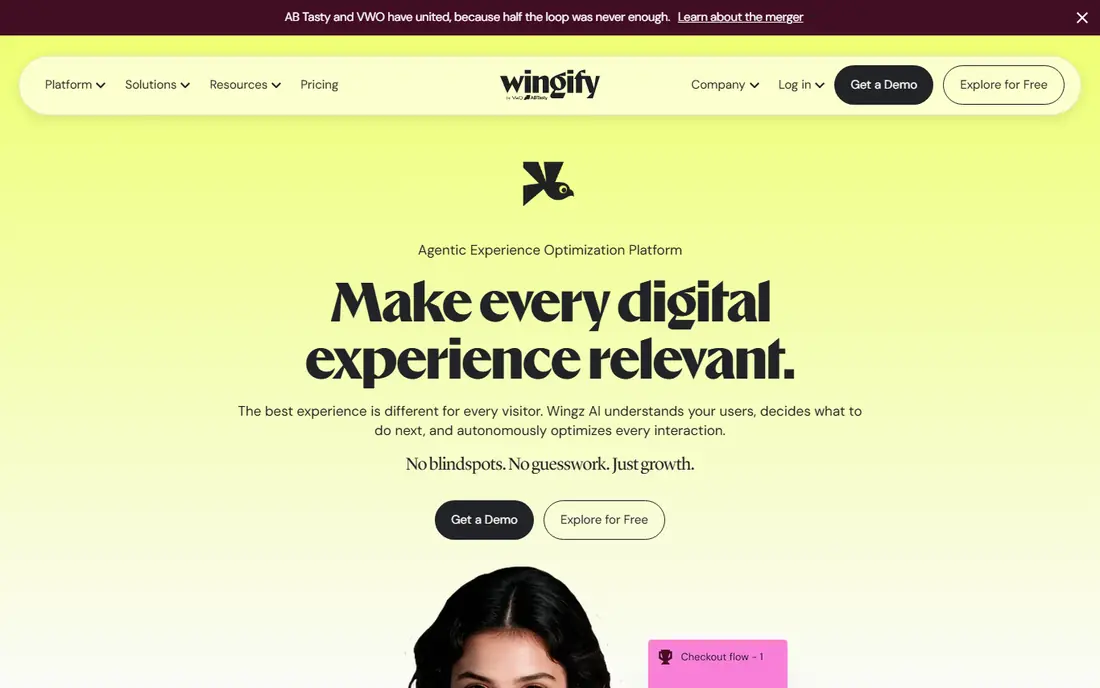
Start here if you want the safe default. AB Tasty gives marketing teams a visual editor and personalisation tools without needing a developer for every test. It fits readers who want testing and personalisation for marketing teams, and its published feature set matches that promise rather than trying to cover every possible use case at once. The price picture is see website, with a free plan status of free trial. Quoted pricing makes comparison harder, so get a quote for your traffic level and compare it with Convert and Kameleoon. Before you sign up, check the current plan limits on the official site, because caps on users, usage or features are where most buyers get surprised after the first month.
- Visual editor
- Personalisation
- Strong reporting
- Pricing is quoted
- Advanced features need higher tiers
Convert
Ideal for: Privacy-focused A/B testing
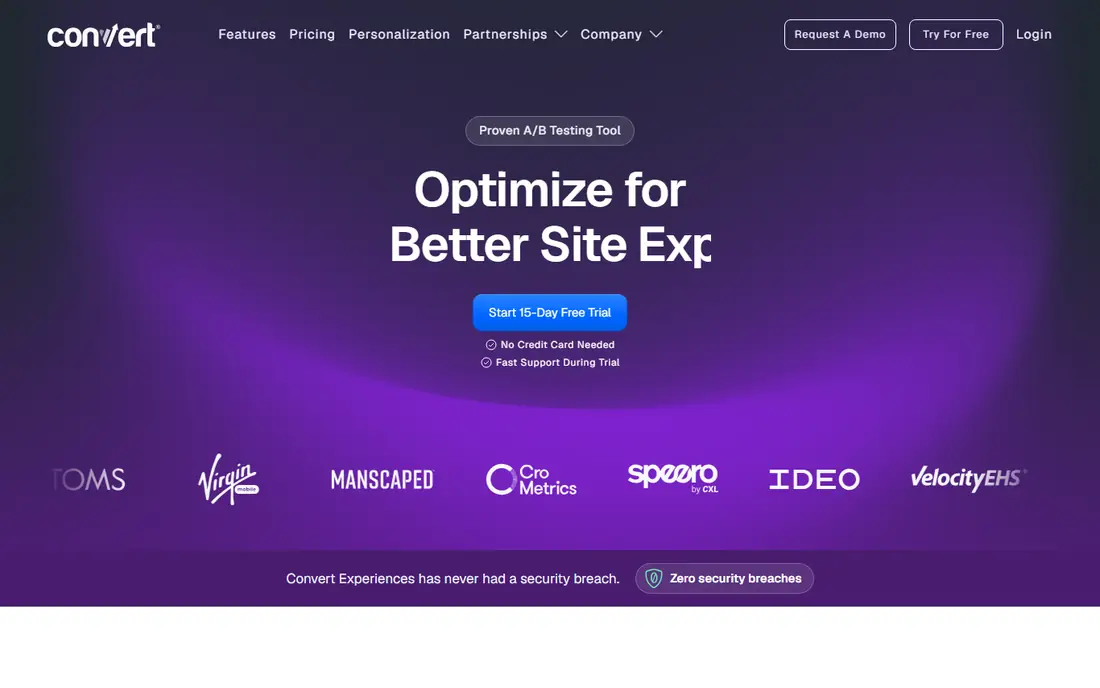
This one suits a specific kind of reader. Convert appeals to teams that care about privacy and data handling, with a testing platform that avoids some common tracking trade-offs. It fits readers who want privacy-focused a/b testing, and its published feature set matches that promise rather than trying to cover every possible use case at once. The price picture is see website, with a free plan status of free trial. Traffic-based pricing means high-traffic sites pay more, so check the cost at your monthly visitor count. Before you sign up, check the current plan limits on the official site, because caps on users, usage or features are where most buyers get surprised after the first month.
- Privacy-first testing
- Visual editor
- Strong support
- Smaller template library than Optimizely
- Pricing grows with traffic
Kameleoon
Ideal for: Testing and personalisation in Europe
Consider this if the top picks do not fit. Kameleoon suits European teams that want testing and personalisation with strong data handling and local support. It fits readers who want testing and personalisation in europe, and its published feature set matches that promise rather than trying to cover every possible use case at once. The price picture is see website, with a free plan status of free trial. Quoted pricing and setup effort mean you should trial it on a real page before committing to a year. Before you sign up, check the current plan limits on the official site, because caps on users, usage or features are where most buyers get surprised after the first month.
- Visual and code editors
- Personalisation
- AI-assisted testing
- Pricing is quoted
- Setup needs care for complex sites
Adobe Target
Ideal for: Personalisation inside Adobe Experience Cloud
A strong option for a narrower need. Adobe Target is the right pick when your site already runs on Adobe Experience Cloud, because personalisation and analytics share the same data. It fits readers who want personalisation inside adobe experience cloud, and its published feature set matches that promise rather than trying to cover every possible use case at once. The price picture is see website, with a free plan status of no. Outside Adobe, the cost and complexity are hard to justify, so judge it as part of that ecosystem. Before you sign up, check the current plan limits on the official site, because caps on users, usage or features are where most buyers get surprised after the first month.
- Deep personalisation
- Adobe integrations
- Enterprise analytics
- Enterprise pricing
- Best inside the Adobe ecosystem
Dynamic Yield
Ideal for: Personalisation for commerce and media
Worth a close look before you decide. Dynamic Yield suits commerce and media sites that want recommendations and personalisation beside testing. It fits readers who want personalisation for commerce and media, and its published feature set matches that promise rather than trying to cover every possible use case at once. The price picture is see website, with a free plan status of no. The implementation effort is real, so budget for developer time as well as the licence fee. Before you sign up, check the current plan limits on the official site, because caps on users, usage or features are where most buyers get surprised after the first month.
- Personalisation and recommendations
- Testing
- Audience tools
- Enterprise pricing
- Implementation is a project, not a plugin
GrowthBook
Ideal for: Open-source experimentation for product teams
This belongs on the shortlist for a reason. GrowthBook gives product teams an open-source way to run feature flags and experiments, with the option to self-host. It fits readers who want open-source experimentation for product teams, and its published feature set matches that promise rather than trying to cover every possible use case at once. The price picture is see website, with a free plan status of yes. Technical setup is required, so non-technical marketing teams may prefer a visual tool like AB Tasty or Convert. Before you sign up, check the current plan limits on the official site, because caps on users, usage or features are where most buyers get surprised after the first month.
- Open-source feature flags and experiments
- Warehouse-friendly analytics
- Self-host option
- Needs technical setup
- Visual editor is simpler than Optimizely
SiteSpect
Ideal for: Server-side testing without page flicker
Do not overlook this one. SiteSpect tests on the server side, which avoids the page flicker that client-side tools can cause on high-traffic sites. It fits readers who want server-side testing without page flicker, and its published feature set matches that promise rather than trying to cover every possible use case at once. The price picture is see website, with a free plan status of no. The enterprise price and technical setup suit larger sites, so smaller teams should start with a client-side tool. Before you sign up, check the current plan limits on the official site, because caps on users, usage or features are where most buyers get surprised after the first month.
- Server-side testing
- No page flicker
- Enterprise support
- Enterprise pricing
- Setup needs technical involvement
How we picked these
We started from official feature pages and pricing pages, then checked app store listings, privacy policies and public reviews to confirm each product still works and still fits the topic. Products that could not be verified, or that only partly matched the topic, were left out, even when they were well known. We favoured a mix of established leaders and strong smaller options, and we weighted price transparency, a usable free tier or trial, and honest limits more heavily than marketing claims. No product on this list paid for its place, and our pick for most people is the one we would suggest to a friend with ordinary needs and an ordinary budget.
How to pick an experimentation tool that fits your traffic
Start with your monthly traffic, because many tools price by visitors and a tool that looks cheap at low traffic can cost far more at scale. Next, decide whether marketing or product teams will run tests: marketing teams need a visual editor, while product teams need feature flags and code-level control. Then check privacy and data handling, since testing tools touch visitor data and regulations differ by region. Run a real test on a real page during the trial, and watch for flicker, load time and reporting clarity. Also check how results are measured. A tool that reports wins without proper statistics can lead you to ship changes that do not actually help. Confirm integrations with your analytics and content platform, and confirm who will own testing after launch, because a tool without an owner quickly becomes an unused subscription.
Frequently asked questions
What is the best VWO alternative?
Optimizely leads for enterprise experimentation, AB Tasty and Convert suit marketing teams, and GrowthBook suits technical product teams that want open source. The right pick depends on traffic, team skills and budget.
Is there a free VWO alternative?
GrowthBook offers a free open-source option, though it needs technical setup. Most visual testing tools offer free trials rather than permanent free plans.
What is A/B testing?
A/B testing shows different versions of a page to different visitors and measures which version performs better on a chosen goal, such as signups or purchases. It helps teams make decisions from visitor behaviour rather than opinion.
Do I need a developer to run tests?
Visual editors let marketers run many tests without code, but complex tests, feature flags and server-side testing still need developer help. Check the editor during a trial with a test you actually want to run.
How much traffic do I need for A/B testing?
Low-traffic sites need longer test runs to reach reliable results, and very low traffic may make testing impractical. Start with high-traffic pages and large changes, where results arrive faster.