For retailers already using Microsoft business apps, Microsoft Dynamics 365 Supply Chain Management is where this list starts. Blue Yonder Warehouse Management fits planning-led warehouse execution; Manhattan Active Warehouse Management fits high-volume, automatic retail fulfillment. Details, prices and limits for the rest of the 6 tools are below.
Choosing warehouse management software for growing retailers usually comes down to price, fit and limits. This Ainotely guide sets 6 tools side by side on those three points, with the facts kept short and checkable.
Key takeaways
This list starts with Microsoft Dynamics 365 Supply Chain Management, which is built for retailers already using Microsoft business apps.
Blue Yonder Warehouse Management comes with a trade-off: configuration can be involved.
For high-volume operations inside SAP landscapes, SAP Extended Warehouse Management is worth a look.
A permanent free plan is missing from all 6 tools, Microsoft Dynamics 365 Supply Chain Management and SAP Extended Warehouse Management included; plan for a trial or a premium start.
Best for: Retailers already using Microsoft business apps
Where Microsoft Dynamics 365 Supply Chain Management fits: retailers already using Microsoft business apps. For expanding retailers, it is attractive when warehouse and inventory needs sit alongside finance, commerce and planning in a Microsoft environment.
This comparison lists no price for Microsoft Dynamics 365 Supply Chain Management; ask the vendor. Free options: Not stated.
Blue Yonder Warehouse Management was built for planning-led warehouse execution. The breadth of the system means configuration and change management take effort, and very small retailers may not use much of it.
Trade-offs to know: May be more than small retailers need.
Retailers with straightforward, single-site operations should weigh whether a more focused inventory tool would serve them better before committing. Pricing for Blue Yonder Warehouse Management is not stated here, so ask the vendor for current figures. Free options: Not stated.
Best for: High-volume, automatic retail fulfillment
Manhattan Active Warehouse Management was built for high-volume, automatic retail fulfillment. Manhattan Active Warehouse Management is a cloud-native WMS built to optimize warehouse operations across receiving, putaway, picking and shipping.
In practice, if your warehouse is still mostly manual and low-volume, a lighter inventory system may be the better starting point. As for the details, implementation generally needs dedicated IT and process expertise. Pricing for Manhattan Active Warehouse Management is not stated here, so ask the vendor for current figures. Trial and free access: Not stated.
Downsides: Implementation demands significant IT resources. Best features of Manhattan Active Warehouse Management: Capable automation and workflow support.
Best for: Smaller retailers moving off spreadsheets
Where Fishbowl Warehouse fits: smaller retailers moving off spreadsheets. It suits expanding retailers that have outgrown spreadsheets and manual counts and want structured inventory, receiving and order workflows without the overhead of an enterprise system.
Points against: May need extras as complexity grows.
As automation and multi-site complexity increase, Fishbowl may present its limits compared to enterprise WMS choices. This comparison lists no price for Fishbowl Warehouse; ask the vendor. On free options: Not stated.
Oracle Fusion Cloud Warehouse Management makes the most sense for Cloud WMS within Oracle supply chain. Oracle Fusion Cloud Warehouse Management is part of Oracle's cloud supply chain and manufacturing suite, which emphasizes built-in AI to boost supply chain efficiency and autonomy.
Trade-offs to know: Tied closely to the Oracle ecosystem.
As for the details, the value depends heavily on adopting Oracle's wider cloud stack, so retailers committed to other ERP systems may not get the full benefit. Beyond that, evaluate integration effort carefully if your finance or order systems sit outside Oracle. Check the vendor site for Oracle Fusion Cloud Warehouse Management pricing; none is listed in this comparison. Free options: Not stated.
Best for: High-volume operations inside SAP landscapes
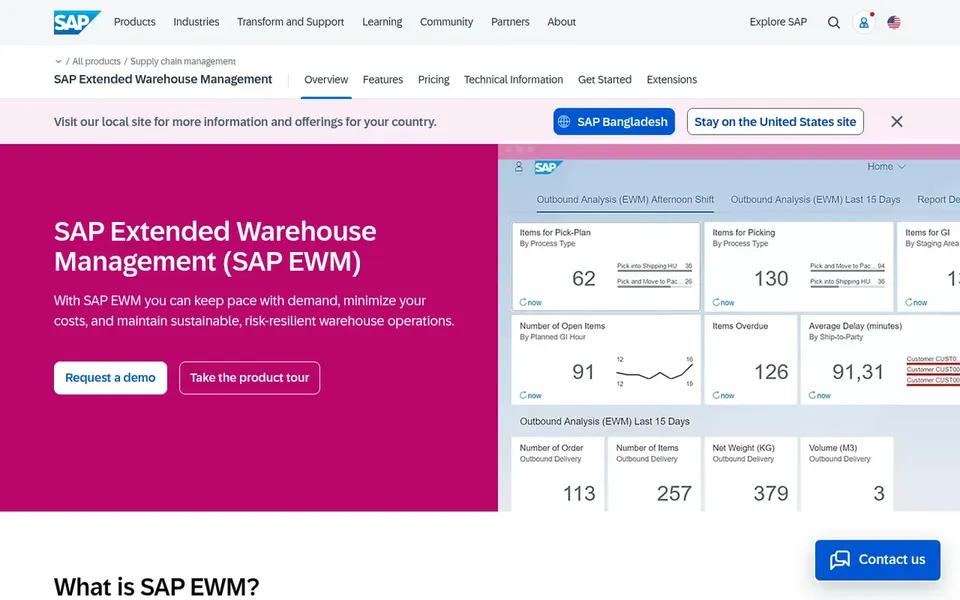
SAP Extended Warehouse Management is a good fit for high-volume operations inside SAP landscapes. The system carries real implementation weight, and retailers without SAP experience may find the ramp-up time steep.
The main drawbacks: Complicated to implement without SAP experience.
In daily use, organizations outside the SAP world frequently choose a standalone WMS instead, particularly when speed to value matters more than deep ERP integration. This comparison lists no price for SAP Extended Warehouse Management; ask the vendor. Free plan details: Not stated.
Confirm the entry price with every vendor: no tool from Microsoft Dynamics 365 Supply Chain Management to SAP Extended Warehouse Management shows a fixed starting price.
Read the limits listed for Microsoft Dynamics 365 Supply Chain Management first: Warehouse features are part of a broader suite.
Pick one real project and run it in Blue Yonder Warehouse Management first; a small pilot shows fit faster than a checklist.
Compare total cost, not headline price: for Manhattan Active Warehouse Management, add extra seats, add-ons and any usage-based charges.
Look at the renewal terms for Fishbowl Warehouse: auto-renewal, notice periods and price changes can matter more than the first-year price.
How we picked
Pricing pages, product documentation and feature lists were the main sources, and every entry carries at least one honest drawback. Treat prices as a snapshot: vendors change plans often, so check the vendor site for the figure that applies today. The order reflects how well each tool fits the most common buying scenario for warehouse management software for growing retailers, then price clarity, then free plan access. It is a starting point, not a verdict.
Every price and plan detail on this page comes from the vendors’ own websites. We did not run hands-on tests unless the text says so, and we do not publish star ratings or review scores. See how we score and our disclosure.
Keep your shortlist in one place
Paste prices, trial dates and notes from this guide into Ainotely, our AI note app. It files them into a topic and pulls out tasks like “cancel trial by Friday”. Free 7-day trial, no card needed.
How important is ERP integration when choosing a WMS?
It matters an excellent deal if you already run an ERP, since warehouse data feeds finance, purchasing and order management. SAP Extended Warehouse Management and Oracle Fusion Cloud Warehouse Management make most sense inside their own ecosystems.
How are the tools for warehouse management software for growing retailers ordered?
The order follows typical fit for warehouse management software for growing retailers, with Microsoft Dynamics 365 Supply Chain Management first and SAP Extended Warehouse Management last, then price clarity and free access. It is editorial judgement, not a score, so another team could rank the tools differently.
Do these tools publish their prices?
No. None of the tools, from Microsoft Dynamics 365 Supply Chain Management to SAP Extended Warehouse Management, shows a fixed starting price here, so budget time for quotes.
Is Microsoft Dynamics 365 Supply Chain Management the right pick for everyone comparing warehouse management software for growing retailers?
No single tool suits every team. Microsoft Dynamics 365 Supply Chain Management comes first because it fits retailers already using Microsoft business apps, while Blue Yonder Warehouse Management suits planning-led warehouse execution and Manhattan Active Warehouse Management suits high-volume, automated retail fulfillment. Match the tool to your own size, budget and workflow before deciding.
What should small retailers check before buying warehouse software?
Confirm the core workflows you need, for example receiving, picking, shipping and inventory counts, and check how the tool links to your sales channels. Also review implementation effort and how the system scales as you add products or locations.
Do expanding retailers need an enterprise WMS like Manhattan or Blue Yonder?
Enterprise systems like Manhattan Active Warehouse Management and Blue Yonder Warehouse Management suit complicated, high-volume or automatic operations. Retailers with more straightforward fulfillment may get more value from a focused inventory and warehouse tool until complexity genuinely demands the bigger product.