Best Warehouse Management Software in 2026: 8 Tools Compared

- 1
 NetSuite WMSNetSuite companiesVisit
- 2
 SAP Warehouse ManagementLarge SAP operationsVisit
- 3
 FishbowlQuickBooks-based SMBsVisit
- 4
 ShipBobEcommerce fulfillmentVisit
- 5
 Cin7Multichannel inventory and warehouseVisit
- NetSuite WMS suits companies already on NetSuite that need a connected warehouse layer for picking, packing and multi-warehouse work.
- SAP Warehouse Management suits large operations already on SAP ERP that need deep warehouse control and compliance features.
- Fishbowl suits small and mid-size businesses that want affordable warehouse and inventory control tied to QuickBooks.
- Pricing models differ sharply: per-user, flat monthly and quote-based, so compare the total at your real headcount and warehouse count.
- Start with your ERP and sales channels, since a warehouse system that does not connect to them will create manual work every day.
Quick comparison
| Product | Ideal for | Price from | Free version | |
|---|---|---|---|---|
| NetSuite WMS | NetSuite companies | See website | No | Visit |
| SAP Warehouse Management | Large SAP operations | See website | No | Visit |
| Fishbowl | QuickBooks-based SMBs | $229 per month | No | Visit |
| ShipBob | Ecommerce fulfillment | See website | No | Visit |
| Cin7 | Multichannel inventory and warehouse | $349 per month | No | Visit |
 Odoo Inventory | Modular, flexible warehouse | See website | Yes | Visit |
 Zoho Inventory | Low-cost multichannel stock | See website | Yes | Visit |
 SKULabs | Barcode-driven warehouse ops | $299 per month | No | Visit |
The best warehouse management software
These eight tools cover enterprise warehouse management, SMB inventory and ecommerce fulfillment. We compared official pricing pages, feature pages and public reviews, focusing on warehouse workflows, integrations and the true cost model.
NetSuite WMS
Ideal for: NetSuite companies
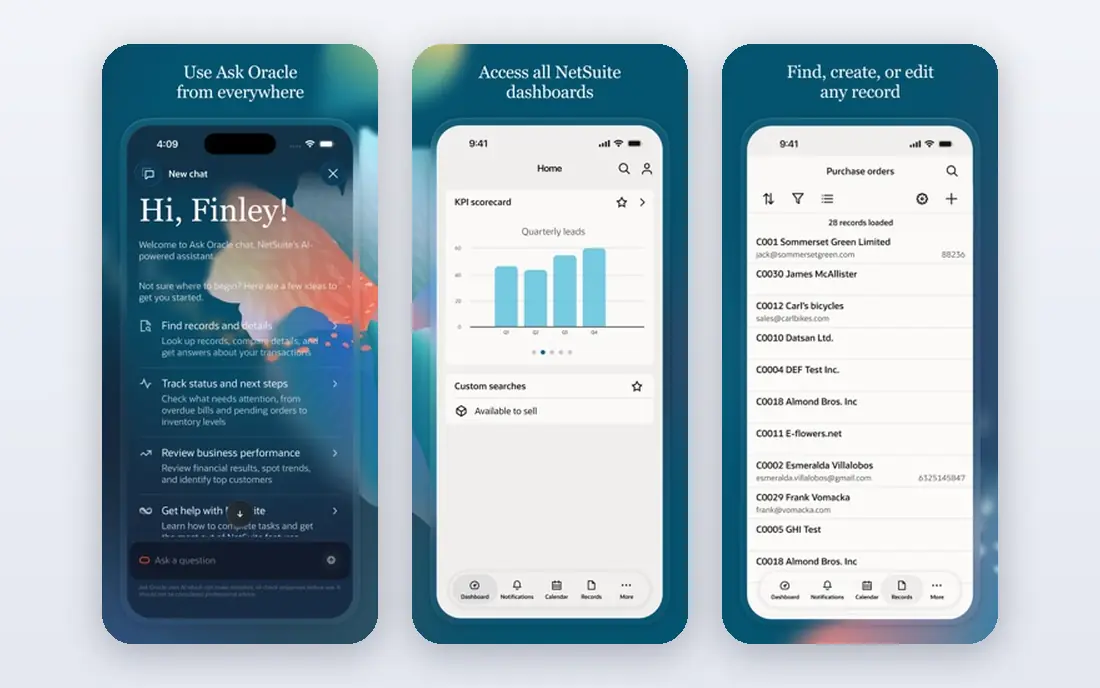
NetSuite WMS adds a warehouse layer to the NetSuite ERP, covering picking, packing, receiving, put-away, returns and 3PL client portals in one connected system. For a company already running NetSuite for finance, orders and inventory, that connection removes the manual handoffs that cause errors between systems.
The cost is the catch: WMS pricing is listed from $99 per user per month in comparisons, and the overall NetSuite bill grows with features and users. Implementation takes effort, and smaller companies may find the total too high. For a NetSuite company with multi-warehouse or 3PL needs, it is the natural choice.
- Deep NetSuite integration
- Picking, packing, receiving and returns
- Multi-warehouse and 3PL portals
- High overall cost once features stack up
- Learning curve
- Per-user pricing from $99 per month in comparisons
SAP Warehouse Management
Ideal for: Large SAP operations
SAP Warehouse Management suits large operations already standardized on SAP ERP. It handles storage bin tracking, cross docking, wave picking, hazardous material records and multi-warehouse work, all connected to SAP's ERP and transportation management for one supply chain view.
Pricing starts around $4,232 per month in comparisons, and implementation often needs SAP consultants, with significant training investment. Smaller companies should look elsewhere. For a large SAP operation with complex sites, SAP WM's depth is unmatched in this list.
- Deep warehouse control
- Hazardous materials and bin tracking
- SAP ERP and transport integration
- Starts around $4,232 per month in comparisons
- Steep learning curve
- Needs SAP consultants
Fishbowl
Ideal for: QuickBooks-based SMBs
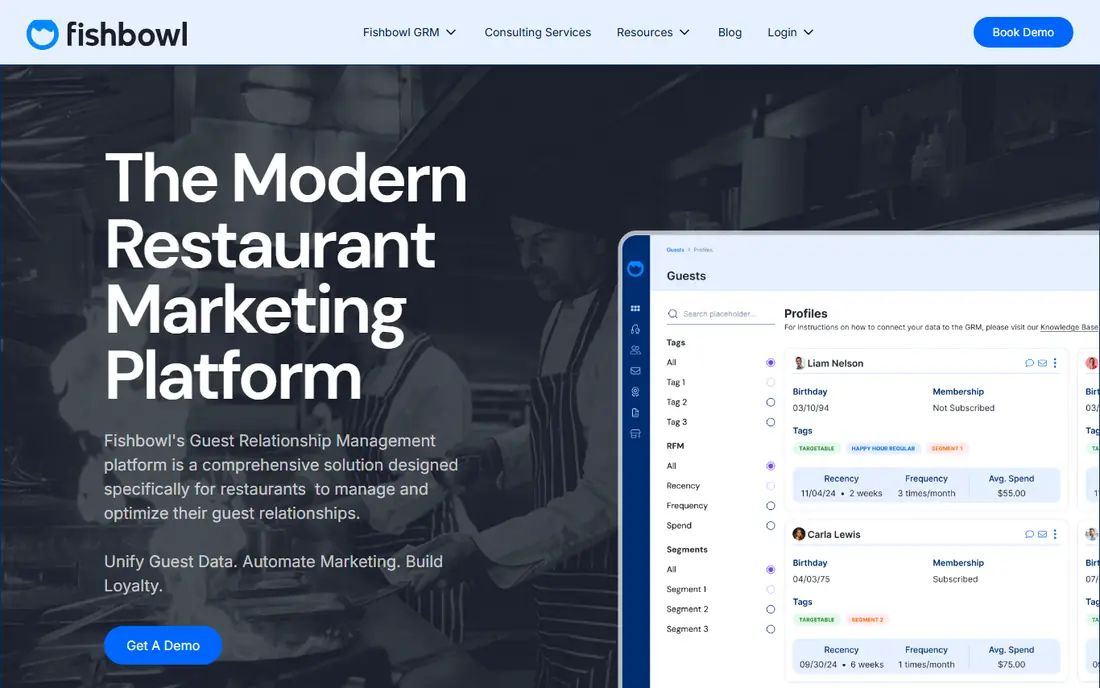
Fishbowl is the SMB pick for warehouse and inventory control tied to accounting. It manages inventory, orders, shipping, part tracking and multiple locations, with native QuickBooks and Xero integration that keeps accounting in sync. Warehousing plans start at $229 per month for two users, with Growth at $429 and Scale at $729 in recent listings.
The interface feels dated compared with modern cloud tools, and manufacturing features sit on higher tiers. For a small or mid-size business already on QuickBooks that needs solid warehouse basics without an enterprise bill, Fishbowl is a strong fit.
- QuickBooks and Xero integration
- Warehousing from $229 per month
- Multiple locations and currencies
- Interface feels dated to some users
- Advanced features need higher tiers
ShipBob
Ideal for: Ecommerce fulfillment
ShipBob combines warehouse software with a fulfillment network, which suits ecommerce brands that want to outsource storage, picking, packing and shipping. It integrates with Shopify, WooCommerce and other sales channels, distributes inventory across fulfillment centers, and gives brands a dashboard for orders and stock.
Pricing is quote-based and tied to fulfillment volume, so it does not fit a company that wants software for its own warehouse. For a growing ecommerce brand that would rather outsource fulfillment than run a warehouse, ShipBob's combined service is compelling.
- Fulfillment network plus software
- Ecommerce integrations
- Inventory distribution across centers
- Pricing is quote-based and tied to fulfillment volume
- Less suited to own-warehouse operations
Cin7
Ideal for: Multichannel inventory and warehouse
Cin7 suits multichannel sellers who need inventory and warehouse control across online stores, marketplaces and wholesale. Published pricing starts at $349 per month and runs to $1,199 per month in October 2026 comparisons, with integrations for major sales channels and accounting tools.
The entry price sits above Zoho Inventory and Odoo, so very small sellers should compare those first. For a growing multichannel business that needs reliable stock control across channels, Cin7's breadth justifies the cost.
- Multichannel inventory and warehouse control
- Published pricing from $349 per month
- Broad integrations
- Higher entry price than Zoho
- Implementation takes planning
Odoo Inventory
Ideal for: Modular, flexible warehouse
Odoo Inventory is the flexible, modular option. Its inventory app covers double-entry stock, barcode scanning, automated replenishment and dropshipping, and it connects to Odoo's sales, purchase, manufacturing and accounting apps as you need them. An open-source community edition keeps entry costs low, while paid plans add hosting and support.
Setup can be complex, and heavy customization raises total cost and needs technical skill. For a small or mid-size business that wants a system it can shape to its own workflows, Odoo's modular approach is a strong advantage.
- Modular apps
- Barcode integration
- Automated replenishment
- Open-source options
- Setup can be complex
- Customization can raise total cost
Zoho Inventory
Ideal for: Low-cost multichannel stock
Zoho Inventory is the low-cost pick for small sellers. Recent listings show plans from $29 per year for two users on Standard, rising through Professional, Premium and Enterprise tiers, with multichannel order management and Zoho app integration. A free tier covers basic use for very small operations.
Lower tiers limit orders per month and warehouse count, so growing sellers should check those caps before committing. For a small business starting out, Zoho's price is hard to beat, and its integration with Zoho Books and CRM adds value.
- Very low entry pricing
- Multichannel order management
- Zoho app integration
- Order and warehouse limits on lower tiers
- Advanced warehouse features need higher plans
SKULabs
Ideal for: Barcode-driven warehouse ops
SKULabs focuses on barcode-driven warehouse operations for ecommerce and distribution, with picking, packing, receiving and shipping workflows built around scanning. Published pricing starts at $299 per month and runs to $1,999 per month in October 2026 comparisons, with integrations for major sales channels.
It lacks the ERP depth of NetSuite or SAP, so companies needing full finance and manufacturing should look there. For a warehouse team that wants fast, scan-driven operations without enterprise complexity, SKULabs is a practical choice.
- Barcode-first warehouse workflows
- Published pricing from $299 per month
- Ecommerce integrations
- Higher entry price than Zoho
- Less ERP depth than NetSuite or SAP
How we picked these
We compared official pricing pages, feature pages and public reviews for warehouse management tools available in October 2026. We favored tools with real warehouse workflows, including receiving, put-away, picking, packing and shipping, rather than simple stock lists, and we weighed ERP integration, pricing transparency and scalability.
What to check before you choose warehouse software
Start with your existing systems. List your ERP or accounting tool, your sales channels and your shipping carriers, then check which warehouse tools connect to all of them natively. A tool that needs custom integration for your main channel will cost time and money every day.
Then map your core workflows on paper: receiving, put-away, picking, packing, shipping and returns, plus cycle counting and multi-warehouse transfers if you need them. Test each shortlisted tool against those exact flows in a trial, with your own products and barcodes, rather than trusting a demo with sample data.
Finally, price the total at your real scale. Multiply per-user pricing by your warehouse headcount, add implementation, training and integration costs, and check warehouse and order limits on lower tiers. A cheap headline price can become expensive at three warehouses and twenty users, while a quote-based enterprise tool may be overkill for a single site.
If you are still unsure, trial the top two options from this list with a real project before committing to a paid plan, since hands-on use reveals fit faster than any feature list. Check how each option handles your everyday tasks, how quickly support answers a question, and how easy it is to export your data if you later switch. A short trial with real work gives you evidence that no comparison table can, and it protects you from paying for features you will never use.
Frequently asked questions
What is the best warehouse management software?
NetSuite WMS is best for NetSuite companies, SAP Warehouse Management suits large SAP operations, and Fishbowl is best for QuickBooks-based small and mid-size businesses. The best choice depends on your ERP, size and budget.
How much does warehouse management software cost?
Pricing varies widely: Zoho Inventory starts very low, Fishbowl from $229 per month, Cin7 from $349 per month and SKULabs from $299 per month, while NetSuite WMS and SAP WM are quote-based or per-user at much higher totals.
What is the difference between WMS and inventory software?
Inventory software tracks stock levels and orders, while warehouse management software adds warehouse workflows such as receiving, put-away, picking, packing, shipping and bin tracking. Larger operations need WMS, while small sellers may only need inventory tools.
Do I need a WMS if I use ShipBob?
If ShipBob fulfills your orders, its platform covers warehouse operations for you, so you may not need separate WMS software. Companies running their own warehouse need a WMS or inventory tool to manage stock and workflows.
Can warehouse software integrate with QuickBooks?
Yes, Fishbowl offers native QuickBooks and Xero integration, and Odoo, Cin7 and Zoho Inventory also connect to accounting tools. Check the exact integration for your QuickBooks version before buying.