Best Ways to Promote an App in 2026: 7 Tools Compared

- 1
 AppTweakApp store optimizationVisit
- 2
 Sensor TowerMarket and ad intelligenceVisit
- 3
 SplitMetricsStore page testingVisit
- 4
 App RadarASO for small teamsVisit
- 5
 StoreMavenPre-launch store testingVisit
- App store optimization is the highest-return starting point, and AppTweak and App Radar suit teams that want keyword and listing tools.
- Paid user acquisition needs careful tracking, and Sensor Tower and SplitMetrics suit teams that test ads and store pages.
- StoreMaven suits pre-launch testing of screenshots and video, while Phiture suits teams that want growth strategy plus execution.
- AppFollow and AppFollow-style review tools help you turn ratings and reviews into store ranking gains.
- No single tool promotes an app alone: pair store optimization with content, ads, and retention work for lasting growth.
Quick comparison
| Product | Ideal for | Price from | Free version | |
|---|---|---|---|---|
| AppTweak | App store optimization | See website | Free trial | Visit |
| Sensor Tower | Market and ad intelligence | See website | Free trial | Visit |
| SplitMetrics | Store page testing | See website | Free trial | Visit |
| App Radar | ASO for small teams | See website | Yes | Visit |
| StoreMaven | Pre-launch store testing | See website | No | Visit |
 Phiture | Growth strategy and ASO | See website | No | Visit |
 AppFollow | Reviews and ASO tracking | See website | Yes | Visit |
The best ways to promote an app
We compared official feature pages, pricing pages, and public reviews for seven app promotion tools. Our pick for most teams is AppTweak for its broad store optimization toolkit, with Sensor Tower close behind for teams that also need market and ad data.
AppTweak
Ideal for: App store optimization
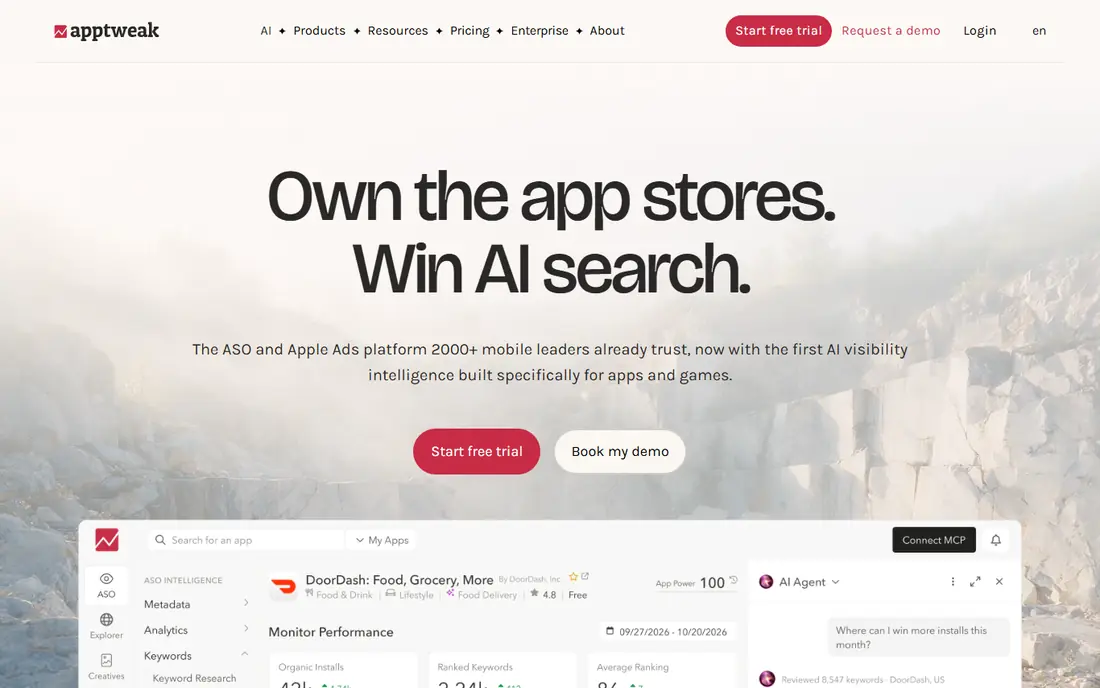
AppTweak helps you find keywords people actually search in app stores, track your rankings, and improve your title, subtitle, and description. Competitor tools show which keywords rivals rank for, so you can target gaps rather than guessing. That research is the foundation of app promotion, since store search drives a large share of organic installs for many apps.
Pricing is quoted for larger teams, and beginners may need time to learn keyword strategy. AppTweak suits teams that treat store optimization as an ongoing job rather than a launch task. If organic store traffic is your main goal, start here.
- Keyword research and tracking
- Competitor insights
- Metadata tools
- Quoted pricing for larger plans
- Learning curve for beginners
Sensor Tower
Ideal for: Market and ad intelligence
Sensor Tower gives market data on downloads, revenue estimates, ad creatives, and category trends, which helps you size a market and plan paid campaigns. You can see which ad styles rivals run, which keywords trend, and how top apps in your category perform. That context helps you set realistic goals and budgets before spending on ads.
The data are estimates, not official store figures, so treat them as direction rather than fact. Pricing is also aimed at larger teams. For app marketers who plan paid growth and competitive strategy, Sensor Tower is the most complete intelligence tool here.
- Download and revenue estimates
- Ad creative insights
- Category trends
- Enterprise pricing
- Estimates are not exact store data
SplitMetrics
Ideal for: Store page testing
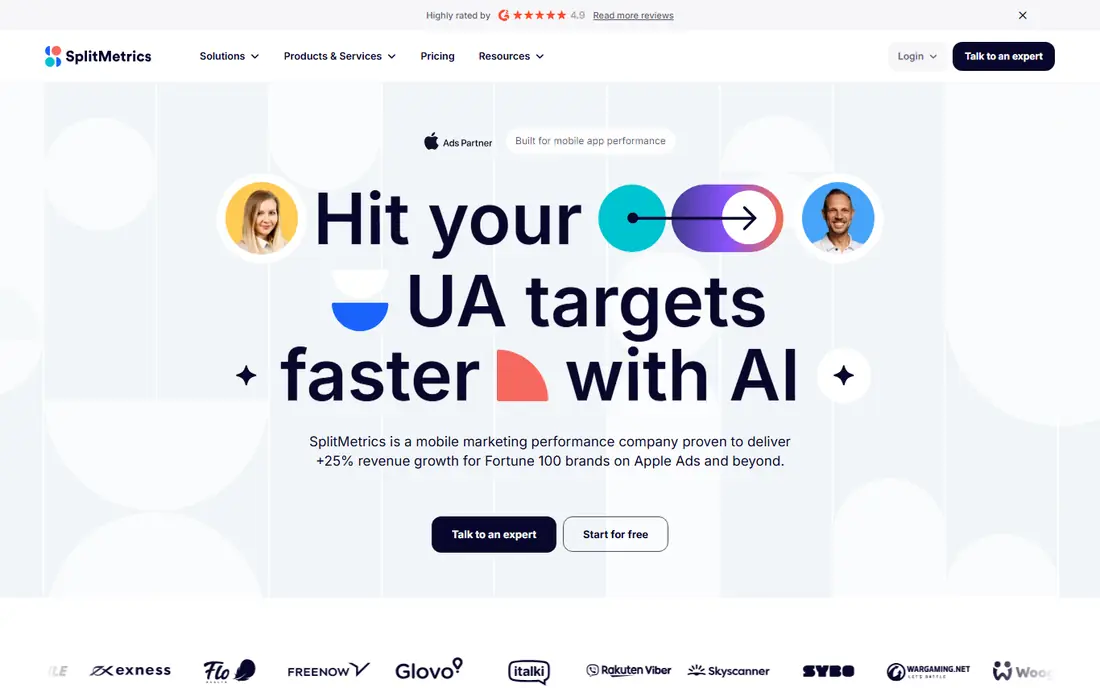
SplitMetrics tests app store pages before and after launch, so you can learn which screenshots, icons, and descriptions convert browsers into installs. Its testing tools work with paid traffic, and reports show which variant wins and by how much. That testing matters because a small change to a first screenshot can shift install rates more than a new feature.
SplitMetrics suits teams with paid budgets, since tests need traffic to reach clear results. Smaller teams can still use its ASO tools, but the full value comes with testing. If you run ads to your store page, SplitMetrics helps you spend that budget more wisely.
- A/B testing for store pages
- Paid campaign tools
- Clear test reports
- Quoted pricing
- Best for teams with ad budgets
App Radar
Ideal for: ASO for small teams
App Radar offers app store optimization for small teams and indie developers, with keyword tracking, ranking reports, and AI help for metadata. The dashboard is simpler than enterprise tools, and pricing is friendlier for solo developers and startups. That makes it a good entry point for teams that need real ASO without an enterprise contract.
Market intelligence is thinner than Sensor Tower, and large teams may outgrow it. For indie developers and small studios, App Radar covers the core ASO job well. If you are promoting your first app on a tight budget, start here.
- Keyword tracking and AI help
- Affordable plans
- Simple dashboard
- Less market data than Sensor Tower
- Fewer enterprise features
StoreMaven
Ideal for: Pre-launch store testing
StoreMaven lets you test store pages, screenshots, and videos before launch, using test pages that mimic the real store. You learn which creative direction converts best, then launch with the winning page instead of guessing. That pre-launch testing is valuable because launch week sets early rankings and featured chances.
Pricing is quoted, and tests need enough traffic for reliable results, so StoreMaven suits funded teams and studios. Smaller teams can get similar lessons from smaller tests and user interviews. For a major launch where the store page must work on day one, StoreMaven is a strong investment.
- Tests store pages before launch
- Video and screenshot testing
- Clear insights
- Quoted pricing
- Needs traffic for reliable tests
Phiture
Ideal for: Growth strategy and ASO
Phiture is a growth agency and consultancy that combines app store optimization, creative testing, and subscription growth work. Unlike pure software tools, Phiture brings strategists who plan and run campaigns for clients. That suits app companies that want expert help rather than another dashboard to learn.
Agency pricing is higher than software alone, and Phiture is not a self-serve tool for indie developers. For funded apps with revenue goals and a team that needs outside expertise, Phiture can move faster than hiring in-house. Check case work in your category before signing, since growth tactics vary by app type.
- ASO plus growth consulting
- Creative testing
- Subscription growth help
- Agency pricing
- Less of a self-serve tool
AppFollow
Ideal for: Reviews and ASO tracking
AppFollow tracks app store reviews, ratings, and keywords, and helps teams reply to reviews and spot problems early. A sudden drop in ratings often signals a bug or a confusing update, and AppFollow alerts catch it before it hurts rankings. Replying to reviews also builds trust with users and can turn unhappy users into loyal ones.
The tool only helps if someone acts on the alerts, so assign review replies to a team member. Some deeper features need paid plans. For teams that want ratings and reviews to support growth rather than drag it down, AppFollow is a useful daily tool.
- Review monitoring and replies
- ASO keyword tracking
- Competitor alerts
- Review tools need team time
- Some features need paid plans
How we picked these
We compared official feature pages, pricing pages, and public reviews for each tool, and we favored tools that still work in October 2026 and cover a distinct promotion job: store optimization, testing, intelligence, or reviews. We did not claim hands-on testing, and we weighed ease of use, data quality, and fit for different team sizes. Where pricing was quoted rather than listed we wrote "See website" rather than guessing.
What to check before you choose
Start with store optimization before paid ads. A weak store page wastes ad spend, since visitors who do not install cost money without return. Fix your title, screenshots, and first lines of description, then test changes with real traffic. Next, set a clear goal: installs, paying subscribers, or active users, since each goal needs different creative and tracking.
Budget for learning time. ASO and ad tools need weeks of data before patterns are clear, so avoid judging a channel after a few days. Track cost per install and retention together, since cheap installs that churn fast are not growth. Finally, pair tools with content: a blog, video, or community presence gives ads and store pages somewhere credible to point.
Also think about retention from the start, since promotion that brings users who leave in a day wastes money and hurts store rankings. A good onboarding flow, a clear first task, and a reason to return in the first week matter more than a large launch spike. Track retention by channel, not just installs, so you learn which ads and posts bring users who stay. Content helps here too: a blog post, video, or community answer that solves a real problem can bring steady installs long after a paid campaign ends. App store screenshots and video should show the main benefit in the first seconds, since most store visitors decide fast. Test store page changes with real traffic rather than opinions, and keep a log of what changed and what happened, so lessons survive team changes.
Budget planning keeps promotion honest. Set a test budget for each channel, decide in advance what success looks like, and stop channels that miss that bar after a fair test period. Paid ads need creative variety, since the same ad tires quickly, so plan several screenshots, headlines, and videos before launch. Influencer posts work best when the creator genuinely uses the app, so favor small, relevant creators over large, mismatched ones. Watch store review trends during campaigns, since a flood of new users often surfaces bugs that hurt ratings. Finally, remember that promotion amplifies the product: fix crashes, slow loads, and confusing onboarding before spending heavily, or ads will simply bring more users to a leaky product.
Frequently asked questions
What is the best way to advertise a mobile app?
App store optimization plus targeted ads is the most reliable combination for most apps. Optimize your store page first, then run ads to the winning page and track installs and retention. Content and influencer posts can add reach, but store conversion decides whether that reach pays.
What is the best way to promote your app for free?
Store optimization, content, community posts, and review replies are the main free paths. They take time rather than money, and results build slowly. A free ASO tool like App Radar can help you track keywords while you build content and community presence.
How do I promote an app on a small budget?
Focus on one store, a few strong keywords, and one paid channel you can test carefully. Use free or low-cost ASO tools, test screenshots with small budgets, and reinvest in what brings retained users. Avoid spreading a small budget across many channels at once.
How long does app promotion take to work?
Store optimization can show movement in weeks, while paid growth and content build over months. Early spikes from launch or press often fade unless retention and store conversion are strong. Plan for at least a few months of steady work before judging results.
Should I hire an agency to promote my app?
An agency like Phiture suits funded apps that need expert help fast, while indie developers often do better learning ASO tools themselves first. Hire an agency when you have budget, clear goals, and a product with proven retention. Otherwise, start with tools and small tests.