Spire Weather comes first here, mainly for space-based weather data. Alternatives: IBM Environmental Intelligence Suite for emissions and environmental reporting, and Meteomatics for high-resolution forecast data. The remaining 2 options are covered below with prices and limits.
Choosing Weather intelligence software usually comes down to price, fit and limits. This Ainotely guide sets 5 tools side by side on those three points, with the facts kept short and checkable.
Key takeaways
Spire Weather sits first on this list: space-based weather data.
Meteomatics comes with a trade-off: data-heavy for casual users.
Tomorrow.io suits Weather automation and resilience planning.
Neither Spire Weather nor Tomorrow.io, nor any of the other 3 tools, has a permanent free plan; trials and quotes are the norm.
No starting price is shown for any of the 5 tools, Spire Weather and Tomorrow.io included, so plan time for sales calls.
Spire Weather is built with space-based weather data in mind. Teams wanting an out-of-the-box alerting interface may need a different style of system.
In practice, analytics and planning teams are the likely users. Spire Weather shows no starting price here, so confirm the cost on the vendor site. As for free access: Not stated.
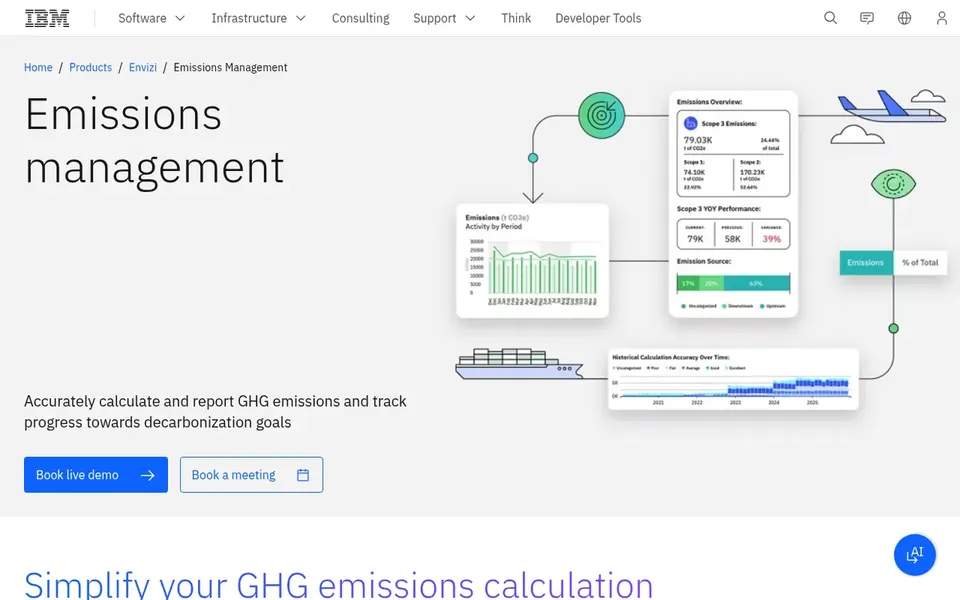
Choose IBM Environmental Intelligence Suite for emissions and environmental reporting. Choose it when environmental and emissions intelligence is the priority instead of operational weather alerts alone.
Trade-offs to know: Weather forecasting is not the headline.
The homepage emphasis is emissions management instead of daily weather forecasting, so teams seeking pure forecast delivery should look elsewhere. It is also best approached with sustainability reporting knowledge in house. IBM Environmental Intelligence Suite shows no starting price here, so confirm the cost on the vendor site. Free access: Not stated.
Meteomatics is aimed squarely at high-resolution forecast data. Meteomatics describes itself as delivering end-to-end weather intelligence, from live data to high-resolution forecasts, helping organizations act with confidence and precision.
Honest limits: Data-heavy for casual users.
It suits teams that require granular weather data and are prepared to integrate it into their own systems. Pricing for Meteomatics is not stated here, so ask the vendor for current figures. Trial and free access: Not stated.
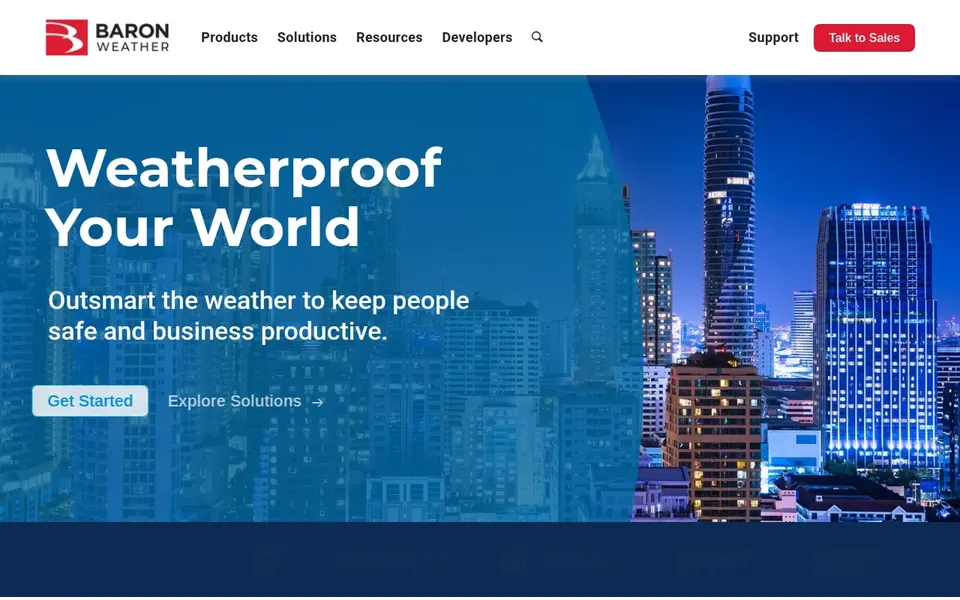
Baron Weather is aimed squarely at safety and business continuity. Baron Weather positions its platform around outsmarting the weather to keep people safe and firms productive.
Limits to weigh: Details vary by product line.
Also, since Baron provides multiple product lines, capabilities can differ by offering, so buyers should confirm the specific modules they need. For everyday use, the weatherproofing message recommends a practical focus on protecting people and keeping work moving. Check the vendor site for Baron Weather pricing; none is listed in this comparison. As for free access: Not stated.
Best for: Weather automation and resilience planning
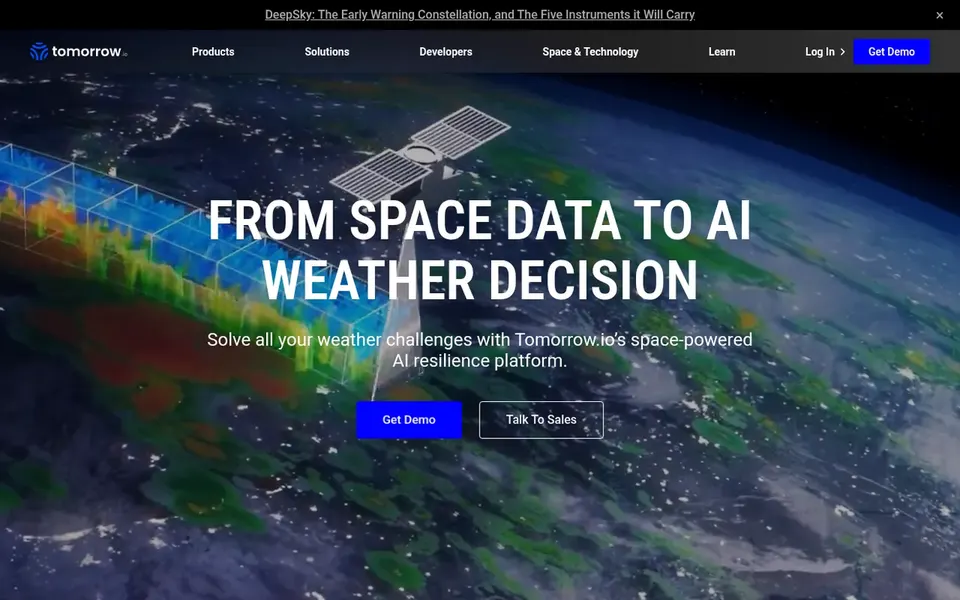
Choose Tomorrow.io for Weather automation and resilience planning. Consider Tomorrow.io when weather-driven decisions need to be systematized instead of checked manually. Because the product emphasizes automation and resilience, teams seeking only entry-level forecast displays may find it more than they need.
Trade-offs to know: Not a pure measurement vendor.
Teams in operations, safety, and logistics that require to act on weather triggers are the natural audience, notably where weather disruptions carry real cost. In practice, organizations that need their own sensor hardware or deep measurement instrumentation should also evaluate instrument-focused vendors. Pricing for Tomorrow.io is not stated here, so ask the vendor for current figures. Free plan details: Not stated.
Ask each vendor, from Spire Weather to Tomorrow.io, for a written quote; none of them publishes a starting price.
Read the limits listed for Spire Weather first: data-centric delivery.
Run a one or two week pilot of Tomorrow.io with the people who will use it every day.
Total up the real monthly cost of Spire Weather, including add-ons, extra users and usage-based fees.
Before you load data into Meteomatics, check what an export looks like and who can run it.
How we picked
Selection started from tools commonly considered for Weather intelligence software, then narrowed to 5 that have clear pricing information or a clear quote process. Seat minimums, billing terms and add-ons can move the real cost, so the starting prices here are a guide and not a quote. The sequence is a judgement call: typical use case first, then pricing transparency, then free access. Use the profiles to check fit.
Every price and plan detail on this page comes from the vendors’ own websites. We did not run hands-on tests unless the text says so, and we do not publish star ratings or review scores. See how we score and our disclosure.
Keep your shortlist in one place
Paste prices, trial dates and notes from this guide into Ainotely, our AI note app. It files them into a topic and pulls out tasks like “cancel trial by Friday”. Free 7-day trial, no card needed.
Not by default. None of the tools, from Spire Weather to Tomorrow.io, lists a free plan or a free trial here, so ask each vendor for a demo before committing.
Does any tool for Weather intelligence software here have a free plan?
No tool in this list, Spire Weather and Tomorrow.io included, has a permanent free plan. Trials and quotes are the usual route, so plan a short evaluation period.
Is Spire Weather the right pick for everyone comparing Weather intelligence software?
No single tool suits every team. Spire Weather comes first because it fits space-based weather data, while IBM Environmental Intelligence Suite suits emissions and environmental reporting and Meteomatics suits high-resolution forecast data. Match the tool to your own size, budget and workflow before deciding.
Can these tools support sustainability reporting?
Some vendors emphasize environmental and emissions intelligence, with IBM Environmental Intelligence Suite documented around emissions management and the GHG Protocol. Others focus on operational weather.
Do these tools publish their prices?
No. None of the tools, from Spire Weather to Tomorrow.io, shows a fixed starting price here, so budget time for quotes.