Best Weight Lifting App in 2026: 8 Apps Compared

- Strong is our pick for most lifters, with fast workout logging, rest timers and a huge exercise library that works for any programme.
- Hevy suits social lifters who like sharing workouts and following friends, while JEFIT suits lifters who want deep programme and exercise databases.
- Fitbod and Alpha Progression suit lifters who want adaptive programming, with workouts that adjust to progress and available equipment.
- The best lifting app is the one you log every session in, so pick the interface you find fastest during a workout, not the one with the longest feature list.
Quick comparison
| Product | Ideal for | Price from | Free version | |
|---|---|---|---|---|
 Strong | Fast all-round logging | See website | Yes | Visit |
 Hevy | Social workout tracking | See website | Yes | Visit |
 JEFIT | Deep exercise database | See website | Yes | Visit |
 Alpha Progression | Adaptive progression | See website | Yes | Visit |
 Fitbod | Adaptive gym workouts | See website | No | Visit |
 StrongLifts 5x5 | Simple beginner programme | See website | Yes | Visit |
 Boostcamp | Free programmes | See website | Yes | Visit |
 RepCount | Simple clean logging | See website | Yes | Visit |
The best weight lifting app
A lifting app must be fast between sets, clear about progression, and honest about what you lifted last time. Programme apps guide beginners, while logging apps suit lifters who already follow a plan. We compared logging speed, exercise libraries, progression tools, rest timers and pricing.
Strong
Ideal for: Fast all-round logging
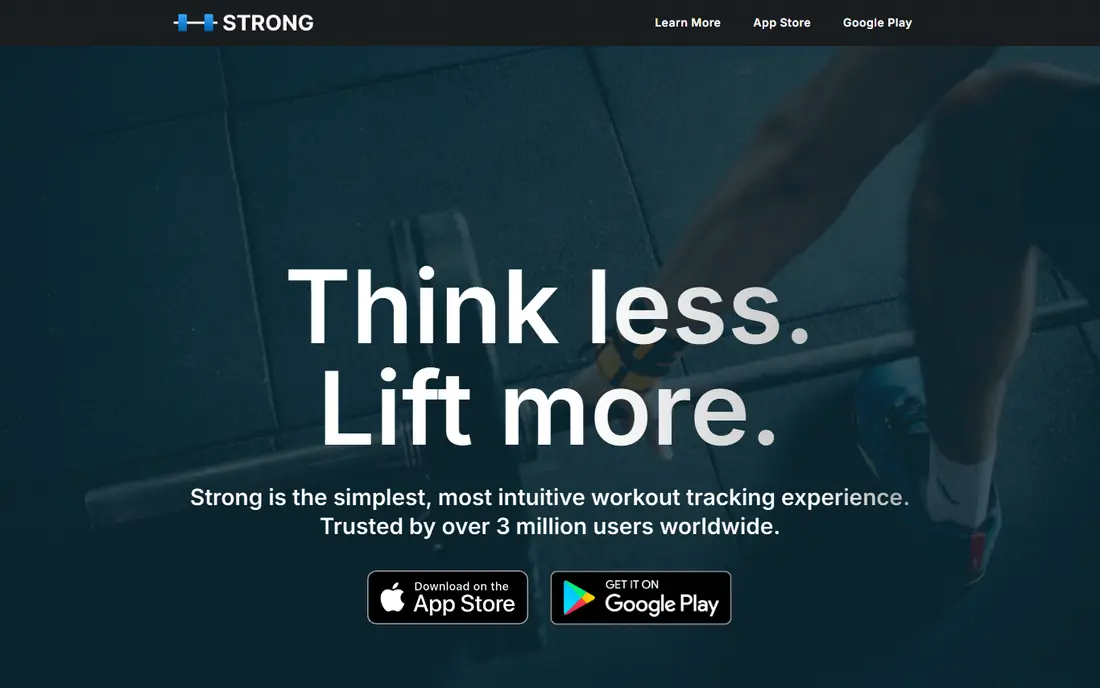
Strong is the logging pick for most lifters. You start a workout, add exercises and sets with a few taps, rest timers run automatically, and history shows your last weights for every lift without hunting through old notebooks. A free tier covers core logging, with a paid plan adding more history, charts and advanced features.
The limit is guidance. Strong logs brilliantly, but it does not design your programme or auto-adjust weights like Fitbod or Alpha Progression, so you need a plan from elsewhere. For a lifter who follows a known programme and wants the fastest log, Strong is hard to beat.
- Fast workout logging with rest timers
- Huge exercise library
- History, charts and personal records
- Programme building is manual compared with adaptive apps
- Premium features need a paid plan
Hevy
Ideal for: Social workout tracking
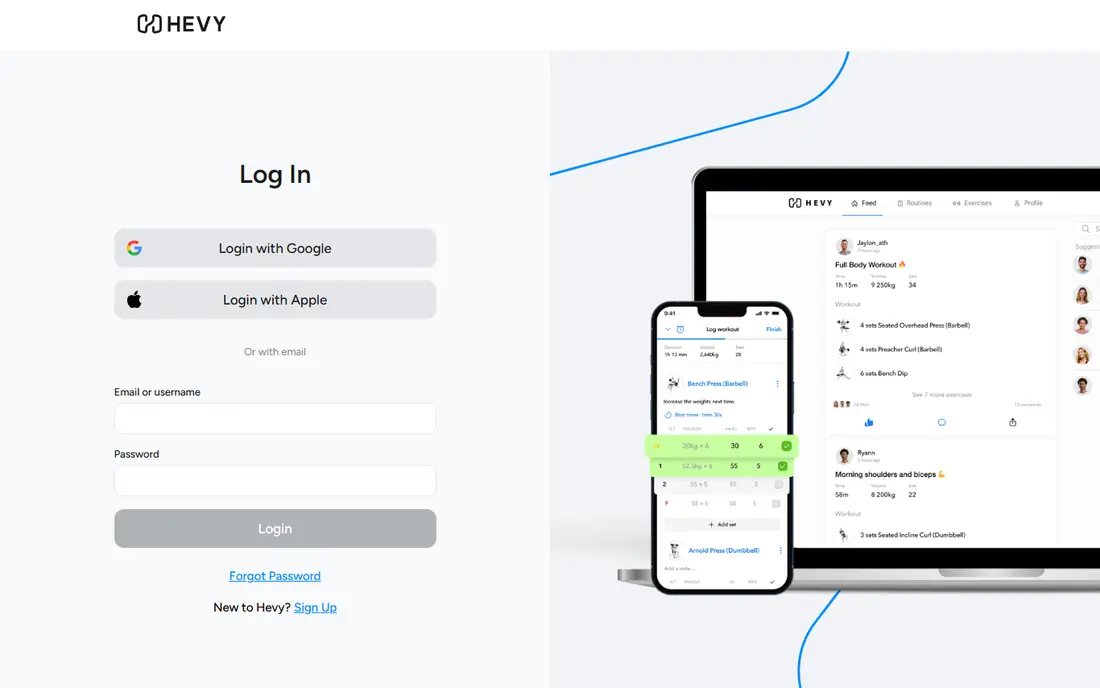
Hevy suits lifters who stay consistent through social accountability. Its logging is fast and clear, with routines, rest timers and personal records, while a social feed lets you follow friends, like workouts and stay motivated on low-energy days. A free tier covers core logging, with a paid plan adding advanced analytics and unlimited routines.
The catch is distraction. The social feed helps some lifters and distracts others, so turn off notifications if you prefer a focused session. Hevy fits lifters who enjoy sharing progress and who train better when friends can see the work.
- Fast logging with rest timers
- Social feed for friends and workouts
- Routines and exercise library
- Social features distract some lifters
- Advanced analytics sit on the paid plan
JEFIT
Ideal for: Deep exercise database
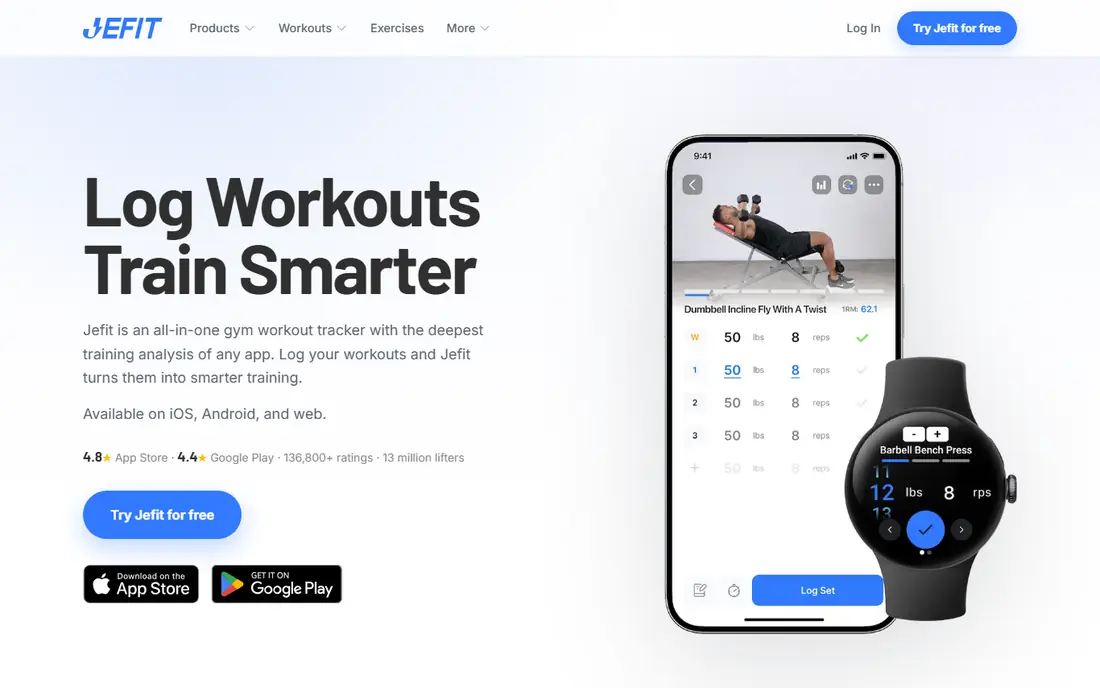
JEFIT suits lifters who want depth. Its exercise database covers thousands of movements with instructions, its programme library spans beginner to advanced plans, and its tracking covers sets, reps, weights, body stats and progress photos. That depth helps lifters who like to explore new exercises and programmes.
The weakness is polish. JEFIT interface feels busier than Strong or Hevy, and new users may need a few sessions to find their flow. For a lifter who values database depth over minimal design, JEFIT offers more to explore than any other app here.
- Very large exercise and programme database
- Detailed tracking and body stats
- Community programmes
- Interface feels busier than Strong or Hevy
- Premium features need a paid plan
Alpha Progression
Ideal for: Adaptive progression
Alpha Progression suits lifters who want the app to handle progression maths. It tracks your lifts, suggests next weights and reps using double progression logic, and adjusts to the equipment you have, whether a full gym or a home setup. That guidance removes the guesswork of when to add weight, which is where many lifters stall.
The limit is social polish. Alpha Progression is training-first, so it lacks Hevy social feed and Strong simplicity for pure logging. For a lifter who wants a coach-like progression plan without hiring a coach, Alpha Progression is a strong, affordable pick.
- Adaptive progression based on your logged lifts
- Double progression logic
- Equipment-aware workouts
- Less social than Hevy
- Programme setup takes a little time to tune
Fitbod
Ideal for: Adaptive gym workouts
Fitbod suits gym lifters who want each session planned for them. It builds workouts from your goals, available equipment, muscle recovery and past lifts, with exercise videos that show form for unfamiliar movements. Wearable integration helps it judge recovery and effort, so sessions adapt week to week.
The drawback is price and fit. Fitbod is a paid subscription with no permanent free plan, so it costs more than Strong or Hevy free tiers, and its suggestions improve only when you log honestly and rate sessions. For a lifter who wants a new plan every session without thinking, Fitbod is worth the fee.
- Adaptive workouts based on recovery and equipment
- Exercise videos
- Apple Watch and wearable integration
- No permanent free plan
- Subscription cost is higher than simple loggers
- Workout suggestions need user feedback to improve
StrongLifts 5x5
Ideal for: Simple beginner programme
StrongLifts 5x5 suits absolute beginners who want a simple, structured start. The programme uses five barbell lifts across three weekly sessions, adds weight automatically when you complete sets, and deloads when you stall, so a new lifter never wonders what to do next. A free tier covers the core programme, with a paid Power Pack adding features.
The limit is scope. Five lifts cannot cover every goal, and experienced lifters, bodybuilders and athletes will need a broader programme within months. StrongLifts is a starting ramp, not a lifetime plan, and it does that one job very well.
- Simple, proven beginner programme
- Automatic weight progression
- Clear three-day weekly structure
- Programme is narrow, with only five core lifts
- Experienced lifters will outgrow it quickly
Boostcamp
Ideal for: Free programmes
Boostcamp suits lifters who want proven programmes without paying for coaching. Its library includes programmes from coaches across powerlifting, bodybuilding and general strength, with logging and progression built in, and a free tier that covers core use. That combination makes it easy to try a structured plan at no cost.
The catch is variation. Programme quality varies by creator, so read reviews, check the programme structure and pick a plan that matches your level and equipment. Boostcamp fits lifters who want to explore programmes freely before committing to one path.
- Free programmes from coaches
- Workout logging with progression
- Community and programme discovery
- Programme quality varies by creator
- Premium features sit on paid tiers
RepCount
Ideal for: Simple clean logging
RepCount suits lifters who want the simplest possible log. Its interface is clean, set entry is fast, and history and personal records are easy to find without menus, ads or social noise. A free tier covers core logging, with a paid plan adding advanced history and analytics.
The limit is guidance. RepCount logs well but does not design programmes or adapt weights like Alpha Progression or Fitbod, and it lacks Hevy social features. For a lifter who knows their programme and wants a quiet, fast log, RepCount is a refreshing choice.
- Clean, simple logging interface
- Fast set entry
- History and personal records without clutter
- Programme and social features are thinner than rivals
- Analytics sit on paid tiers
How we picked these
We compared logging speed, exercise libraries, progression logic, rest timers, social features and pricing for apps still operating in October 2026. We kept logging, programme and adaptive apps in the list, since lifters arrive with different experience levels. We did not train with each app for months, and we did not repeat vendor claims about strength gains as measured facts.
What to check before you buy
This is not medical advice, and lifting carries injury risk if form, load or recovery are wrong. Start with form before load: learn the main lifts from a qualified coach, a reputable video series or an in-person session, and film your sets to check bar path and posture. Pain that is sharp, joint-related or persistent is a signal to stop and seek professional advice, not to push through.
Next, pick the app that fits your programme stage. Beginners do best with a guided programme such as StrongLifts 5x5 or a Boostcamp plan, intermediate lifters benefit from adaptive progression in Alpha Progression or Fitbod, and experienced lifters often prefer a fast logger such as Strong or RepCount. The app should match your stage, not the other way around.
Finally, test logging during a real workout. Start a session, log sets between sets, check rest timers, and see whether you can find last session weights in under ten seconds. An app that slows you down between sets will be abandoned, no matter how good its charts look at home. Log every session for a month, review progression honestly, and switch apps if logging feels like a chore.
Frequently asked questions
What is the best weight lifting app for beginners?
StrongLifts 5x5 is our pick for absolute beginners because its simple three-day programme removes guesswork. Boostcamp is a strong free alternative with many coach programmes, while Strong suits beginners who already have a plan and just need fast logging.
Is there a free weight lifting app?
Yes. Strong, Hevy, JEFIT, Alpha Progression, StrongLifts 5x5, Boostcamp and RepCount all offer free tiers that cover core logging. Fitbod is the exception here, with no permanent free plan, so test a free logger first if budget matters.
Do lifting apps replace a coach?
No. Apps log, suggest progression and show form videos, but they cannot watch your form, correct a lift in real time or diagnose pain. A coach, even for a few sessions, adds value that no app can match, especially for barbell lifts.
How do adaptive lifting apps work?
Adaptive apps such as Fitbod and Alpha Progression use your logged lifts, recovery, goals and equipment to suggest next weights, reps and exercises. They improve with honest logging, so rate sessions, log missed reps and update equipment changes for the best suggestions.
Can I track home workouts in these apps?
Yes. Strong, Hevy, JEFIT, Alpha Progression and RepCount all let you log home workouts with dumbbells, kettlebells or bodyweight, and Alpha Progression and Fitbod adjust suggestions to your available equipment. Confirm your equipment list in the app settings for the best home plans.