For threat intelligence driven risk scoring, RiskRecon is where this list starts. Listed starting prices: UpGuard from $1,750 per month, billed yearly. If your case is different, Panorays suits business-context third-party assessments and Prevalent suits automated TPRM workflows and compliance. The full list of 5 tools follows, with prices and free plan facts.
This Ainotely guide covers 5 options for BitSight. Each profile lists a starting price, free plan details, strengths and drawbacks, so you can drop poor fits quickly.
Key takeaways
This list starts with RiskRecon, which is built for threat intelligence driven risk scoring.
UpGuard is the lowest-priced starter here at $1,750 per month, billed annually.
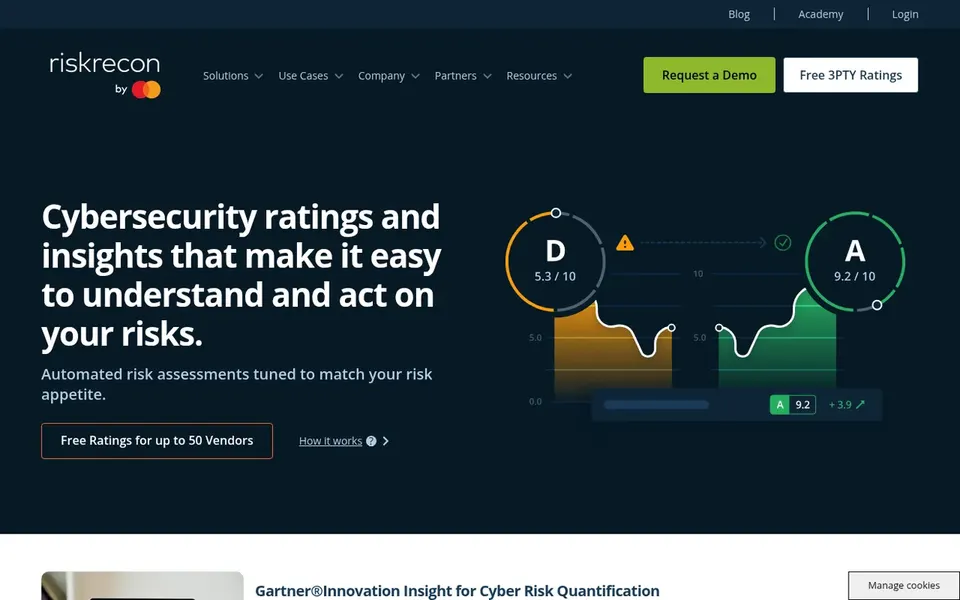
RiskRecon was built for threat intelligence driven risk scoring. RiskRecon by Mastercard is a risk management option that merges threat intelligence with external risk management software to deliver actionable insights for managing cyber risks and threats.
In daily use, as part of Mastercard, its roadmap and integration priorities may align with that ecosystem. Pricing for RiskRecon is not stated here, so ask the vendor for current figures. As for free access: Not stated.
Downsides: May emphasize scoring over remediation.
Panorays is a good fit for business-context external assessments. Panorays is an external cyber risk management system that helps firms assess, monitor and fix external cyber risk based on business context.
It suits organizations that want risk assessments tailored to how each vendor is used in their business. No starting price is listed for Panorays here; confirm pricing on the vendor site. On free options: Free trial.
The main drawbacks: May need integration with other tools.
Prevalent works best for automatic TPRM workflows and compliance. Prevalent, now part of Mitratech, is AI-powered external risk management software that automates workflows and eases compliance.
Beyond that, as part of a bigger portfolio, its focus is on workflow and compliance instead of external threat intelligence. Prevalent does not show a starting price in this comparison, so check the vendor site for current pricing. On free options: Not stated.
Drawbacks to consider: Part of Mitratech portfolio.
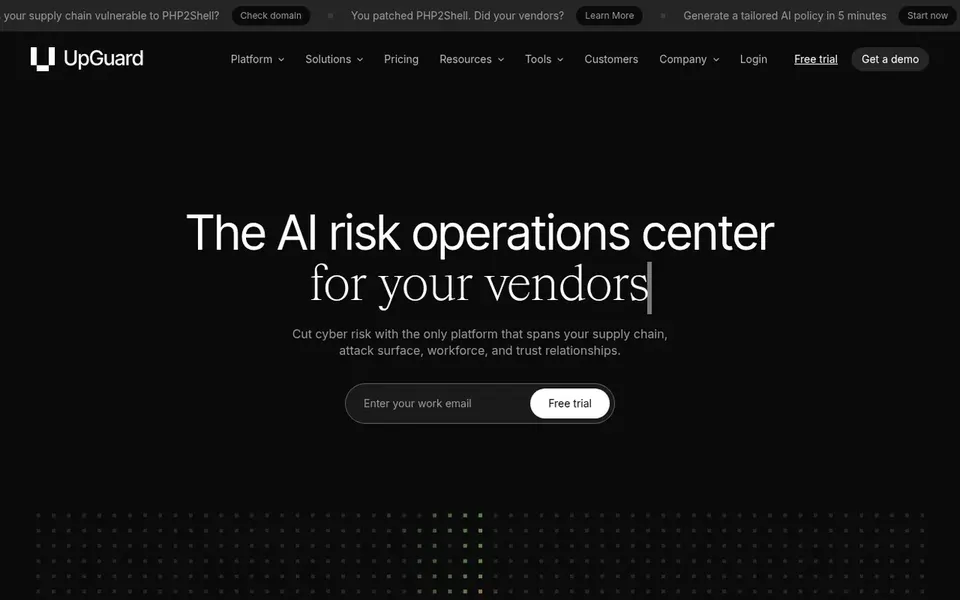
Pick UpGuard if this describes you: unified vendor and attack surface risk. UpGuard is a cyber risk posture management product that brings together risk management across the vendor supply chain, attack surface and human workforce.
On top of that, the wide feature set can be complicated to deploy for teams focused only on vendor risk scoring. If you need specialized threat intelligence or business-context-driven assessments, other choices may be a better fit. UpGuard pricing: $1,750 per month, billed annually. Trial and free access: Free trial.
Points against: Wide scope may overwhelm new users.
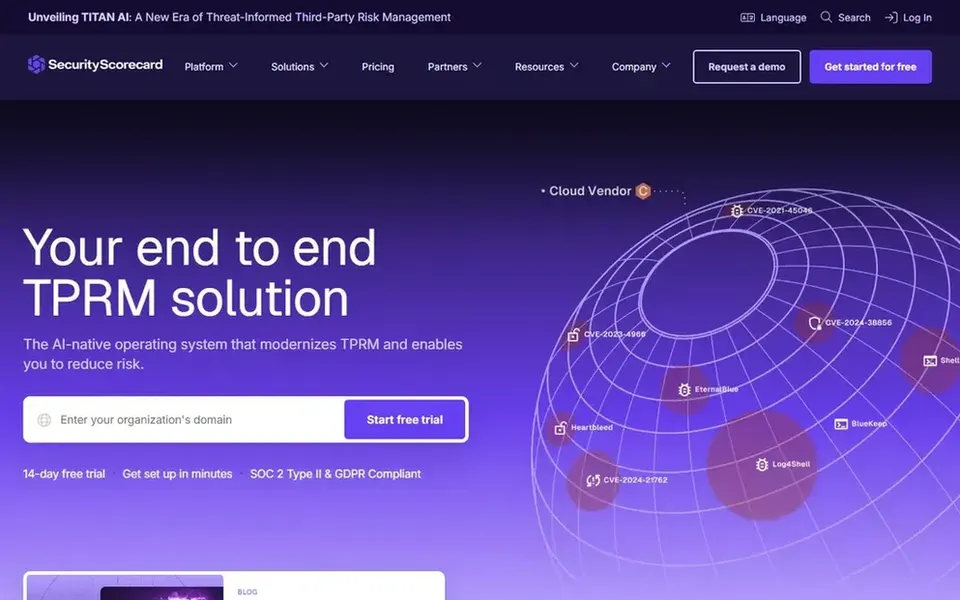
SecurityScorecard works best for continuous supply chain monitoring. Consider alternatives if you need deep threat intelligence integration or attack surface monitoring beyond vendor scoring.
The main drawbacks: May need integration effort.
It suits organizations that require continuing visibility into vendor security posture and want to handle supply chain cyber risk in one place. Check the vendor site for SecurityScorecard pricing; none is listed in this comparison. On free options: Free trial.
Confirm the entry price on the vendor page. For RiskRecon, Panorays, Prevalent and SecurityScorecard that means a quote rather than a fixed price.
Use real work to test the free trial from Panorays, UpGuard and SecurityScorecard, rather than a demo project.
Before choosing RiskRecon, weigh its main limit: part of Mastercard ecosystem.
Find out what support Prevalent includes on your plan, and whether onboarding help costs extra.
Confirm you can export your data from SecurityScorecard, so leaving later does not mean losing records.
How we picked
Ainotely used vendor pricing pages and product documentation as the base, then compared plans, free access and documented limits for 5 tools. Where a price is missing, the vendor does not list one publicly or ties it to a quote. Always confirm before budgeting. Tools are placed by general fit for BitSight, with price clarity and free access as tie-breakers. A different team can reasonably rank them differently.
Every price and plan detail on this page comes from the vendors’ own websites. We did not run hands-on tests unless the text says so, and we do not publish star ratings or review scores. See how we score and our disclosure.
Keep your shortlist in one place
Paste prices, trial dates and notes from this guide into Ainotely, our AI note app. It files them into a topic and pulls out tasks like “cancel trial by Friday”. Free 7-day trial, no card needed.
Not all of them. RiskRecon, Panorays, Prevalent and SecurityScorecard publish no starting price, so expect a quote request for those. The rest, UpGuard included, show a starting price, though seats and billing terms still change the final cost.
Does any tool for BitSight here have a free plan?
A permanent free plan is not offered by RiskRecon, SecurityScorecard or the other tools here. Panorays, UpGuard, SecurityScorecard offer a trial. Plan a short evaluation period instead.
What should I look for in a BitSight alternative?
Focus on whether you need continuous vendor monitoring, threat intelligence, attack surface visibility or workflow automation. Confirm the system spans your vendor types and links up with your existing tools.
Can I try these tools before paying?
Often, yes. Panorays, UpGuard and SecurityScorecard offer a free trial. Use your own data and a real task during the test, and check what the free tier or trial limits before you rely on it.
What is the cheapest option for BitSight in this list?
On published monthly entry prices, UpGuard is the lowest here at $1,750 per month, billed annually. Entry price is only part of the cost, because seats, add-ons and billing terms can change the total. All 5 picks in this BitSight alternatives comparison show their pricing, free plan details and main limits on the cards above.