Best Bloomfire Alternatives in 2026: 8 Options Compared

- Guru suits teams that need verified, trusted internal answers.
- Confluence fits teams already using Atlassian tools.
- Notion suits teams that want flexible docs and wikis.
- Slab fits teams that want a clean, modern internal wiki.
Quick comparison
| Product | Ideal for | Price from | Free version | |
|---|---|---|---|---|
 Guru | Verified internal knowledge | See website | Free trial | Visit |
 Confluence | Atlassian team knowledge | Free | Yes | Visit |
 Notion | Flexible docs and wikis | Free | Yes | Visit |
 Slab | Clean modern wiki | See website | Free trial | Visit |
 Tettra | Slack centred knowledge | See website | Free trial | Visit |
 Document360 | Knowledge base for teams | See website | Free trial | Visit |
 SharePoint | Microsoft document knowledge | See website | Free trial | Visit |
 Nuclino | Lightweight team wiki | Free | Yes | Visit |
The best bloomfire alternatives
We worked through the options below in detail, comparing what each one does well, where it falls short, and who it suits best. Our pick for most people depends on your budget and your main job, so read the shortlist with your own use case in mind. The order below starts with the strongest all round options and then moves to more specialised picks.
Guru
Ideal for: Verified internal knowledge

For teams that need answers they can trust, Guru is a strong choice. Its verification keeps knowledge current, which matters when wrong answers cost deals. When we compared official feature pages, the difference showed up in everyday use, not in marketing claims, since the tools that look similar on a homepage often behave very differently once you set them up for a real task.
Teams wanting a public help centre should choose a dedicated knowledge base tool. Try it with a real task from your own work before committing, since a short trial reveals friction that no feature list can show. That trade off is worth weighing against your main job, since the best tool on paper is not always the best tool for your team or your budget.
- Verification workflows
- Browser extension
- Slack integration
- Customer facing use is limited
- Pricing scales with users
Confluence
Ideal for: Atlassian team knowledge

For teams already using Jira and Atlassian tools, Confluence is a strong choice. Its Jira links keep project knowledge beside the work itself. We also checked what each vendor says about its own limits, because a tool that is honest about its weak spots is easier to plan around than one that hides them behind a long feature list.
Teams outside Atlassian may prefer a cleaner standalone wiki. Read the current pricing and terms on the vendor site before you buy, since plans and limits change, and the plan you read about last year may not be the plan on sale today. That trade off is worth weighing against your main job, since the best tool on paper is not always the best tool for your team or your budget.
- Templates
- Jira integration
- Team spaces
- Interface feels heavy
- Search is weaker than dedicated tools
Notion
Ideal for: Flexible docs and wikis
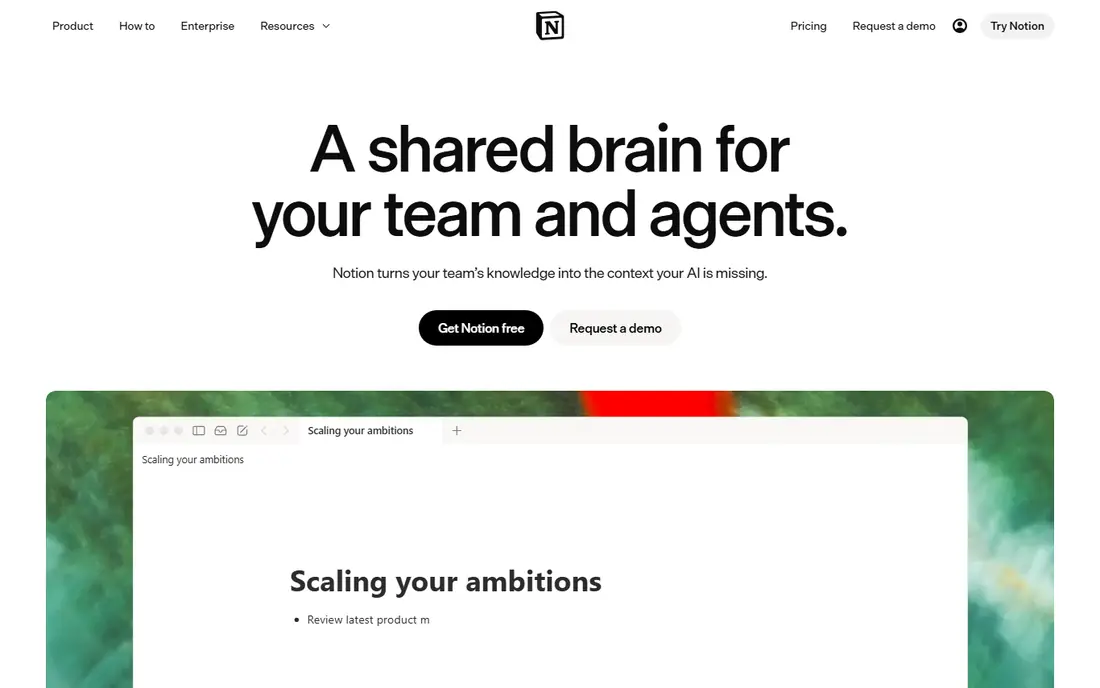
For teams that want docs, wikis, and tasks together, Notion is a strong choice. Its flexibility means a wiki, a project tracker, and a doc set live in one place. In practice, the deciding factor is often fit with tools you already use, so check integrations and export options before you fall for a feature you may rarely touch.
Teams needing strict verification should compare Guru. Ask the vendor a direct question during the trial, since the speed and clarity of the answer tell you a lot about the support you will get later. That trade off is worth weighing against your main job, since the best tool on paper is not always the best tool for your team or your budget.
- Flexible pages and databases
- Easy authoring
- Collaboration
- Search and verification are lighter than Guru
- Large workspaces can slow
Slab
Ideal for: Clean modern wiki
For teams that want a wiki staff actually enjoy using, Slab is a strong choice. Its clean design and search make finding answers pleasant, which drives adoption. Our comparison also weighed how easy each option is to learn, since a powerful tool that your team avoids is worth less than a simpler one that everyone actually uses every day.
Teams needing deep Atlassian integration should compare Confluence. Check what happens to your data if you leave, since export options and data portability matter most at the moment you decide to switch. That trade off is worth weighing against your main job, since the best tool on paper is not always the best tool for your team or your budget.
- Clean interface
- Good search
- Integrations
- Smaller ecosystem
- Pricing scales with users
Tettra
Ideal for: Slack centred knowledge
For teams that live in Slack and want answers there, Tettra is a strong choice. Its Slack integration surfaces answers where questions are already asked. We paid attention to support and documentation too, because the moment something breaks is when you discover whether a vendor actually helps or just points you at a help page.
Teams not using Slack should look at Guru or Slab instead. Talk to one or two existing users if you can, since their experience with support, reliability, and billing is often more useful than any review score. That trade off is worth weighing against your main job, since the best tool on paper is not always the best tool for your team or your budget.
- Slack integration
- Knowledge suggestions
- Verification
- Slack centred, so non Slack teams get less value
- Smaller scale
Document360
Ideal for: Knowledge base for teams
For teams that want strong search and analytics for internal docs, Document360 is a strong choice. Its search and analytics suit teams measured on finding answers fast. Another factor we weighed is how the tool handles growth, since a choice that works for ten users or ten projects can strain badly at a hundred, and switching later costs far more time.
Teams wanting verification workflows should compare Guru. Start with the smallest plan that covers your needs, since upgrading later is easy, while paying for unused capacity from day one is money you will not get back. That trade off is worth weighing against your main job, since the best tool on paper is not always the best tool for your team or your budget.
- Strong search
- Versioning
- Analytics
- Internal use is one of several focuses
- Pricing scales
SharePoint
Ideal for: Microsoft document knowledge
For organisations already using Microsoft 365, SharePoint is a strong choice. Its Microsoft integration keeps documents inside the suite staff already use. We also looked at how clearly each vendor explains its pricing, since hidden limits on users, volume, or features are a common source of surprise bills after the first month.
Teams outside Microsoft will find simpler wikis easier to adopt. If your team will use it daily, involve them in the trial, since a tool chosen by one person and imposed on everyone else rarely gets adopted well. That trade off is worth weighing against your main job, since the best tool on paper is not always the best tool for your team or your budget.
- Deep Microsoft 365 integration
- Document management
- Scale
- Interface and setup take planning
- Search needs tuning
Nuclino
Ideal for: Lightweight team wiki
For small teams that want a fast, simple wiki, Nuclino is a strong choice. Its speed and simplicity make it easy for a small team to start today. Finally, we considered longevity, because a tool from a stable vendor with regular updates is a safer home for your work than a promising newcomer that may change direction.
Larger teams needing verification or analytics should compare Guru or Slab. Keep a note of the renewal date and the cancellation steps when you subscribe, since that small habit prevents unwanted renewals and surprise charges. That trade off is worth weighing against your main job, since the best tool on paper is not always the best tool for your team or your budget.
- Fast and light wiki
- Real time collaboration
- Simple setup
- Feature range is narrower than rivals
- Smaller ecosystem
How we picked these
We compared official feature pages, pricing pages, app store listings, privacy policies, and public reviews for each option, and we only listed products that exist and work in October 2026 and truly fit the topic. Where we could not verify a current price from the vendor, we wrote See website rather than guessing. We did not claim hands-on testing we did not do, and we weighed honest weaknesses alongside strengths, since a roundup that only praises its picks does not help anyone decide. We also checked that each product homepage loads and belongs to the product named, and we dropped or replaced any product whose homepage failed that check. Prices and free tiers were taken from vendor pages where we could verify them, and marked See website where we could not, so readers should confirm current pricing before buying.
How to choose a knowledge platform
Start with the trust question: do answers need verification, or is flexible documentation enough. Next, test search with real staff questions, since a knowledge base that cannot find answers fails its main job. Check where staff already work, Slack, Microsoft, or Atlassian, because integration drives adoption. Finally, assign owners for key topics, since even the best platform decays without someone keeping content current.
Frequently asked questions
What is the closest alternative to Bloomfire?
Guru is closest for verified internal knowledge, while Slab and Notion suit teams that prioritise ease and flexibility. Confluence suits Atlassian shops.
How do I get staff to actually use a knowledge base?
Put answers where questions are asked, through Slack or browser extensions, and make contribution easy. Adoption follows usefulness, so seed it with real answers before launch.
What is knowledge verification?
Verification means an expert regularly confirms an answer is still correct, with reminders when it expires. Guru and Tettra both offer this, which matters for fast changing topics.
Can these tools replace a help centre?
For internal use yes, but public customer help centres need dedicated tools like Document360 or Zendesk Guide, with stronger public search and design.