Best Brightcove Alternatives in 2026: 7 Platforms Compared

- Vimeo is our pick for most teams that want polished hosting, players, and privacy controls without enterprise complexity.
- Wistia suits marketing teams that want video analytics tied to leads and campaigns.
- Kaltura suits education and enterprise teams that need flexible, open video platforms.
- JW Player, Dacast, Vidyard, and Mux cover monetization, live streaming, sales video, and developer video infrastructure.
- Always test player performance, captions, and analytics with real viewers before committing.
Quick comparison
| Product | Ideal for | Price from | Free version | |
|---|---|---|---|---|
 Vimeo | Polished video hosting | See website | Free trial | Visit |
 Wistia | Marketing video analytics | See website | Free trial | Visit |
 Kaltura | Education and enterprise video | See website | Free trial | Visit |
 JW Player | Monetization and players | See website | Free trial | Visit |
 Dacast | Live streaming and monetization | See website | Free trial | Visit |
 Vidyard | Sales and business video | See website | Free trial | Visit |
 Mux | Developer video infrastructure | See website | Free trial | Visit |
The best Brightcove alternatives
Brightcove serves publishers and enterprises with video hosting, live streaming, and monetization, so a good replacement needs reliable playback, strong players, analytics, and the right business model for your audience. We compared official feature pages, pricing pages, and public reviews, focusing on hosting, live streaming, monetization, analytics, and developer tools.
Vimeo
Ideal for: Polished video hosting
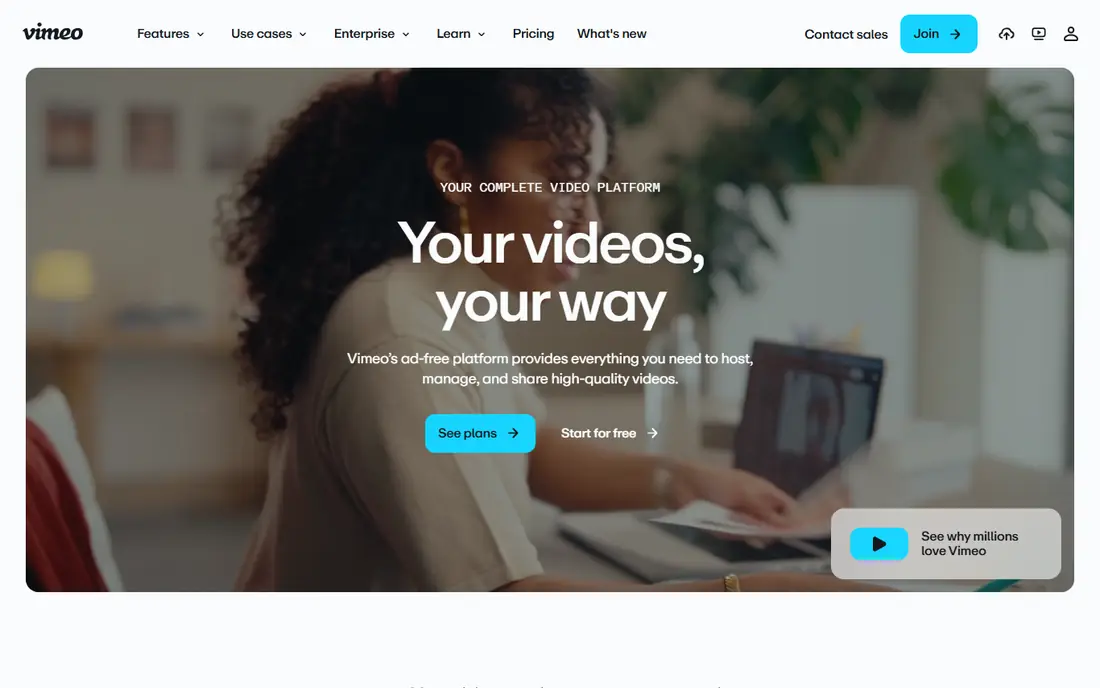
Vimeo is the most polished general video hosting replacement for Brightcove. It offers ad-free players, privacy controls, collaboration tools, and analytics that suit marketing, creative, and corporate teams. Vimeo OTT options also let businesses build subscription video services without a separate platform.
Enterprise live streaming and advanced monetization depth vary by plan, so check tier details for large events or paywalled libraries. For most teams that need reliable, good-looking video hosting, Vimeo is our top pick.
- Polished players and privacy controls
- Good for marketing and creative teams
- OTT options
- Enterprise features need higher tiers
- Live and monetization depth varies by plan
Wistia
Ideal for: Marketing video analytics
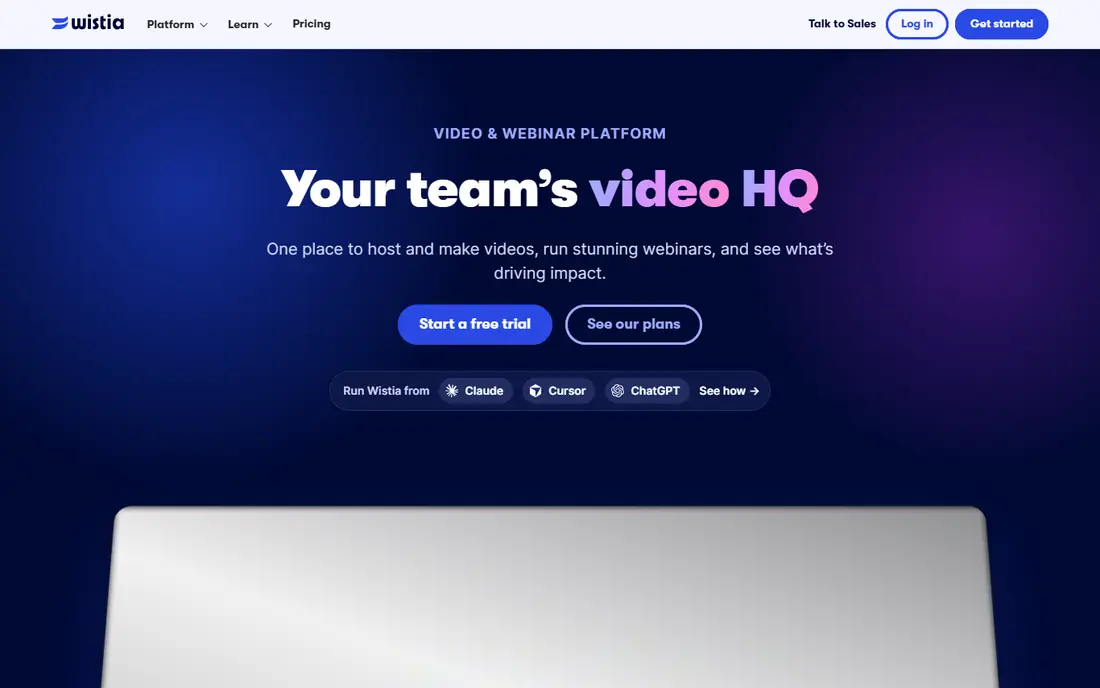
Wistia is built for marketing teams that want video to generate leads and prove impact. Its players support calls to action, email capture, and chapters, while analytics show watch time, engagement, and viewer detail that connect to CRM and marketing tools. Channels let teams publish video hubs without a separate site.
Large-scale OTT and live event depth is lighter than Brightcove or Kaltura. For marketing teams that measure video by leads and pipeline rather than views alone, Wistia is a strong pick.
- Marketing-focused analytics
- Lead capture and CTAs
- Clean players and channels
- Less suited to large-scale OTT
- Pricing scales with usage and features
Kaltura
Ideal for: Education and enterprise video
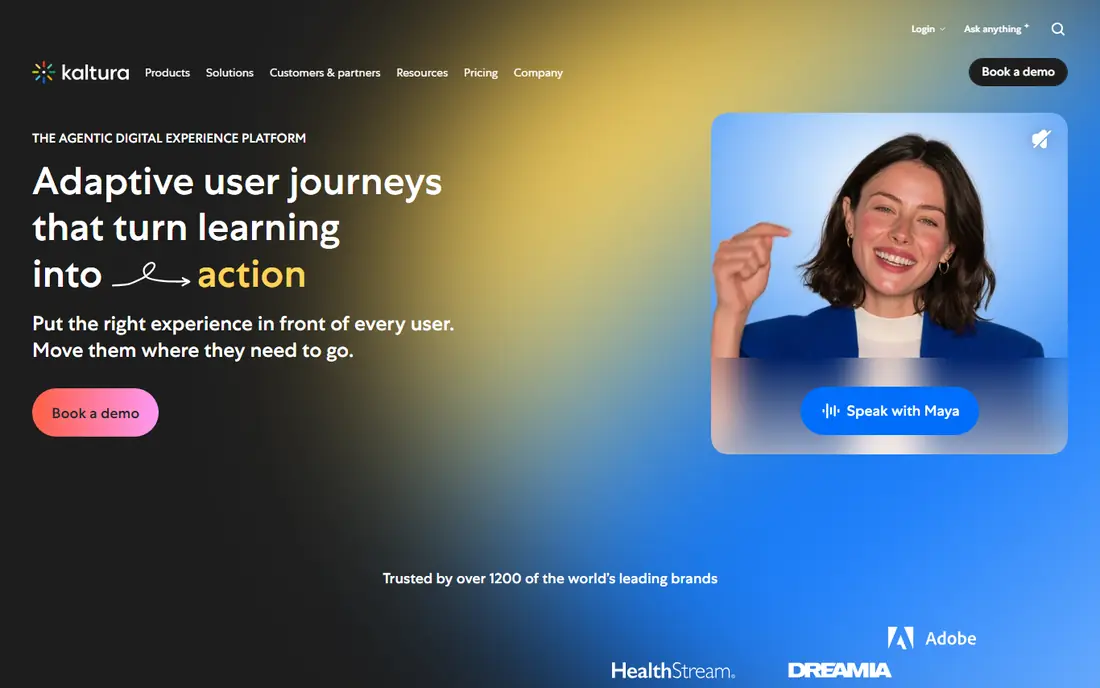
Kaltura offers a flexible, open video platform used heavily in education and enterprise. It covers live and on-demand video, virtual classrooms, webinars, and media management, with APIs and customization that let organizations shape portals and workflows. Universities and large companies value that flexibility.
Setup and customization need effort, and pricing is quote-based. For education and enterprise teams that need a platform they can shape deeply, Kaltura is a strong Brightcove replacement.
- Flexible open platform
- Strong education and enterprise tools
- Live and on-demand
- Setup and customization need effort
- Pricing is quote-based
JW Player
Ideal for: Monetization and players
JW Player, now part of JWP, focuses on player technology, advertising, and monetization for publishers. Its players load fast, support ads, recommendations, and analytics, and its platform helps media companies earn from video across sites and apps. Publishers that live on ad revenue often shortlist it first.
Configuring the full platform takes care, and pricing varies with usage. For publishers and media teams that prioritize player performance and monetization, JW Player is a strong pick.
- Strong player technology
- Advertising and monetization tools
- Good analytics
- Full platform needs care to configure
- Pricing varies by usage
Dacast
Ideal for: Live streaming and monetization
Dacast suits creators, event organizers, and businesses that need live streaming with paywalls and monetization. It supports live events, on-demand libraries, subscriptions, and pay-per-view, with a white-label player that keeps branding clean. That mix makes it practical for churches, fitness studios, educators, and event teams.
Player polish and analytics depth are lighter than Vimeo or JW Player. For teams whose main need is reliable live streaming that can charge viewers, Dacast offers strong value.
- Live and on-demand streaming
- Paywall and monetization
- Good for events and creators
- Player and analytics depth is lighter than Vimeo
- Support varies by plan
Vidyard
Ideal for: Sales and business video
Vidyard helps sales and business teams create, host, and share videos that move deals forward. Recording tools, hosting, viewer analytics, and CRM integrations show sales teams who watched, for how long, and what to do next. That sales focus sets it apart from general hosting platforms.
Large OTT libraries and broadcast-scale live events are not its main strength. For sales, marketing, and customer success teams that use video to engage buyers, Vidyard is a practical and focused pick.
- Easy business video creation and hosting
- Viewer analytics for sales
- Good integrations
- Less suited to large OTT libraries
- Hosting depth is lighter than Brightcove
Mux
Ideal for: Developer video infrastructure
Mux is a developer-first video infrastructure platform with APIs for upload, encoding, streaming, and analytics. Product teams building video into apps get reliable playback, adaptive streaming, and detailed quality data without running their own encoding pipeline. Usage-based pricing suits apps with variable video volume.
Mux needs developer skill, and there is no ready-made marketing video portal out of the box. For engineering teams building video features into products, Mux is the most flexible Brightcove replacement here.
- Developer-first video APIs
- Strong streaming quality and analytics
- Usage-based pricing
- Needs developer skill
- No ready-made marketing portal out of the box
How we picked these
We compared official feature pages, pricing pages, and public reviews, and we checked that the homepages listed here belong to the products named. We favored platforms that host and stream video reliably, offer players and analytics, and support live or monetized use cases. We left out social-only video apps with no business hosting, and we did not include Brightcove itself, since this list is about replacements.
We also excluded products that failed our fit checks, including tools whose homepages no longer matched the product, tools that covered only a slice of the topic, and tools aimed at a different audience entirely. That filtering matters, because a long list padded with near-misses helps nobody choose. Every product that made the final list covers the core job in the title, works in October 2026, and offers a real path to try or buy it from the vendor directly.
What to check before you switch
Start with playback. Test players on your viewers devices and networks, including mobile and low-bandwidth cases, and check captions, chapters, and privacy controls. A player that stutters or lacks captions will hurt engagement no matter how good the analytics look.
Next, test monetization and live workflows. Run a real live event or paywalled video during the trial, and confirm ticketing, paywall, and analytics behave as expected. Live and payment failures are public, so test them before a real audience.
Finally, plan migration. Check bulk upload, metadata, captions, and embed migration from Brightcove, and confirm that old embeds and links keep working or redirect cleanly. A migration that breaks published videos costs more than any monthly saving.
Plan your exit before you enter. Check how your data exports, which formats are supported, and whether you can leave without losing history, templates, or customer records. A tool with clean exports gives you freedom to change later if pricing, features, or support disappoint you, while a tool with weak exports locks you in quietly. Ask the vendor directly about export limits and migration help, and test an export with a sample of your own data during the trial. That single test often reveals more about a vendor than any sales call, and it protects you if your needs change next year.
Also confirm how the tool behaves when your needs change. A product that fits today may feel tight after a year of growth, a new team, or a shift in how you work, so ask whether higher tiers, extra seats, or added features arrive without a forced migration. Read recent user reviews for signs of price rises, support changes, or features being moved between tiers, since those patterns often predict what your second year will cost. A tool that grows with you, with clear upgrade paths and honest limits, is usually the better long-term choice even when a rival looks slightly cheaper in month one.
Frequently asked questions
What is the best Brightcove alternative for most teams?
Vimeo is our pick for most teams, thanks to polished hosting, players, and privacy controls. Wistia suits marketing teams focused on leads, while Kaltura suits education and enterprise teams that need flexibility.
Is there a free Brightcove alternative?
Most platforms here offer free trials rather than permanent free plans. Vimeo, Wistia, and others let teams test hosting and players during a trial. Mux offers usage-based pricing that can start small for developer projects.
Which alternative is best for live streaming?
Dacast and Kaltura suit live streaming well, with Dacast offering strong paywall options for events and Kaltura offering enterprise and education live tools. Vimeo also supports live streaming on higher tiers. Test a real event before committing.
Can I monetize videos with these platforms?
Yes, with different models. Dacast and Vimeo OTT support paywalls and subscriptions, JW Player supports advertising, and Wistia and Vidyard focus on lead generation. Match the monetization model to how your audience pays or converts.
How hard is it to move from Brightcove to another tool?
Video files, metadata, and captions usually migrate through bulk tools or APIs, while players, embeds, and analytics setups need rebuilding. Test embeds on your live pages, and keep Brightcove running until migrated videos play cleanly everywhere.
How often should I review my choice?
Review your main tools at least once a year, and sooner if pricing, team size, or needs change sharply. A quick review covers cost per user, feature use, support quality, and whether the team still likes the tool day to day. If a cheaper or better-fitting option has appeared, run a small pilot before switching, since migration costs can outweigh modest savings. Regular reviews keep you from paying for seats nobody uses or sticking with a tool that no longer fits how your team actually works.