Best Carbon Black Alternatives in 2026: 8 Endpoint Protection Tools Compared

- 1
 CrowdStrikeCloud-managed EDRVisit
- 2
 SentinelOneAutonomous endpoint protectionVisit
- 3
 Microsoft Defender for EndpointMicrosoft 365 environmentsVisit
- 4
 Palo Alto Cortex XDRXDR across endpoint and networkVisit
- 5
 SophosManaged endpoint securityVisit
- CrowdStrike and SentinelOne are the most complete picks for teams that want cloud-managed endpoint detection and response.
- Microsoft Defender for Endpoint suits organizations already on Microsoft 365, since it builds on tools they already own.
- Palo Alto Cortex XDR suits teams that want endpoint data joined with network and cloud security.
- Sophos, Trend Micro, ESET, and Bitdefender suit smaller teams and mixed environments that need strong protection without enterprise complexity.
- All eight tools cover Windows, and most cover macOS and Linux, so check platform coverage before committing.
Quick comparison
| Product | Ideal for | Price from | Free version | |
|---|---|---|---|---|
| CrowdStrike | Cloud-managed EDR | See website | See website | Visit |
| SentinelOne | Autonomous endpoint protection | See website | See website | Visit |
| Microsoft Defender for Endpoint | Microsoft 365 environments | See website | See website | Visit |
| Palo Alto Cortex XDR | XDR across endpoint and network | See website | See website | Visit |
| Sophos | Managed endpoint security | See website | See website | Visit |
 Trend Micro | Broad platform protection | See website | See website | Visit |
 ESET | Lightweight endpoint protection | See website | See website | Visit |
 Bitdefender | Small business endpoint security | See website | See website | Visit |
The best Carbon Black alternatives
Carbon Black, now part of Broadcom, is known for endpoint detection and response that watches what runs on each device and flags suspicious behavior. The platforms below cover similar ground, and they differ in management style, automation, and price. Some are cloud-native and built for large fleets, while others suit smaller teams that want strong protection with less overhead.
CrowdStrike
Ideal for: Cloud-managed EDR
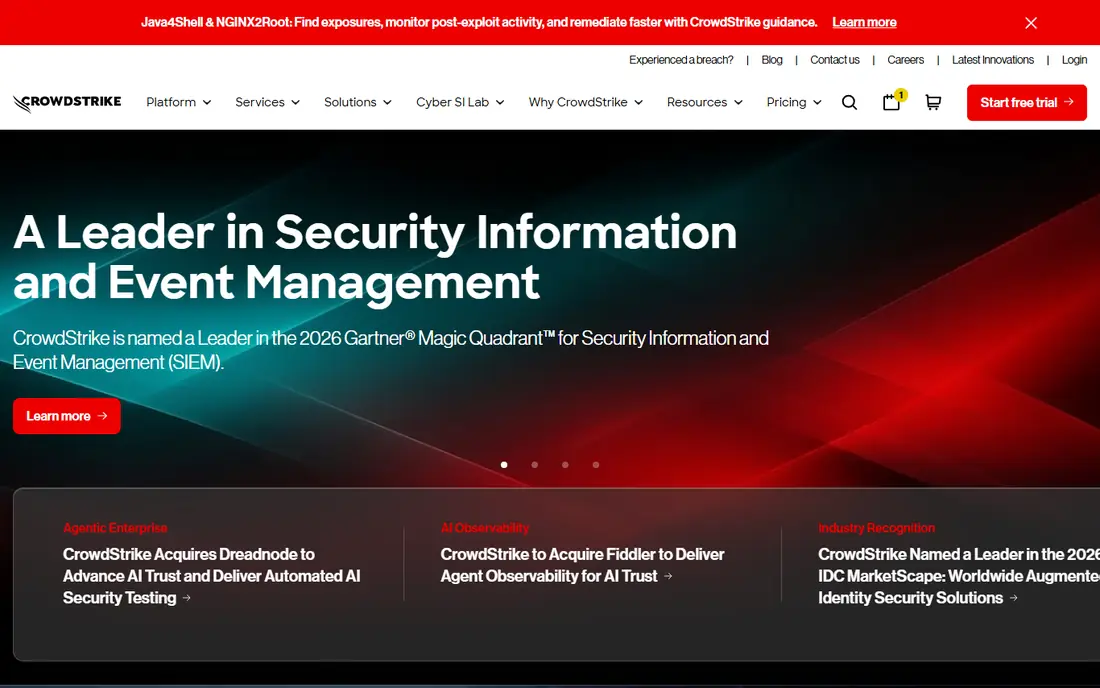
CrowdStrike Falcon is a cloud-native platform with a lightweight agent that streams endpoint activity to the cloud for analysis. Its threat intelligence updates quickly, and detection covers malware, fileless attacks, and suspicious behavior patterns. Response tools let analysts isolate hosts and investigate across the fleet from one console.
Pricing is enterprise-grade, and some advanced features sit on higher tiers. For organizations that want a proven, cloud-managed EDR platform, CrowdStrike is our pick for most teams.
- Cloud-native agent
- Fast threat intelligence
- Strong detection and response
- Enterprise pricing
- Full value needs higher tiers
SentinelOne
Ideal for: Autonomous endpoint protection
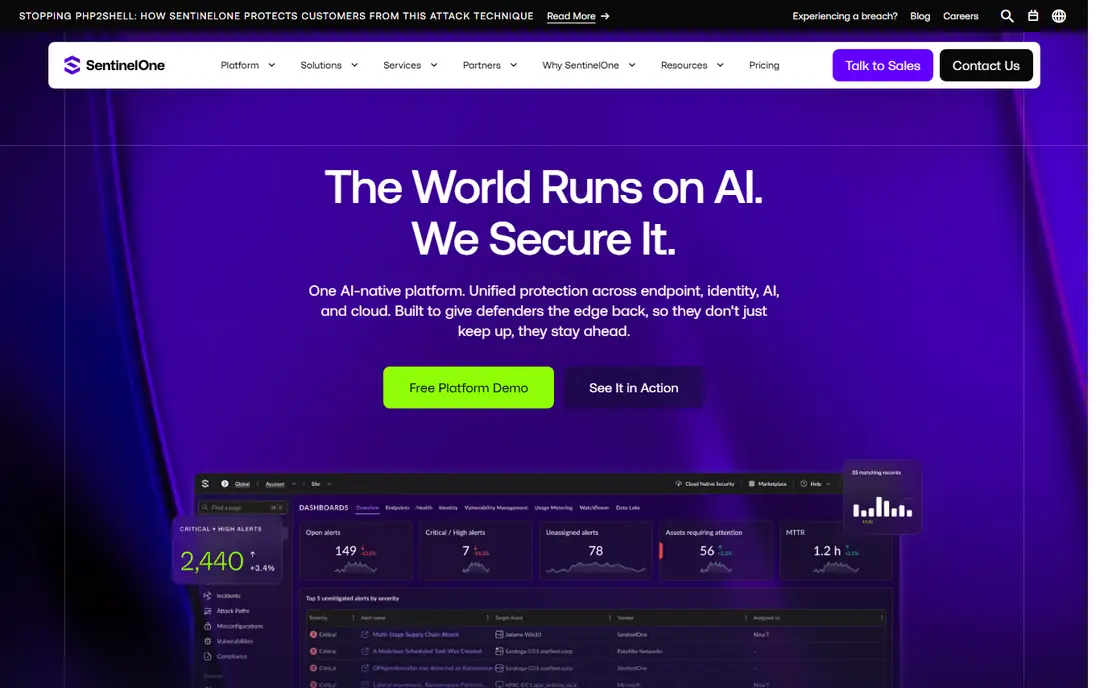
SentinelOne emphasizes automation: its agent can detect, block, and roll back malicious changes on the device itself, even when offline. Behavioral models watch for ransomware patterns and suspicious process activity rather than relying only on known signatures. Coverage spans Windows, macOS, and Linux, plus cloud workloads on higher plans.
The console has depth that takes time to learn, and pricing is quote-based for many teams. For organizations that want fast, automated response with limited analyst staffing, SentinelOne is a strong choice.
- Automated response and rollback
- Behavioral AI
- Broad platform support
- Console takes time to learn
- Pricing is quote-based
Microsoft Defender for Endpoint
Ideal for: Microsoft 365 environments
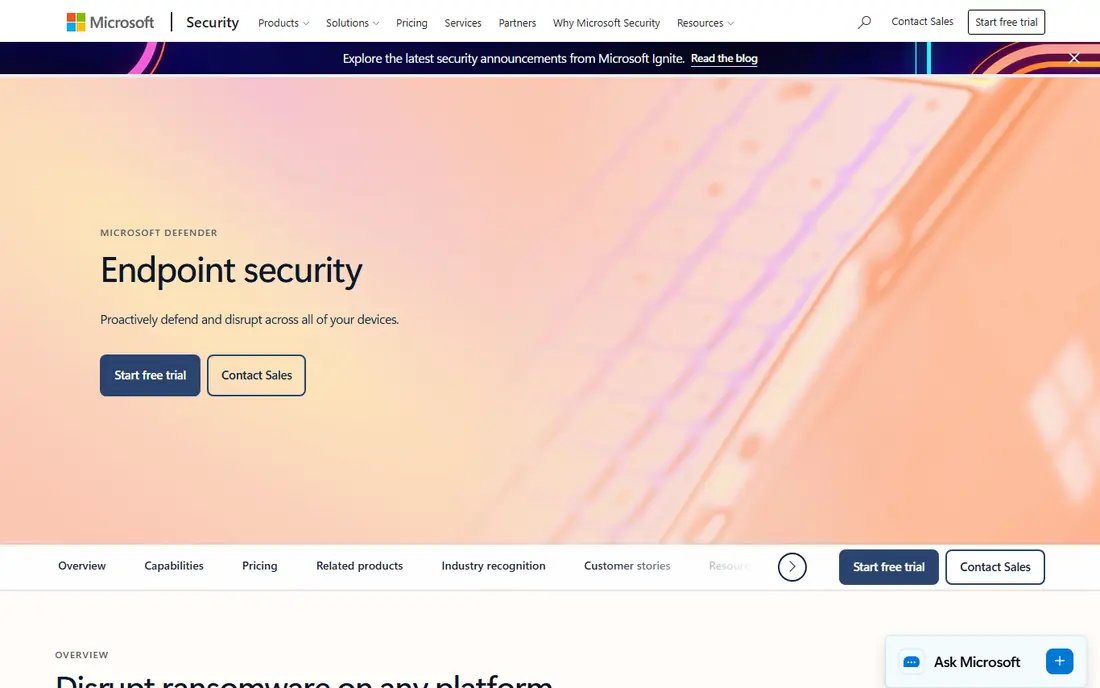
Microsoft Defender for Endpoint builds on the protection already present in Windows, adding detection, investigation, and response through the Microsoft security console. Organizations already licensed for Microsoft 365 often get core coverage included, which lowers cost and deployment effort. Integration with identity and email security gives analysts useful context.
Teams outside the Microsoft ecosystem get less value, and advanced hunting features need higher license tiers. For Microsoft-centered organizations, it is the most natural Carbon Black replacement.
- Built into Windows and Microsoft 365
- Unified console
- No extra agent for many setups
- Best inside the Microsoft ecosystem
- Advanced features need higher licenses
Palo Alto Cortex XDR
Ideal for: XDR across endpoint and network
Cortex XDR goes beyond the endpoint by joining data from endpoints, network firewalls, and cloud sources into one detection picture. That breadth helps analysts trace an attack across the environment instead of seeing only one device. Timeline views show how an incident unfolded, which speeds investigation.
It carries enterprise pricing and complexity, and it works best alongside other Palo Alto products. For organizations that want extended detection and response rather than endpoint-only coverage, Cortex XDR is a strong pick.
- Joins endpoint, network, and cloud data
- Strong analytics
- Incident timeline views
- Enterprise pricing and complexity
- Best with other Palo Alto products
Sophos
Ideal for: Managed endpoint security
Sophos Intercept X combines endpoint protection with managed detection and response options, which suit teams without a full security staff. Integration with Sophos firewalls adds synchronized security, where an infected endpoint can trigger network isolation automatically. The console is clear and manageable for smaller teams.
Some advanced features sit on higher tiers, and its threat research profile is smaller than the largest vendors. For small and mid-size teams that want managed help, Sophos is a practical choice.
- Managed detection options
- Firewall integration
- Clear console
- Some features need higher tiers
- Smaller threat research profile than leaders
Trend Micro
Ideal for: Broad platform protection
Trend Micro covers endpoints, servers, email, and cloud workloads from a central console, which suits organizations with mixed environments. Its long track record in antivirus and intrusion prevention gives it depth in traditional malware protection alongside newer behavioral detection. Bundle options let teams add cloud and email security under one vendor.
The console can feel busy, and pricing varies by bundle, so comparing like-for-like plans takes care. For organizations that want one vendor across many platforms, Trend Micro is a solid pick.
- Broad coverage across endpoint, server, and cloud
- Long track record
- Central console
- Console can feel busy
- Pricing varies by bundle
ESET
Ideal for: Lightweight endpoint protection
ESET is known for a lightweight agent that has little effect on device performance, which matters for older hardware and busy workstations. Detection is strong for known and emerging malware, and management tools cover policies, updates, and reporting without much fuss. Pricing is generally approachable for smaller fleets.
It offers fewer enterprise response and hunting tools than CrowdStrike or SentinelOne, and the console is less polished. For teams that value speed and simplicity, ESET is a good fit.
- Low system impact
- Strong malware detection
- Straightforward management
- Fewer enterprise response tools
- Console less polished than leaders
Bitdefender
Ideal for: Small business endpoint security
Bitdefender GravityZone brings the vendor's well-regarded detection engine to business fleets, with layered ransomware defenses and risk analytics. The console manages policies, patching, and encryption options, which helps small IT teams cover more ground. Detection quality is consistently strong in public testing.
Advanced tiers cost more, and larger fleets need careful setup to keep policies consistent. For small businesses that want strong protection without enterprise overhead, Bitdefender is a reliable pick.
- Strong detection scores
- Gravity zone console
- Layered ransomware defenses
- Advanced tiers cost more
- Setup needs care for larger fleets
How we picked these
We compared official feature pages, pricing, platform coverage, and public reviews for each platform, and we checked that each product is actively offered in October 2026. We favored tools with real detection and response capability, not antivirus alone, and we kept a mix of cloud-native leaders and approachable options for smaller teams. We left out consumer-only antivirus and tools that have shut down.
How to choose an endpoint platform
Endpoint protection touches every device, so a careful trial matters more than a feature checklist.
Test on your real fleet
Run the trial on a mix of your actual devices, including older machines, remote laptops, and any Linux or Mac systems you support. Check agent impact on boot time and battery life, since a heavy agent creates support tickets. Confirm that offline devices still get protection and that policies apply correctly when laptops return to the network.
Check response, not just detection
Detection headlines are easy to compare, but response quality decides how fast an incident ends. Test isolation, rollback, and investigation views during the trial, and check whether managed response help is available overnight. Ask how alerts are tuned, since noisy alerts lead teams to ignore the console.
Model the full cost
Compare per-device pricing across your full fleet, including servers and any cloud workloads, since headline endpoint prices often exclude those. Check contract length, renewal terms, and whether advanced features need higher tiers. A platform that looks cheaper per device can cost more once the needed tier is added.
Rollout order matters more than feature lists for endpoint tools. Start with a pilot group that covers different roles and device types, and run the agent in detection-only mode while you tune policies. Count false positives per week and track which rules caused them, since a noisy tool trains staff to ignore alerts. Document exclusions for developer tools and security scanners before full deployment, and agree on who approves new exclusions. A calm pilot makes the wider rollout faster, because the help desk already knows the common issues.
Managed detection is the other big decision. Some teams want their own analysts triaging alerts around the clock, while others prefer a vendor team watching nights and weekends. Ask how alerts reach you, what response actions the vendor can take on your behalf, and how long event data stays searchable for incident review. Confirm which operating systems and server versions are covered, since gaps in coverage become blind spots. Price the plan against headcount and device count together, because both numbers move over a contract term.
Frequently asked questions
What is Carbon Black?
Carbon Black, now part of Broadcom, is an endpoint security platform known for detection and response on servers and workstations. The tools here offer similar endpoint protection, with varying emphasis on automation, XDR breadth, and managed services.
Which Carbon Black alternative is best for small businesses?
Sophos, ESET, and Bitdefender suit smaller teams, since they pair strong protection with manageable consoles and approachable pricing. Microsoft Defender for Endpoint also fits small teams already on Microsoft 365.
What is the difference between EDR and XDR?
EDR focuses on endpoints, watching devices for suspicious activity and supporting investigation and response. XDR extends that view to network, email, identity, and cloud data, giving analysts a broader picture of an attack across the environment.
Do these tools work on Mac and Linux?
Most of them cover Windows, macOS, and Linux, though feature depth varies by platform. Check the vendor's platform page for your exact operating system versions before committing, especially for Linux servers.
Can I replace Carbon Black without reinstalling everything?
Yes, in most cases, since agents deploy through standard management tools and policies migrate in stages. Plan a phased rollout by team or site, and keep the old agent running until the new one reports cleanly on each device.