Best Circle Alternatives in 2026: 8 Community Platforms Compared

- 1
 Mighty NetworksAll-in-one community plus coursesVisit
- 2
 DiscourseOpen, discussion-first communitiesVisit
- 3
 BettermodeBranded company communitiesVisit
- 4
 DiscordChat-first communities at any sizeVisit
- 5
 SlackProfessional and team communitiesVisit
- Mighty Networks is the closest all-in-one replacement, combining community, courses, and memberships.
- Discourse suits open, discussion-first communities that want full control.
- Bettermode fits companies that need a branded, embeddable community.
- Discord and Slack work best for chat-first communities, with different trade-offs.
- Hivebrite, Kajabi, and Thinkific suit associations, course sellers, and learning businesses.
Quick comparison
| Product | Ideal for | Price from | Free version | |
|---|---|---|---|---|
| Mighty Networks | All-in-one community plus courses | See website | Free trial | Visit |
| Discourse | Open, discussion-first communities | See website | Free trial | Visit |
| Bettermode | Branded company communities | See website | Free trial | Visit |
| Discord | Chat-first communities at any size | See website | Yes | Visit |
| Slack | Professional and team communities | See website | Yes | Visit |
 Hivebrite | Associations and alumni networks | See website | Free trial | Visit |
 Kajabi | Courses plus community in one business | See website | Free trial | Visit |
 Thinkific | Course communities on a budget | See website | Free trial | Visit |
The best Circle alternatives
Circle built its name as a modern community platform for creators, coaches, and brands, combining discussion spaces, courses, events, and memberships. Alternatives split into all-in-one creator platforms, open forums, chat apps, and association tools. The right pick depends on whether your community is chat-first, course-first, or discussion-first.
Mighty Networks
Ideal for: All-in-one community plus courses
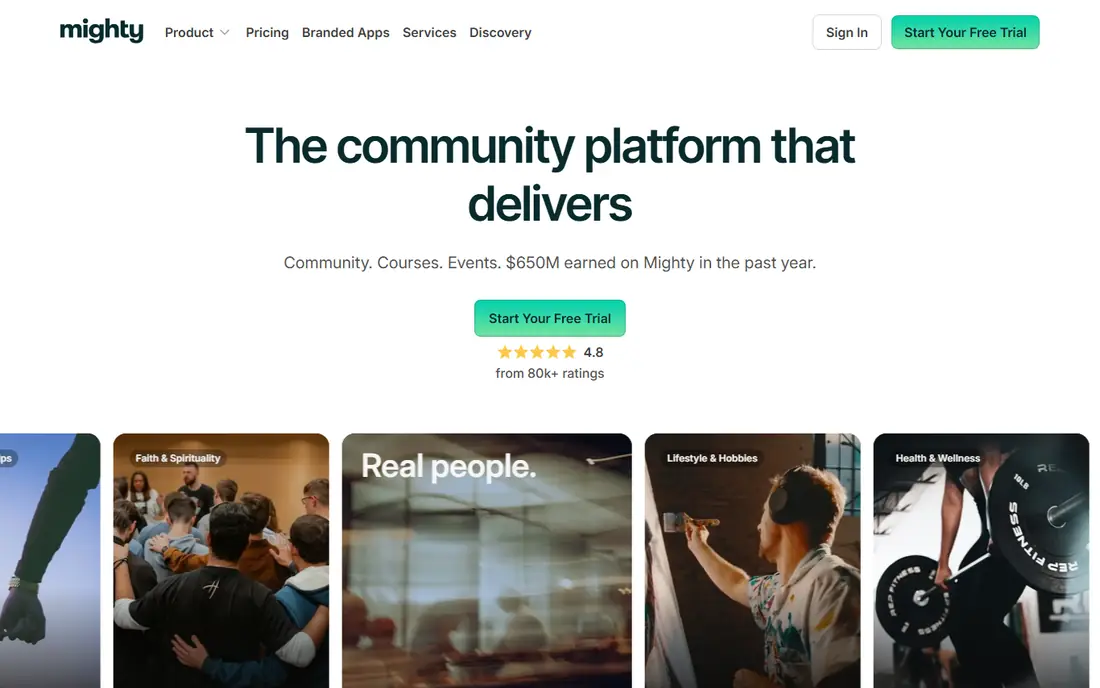
Mighty Networks is the closest Circle replacement for most creators. It combines discussion spaces, courses, live events, and paid memberships in one platform with mobile apps, so members can join, learn, and talk without juggling separate tools. The setup is guided, which helps creators launch quickly.
Customization is more limited than a self-hosted forum, and costs rise as membership and feature needs grow. For coaches, creators, and course sellers who want one home for community and content, Mighty Networks is our pick for most people.
- Community, courses, events, and memberships in one place
- Mobile apps included
- Good for paid memberships
- Design customization is limited compared with Discourse
- Pricing rises with members and features
Discourse
Ideal for: Open, discussion-first communities
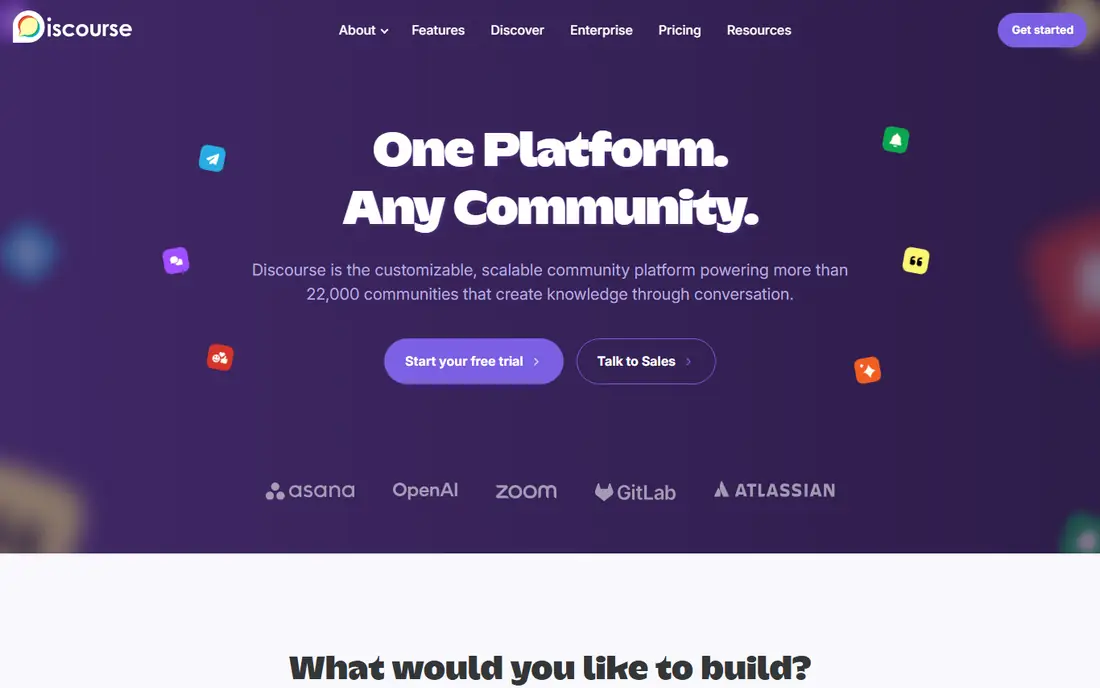
Discourse is the modern forum done right. Long-form threads, strong search, trust levels, and moderation tools make it ideal for communities where knowledge accumulates over time, such as product support forums, developer communities, and interest groups. It is open source, so you can self-host for free or pay for managed hosting.
Real-time chat is basic compared with Discord, and making Discourse look fully branded takes theming work. For communities built around searchable discussion rather than live chat, Discourse is the most durable, member-friendly option here.
- Open source with self-hosting option
- Excellent long-form discussion and search
- Strong moderation tools
- Chat features are basic
- Setup and theming take effort
Bettermode
Ideal for: Branded company communities

Bettermode, formerly Tribe, builds branded communities for companies, including customer communities, product feedback spaces, and partner networks. Spaces can be embedded in a website or run standalone, and customization covers branding, structure, and member experience more deeply than most creator platforms.
The ecosystem is smaller than Circle's or Mighty Networks', and higher-tier pricing requires a quote. For companies that want a community that looks and feels like part of their own product, Bettermode is a strong, flexible choice.
- Embeddable and customizable community spaces
- Good for customer and product communities
- Analytics included
- Smaller ecosystem than Circle or Mighty Networks
- Pricing is quote-based on higher tiers
Discord
Ideal for: Chat-first communities at any size
Discord is where many communities already live. Text channels, voice rooms, video, and streaming come free, and members need no new account if they already use Discord. That low friction makes it the easiest place to gather a gaming, hobby, or creator audience quickly.
The trade-off is permanence. Fast-moving chat buries good answers, search is weaker than a forum, and moderation at scale needs bots and active staff. For chat-first communities that value live conversation over an organized knowledge base, Discord is free and hard to beat.
- Free for most communities
- Excellent voice, video, and chat
- Huge existing user base
- Conversations are hard to search and archive
- Moderation at scale takes effort
Slack
Ideal for: Professional and team communities
Slack suits professional communities, alumni groups, and paid mastermind groups where members already use it at work. Channels, threads, and integrations with tools such as Google Drive and Zoom keep conversation organized, and the interface is familiar to business users.
The free tier limits searchable message history, which hurts communities that rely on old answers, and Slack is not designed for public, paid memberships the way Circle or Mighty Networks are. For professional, invite-only communities, Slack is a comfortable, well-supported home.
- Familiar to professionals
- Strong integrations
- Threads and channels keep talk organized
- Message history limits on the free tier
- Not built for public, paid memberships
Hivebrite
Ideal for: Associations and alumni networks
Hivebrite is built for associations, alumni networks, and professional groups that need a member directory, events, and structured engagement. It handles membership tiers, chapters, and mentoring features that creator platforms do not, and analytics show which members are active and which are drifting.
Pricing is enterprise-grade, which puts it out of reach for small creator communities. For associations and alumni organizations that need a real membership platform rather than a chat room, Hivebrite is the purpose-built choice.
- Built for associations, alumni, and networks
- Member directory and events
- Engagement analytics
- Enterprise pricing
- Less suited to small creator communities
Kajabi
Ideal for: Courses plus community in one business
Kajabi is for creators whose business is selling courses, coaching, and memberships, with community as part of the package. Courses, email marketing, landing pages, and payments live in one system, so a creator can sell and deliver without stitching tools together. Templates look polished out of the box.
If you only need a community, Kajabi is expensive, and its community features are less deep than Circle's or Mighty Networks'. For course sellers who want community wrapped into their sales and delivery system, Kajabi is a strong all-in-one option.
- Courses, email, landing pages, and community in one platform
- Good for selling knowledge products
- Polished templates
- Pricing is high for community-only use
- Community features are secondary to courses
Thinkific
Ideal for: Course communities on a budget
Thinkific is the budget-friendly course platform with community spaces attached. The course builder is strong, communities let students discuss lessons, and a free tier lets a new creator start without paying. Selling and delivering courses is the core job, and it does that well.
Community features are simpler than Circle or Mighty Networks, and marketing tools are thinner than Kajabi's. For educators whose priority is courses, with community as a supporting space for students, Thinkific offers good value.
- Strong course builder with community spaces
- Free tier for getting started
- Good for selling courses
- Community features are simpler than Circle
- Marketing tools are thinner than Kajabi
How we picked these
We compared official feature pages, pricing pages, app store listings, and public reviews for each platform, and we checked that each product is actively offered in October 2026. We kept platforms that host member communities with discussion, events, or courses, and we spread the list across all-in-one creator tools, forums, chat apps, and association platforms. We did not include social networks with no community management controls, or tools that have shut down.
What to check before you switch
Moving a community means moving people, not just data, so plan the human side too.
Data and member migration
Check how members, posts, and content transfer. Most platforms import members by CSV, but discussion history, media, and course progress often transfer poorly or not at all, so set expectations early.
Monetization and access
Confirm paid membership, tiered access, and payment handling match your model. A platform that cannot gate content by tier, or that takes a large transaction cut, can change your business model by accident.
Mobile experience
Test the member experience on a phone, since most community activity happens on mobile. A platform with a good mobile app, such as Mighty Networks, will keep members active far better than a desktop-only forum.
Moving an existing community takes planning, so export your member list, content, and discussion history before you commit to a new platform. Check which parts migrate cleanly and which need manual rebuilding, since lost threads and broken links frustrate long-time members. Moderation tooling matters as the group grows: look for spam controls, member roles, and reporting workflows that match how your team actually works. Also test the mobile experience, since many members read and post from phones. If you charge for access, confirm that payments, trials, and refunds work in your region, and that cancelling members lose access on the schedule you expect.
Event tooling is easy to overlook, so check whether live sessions, recorded replays, and event reminders work inside the platform or need outside tools. Member onboarding also matters: a clear welcome path with pinned posts and starter threads helps new members join conversations instead of lurking. Finally, review the analytics on offer, since basic member counts tell you little about which discussions actually hold attention.
Frequently asked questions
What is the closest alternative to Circle?
Mighty Networks is the closest all-in-one replacement, combining community spaces, courses, events, and paid memberships. Discourse is closer for discussion-first communities that want open-source control.
Is there a free Circle alternative?
Yes. Discord is free for most communities, Slack has a free tier, and Discourse can be self-hosted for free. Each trades something: Discord lacks organized archives, Slack limits free message history, and self-hosted Discourse needs technical setup.
Can I migrate my Circle community to another platform?
Members usually transfer by CSV export and import, but posts, media, and course progress often do not transfer cleanly. Check the new platform's migration tools and plan to keep Circle read-only for a transition period if history matters.
Which platform is best for paid memberships?
Mighty Networks and Kajabi handle paid memberships well, with tiered access and payment handling built in. Hivebrite suits associations with formal membership structures, while Discord and Slack need third-party tools for paid gating.
Should I choose a forum or a chat app for my community?
Choose a forum such as Discourse when knowledge should be searchable and long-lived. Choose chat such as Discord or Slack when live conversation and presence matter more than archives. Many communities run both, with a forum for knowledge and chat for daily talk.