Clickup alternatives in 2026: 8 Options Compared

- Asana and monday.com are the closest structured replacements, while Trello suits teams that want less setup.
- Notion is the pick when docs and tasks must live together.
- Free plan limits differ a lot, so check member and storage limits, not just the headline price.
Quick comparison
| Product | Ideal for | Price from | Free version | |
|---|---|---|---|---|
 Asana | teams needing structured projects and goals | $10.99 per user per month | Yes | Visit |
 monday.com | visual teams wanting flexible boards | $9 per seat per month | Yes | Visit |
 Trello | small teams wanting simple kanban boards | $5 per user per month | Yes | Visit |
 Notion | teams combining docs, wikis and tasks | $10 per user per month | Yes | Visit |
 Wrike | teams needing structured workflows and approvals | $10 per user per month | Yes | Visit |
 Basecamp | teams wanting one flat price and calmer projects | See website | Yes | Visit |
 Todoist | individuals and small teams focused on tasks | $5 per user per month | Yes | Visit |
 Smartsheet | teams that think in spreadsheets | $9 per user per month | Free trial | Visit |
The best clickup alternatives
We compared official feature pages, pricing, app store listings, privacy policies and public reviews to build this list of clickup alternatives. Our pick for most people is listed first in each section below, but the right choice depends on your budget, team size and must-have features, so read the strengths and limits for each option before you decide.
Asana
Ideal for: teams needing structured projects and goals

For readers weighing this option, the story starts with fit. Asana brings order to cross-team work, with timelines, portfolios and goals that keep larger projects visible. In practice, that means you should judge it on the job you need done most, not on the longest feature list, since a tool that fits your daily work beats a broader tool you rarely open. We also weighed pricing honesty, support options and how the product handles your data, because those factors shape the experience long after the first week.
The catch is the free plan, since it now covers very few users and teams quickly need a paid tier. That trade-off is normal, since every product on this list gives up something to excel at its main job. Before you commit, use the free plan or trial with a real task from your own work, check the export and cancellation terms, and confirm the plan you need includes the features described here, since vendors move features between tiers from time to time.
- Timeline and portfolio views
- Goals tracking
- Wide integration range
- Free plan is limited
- Advanced features need higher tiers
monday.com
Ideal for: visual teams wanting flexible boards
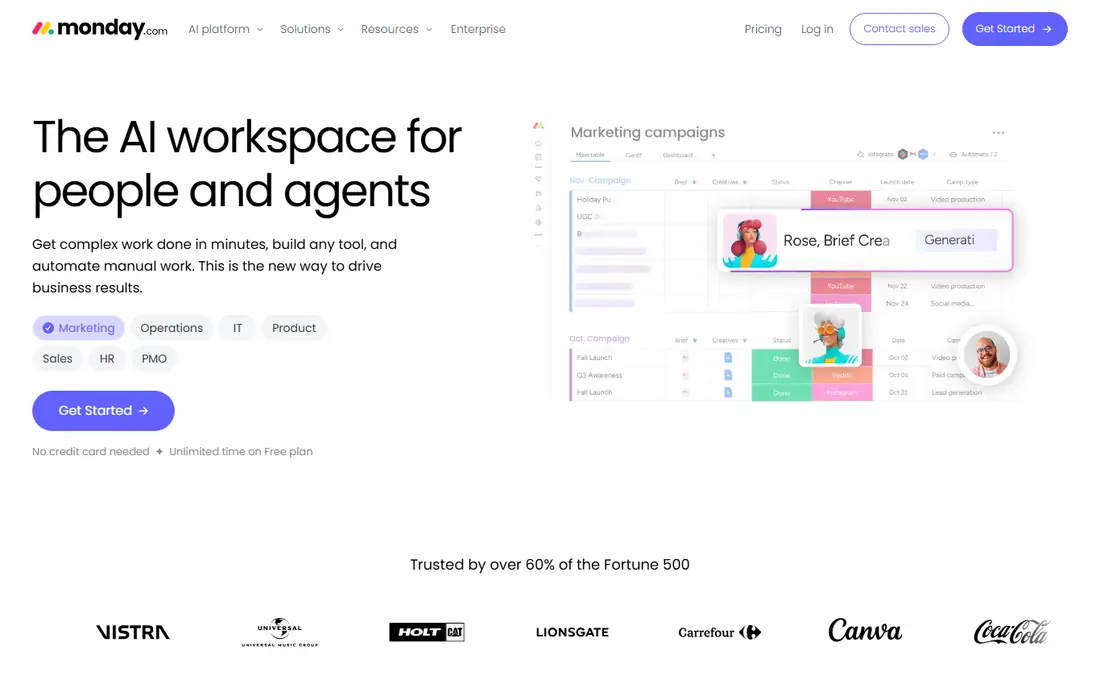
This one earns its place for a clear reason. monday.com is the most visual option here, with boards and dashboards that make project status easy to read at a glance. In practice, that means you should judge it on the job you need done most, not on the longest feature list, since a tool that fits your daily work beats a broader tool you rarely open. We also weighed pricing honesty, support options and how the product handles your data, because those factors shape the experience long after the first week.
The catch is seat rules, since paid plans start with a minimum seat count that raises the real cost for tiny teams. That trade-off is normal, since every product on this list gives up something to excel at its main job. Before you commit, use the free plan or trial with a real task from your own work, check the export and cancellation terms, and confirm the plan you need includes the features described here, since vendors move features between tiers from time to time.
- Highly visual boards
- Automations
- Dashboards
- Seat minimums apply
- Costs rise with each seat
Trello
Ideal for: small teams wanting simple kanban boards
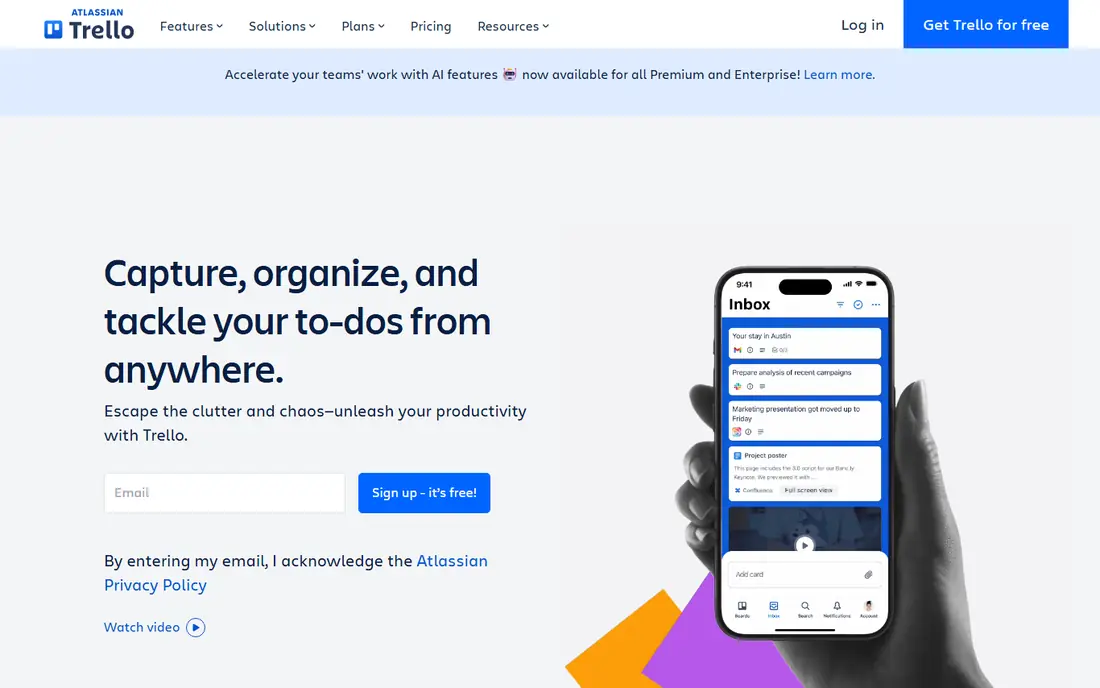
Here is where this option stands out from the rest of the list. Trello wins on simplicity, since a new board takes minutes and almost nobody needs training to use it. In practice, that means you should judge it on the job you need done most, not on the longest feature list, since a tool that fits your daily work beats a broader tool you rarely open. We also weighed pricing honesty, support options and how the product handles your data, because those factors shape the experience long after the first week.
The catch is depth, since reporting and portfolio views are far lighter than in Asana or monday.com. That trade-off is normal, since every product on this list gives up something to excel at its main job. Before you commit, use the free plan or trial with a real task from your own work, check the export and cancellation terms, and confirm the plan you need includes the features described here, since vendors move features between tiers from time to time.
- Simple drag-and-drop boards
- Fast setup
- Low learning curve
- Limited reporting
- Large projects need workarounds
Notion
Ideal for: teams combining docs, wikis and tasks
Consider this option if its strengths match your main need. Notion suits teams whose work starts as writing, since docs, wikis and task lists live in the same workspace. In practice, that means you should judge it on the job you need done most, not on the longest feature list, since a tool that fits your daily work beats a broader tool you rarely open. We also weighed pricing honesty, support options and how the product handles your data, because those factors shape the experience long after the first week.
The catch is project power, since it will not match a dedicated project tool for complex portfolio reporting. That trade-off is normal, since every product on this list gives up something to excel at its main job. Before you commit, use the free plan or trial with a real task from your own work, check the export and cancellation terms, and confirm the plan you need includes the features described here, since vendors move features between tiers from time to time.
- Docs and databases in one place
- Flexible templates
- Good for knowledge bases
- Project views are lighter than dedicated tools
- Permissions need care at scale
Wrike
Ideal for: teams needing structured workflows and approvals
This entry suits a narrower audience, and that focus is its strength. Wrike fits teams with formal approval steps, since requests, reviews and sign-offs are built into the workflow. In practice, that means you should judge it on the job you need done most, not on the longest feature list, since a tool that fits your daily work beats a broader tool you rarely open. We also weighed pricing honesty, support options and how the product handles your data, because those factors shape the experience long after the first week.
The catch is the learning curve, since new users need time to get comfortable with its structure. That trade-off is normal, since every product on this list gives up something to excel at its main job. Before you commit, use the free plan or trial with a real task from your own work, check the export and cancellation terms, and confirm the plan you need includes the features described here, since vendors move features between tiers from time to time.
- Approval workflows
- Time tracking
- Reporting dashboards
- Interface takes learning
- Team plan has user limits
Basecamp
Ideal for: teams wanting one flat price and calmer projects
On value alone, this option deserves a close look. Basecamp is the calm option, with one flat price and a deliberately small set of tools that keeps projects from sprawling. In practice, that means you should judge it on the job you need done most, not on the longest feature list, since a tool that fits your daily work beats a broader tool you rarely open. We also weighed pricing honesty, support options and how the product handles your data, because those factors shape the experience long after the first week.
The catch is flexibility, since teams that want Gantt charts and custom dashboards will miss them. That trade-off is normal, since every product on this list gives up something to excel at its main job. Before you commit, use the free plan or trial with a real task from your own work, check the export and cancellation terms, and confirm the plan you need includes the features described here, since vendors move features between tiers from time to time.
- Flat pricing
- Message boards and chat in one place
- Simple to-do lists
- Fewer views than rivals
- No free plan beyond a limited project
Todoist
Ideal for: individuals and small teams focused on tasks
If you want a dependable choice, start here. Todoist is the fastest way to capture and clear tasks, which is why it suits individuals and very small teams so well. In practice, that means you should judge it on the job you need done most, not on the longest feature list, since a tool that fits your daily work beats a broader tool you rarely open. We also weighed pricing honesty, support options and how the product handles your data, because those factors shape the experience long after the first week.
The catch is scope, since it is a task tool first and a project platform second. That trade-off is normal, since every product on this list gives up something to excel at its main job. Before you commit, use the free plan or trial with a real task from your own work, check the export and cancellation terms, and confirm the plan you need includes the features described here, since vendors move features between tiers from time to time.
- Fast task capture
- Natural language dates
- Cross-platform apps
- Not a full project platform
- Collaboration features are basic
Smartsheet
Ideal for: teams that think in spreadsheets
The final entry rounds out the list with a different angle. Smartsheet fits spreadsheet thinkers, since its grid view feels familiar while still offering Gantt, card and dashboard views. In practice, that means you should judge it on the job you need done most, not on the longest feature list, since a tool that fits your daily work beats a broader tool you rarely open. We also weighed pricing honesty, support options and how the product handles your data, because those factors shape the experience long after the first week.
The catch is the lack of a free plan, so you trial it rather than starting free. That trade-off is normal, since every product on this list gives up something to excel at its main job. Before you commit, use the free plan or trial with a real task from your own work, check the export and cancellation terms, and confirm the plan you need includes the features described here, since vendors move features between tiers from time to time.
- Spreadsheet-style grids
- Gantt and card views
- Automation rules
- No free plan
- Interface can feel dense for casual users
How we picked these
We compared official feature pages, pricing pages, app store listings, privacy policies and public reviews for each product on this list, and we checked that each product exists and works today. We favoured products that fit the topic directly, offered clear pricing or a usable free tier, and showed an honest balance of strengths and limits. We did not claim hands-on testing we did not do, and where a price could not be verified we wrote See website rather than guessing.
We also mixed well-known leaders with strong smaller options, so the list is useful whether you want the safest default or a more specialised pick. If a product changed its pricing or features after our check, the vendor website is the final word, and we recommend confirming the plan details before you buy.
How to choose the right clickup alternatives
Start from why you are leaving ClickUp. If it felt too complex, pick Trello or Todoist and accept fewer views. If it felt too loose, pick Asana or Wrike for structure and approvals. If docs were the missing piece, Notion is the natural move. Trial with one real project and your actual team size, and price the paid plan for every person who will edit, not just the core team, since seat rules change the total fast.
Use the checklist below with your own shortlist, since it catches the problems that cause most regret after purchase.
- Fit first: does it solve your main job, or does it only look impressive in a demo.
- True cost: add up seats, add-ons, taxes and renewal prices, not just the headline monthly figure.
- Exit route: can you export your data and cancel without a long process or penalty.
- Support and privacy: check support hours, data handling and security practices before you rely on it daily.
Run a trial with real work, not sample data, and involve the people who will use the product every day. Their verdict after a week of real tasks tells you more than any feature table, including ours.
Frequently asked questions
What are the best ClickUp alternatives?
Asana and monday.com are the closest full replacements, Trello is the simplest board, and Notion suits teams that want docs with tasks. The best choice depends on whether you need structure, simplicity or writing in one place.
Is there a free ClickUp alternative?
Yes. Asana, monday.com, Trello, Notion, Wrike, Basecamp and Todoist all offer free plans, but limits on users, projects or storage differ. Smartsheet is the exception here, with a trial instead of a free plan.
Which alternative is easiest to switch to?
Trello is usually the fastest switch, since boards map easily from ClickUp lists. Asana and monday.com offer importers, but you should still expect to rebuild some views, automations and custom fields by hand.
Can I use these tools for free as a small team?
Small teams can often stay on a free plan, especially with Trello or Todoist. Check the member limit first, since Asana free now covers very few users and monday.com free covers two seats.
Do ClickUp alternatives include docs?
Notion is the strongest docs option on this list, and ClickUp rivals such as Asana and monday.com include docs as a secondary feature. If writing is central to your work, Notion should be first on your shortlist.