This list puts MongoDB Atlas first for document and AI application data. Listed starting prices: YugabyteDB from $125 / vCPU / month. Google BigQuery fits analytics and AI data system needs; Google Cloud Spanner fits always-on globally distributed relational workloads. Details, prices and limits for the rest of the 5 tools are below.
Choosing Cloud-Native Oracle Database usually comes down to price, fit and limits. This Ainotely guide sets 5 tools side by side on those three points, with the facts kept short and checkable.
Key takeaways
Number one here is MongoDB Atlas, a fit for document and AI application data.
The lowest published monthly entry price here is $125 / vCPU / month, from YugabyteDB.
A fair warning about MongoDB Atlas: document model differs from relational SQL.
Only MongoDB Atlas offers a free plan among these 5 tools.
Think of MongoDB Atlas for document and AI application data. MongoDB Atlas is a managed data product for building AI applications and agents, bringing together live data, intelligent retrieval and governed action.
The document model is not a drop-in replacement for relational schemas, so a move from Oracle typically involves redesigning data structures and queries. For everyday use, consider Atlas when application adaptability and AI-oriented retrieval matter more than strict relational modeling. Check the vendor site for MongoDB Atlas pricing; none is listed in this comparison. MongoDB Atlas has a free plan.
The main drawbacks: Migration from Oracle needs schema rework.
Google BigQuery is aimed squarely at analytics and AI data platform needs. BigQuery is described as an autonomous data and AI product that automates the whole data life cycle, helping teams move from data to AI to action quicker.
It is a solid fit for analytics, reporting and machine learning pipelines instead of transactional application back ends. Google BigQuery does not show a starting price in this comparison, so check the vendor site for current pricing. As for free access: Not stated.
What to check first: Query costs need active monitoring.
Best for: Always-on globally distributed relational workloads
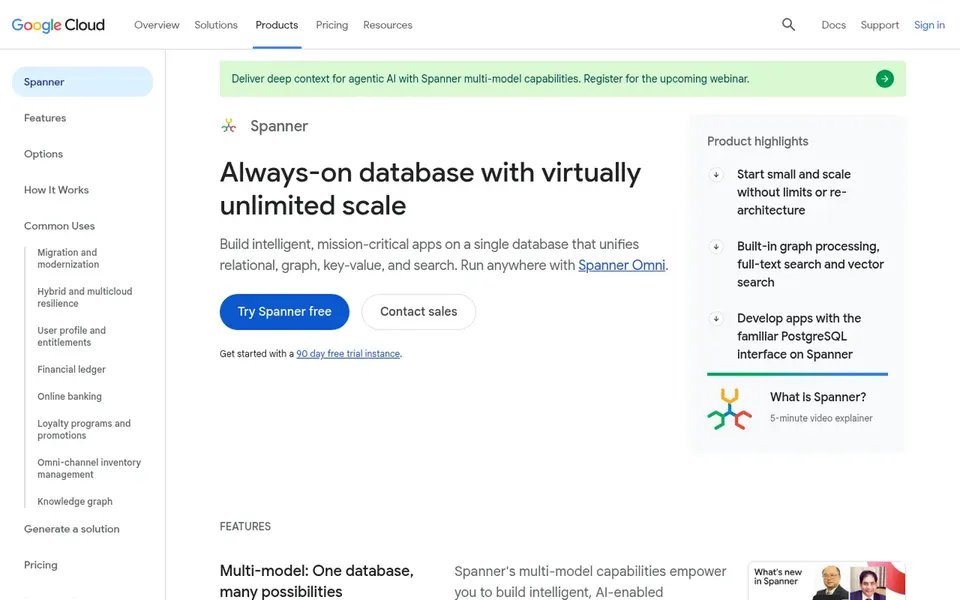
Pick Google Cloud Spanner if this describes you: always-on globally distributed relational workloads. Google Cloud Spanner is a completely managed database that brings relational, graph, key value and search models together in a single system. Its homepage emphasizes always-on operation with no maintenance windows, so applications keep running during scaling or upkeep.
Its distributed design also brings conceptual overhead for small, single-region applications that a more straightforward managed relational database could deal with. Consider it when global scale and uninterrupted availability matter more than portability. Google Cloud Spanner shows no starting price here, so confirm the cost on the vendor site. Free plan details: Not stated.
Best for: PostgreSQL-compatible distributed deployments
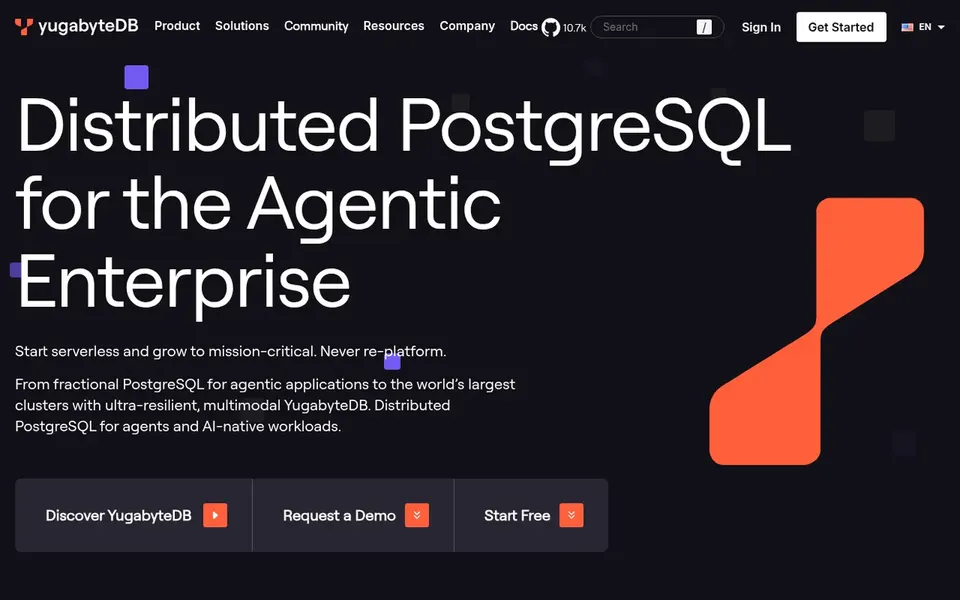
Where YugabyteDB fits: PostgreSQL-compatible distributed deployments. YugabyteDB is presented as an AI-native, distributed, PostgreSQL-compatible database for agents and AI-native workloads. As for the details, PostgreSQL compatibility seldom spans every extension and edge case, so teams should validate their specific features before committing.
What to check first: Compatibility gaps can appear in edge cases.
Also, the vendor says teams can start serverless and grow to mission-critical use without re-platforming. That makes it appealing to organizations already invested in PostgreSQL tooling and skills who want horizontal scale and resilience without abandoning familiar interfaces. Distributed tuning also demands more attention than a single-node setup. Choose it when PostgreSQL familiarity is a priority and you can absorb some operational complexity in exchange for scale. Price to start with YugabyteDB: $125 / vCPU / month. As for free access: Free trial.
Best for: Resilient distributed SQL across regions
CockroachDB targets resilient distributed SQL across regions. Pick it when uptime across locations is a core requirement instead of an afterthought. On top of that, workloads that stay in one region and modest in size may not need its resilience machinery.
Trade-offs to know: Distributed model layers on operational learning.
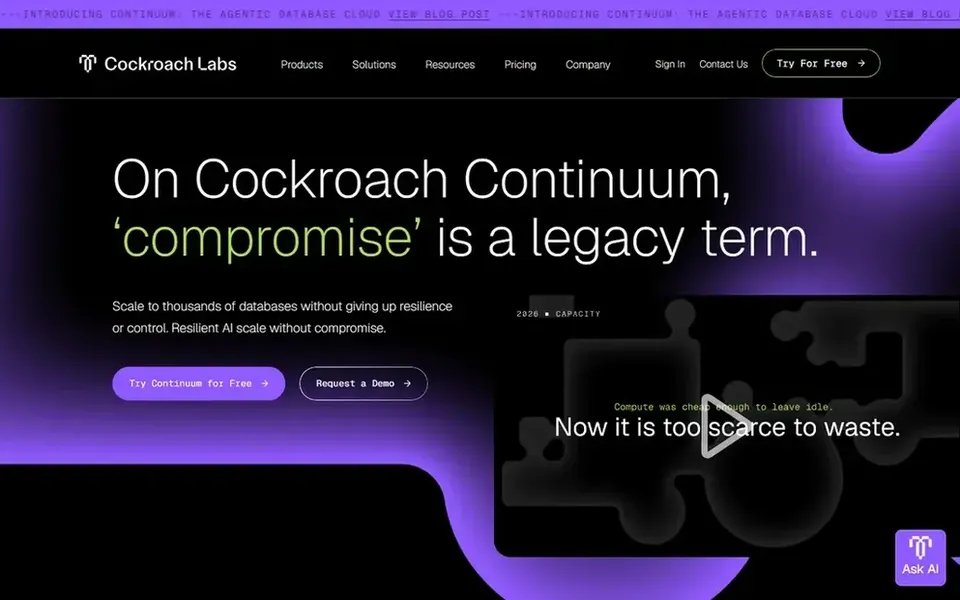
For everyday use, CockroachDB is a cloud-native, distributed SQL database from Cockroach Labs, described as made for extreme resilience, smooth horizontal scaling and global deployment. The distributed design introduces a ramp-up time, and behavior can differ from what teams expect from a legacy relational engine. Pricing for CockroachDB is not stated here, so ask the vendor for current figures. Free plan details: Free trial.
Get a written quote from MongoDB Atlas, Google BigQuery, Google Cloud Spanner and CockroachDB; the list shows no starting price for them.
Look at the free plan from MongoDB Atlas closely: its caps decide whether it is usable for real work.
Use real work to test the free trial from YugabyteDB and CockroachDB, rather than a demo project.
Read the limits listed for MongoDB Atlas first: document model differs from relational SQL.
Look at which plan of YugabyteDB unlocks the features you need; entry tiers are often cut down.
Pick one real project and run it in CockroachDB first; a small pilot shows fit faster than a checklist.
How we picked
For each of the 5 tools we noted price, free plan or trial, fit for Cloud-Native Oracle Database and the main limit, using vendor pages and documentation. Where a price is missing, the vendor does not list one publicly or ties it to a quote. Always confirm before budgeting. We ordered the tools by general fit, then by how clearly pricing is shown, then by free access. A buyer with unusual needs may reorder them.
Every price and plan detail on this page comes from the vendors’ own websites. We did not run hands-on tests unless the text says so, and we do not publish star ratings or review scores. See how we score and our disclosure.
Keep your shortlist in one place
Paste prices, trial dates and notes from this guide into Ainotely, our AI note app. It files them into a topic and pulls out tasks like “cancel trial by Friday”. Free 7-day trial, no card needed.
Can a distributed SQL database replace Oracle for transactional workloads?
Distributed SQL engines for example Google Cloud Spanner, CockroachDB and YugabyteDB are made for transactional workloads at scale. The central work is validating SQL compatibility and rewriting features that rely on Oracle-specific behavior.
What is the cheapest option for Cloud-Native Oracle Database in this list?
On published monthly entry prices, YugabyteDB is the lowest here at $125 / vCPU / month. Entry price is only part of the cost, because seats, add-ons and billing terms can change the total.
How are the tools for Cloud-Native Oracle Database ordered?
The order follows typical fit for Cloud-Native Oracle Database, with MongoDB Atlas first and CockroachDB last, then price clarity and free access. It is editorial judgement, not a score, so another team could rank the tools differently.
Is MongoDB Atlas the right pick for everyone comparing Cloud-Native Oracle Database?
No single tool suits every team. MongoDB Atlas comes first because it fits document and AI application data, while Google BigQuery suits analytics and AI data platform needs and Google Cloud Spanner suits always-on globally distributed relational workloads. Match the tool to your own size, budget and workflow before deciding.
Which options for Cloud-Native Oracle Database have a free plan?
MongoDB Atlas is the only tool in this list with a free plan. Free plans usually cap users, projects or features, so check the limits on the vendor page. Several others offer a trial instead. Pricing, free plan details and limits for all 5 tools in this Cloud-Native oracle database alternatives roundup sit on the individual cards above.