Alteryx is the first pick on this list for automating data workflows. Listed starting prices: Alteryx from $250 per user a month. Look at RapidMiner for end-to-end enterprise analytics, and at Databricks for unified data and AI system. Details, prices and limits for the rest of the 5 tools are below.
Ainotely compared 5 tools for Dataiku. The goal is a practical shortlist: published prices, free plan facts, best-fit use cases and honest limits for every entry.
Key takeaways
The list opens with Alteryx, aimed at automating data workflows.
The main caution on Databricks: wide scope can mean a steeper setup.
Neither Alteryx nor KNIME, nor any of the other 3 tools, has a permanent free plan; trials and quotes are the norm.
Alteryx is the lowest-priced starter here at $250 per user per month.
Enterprise production features sit in the commercial offering
See website
Not stated
The 5 picks in detail
Al
#1
Alteryx
Best for: Automating data workflows
Alteryx is built with automating data workflows in mind. Alteryx centers on automating data workflows, reducing manual work and delivering insights quicker through Alteryx One. Its homepage notes integration with Snowflake, Databricks and BI tools, which makes it a practical choice for analytics teams that spend significant time on preparation and blending before reporting.
Limits to weigh: Less centered on model hosting and deployment.
In daily use, the product is oriented toward workflow automation and insights instead of running AI models on your own infrastructure. Worth adding: if sovereign model deployment is the priority, H2O.ai addresses that require more straight, and KNIME supplies a visual alternative with an open source core. What you pay to start with Alteryx: $250 per user per month. Free access: Free trial.
What Alteryx does well: Automates data workflows to cut manual work.
RapidMiner makes the most sense for end-to-end enterprise analytics. It suits bigger organizations that want a structured system for analytics work and value alignment with an established industrial technology vendor.
RapidMiner shows no starting price here, so confirm the cost on the vendor site. Free access: Not stated.
Watch-outs: Less emphasis on open source adaptability.
Databricks is aimed squarely at unified data and AI system. Databricks presents itself as a unified platform for data, analytics and AI, built around a data-centric approach.
Honest limits: Wide scope can mean a steeper setup.
No starting price is listed for Databricks here; confirm pricing on the vendor site. Free plan details: Not stated.
Pick H2O.ai if this describes you: AI on your own infrastructure. If you chiefly need visual data preparation and workflow automation rather than model hosting, Alteryx or KNIME may be a more direct fit.
The main drawbacks: Narrower data preparation scope than full systems.
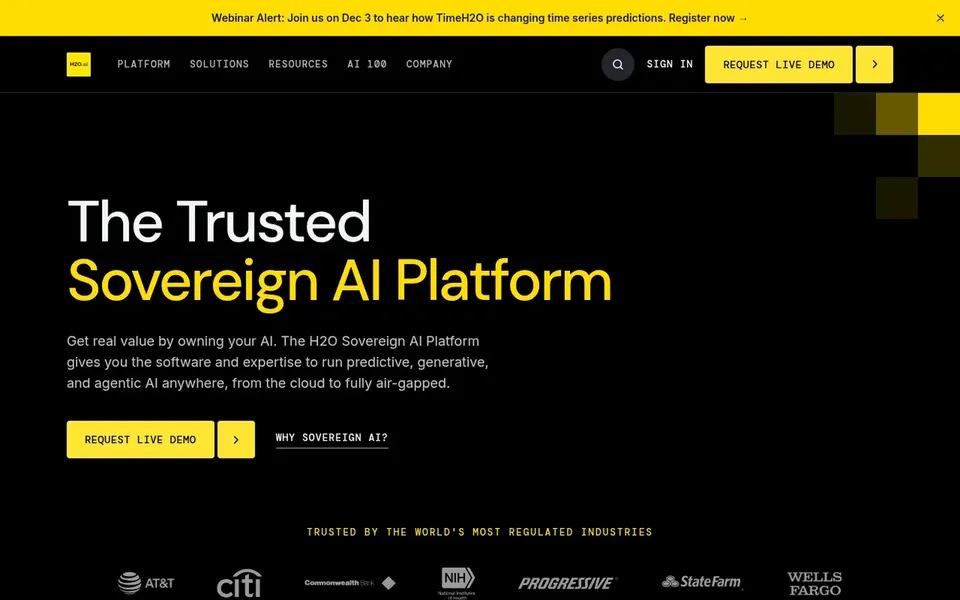
H2O.ai does not show a starting price in this comparison, so check the vendor site for current pricing. As for free access: Not stated. What works well: Sovereign AI positioning for controlled environments.
KNIME was built for visual open source workflows. Teams that rely heavily on custom code or managed infrastructure may find a visual builder less adaptable than a full data product like Databricks.
Watch-outs: Visual approach may feel limiting for code-heavy teams.
More specifically, KNIME provides a free and open source system with data analysis tools, a visual workflow builder and a route to putting options into production in the enterprise. KNIME shows no starting price here, so confirm the cost on the vendor site. On free options: Not stated.
Ask RapidMiner, Databricks, H2O.ai and KNIME for a written quote, since no starting price is shown.
Run a trial of Alteryx with real work before paying for a year; your own workflow is the best test.
Before choosing Alteryx, weigh its main limit: less centered on model hosting and deployment.
Read the plan comparison for Alteryx carefully; key features often start on a higher tier.
Before rolling out KNIME, verify the integrations your workflow depends on.
How we picked
The comparison looks at four things: starting price, free access, how well the feature set matches Dataiku, and the main limit of each tool. Plan names, prices and limits change often. Treat the figures here as a starting point and verify them with the vendor. The ranking is editorial: typical fit first, then clear pricing, then free access. If your needs are unusual, read the profiles rather than relying on position.
Every price and plan detail on this page comes from the vendors’ own websites. We did not run hands-on tests unless the text says so, and we do not publish star ratings or review scores. See how we score and our disclosure.
Keep your shortlist in one place
Paste prices, trial dates and notes from this guide into Ainotely, our AI note app. It files them into a topic and pulls out tasks like “cancel trial by Friday”. Free 7-day trial, no card needed.
Is Alteryx the right pick for everyone comparing Dataiku?
No single tool suits every team. Alteryx comes first because it fits automating data workflows, while RapidMiner suits end-to-end enterprise analytics and Databricks suits unified data and AI platform. Match the tool to your own size, budget and workflow before deciding.
How are the tools for Dataiku ordered?
The order follows typical fit for Dataiku, with Alteryx first and KNIME last, then price clarity and free access. It is editorial judgement, not a score, so another team could rank the tools differently.
What is the cheapest option for Dataiku in this list?
On published monthly entry prices, Alteryx is the lowest here at $250 per user per month. Entry price is only part of the cost, because seats, add-ons and billing terms can change the total. For the full picture, the cards above cover all 5 entries of this Dataiku alternatives list, including price, free plan and limits.
Which choice suits organizations with strict infrastructure control?
H2O.ai emphasizes running predictive, generative and agentic AI on your own infrastructure, from the cloud to completely air-gapped setups. That positioning suits regulated or sovereignty-focused environments.
Are there open source alternatives to Dataiku?
KNIME supplies a free and open source core with a visual workflow builder and a path into enterprise production. It is a typical starting point for teams that want to avoid a completely commercial system.
How do Alteryx and RapidMiner differ in focus?
Alteryx centers on automating data workflows and connecting with warehouses and BI tools, whereas RapidMiner positions itself as an end-to-end enterprise AI and analytics system backed by Siemens.