Best Dataloader Alternatives in 2026: 7 Data Loading Tools Compared

- Fivetran and Stitch suit teams that want managed, low-maintenance data pipelines.
- Airbyte suits teams that want open source ELT with many connectors.
- Hevo Data and Estuary suit teams that want real-time or near-real-time sync.
- Talend suits enterprises that need broad data integration and governance.
- Portable suits teams that need long-tail connectors on demand.
Quick comparison
| Product | Ideal for | Price from | Free version | |
|---|---|---|---|---|
 Fivetran | Managed data pipelines | See website | Free trial | Visit |
 Airbyte | Open source ELT | See website | Yes | Visit |
 Stitch | Simple managed ELT | See website | Free trial | Visit |
 Talend | Enterprise data integration | See website | Free trial | Visit |
 Hevo Data | Real-time data pipelines | See website | Free trial | Visit |
 Portable | Long-tail connectors | See website | Free trial | Visit |
 Estuary | Real-time data streaming | See website | Free trial | Visit |
The best Dataloader alternatives
Data loading tools move data from apps, databases, and APIs into warehouses for analysis. The tools below cover that work, from managed ELT platforms to open source pipelines. We compared official documentation, pricing pages, and public developer guides.
Fivetran
Ideal for: Managed data pipelines
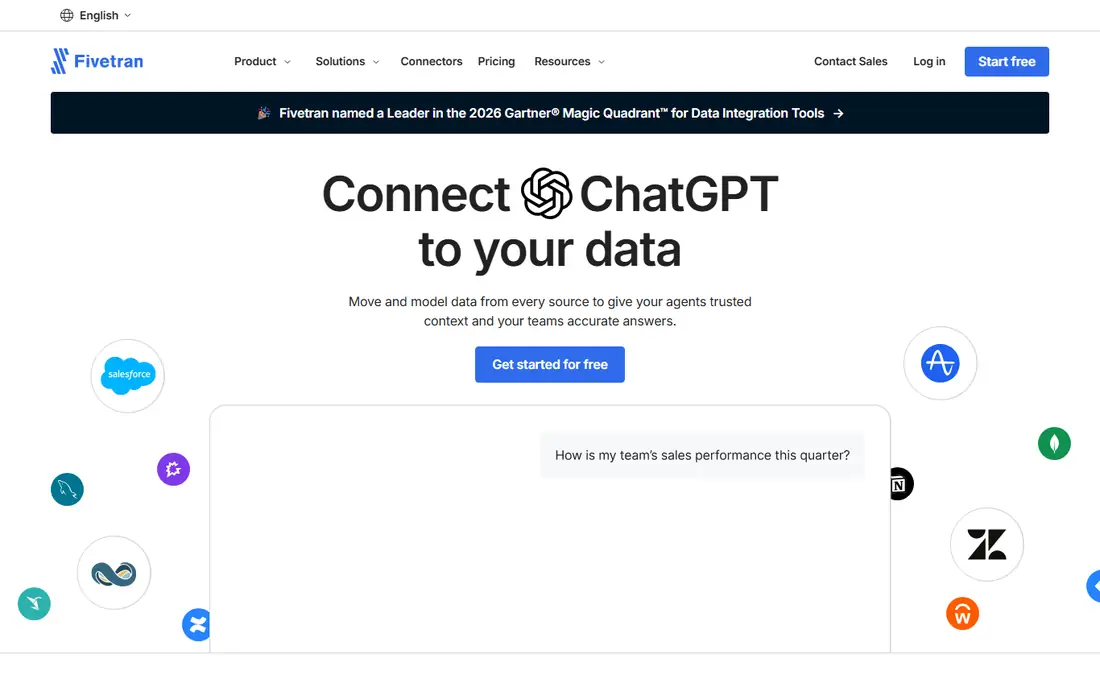
Fivetran offers fully managed data pipelines that sync data from hundreds of sources into warehouses with minimal setup. It handles schema changes automatically, monitors sync health, and alerts teams to failures, which saves data engineering time. That reliability suits analytics teams that want pipelines to just work.
Pricing scales with monthly active rows, so high-volume teams should model costs carefully. For a team that wants managed, low-maintenance pipelines, Fivetran is our pick for reliability. Trial it with your top sources first.
- Managed pipelines with many connectors
- Automatic schema handling
- Reliable sync and monitoring
- Pricing scales with data volume
- Less customization than open source tools
Airbyte
Ideal for: Open source ELT
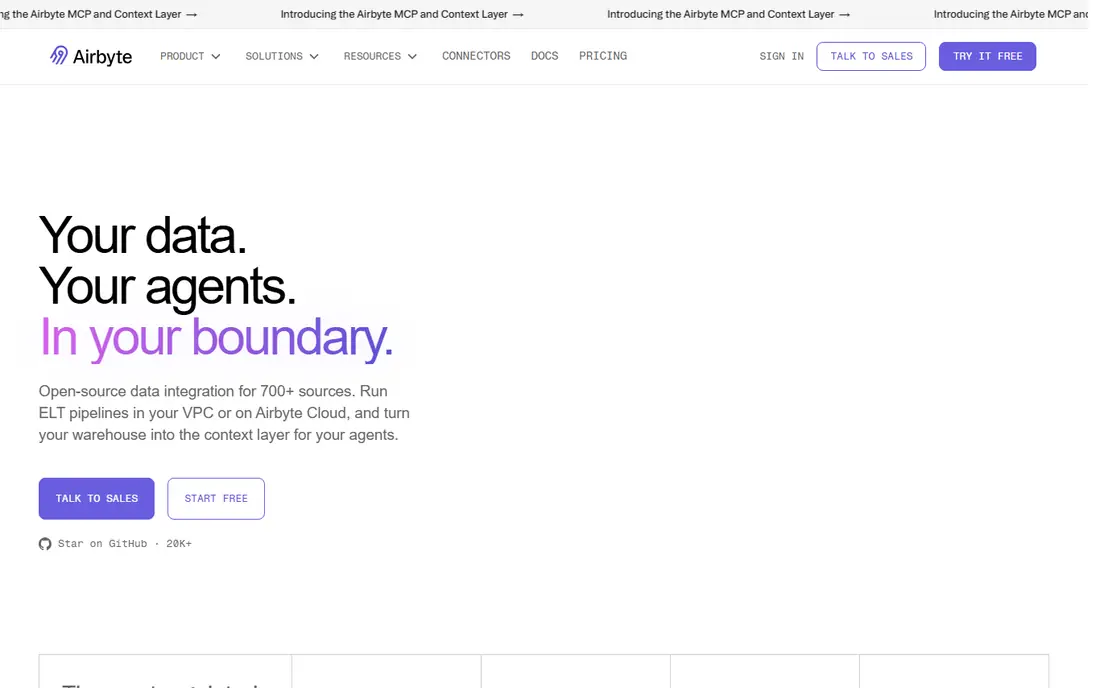
Airbyte is an open source ELT platform with hundreds of connectors for apps, databases, and APIs, plus options to build custom connectors. Teams can self-host for control or use Airbyte Cloud for managed service. Its community contributes connectors rapidly, which keeps coverage broad.
Self-hosting needs operations effort, and cloud pricing scales with data volume. For a team that wants open source flexibility with broad connectors, Airbyte is a strong pick. Test connector quality for your specific sources, since depth varies.
- Open source ELT with a large connector catalog
- Self-hosting and cloud options
- Active community
- Self-hosting needs ops effort
- Managed cloud pricing scales with volume
Stitch
Ideal for: Simple managed ELT

Stitch, from Talend, offers simple managed ELT that replicates data from apps and databases into warehouses with minimal configuration. Its setup is quick, and its replication is reliable for standard analytics pipelines. Small data teams value its simplicity over complex platforms.
Advanced transformation and real-time features are thinner than Fivetran or Estuary. For a small team that wants simple, reliable ELT, Stitch is a practical pick. Check connector coverage for your sources before subscribing.
- Simple managed ELT with solid connector coverage
- Easy setup
- Reliable replication to warehouses
- Fewer advanced transformation features than Fivetran
- Pricing scales with rows
Talend
Ideal for: Enterprise data integration
Talend provides enterprise data integration with tools for ingestion, transformation, quality, and governance across on-premises and cloud systems. Large organizations use it for complex pipelines, master data, and compliance-heavy workflows. Its breadth suits enterprises with diverse data estates.
Complexity and pricing are enterprise oriented, so small teams may prefer Airbyte or Stitch. For a large organization that needs integration plus governance, Talend is a strong pick. Budget training time beside licensing.
- Broad data integration, quality, and governance tools
- Enterprise connectors
- Strong on-premises and cloud options
- Enterprise complexity and pricing
- Learning curve for new teams
Hevo Data
Ideal for: Real-time data pipelines
Hevo Data offers no-code data pipelines that sync apps and databases into warehouses in real time or batch, with automatic schema handling. Its interface suits data teams that want pipelines without heavy coding, and its connector catalog covers common SaaS tools well. That ease speeds analytics setup.
Pricing scales with events, so high-volume sources need modeling. For a team that wants no-code, near-real-time pipelines, Hevo Data is a strong pick. Trial it with your highest-volume source first.
- No-code pipelines with real-time and batch sync
- Many connectors
- Automatic schema management
- Pricing scales with events
- Advanced customization is thinner than open source tools
Portable
Ideal for: Long-tail connectors
Portable specializes in long-tail connectors: if your niche SaaS tool lacks a connector elsewhere, Portable builds and maintains one for you. Its managed pipelines then sync that data into your warehouse reliably. That on-demand model suits teams with unusual sources that mainstream tools miss.
Mainstream connector breadth is smaller than Fivetran, and pricing is per connector. For a team blocked by one missing connector, Portable is a distinctive pick. Check build time for your specific source before committing.
- Long-tail SaaS connectors built on demand
- Managed pipelines
- Good for niche sources
- Smaller catalog than Fivetran for mainstream sources
- Pricing is per connector
Estuary
Ideal for: Real-time data streaming
Estuary offers real-time data streaming pipelines that move data from sources to warehouses with low latency, plus transformations inside the pipeline. Its open source core appeals to teams that want transparency, while its cloud version suits managed use. That real-time focus suits operational analytics and live dashboards.
It is newer than Fivetran, so ecosystem depth is smaller, and real-time setup needs engineering care. For a team that needs fresh data within seconds rather than hours, Estuary is a strong pick. Trial it on one live dashboard use case first.
- Real-time data streaming with low latency
- Open source core
- Transformations inside pipelines
- Newer platform with a smaller ecosystem
- Real-time setup needs care
How we picked these
We compared official documentation, pricing pages, and public developer guides, looking for data loading, ELT, or pipeline features that match Dataloader tools. We favored tools that are actively maintained and work in October 2026, and we mixed managed, open source, and real-time options. We did not claim hands-on testing, and we note that pricing often scales with data volume, so model costs for your row and event counts.
We also weighed practical details that matter after signup. That included how easy each product is to set up, whether support answers promptly, and whether pricing stays clear as usage grows. We read user complaints as well as praise, since repeated complaints about billing, onboarding, or missing features often signal a real weakness. Where a product had a known limitation, we said so in its write-up rather than smoothing it over. Our goal was a shortlist that a reader can trust for dataloader alternatives, not a list of every vendor in the market. Readers with unusual needs should still test their top two choices, since fit depends on budget, team size, and the features used every day.
What to check before you choose
Start with your sources and destination: which apps, databases, and warehouses must connect, and how fresh must data be. Batch pipelines suit daily reporting, while real-time tools suit live dashboards. Check connector depth for your specific sources, since catalog size alone does not guarantee quality.
Next, test sync reliability and schema handling. Load a real source, change a field, and see whether the pipeline adapts without breaking downstream models. Also check monitoring and alerting, since silent pipeline failures cause stale reports. A trial with your top three sources will reveal fit fast.
Testing your shortlist before you commit
A short trial answers questions that no comparison table can settle. Sign up for your top two choices, run a real task from your own work, and watch how long it takes and where you get stuck. For dataloader alternatives, that real task might be a weekly workflow you repeat, a report you need every month, or a setup step your team must repeat for new members. If a tool slows that task down, it will cost time every week, no matter how good its feature list looks.
Pay attention to support during the trial as well. Send a question through the normal support channel and note how long a useful answer takes. Check billing clarity too: confirm what the trial includes, when it ends, and what the first paid invoice will actually show. A tool that is hard to cancel, or that hides fees until checkout, deserves caution.
Finally, ask who else on your team must use the tool. A product that only one person likes will stall, while a product the whole team adopts will pay for itself. Gather quick feedback from the people who will use it daily, compare their notes with your own, and then choose. That small amount of trial discipline prevents most bad purchases, and it costs far less than switching tools again in six months.
Budgeting the full cost, not just the headline price
Headline prices rarely tell the full story. Add up per-user fees, add-on charges, implementation help, and any training your team needs, then compare that total across your shortlist. A cheaper plan that needs three paid add-ons can end up costing more than a fuller plan from a rival. Check renewal terms as well, since introductory discounts often expire after the first term and the second year price is the one you will actually live with.
Think about exit costs too. Before you commit, confirm how your data exports, whether your content or history moves cleanly, and what happens if you pause or cancel. A tool with clean exports gives you freedom later, while a tool that locks data in makes switching painful. Choosing with the full cost and the exit path in mind keeps your dataloader alternatives decision sound for the long term, not just for the first month.
Frequently asked questions
What does a data loader do?
A data loader, or ELT tool, extracts data from sources such as apps and databases, loads it into a warehouse, and lets analysts transform it for reporting. It replaces manual exports and fragile scripts.
Which Dataloader alternative is best for small teams?
Stitch and Hevo Data suit small teams with simple, managed pipelines. Airbyte suits technical teams that want open source control at lower license cost.
Do I need real-time data pipelines?
Most reporting works well with hourly or daily batch sync. Real-time pipelines suit live dashboards, fraud detection, and operational alerts where minutes matter.
How is ELT pricing set?
Most tools charge by data volume, rows, events, or connectors, with free tiers or trials for testing. Model costs for your actual source volumes before committing.
Can I build my own connectors?
Yes, Airbyte, Estuary, and Portable support custom or on-demand connectors. Check development effort and maintenance burden before building a custom connector.