Best Debezium Alternatives in 2026: 7 Tools Compared

- Confluent is our pick for teams that want a full streaming platform around change data capture, with Kafka at the center.
- Fivetran suits teams that want managed pipelines with little upkeep, while Airbyte suits teams that want open source flexibility.
- Striim and Qlik Replicate suit enterprises that need low-latency replication with strong monitoring and support.
- Estuary and Hevo Data suit smaller teams that want fast setup and real-time pipelines without heavy engineering.
- Always test with your real databases and change volumes, since latency and cost depend heavily on workload shape.
Quick comparison
| Product | Ideal for | Price from | Free version | |
|---|---|---|---|---|
 Fivetran | Managed data pipelines | See website | Free trial | Visit |
 Airbyte | Open source data movement | See website | Free trial | Visit |
 Striim | Low-latency streaming replication | See website | Free trial | Visit |
 Qlik Replicate | Enterprise database replication | See website | See website | Visit |
 Confluent | Kafka-based streaming platform | See website | Free trial | Visit |
 Estuary | Real-time data pipelines | See website | Free trial | Visit |
 Hevo Data | Simple managed pipelines | See website | Free trial | Visit |
The best Debezium alternatives
Debezium captures row-level changes from databases and streams them onward, so a good replacement needs reliable capture, low latency, and a destination your team already uses. We compared official feature pages, pricing pages, documentation, and public reviews, focusing on supported sources, delivery guarantees, monitoring, and operating effort.
Fivetran
Ideal for: Managed data pipelines
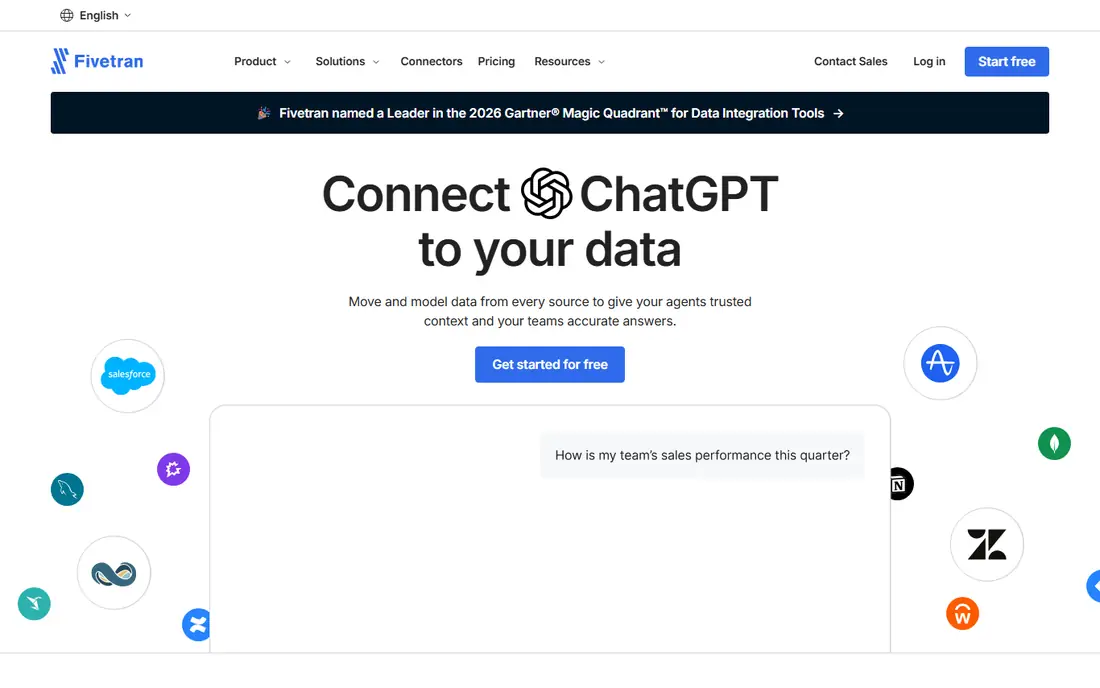
Fivetran is the low-upkeep replacement for Debezium. It offers managed connectors for databases, apps, and files, handles schema changes automatically, and loads data into warehouses and lakes with monitoring built in. Teams that want pipelines that just run, without operating Kafka Connect or capture agents, will appreciate the difference.
The trade-off is control and cost. Fivetran charges on usage, so high-volume change streams can get expensive, and you have less tuning control than a self-hosted Debezium setup. For analytics teams that value reliability and speed of setup over fine control, Fivetran is a strong pick.
- Fully managed connectors
- Automated schema handling
- Strong warehouse destinations
- Usage-based pricing can rise fast
- Less control than self-hosted capture
Airbyte
Ideal for: Open source data movement
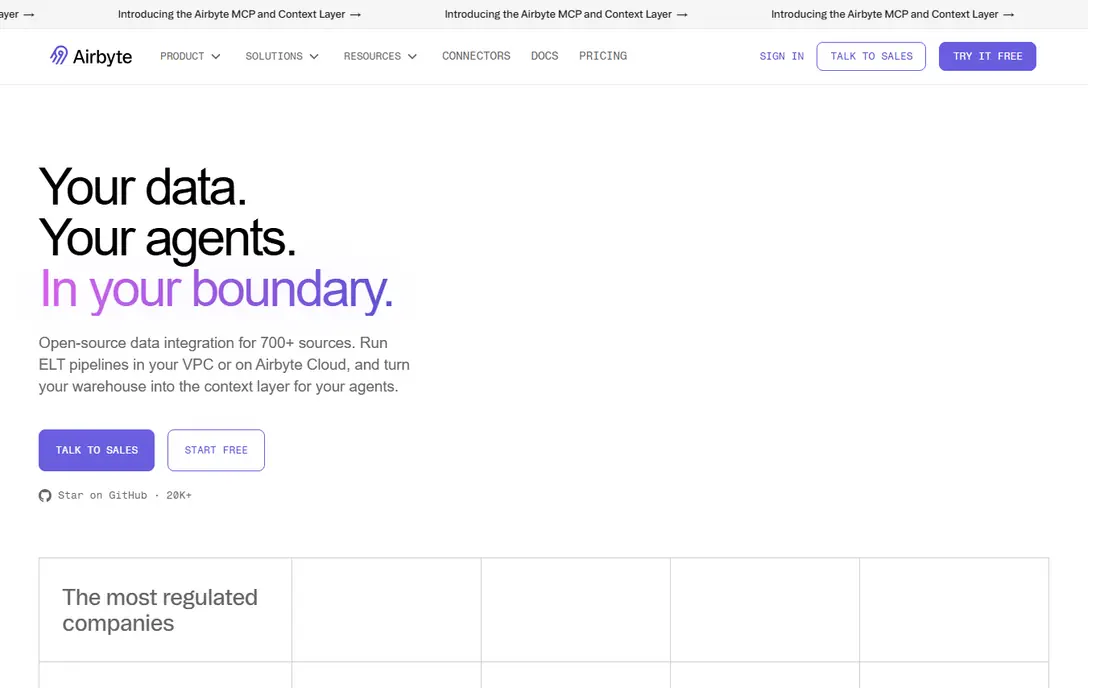
Airbyte gives teams an open source data movement platform with a large catalog of connectors and a choice of cloud or self-hosted deployment. Database connectors support change data capture for common sources, and the platform handles scheduling, schema evolution, and monitoring in one place. Teams that want to avoid vendor lock-in often start here.
Capture depth is the caveat. Change data capture quality varies by connector, and self-hosting still needs engineering effort for scaling and upkeep. For teams that want open source flexibility with a managed cloud option as a fallback, Airbyte is a practical Debezium replacement.
- Open source core
- Large connector catalog
- Cloud or self-hosted deployment
- Change data capture depth varies by connector
- Self-hosting needs engineering time
Striim
Ideal for: Low-latency streaming replication
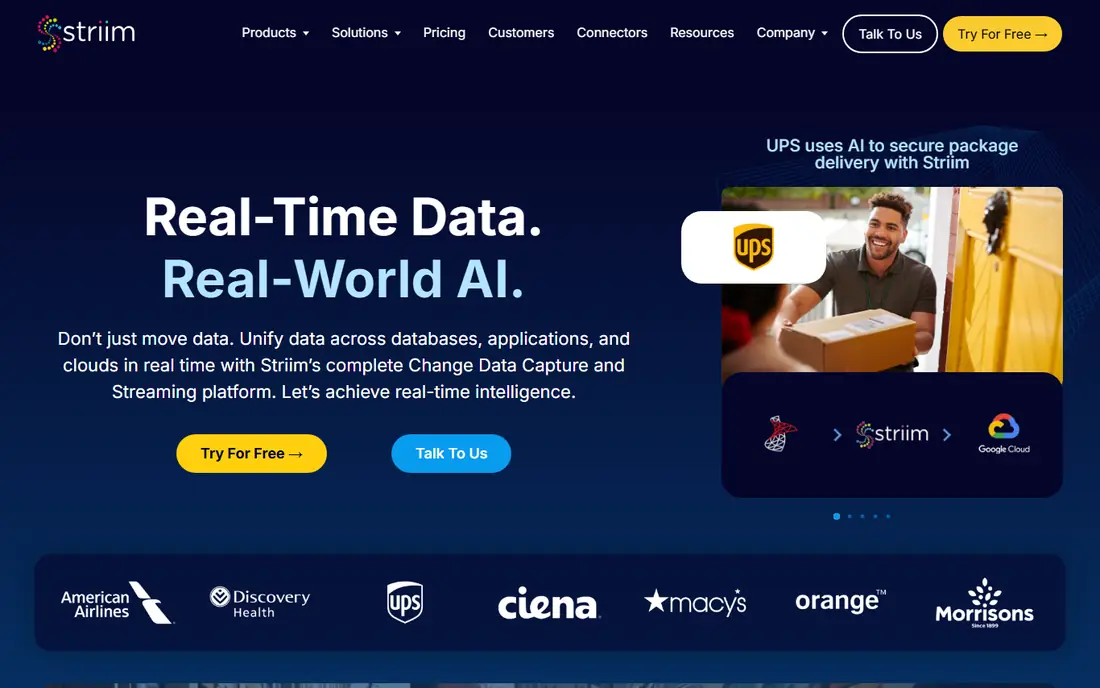
Striim focuses on real-time data streaming and replication with low latency, in-memory processing, and strong monitoring. It captures database changes, transforms them in flight, and delivers to warehouses, lakes, and messaging systems, with alerting that helps teams catch lag or errors early. Enterprises with strict freshness needs often choose it for that reason.
Small teams should weigh cost and scope. Striim is an enterprise platform with enterprise pricing and setup effort, and it may be more than a simple analytics pipeline needs. For teams where minutes of delay cost money, Striim is worth a serious look.
- Very low-latency streaming
- Strong monitoring and alerting
- Enterprise support
- Enterprise pricing and setup
- More platform than small teams need
Qlik Replicate
Ideal for: Enterprise database replication
Qlik Replicate, formerly Attunity Replicate, is a mature enterprise replication tool that moves data from many databases to warehouses, lakes, and messaging platforms with low latency. Its broad source support and enterprise monitoring suit organizations with mixed database estates and strict reliability needs.
The main barriers are price transparency and admin skill. Pricing is handled through sales, and getting the most from the product needs trained staff. For enterprises already invested in Qlik or with complex replication needs, Replicate is a proven Debezium replacement.
- Mature database replication
- Broad source and target support
- Strong enterprise tooling
- Pricing is quote-based
- Product depth needs trained admins
Confluent
Ideal for: Kafka-based streaming platform
Confluent builds a full streaming platform around Apache Kafka, with managed connectors, stream processing, governance, and monitoring. Teams can capture database changes, process them as streams, and feed apps, warehouses, and analytics from one backbone. If your architecture already centers on Kafka, Confluent is the natural home for change data capture.
Kafka itself is the learning curve. Teams new to topics, partitions, and consumer groups should budget training time, and costs scale with throughput and storage. For organizations building event-driven systems rather than simple warehouse loads, Confluent is our top pick.
- Full Kafka streaming platform
- Managed connectors including CDC
- Strong ecosystem
- Kafka concepts take learning
- Costs scale with throughput and storage
Estuary
Ideal for: Real-time data pipelines
Estuary focuses on real-time data pipelines that capture changes and deliver them quickly to warehouses and lakes. Setup is simple compared with self-hosted capture, and its free tier lets teams test real pipelines before paying. That combination suits smaller data teams that need freshness without operating streaming infrastructure.
The catalog is smaller than Fivetran, so check your sources and destinations before committing. For teams whose core databases and warehouses are covered, Estuary offers a fast, modern path from Debezium-style capture to real-time analytics.
- Real-time pipelines with low latency
- Simple setup
- Generous free tier for testing
- Smaller connector catalog than Fivetran
- Newer platform still growing
Hevo Data
Ideal for: Simple managed pipelines
Hevo Data offers managed, no-code pipelines that capture database changes and load them into warehouses with monitoring and alerting. Setup is quick, and the interface stays friendly for analytics teams without deep engineering support. That simplicity makes it a good fit for small and mid-sized teams moving off a self-hosted capture setup.
Complex streaming cases, such as heavy in-flight transformation or event-driven apps, may outgrow Hevo. Usage pricing also needs watching at high volumes. For teams that want reliable warehouse pipelines with minimal upkeep, Hevo is a solid, affordable replacement.
- Simple no-code pipeline setup
- Database CDC support
- Good monitoring
- Less depth for complex streaming use cases
- Usage pricing needs watching
How we picked these
We compared official feature pages, pricing pages, documentation, and public reviews, and we checked that the homepages listed here belong to the products named. We favored tools that capture database changes reliably, deliver with low latency, and support common warehouses, lakes, or streaming destinations. We left out batch-only loaders with no change capture, and we did not include Debezium itself, since this list is about replacements.
We also excluded products that failed our fit checks, including tools whose homepages no longer matched the product, tools that covered only a slice of the topic, and tools aimed at a different audience entirely. That filtering matters, because a long list padded with near-misses helps nobody choose. Every product that made the final list covers the core job in the title, works in October 2026, and offers a real path to try or buy it from the vendor directly.
What to check before you switch
Start with your sources and change volume. List every database, its change rate, and your latency target, then test capture on a copy of production data. A tool that handles a quiet Postgres database well may struggle with a busy Oracle or SQL Server workload, and only a real test reveals that.
Next, check delivery and failure behavior. Ask how the tool handles schema changes, deletes, large transactions, and outages, and whether it offers exactly-once or at-least-once delivery to your destination. Review monitoring and alerting, since a silent pipeline stall can corrupt downstream reports for days.
Finally, model cost at real volume. Compare usage pricing against self-hosting costs, including engineering time, for your expected change rate and retention. Run a month of realistic load during the trial, and confirm that the destination data matches the source before you cut over.
Look at total cost over two years rather than the first month alone. A low starting price can rise once you add team members, higher tiers, or the add-ons that hold the features you actually need, while a higher starting price sometimes includes everything and stays flat. List every seat, every add-on, and every usage limit for your real team size, then compare that full number across finalists. Also check contract terms, including minimums, renewal rules, and what happens to your data if you cancel. A tool that exports cleanly and charges fairly for extra seats is easier to live with than a cheaper tool that traps your work. Finally, weigh support quality alongside price, since fast help during setup and outages saves more money than a small monthly discount ever will.
Frequently asked questions
What is the best Debezium alternative for most teams?
Confluent is our pick for teams building streaming systems around Kafka, while Fivetran suits analytics teams that want managed pipelines with little upkeep. Airbyte is the best open source path for teams that want flexibility and a self-hosted option.
Is there a free Debezium alternative?
Debezium itself is open source and free to run, and Airbyte also offers an open source core. Managed tools here mostly offer free trials or limited free tiers rather than permanent free plans. Budget for hosting and engineering time when comparing free self-hosted options with paid managed ones.
What is change data capture?
Change data capture, or CDC, records row-level inserts, updates, and deletes from a database and streams them to another system. It keeps warehouses, caches, and apps fresh without full reloads, and it preserves the order and history of changes.
Which alternative has the lowest latency?
Striim, Confluent, and Estuary all target low-latency streaming, but real latency depends on your source database, change volume, and destination. Test with your own workload, since vendor claims rarely match every production shape.
Do I still need Kafka if I switch from Debezium?
Not always. Managed tools such as Fivetran, Hevo, and Estuary can load directly to a warehouse without Kafka. You need Kafka or a similar backbone only when apps, stream processing, or multiple consumers must share the same change stream.
How long does it take to switch?
Most teams can pilot a new tool in two to four weeks, including setup, data import, and training for the people who will use it daily. A full migration takes longer when years of history, templates, or integrations must move, so plan a staged rollout rather than a single cutover day. Start with one team or one workflow, measure results, and only then move the rest. Keep the old tool running during the overlap so nothing is lost if the new setup needs fixes. Rushing a switch usually costs more time than a careful pilot, since broken workflows frustrate the very people you need to win over.