For private company and funding research, Crunchbase is where this list starts. Look at Clearbit for HubSpot-native enrichment and intent signals, and at Apollo.io for connected data, intelligence and execution workflows. All 5 tools are compared below on price, free plan and limits.
This Ainotely guide covers 5 options for Draup. Each profile lists a starting price, free plan details, strengths and drawbacks, so you can drop poor fits quickly.
Key takeaways
Top of the list is Crunchbase, which targets private company and funding research.
One limit worth knowing about Apollo.io: wide scope may need workflow planning.
Crunchbase, ZoomInfo and the 3 others all need a premium plan or a trial, since no free plan is listed.
ZoomInfo suits all-in-one go-to-market data and sales AI.
Think of Crunchbase for private company and funding research. Crunchbase concentrates on private company data and predictive intelligence, handling funding insights and AI-powered predictions. It complements prospecting tools by supplying the company context that contact databases frequently lack.
Beyond that, Crunchbase is not made for building contact lists or running outreach sequences, so it performs best alongside a sales intelligence system. In practice, pick Crunchbase when company and funding research shapes your targeting. Crunchbase shows no starting price here, so confirm the cost on the vendor site. Free options: Not stated.
Where it falls short: Not a contact prospecting database.
Best for: HubSpot-native enrichment and intent signals
Clearbit is built with HubSpot-native enrichment and intent signals in mind. Its stated uses bundle enriching records, scoring and routing leads, and revealing buying intent from website visitors. Teams outside HubSpot get less from the native integration, and Clearbit is an enrichment and intent layer instead of a wide prospecting database.
What users get: Enriches records and supports routing.
If you have to build contact lists from scratch, a dedicated sales intelligence tool may be the better choice. Choose Clearbit when enrichment inside HubSpot is the goal. Check the vendor site for Clearbit pricing; none is listed in this comparison. Free options: Not stated.
Best for: Connected data, intelligence and execution workflows
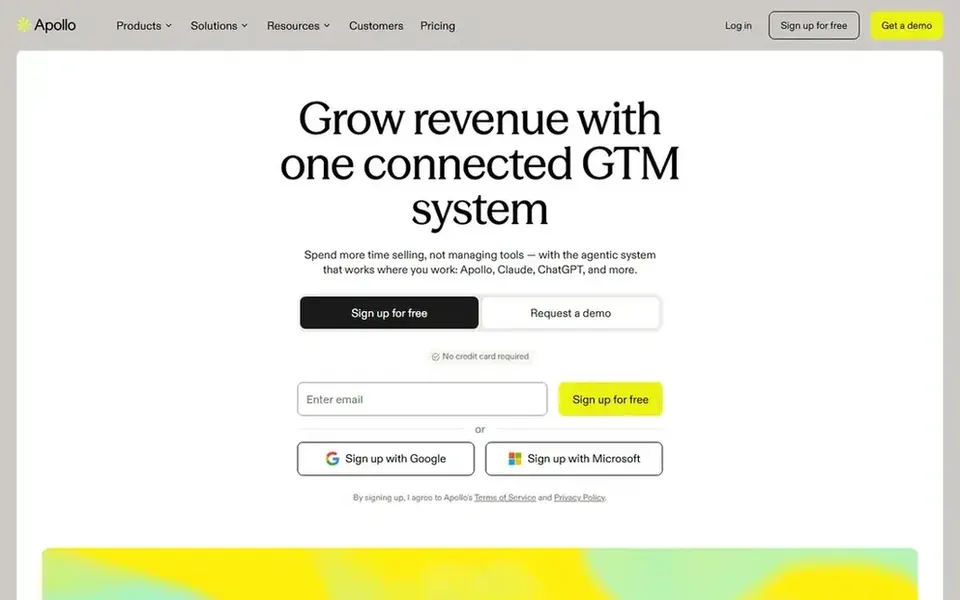
Think of Apollo.io for connected data, intelligence and execution workflows. Apollo.io describes itself as an AI sales product rebuilt as one connected go-to-market system, bringing together data, intelligence and execution.
Where Apollo.io stands out: Data.
Downsides: Feature depth varies by use case.
As for the details, choose Apollo.io when coordinated data and execution is the priority. Organizations needing only static company research may prefer a data-first tool. Apollo.io shows no starting price here, so confirm the cost on the vendor site. On free options: Free trial.
Best for: Buyer ranking and signal-driven prospecting
For buyer ranking and signal-driven prospecting, Lusha is a natural candidate. Its homepage describes ranking likely buyers, mapping who decides and flagging signals to act on, with access through its workspace, typical AI assistants and an API. In daily use, pick Lusha when prioritization and buying signals drive your outreach.
Beyond that, for funding and company research, a company-data tool is a better fit. The value relies on feeding it a clear target definition, and teams without a defined ideal customer profile may see less benefit. Lusha does not show a starting price in this comparison, so check the vendor site for current pricing. On free options: Not stated.
Where it is weaker: Signal features need clean workflow setup.
Best for: All-in-one go-to-market data and sales AI
ZoomInfo is designed for all-in-one go-to-market data and sales AI. Its stated scope handles lead generation, prospecting, market intelligence and account-based marketing software in one place. On top of that, teams with a straightforward prospecting need may find a lighter choice simpler to run.
What works well: Wide product for revenue teams.
The main drawbacks: System breadth can mean a steeper ramp-up time.
Consider ZoomInfo when an integrated go-to-market stack matters more than minimal tooling. More specifically, since the system spans plenty of functions, setup and adoption take more planning than a narrow contact tool. Check the vendor site for ZoomInfo pricing; none is listed in this comparison. On free options: Free trial.
Ask each vendor, from Crunchbase to ZoomInfo, for a written quote; none of them publishes a starting price.
Use real work to test the free trial from Apollo.io and ZoomInfo, rather than a demo project.
Read the limits listed for Crunchbase first: not a contact prospecting database.
The entry price of ZoomInfo is only the starting point; model the full cost with seats and extras.
Confirm the exact Lusha plan that includes your must-have features.
How we picked
We compared the tools on published pricing, free plan or trial availability, feature coverage for Draup, and the limits each vendor documents. Prices and plan limits come from vendor pages and can change, so confirm them on the vendor site before you buy. We ordered the tools by general fit, then by how clearly pricing is shown, then by free access. A buyer with unusual needs may reorder them.
Every price and plan detail on this page comes from the vendors’ own websites. We did not run hands-on tests unless the text says so, and we do not publish star ratings or review scores. See how we score and our disclosure.
Keep your shortlist in one place
Paste prices, trial dates and notes from this guide into Ainotely, our AI note app. It files them into a topic and pulls out tasks like “cancel trial by Friday”. Free 7-day trial, no card needed.
Often, yes. Apollo.io and ZoomInfo offer a free trial. Use your own data and a real task during the test, and check what the free tier or trial limits before you rely on it. All 5 picks in this Draup alternatives comparison show their pricing, free plan details and main limits on the cards above.
Is Crunchbase the right pick for everyone comparing Draup?
No single tool suits every team. Crunchbase comes first because it fits private company and funding research, while Clearbit suits HubSpot-native enrichment and intent signals and Apollo.io suits connected data, intelligence and execution workflows. Match the tool to your own size, budget and workflow before deciding.
How are the tools for Draup ordered?
Crunchbase sits first and ZoomInfo last because the order follows typical fit for Draup, then price clarity and free access. It is a judgement call, so read each profile for fit and limits.
Can company research tools replace a sales intelligence system?
Crunchbase centers on private company data, funding insights and predictions, which supports targeting but does not replace contact-level prospecting. Numerous teams use a research tool alongside a data product.
Do these tools publish their prices?
No. None of the tools, from Crunchbase to ZoomInfo, shows a fixed starting price here, so budget time for quotes.