Best Dreamdata Alternatives in 2026: 7 Tools Compared

- 1
 HockeyStackB2B revenue attributionVisit
- 2
 Factors.aiAccount-level attributionVisit
- 3
 AttributionMulti-touch attributionVisit
- 4
 CaliberMindB2B marketing analyticsVisit
- 5
 Full Circle InsightsSalesforce-native attributionVisit
- HockeyStack is our pick for most B2B teams that want attribution tied to pipeline and revenue in one dashboard.
- Factors.ai suits teams that want account-level attribution with a clear view of the buying journey.
- Attribution, CaliberMind, Full Circle Insights, Rockerbox, and Windsor.ai cover ecommerce, Salesforce-native, and multi-touch needs.
- Always check CRM integration and data quality, since attribution is only as good as the pipeline data behind it.
- Run a pilot on one quarter of closed deals before trusting any model for budget decisions.
Quick comparison
| Product | Ideal for | Price from | Free version | |
|---|---|---|---|---|
| HockeyStack | B2B revenue attribution | See website | Free trial | Visit |
| Factors.ai | Account-level attribution | See website | Free trial | Visit |
| Attribution | Multi-touch attribution | See website | Free trial | Visit |
| CaliberMind | B2B marketing analytics | See website | See website | Visit |
| Full Circle Insights | Salesforce-native attribution | See website | See website | Visit |
 Rockerbox | Marketing measurement | See website | Free trial | Visit |
 Windsor.ai | Attribution and reporting | See website | Free trial | Visit |
The best Dreamdata alternatives
Dreamdata helps B2B teams link marketing touches to pipeline and revenue, so a good replacement needs reliable tracking, CRM integration, and attribution models your team can explain to leadership. We compared official feature pages, pricing pages, and public reviews, focusing on data sources, model options, Salesforce and HubSpot fit, and reporting clarity.
HockeyStack
Ideal for: B2B revenue attribution
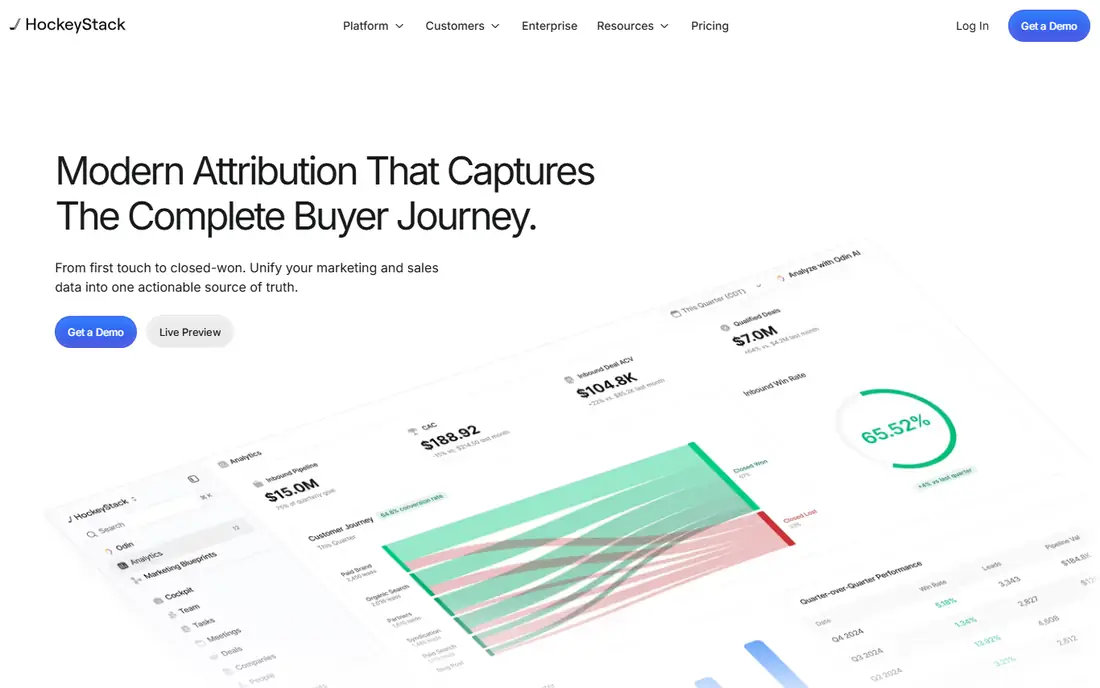
HockeyStack is built for B2B teams that want to see which marketing and sales touches create pipeline and revenue, not just clicks. It unifies website, ad, CRM, and sales data into account journeys and revenue dashboards, so teams can compare channels on pipeline value rather than vanity metrics.
Setup is the catch. Attribution only works when CRM data is clean and tracking is complete, and pricing is quote-based. For B2B teams willing to invest in data hygiene, HockeyStack offers one of the clearest Dreamdata replacements available.
- Links touches to pipeline and revenue
- Account and journey views
- Strong integrations
- Pricing needs a quote
- Setup and data hygiene take effort
Factors.ai
Ideal for: Account-level attribution
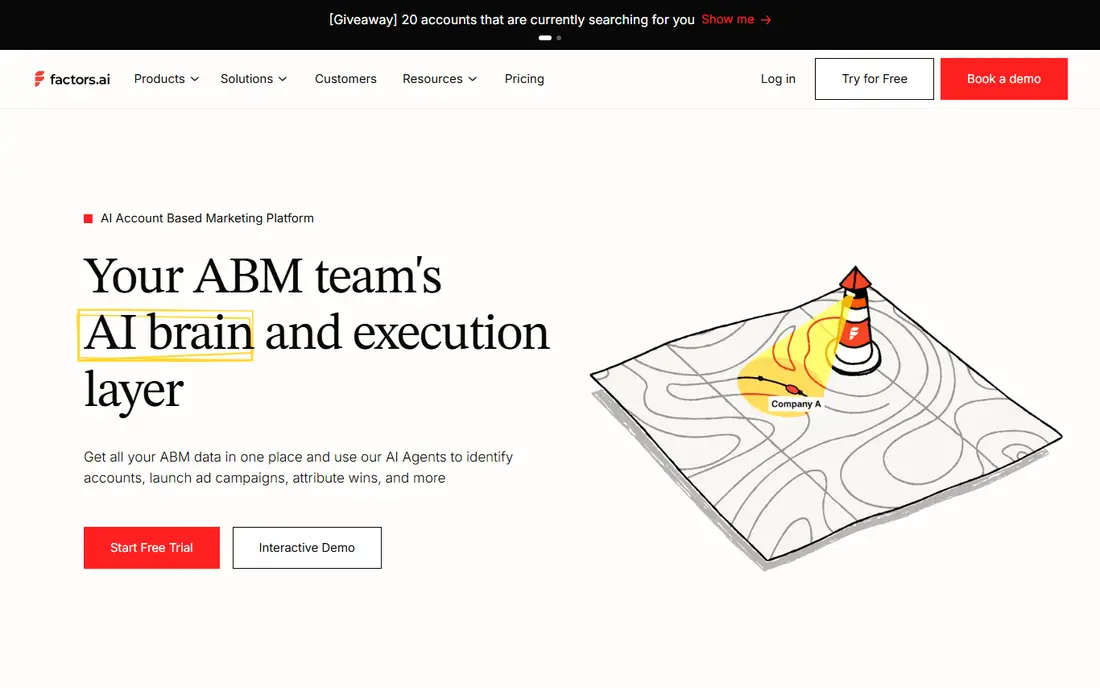
Factors.ai focuses on account-level attribution for B2B teams, showing how target accounts move through marketing and sales touches toward pipeline. Its journey views suit account-based marketing teams that need to prove which programs influence key accounts, rather than only counting leads.
As a smaller vendor, its ecosystem is narrower than larger analytics platforms, and pricing is quote-based. For ABM-focused teams that think in accounts rather than leads, Factors.ai is a strong and focused pick.
- Account-based attribution and journey views
- Good for ABM teams
- Clear reporting
- Smaller vendor than some rivals
- Pricing needs a quote
Attribution
Ideal for: Multi-touch attribution
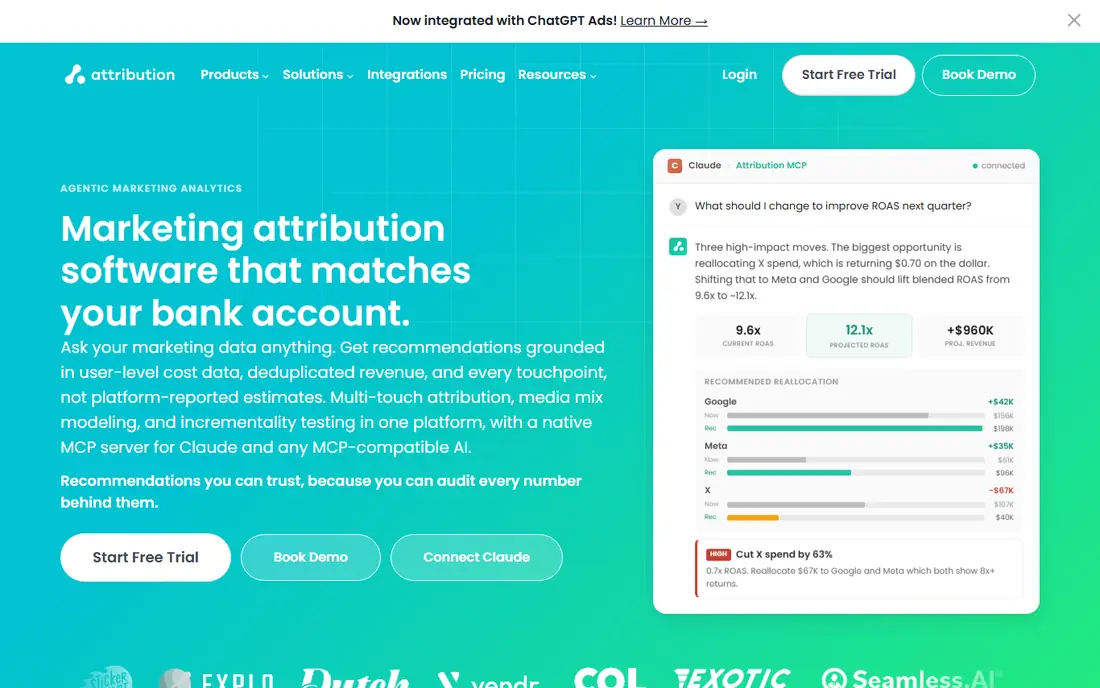
Attribution, from Attribution App, offers multi-touch attribution across paid, organic, email, and sales touches, with models teams can compare side by side. That flexibility suits companies with mixed B2B and ecommerce revenue, where a single model rarely fits every channel.
Model setup needs care, and smaller teams may need help getting tracking right. For teams that want to compare first-touch, last-touch, and multi-touch views in one place, Attribution is a practical choice.
- Multi-touch models across channels
- Good for mixed B2B and ecommerce
- Clear dashboards
- Model setup needs care
- Smaller teams may need help with tracking
CaliberMind
Ideal for: B2B marketing analytics
CaliberMind offers B2B marketing analytics with chain-based attribution that links touches into full buying chains, plus integrations with CRMs and warehouses. Its reporting helps marketing and revenue teams agree on which programs create pipeline, which is often harder than building the model itself.
Enterprise focus and pricing are the barriers for small teams, and setup needs solid data work. For mid-sized and larger B2B teams that want analytics beyond simple attribution, CaliberMind is a strong Dreamdata replacement.
- B2B analytics with chain-based attribution
- Good CRM and warehouse integration
- Strong reporting
- Enterprise focus and pricing
- Setup needs data work
Full Circle Insights
Ideal for: Salesforce-native attribution
Full Circle Insights is built natively on Salesforce, which makes it the natural pick for teams that run marketing and sales inside Salesforce. Campaign attribution, funnel metrics, and response management live inside the CRM, so reporting matches the system sales already trusts.
Outside Salesforce, the case weakens, and pricing is quote-based. For Salesforce-native teams that want attribution without a separate data stack, Full Circle Insights removes integration risk and keeps reporting in one place.
- Built natively on Salesforce
- Campaign and funnel analytics
- Strong for Salesforce shops
- Best value only inside Salesforce
- Pricing needs a quote
Rockerbox
Ideal for: Marketing measurement
Rockerbox helps teams measure marketing across paid, organic, and offline channels, with reporting that ties spend to outcomes. Its strength is a clear view of which channels drive results, which suits teams with a broad media mix and a need to justify spend.
B2B pipeline depth is lighter than HockeyStack or Factors.ai, so pure B2B teams should test account and revenue views carefully. For teams balancing paid media with content and events, Rockerbox offers practical measurement without enterprise complexity.
- Marketing measurement across channels
- Good for paid and organic mix
- Clear spend reporting
- B2B depth is lighter than HockeyStack
- Setup needs tracking care
Windsor.ai
Ideal for: Attribution and reporting
Windsor.ai combines attribution with data integration, letting teams pull marketing, sales, and ad data into dashboards and warehouses for reporting. Agencies and multi-account teams benefit from managing many data sources in one place, and its starting price is more accessible than enterprise specialists.
B2B revenue attribution depth is lighter than HockeyStack or CaliberMind, so teams with complex B2B journeys should test pipeline views before committing. For reporting-heavy teams that want attribution plus flexible data blending, Windsor.ai is a good value pick.
- Attribution plus data integration for reporting
- Good for agencies and multi-account teams
- Affordable start
- B2B revenue depth is lighter than specialists
- Model options need review
How we picked these
We compared official feature pages, pricing pages, and public reviews, and we checked that the homepages listed here belong to the products named. We favored tools that link marketing touches to pipeline or revenue, integrate with major CRMs, and offer models teams can explain. We left out web analytics tools with no revenue attribution, and we did not include Dreamdata itself, since this list is about replacements.
We also weighed how each vendor treats new users, including trial length, onboarding help, and the quality of its public documentation. A tool with clear guides and responsive support earns trust faster than a tool with a thin help center, even when feature lists look similar. We gave extra weight to vendors that publish pricing openly and explain limits plainly, since hidden costs and surprise caps cause most buyer regret. Where pricing was only available on request, we said so rather than guessing, and we treated a missing free tier as a real drawback for small teams testing on a budget.
What to check before you buy
Start with your CRM data. Audit pipeline stages, campaign links, and closed deal records, since attribution models amplify whatever data quality already exists. Fix tracking gaps and stage definitions before comparing vendors, or every tool will look equally unreliable.
Next, test one quarter of closed deals. Run each finalist on the same deals and compare how credit is assigned across channels. A model that looks fair in a demo can still misassign credit for your longest, multi-touch journeys.
Finally, check who will own the tool. Attribution needs ongoing care for tracking, tagging, and model review. Assign an owner, set a monthly review habit, and agree with sales on how attribution will and will not be used for budget decisions.
Use the trial the way you would use the real thing. Pick one genuine project, run it from start to finish, and invite the colleagues who will use the tool every day. Watch for friction in the steps you repeat most, such as setup, daily entry, sharing, and reporting, since those moments decide whether a tool survives after the novelty fades. Keep notes on what slowed you down, what needed a workaround, and what you still could not do by the end of the trial. Then compare those notes across finalists instead of comparing marketing pages. A trial that ends with a finished piece of real work tells you far more than a trial spent clicking through demo data, and it gives your team a fair basis for the final choice.
Frequently asked questions
What is the best Dreamdata alternative for B2B teams?
HockeyStack is our pick for most B2B teams, thanks to revenue-focused attribution and account journey views. Factors.ai suits ABM teams, while Full Circle Insights suits Salesforce-native teams.
Is there a free Dreamdata alternative?
Most tools here offer free trials rather than permanent free plans. Windsor.ai and Attribution offer trials that let teams test tracking and reporting. Web analytics tools are free but do not replace revenue attribution on their own.
What is revenue attribution?
Revenue attribution assigns credit for pipeline and closed deals across the marketing and sales touches that influenced a buyer journey. Models range from first-touch and last-touch to multi-touch and data-driven views, and the right model depends on your sales cycle.
How long does attribution setup take?
Setup usually takes weeks, not days, since it needs tracking, CRM integration, and data cleanup. Plan a pilot on one quarter of deals, and expect to refine tagging and models during the first months.
Can attribution replace marketing judgment?
No. Attribution is a guide for budget and program decisions, not a verdict on every channel. Brand, community, and long-cycle influence often show weakly in models, so pair attribution data with sales feedback and pipeline reviews.
What happens to my data if I cancel?
That depends on the vendor, so read the terms and test an export before you commit. Good vendors let you export your core records in common formats and give you a grace period to download them after cancellation. Weaker vendors limit exports, charge for them, or delete data quickly, which can strand years of work. During your trial, export a sample of your own data and confirm it opens cleanly elsewhere. Keep a local backup of anything critical, and avoid building your whole operation around a tool that will not let your data leave.