Best Elasticsearch Alternatives in 2026: 8 Options Compared

- 1
 OpenSearchDrop-in open source replacementVisit
- 2
 AlgoliaManaged site and product searchVisit
- 3
 MeilisearchDeveloper-friendly instant searchVisit
- 4
 TypesenseOpen source typo-tolerant searchVisit
- 5
 Apache SolrEnterprise Lucene searchVisit
- Our pick for most people is OpenSearch, because it covers the core needs of this category well without the highest price or the steepest learning curve.
- The cheapest way to start is often Algolia or a free tier, but check what the free plan actually allows before you rely on it for daily work.
- Prices and free tiers change often, so confirm the current plan on the official site before you pay, especially for per-user and per-seat pricing.
- The best choice depends on your main use case, not on the longest feature list, so shortlist two options and trial them with a real task.
Quick comparison
| Product | Ideal for | Price from | Free version | |
|---|---|---|---|---|
| OpenSearch | Drop-in open source replacement | Free | Yes | Visit |
| Algolia | Managed site and product search | See website | Yes | Visit |
| Meilisearch | Developer-friendly instant search | Free | Yes | Visit |
| Typesense | Open source typo-tolerant search | See website | Yes | Visit |
| Apache Solr | Enterprise Lucene search | Free | Yes | Visit |
 ClickHouse | Fast analytics on large data | Free | Yes | Visit |
 Vespa | Large-scale hybrid search | Free | Yes | Visit |
 Pinecone | Managed vector search | See website | Yes | Visit |
The best elasticsearch alternatives
We compared official feature pages, pricing pages, app store listings, privacy policies, and public reviews to build this list. Each option below is a real product that works today, with a clear strength and an honest trade-off, so you can match the choice to your budget and your main task. Use the comparison table to shortlist, then read the full entries for the options that fit your situation.
OpenSearch
Ideal for: Drop-in open source replacement
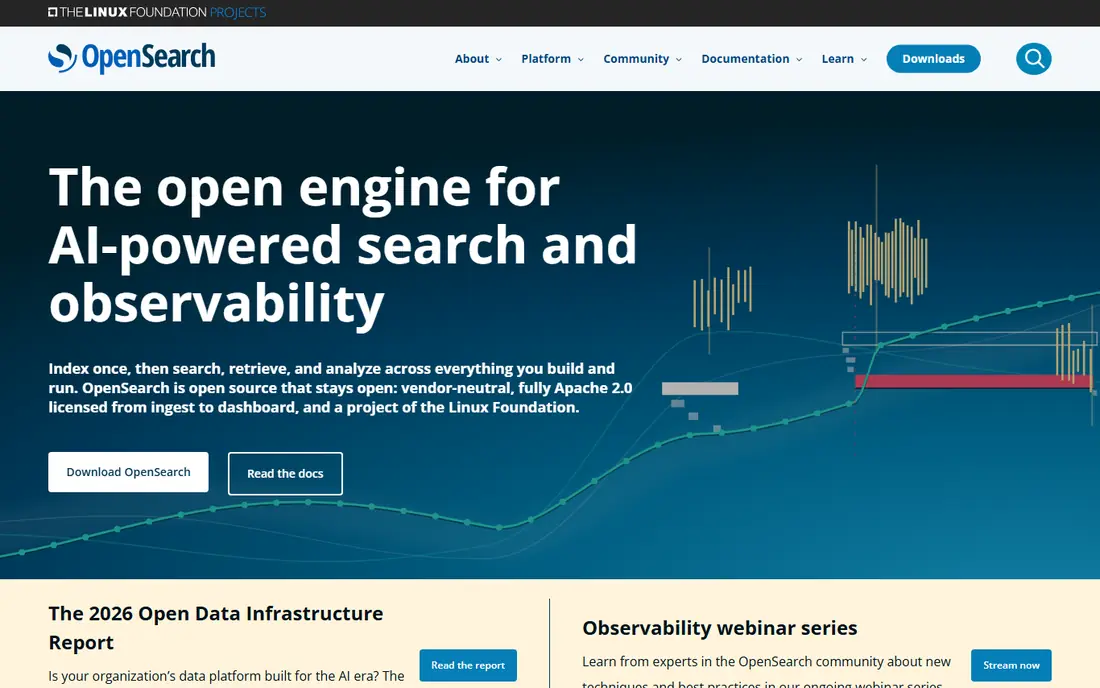
OpenSearch is the closest open source replacement for Elasticsearch, with search, analytics, and dashboards in one project. It suits teams that want to keep a familiar query style while moving to a permissively licensed platform. For someone whose main need is drop-in open source replacement, that focus matters because it shapes the daily experience, from setup to the features you will actually use each week. On pricing, the starting point is Free, with a free option listed as Yes. That makes it worth checking the full pricing page before you commit, since the plan that looks cheapest can miss a feature you need, while a higher plan may include tools you would otherwise buy separately. The trade-off to weigh is this: migration still needs testing; managed costs depend on your cloud provider. If that trade-off does not block your main task, this option deserves a place on your shortlist, and a short trial with a real project will tell you more than any feature list.
- Elasticsearch-compatible API for many 7.x workloads
- Dashboards included
- Permissive open licence
- Migration still needs testing
- Managed costs depend on your cloud provider
Algolia
Ideal for: Managed site and product search
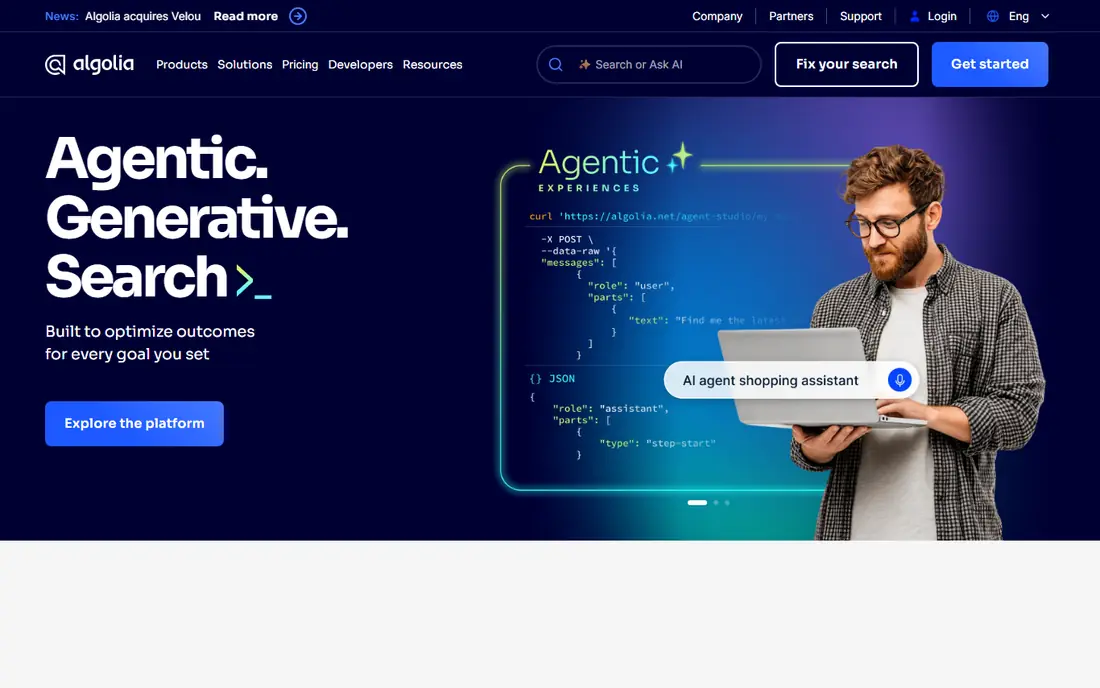
Algolia is a fully hosted search service for websites and apps, with instant search libraries and relevance controls. It suits product and site search teams that want speed without running a cluster. For someone whose main need is managed site and product search, that focus matters because it shapes the daily experience, from setup to the features you will actually use each week. On pricing, the starting point is See website, with a free option listed as Yes. That makes it worth checking the full pricing page before you commit, since the plan that looks cheapest can miss a feature you need, while a higher plan may include tools you would otherwise buy separately. The trade-off to weigh is this: costs rise with usage; not built for log analytics. If that trade-off does not block your main task, this option deserves a place on your shortlist, and a short trial with a real project will tell you more than any feature list.
- Fast hosted search with instant results
- Strong relevance tuning
- Ready UI libraries
- Costs rise with usage
- Not built for log analytics
Meilisearch
Ideal for: Developer-friendly instant search
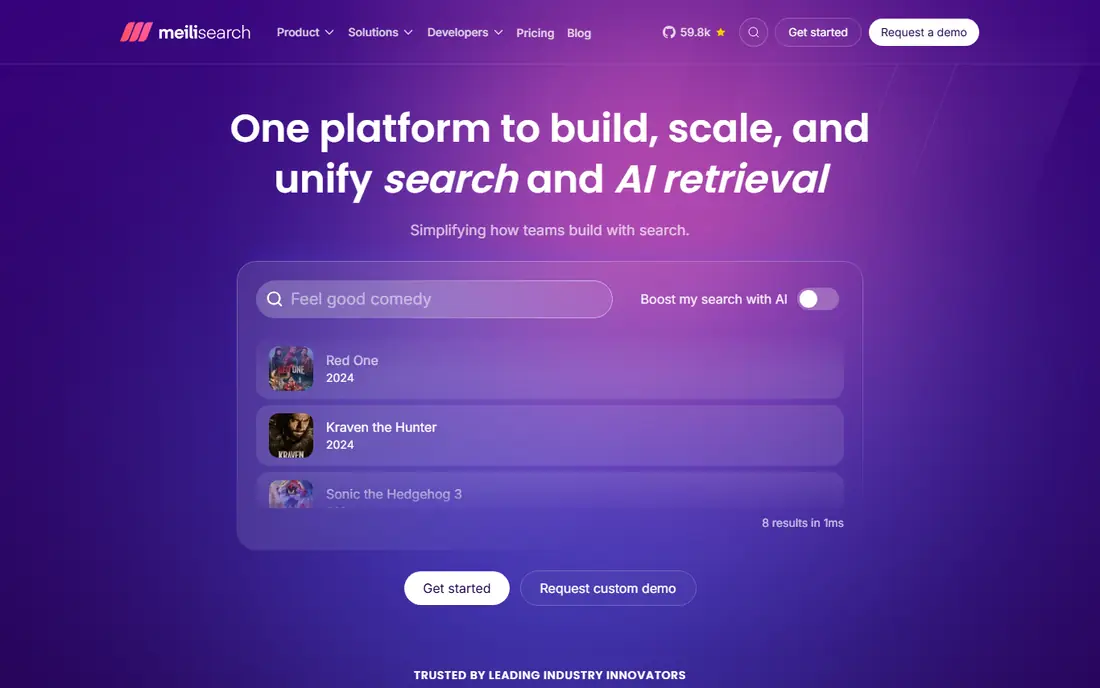
Meilisearch is a lightweight, typo-tolerant search engine with a simple API that developers can set up quickly. It suits app search, catalogues, and internal tools where instant results matter more than heavy analytics. For someone whose main need is developer-friendly instant search, that focus matters because it shapes the daily experience, from setup to the features you will actually use each week. On pricing, the starting point is Free, with a free option listed as Yes. That makes it worth checking the full pricing page before you commit, since the plan that looks cheapest can miss a feature you need, while a higher plan may include tools you would otherwise buy separately. The trade-off to weigh is this: less suited to huge log workloads; enterprise sharding is paid. If that trade-off does not block your main task, this option deserves a place on your shortlist, and a short trial with a real project will tell you more than any feature list.
- Typo-tolerant instant search
- Simple API
- Easy self-hosting
- Less suited to huge log workloads
- Enterprise sharding is paid
Typesense
Ideal for: Open source typo-tolerant search
Typesense is an open source search engine built for fast, typo-tolerant product and document search. It suits developers who want a simple API and quick setup for catalogues and site search. For someone whose main need is open source typo-tolerant search, that focus matters because it shapes the daily experience, from setup to the features you will actually use each week. On pricing, the starting point is See website, with a free option listed as Yes. That makes it worth checking the full pricing page before you commit, since the plan that looks cheapest can miss a feature you need, while a higher plan may include tools you would otherwise buy separately. The trade-off to weigh is this: smaller ecosystem than elasticsearch; advanced analytics are limited. If that trade-off does not block your main task, this option deserves a place on your shortlist, and a short trial with a real project will tell you more than any feature list.
- Typo tolerance and faceting out of the box
- Simple API
- Managed cloud option
- Smaller ecosystem than Elasticsearch
- Advanced analytics are limited
Apache Solr
Ideal for: Enterprise Lucene search
Apache Solr is a mature, Lucene-based search platform with deep faceting and text analysis. It suits enterprises with existing Solr skills or complex search requirements that justify hands-on tuning. For someone whose main need is enterprise lucene search, that focus matters because it shapes the daily experience, from setup to the features you will actually use each week. On pricing, the starting point is Free, with a free option listed as Yes. That makes it worth checking the full pricing page before you commit, since the plan that looks cheapest can miss a feature you need, while a higher plan may include tools you would otherwise buy separately. The trade-off to weigh is this: setup and tuning need expertise; dashboards need separate tools. If that trade-off does not block your main task, this option deserves a place on your shortlist, and a short trial with a real project will tell you more than any feature list.
- Mature Lucene-based search
- Rich faceting
- Large enterprise history
- Setup and tuning need expertise
- Dashboards need separate tools
ClickHouse
Ideal for: Fast analytics on large data
ClickHouse is a columnar analytics database that handles huge log and event volumes with fast SQL queries. It suits teams whose main need is analytics over logs rather than ranked document search. For someone whose main need is fast analytics on large data, that focus matters because it shapes the daily experience, from setup to the features you will actually use each week. On pricing, the starting point is Free, with a free option listed as Yes. That makes it worth checking the full pricing page before you commit, since the plan that looks cheapest can miss a feature you need, while a higher plan may include tools you would otherwise buy separately. The trade-off to weigh is this: not a drop-in search replacement; relevance search needs extra work. If that trade-off does not block your main task, this option deserves a place on your shortlist, and a short trial with a real project will tell you more than any feature list.
- Very fast aggregations
- Efficient storage
- SQL queries
- Not a drop-in search replacement
- Relevance search needs extra work
Vespa
Ideal for: Large-scale hybrid search
Vespa is built for large-scale search and recommendation, combining keyword, vector, and machine-learned ranking. It suits large platforms with real-time ranking needs and engineering capacity to run it. For someone whose main need is large-scale hybrid search, that focus matters because it shapes the daily experience, from setup to the features you will actually use each week. On pricing, the starting point is Free, with a free option listed as Yes. That makes it worth checking the full pricing page before you commit, since the plan that looks cheapest can miss a feature you need, while a higher plan may include tools you would otherwise buy separately. The trade-off to weigh is this: complex to operate; overkill for small catalogues. If that trade-off does not block your main task, this option deserves a place on your shortlist, and a short trial with a real project will tell you more than any feature list.
- Hybrid keyword, vector, and ranking at scale
- Real-time updates
- Complex to operate
- Overkill for small catalogues
Pinecone
Ideal for: Managed vector search
Pinecone is a managed vector database for AI search and retrieval, handling embeddings and similarity queries without cluster management. It suits teams building AI assistants and semantic search. For someone whose main need is managed vector search, that focus matters because it shapes the daily experience, from setup to the features you will actually use each week. On pricing, the starting point is See website, with a free option listed as Yes. That makes it worth checking the full pricing page before you commit, since the plan that looks cheapest can miss a feature you need, while a higher plan may include tools you would otherwise buy separately. The trade-off to weigh is this: keyword search is not its focus; costs depend on usage. If that trade-off does not block your main task, this option deserves a place on your shortlist, and a short trial with a real project will tell you more than any feature list.
- Serverless vector search
- Easy scaling
- Good for AI retrieval
- Keyword search is not its focus
- Costs depend on usage
How we picked these
We compared official feature pages and pricing pages, app store listings where relevant, privacy policies, and public reviews, and we only listed products that exist and work today and truly fit the topic. We mixed well-known leaders with strong smaller options, and we favoured products with clear pricing, clear free-tier terms, and a clear audience, rather than tools that try to cover every use case at once. We did not claim hands-on testing that did not happen. Instead, we weighed what each product is built for, who it fits best, what it costs to start, and where it falls short, so the pros and cons reflect real trade-offs you will meet in daily use. If a price could not be verified from an official source, we listed it as See website rather than guessing.
What to check before you choose
First separate your workload: ranked document search, site search, log analytics, or vector search for AI features. A drop-in replacement only matters if you want to keep Elasticsearch queries and tooling. For site search, a hosted or lightweight engine is usually cheaper to run, while analytics workloads favour columnar databases. Also check support options, since help quality matters when something goes wrong at a busy moment. Look for clear documentation, a responsive support channel, and a way to export your data if you later switch. A tool that is easy to leave is often easier to trust, because you are not locked in by your own files. Finally, trial with a real task, not just a demo. Set up the exact workflow you will use, invite the people who will use it, and test on the devices you own. A week of real use reveals friction that a feature list hides, and it gives you a fair basis to compare your top two options before you pay.
Frequently asked questions
What is the best open source alternative to Elasticsearch?
OpenSearch is the closest open source replacement for many Elasticsearch workloads, while Meilisearch and Typesense are simpler choices for app and site search. Apache Solr remains a strong enterprise option.
Can I migrate from Elasticsearch to OpenSearch easily?
Many 7.x queries and clients work with little change, but you should still test indexing, queries, and dashboards in staging. Differences grow with newer Elasticsearch features, so plan a phased migration.
Which alternative is best for e-commerce search?
Algolia, Meilisearch, and Typesense are built for fast product search with typo tolerance and instant results. Choose based on catalogue size, relevance controls, and whether you want hosting managed for you.
Do I need a vector database instead?
If your main use is AI retrieval over embeddings, a vector service like Pinecone may fit better than a general search engine. If you need keyword and vector search together, OpenSearch or Vespa can combine both.