Best Elevenlabs Api Alternatives Comparison in 2026: 8 APIs Compared

- 1
 FlikiAI voices for video contentVisit
- 2
 Resemble AICustom voice cloning APIVisit
- 3
 MurfStudio voices for contentVisit
- 4
 WellSaid LabsStudio-grade voice APIVisit
- 5
 SpeechifyText-to-speech apps and APIVisit
- Fliki is our pick for ai voices for video content, and it leads a list that covers both well-known names and smaller options worth a look.
- Resemble AI stands out for readers who want a simpler start, while Murf suits those who need more depth in one area.
- Prices and free tiers change often, so check the vendor pricing page and the current trial terms before you buy, and treat any price here as a starting point only.
- The best choice depends on your workflow, your budget and how much setup help you want, so use the free tier or trial to test the product with your own work.
- Respeecher rounds out the list for readers with a specific need that the larger names do not cover as well.
Quick comparison
| Product | Ideal for | Price from | Free version | |
|---|---|---|---|---|
| Fliki | AI voices for video content | Free | Yes | Visit |
| Resemble AI | Custom voice cloning API | See website | Free trial | Visit |
| Murf | Studio voices for content | See website | Free trial | Visit |
| WellSaid Labs | Studio-grade voice API | See website | Free trial | Visit |
| Speechify | Text-to-speech apps and API | See website | Free trial | Visit |
 Descript | Voice editing and Overdub | See website | Free trial | Visit |
 Cartesia | Real-time voice API | See website | Free trial | Visit |
 Respeecher | Voice conversion technology | See website | No | Visit |
The best ElevenLabs API alternatives
We compared official feature pages, pricing pages, app store listings, privacy policies and public reviews to build this list, focusing on products that fit elevenlabs api alternatives comparison closely and are still available in October 2026. Our pick for most readers is Fliki, but the right answer depends on your budget and the features you will actually use.
Fliki
Ideal for: AI voices for video content
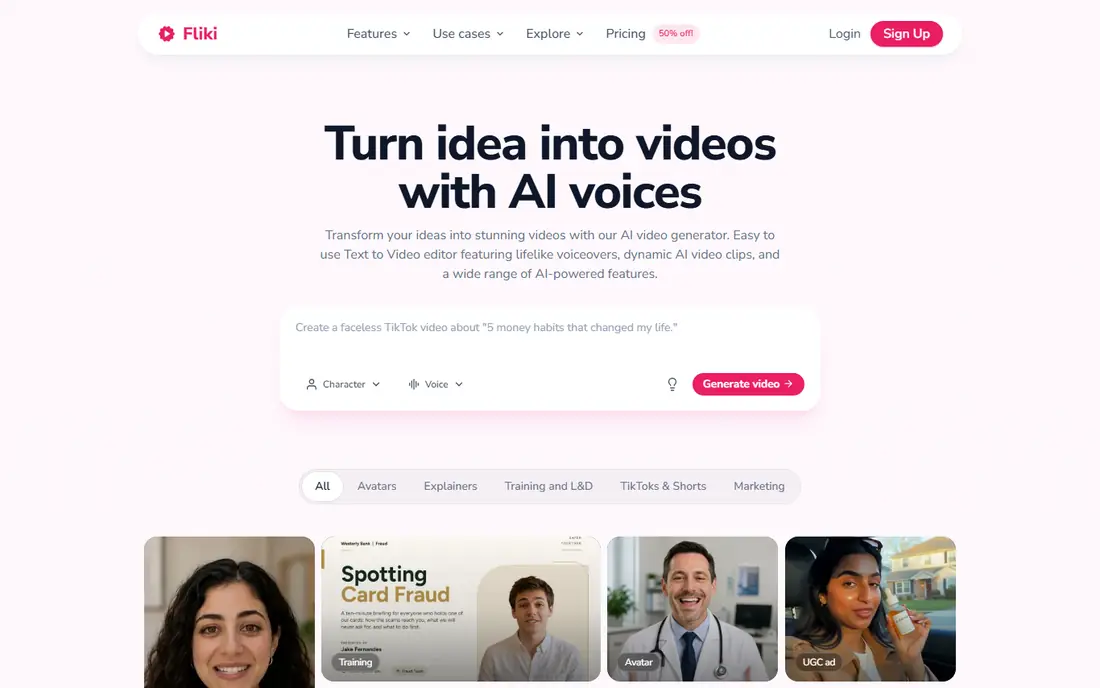
Fliki is a strong option for ai voices for video content. Its strengths include large voice library; text-to-video tools; voice cloning options. That combination is why it earned a place here, and it gives most readers a clear reason to start a trial with this product before looking further afield. When we compared the official feature pages, the practical question was fit rather than raw feature count. A tool that covers your main workflow well will serve you better than a broader product you only half use. Check the pricing page and the trial terms before you commit, and confirm that the plan you want includes the features you actually need. The honest catch is that free tier limits exports; credit use needs care. If that weakness touches your main workflow, look at the next option on this list instead. If it does not, Fliki is a sensible choice, and a short trial with your own data will confirm whether the fit holds up in daily use.
- Large voice library
- Text-to-video tools
- Voice cloning options
- Free tier limits exports
- Credit use needs care
Resemble AI
Ideal for: Custom voice cloning API
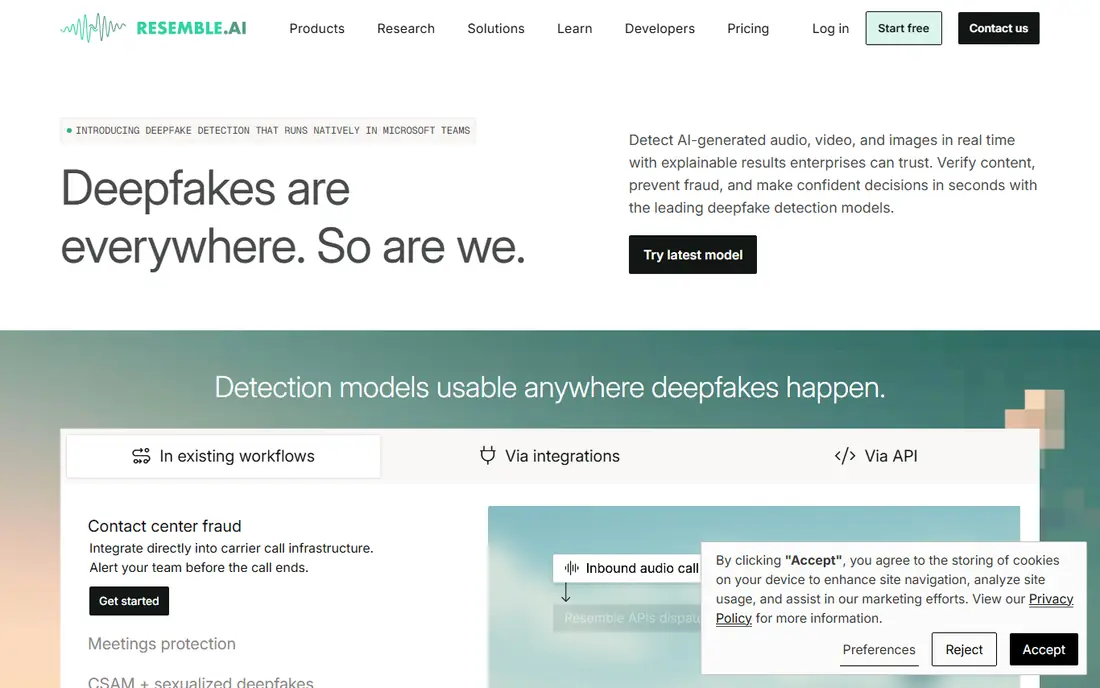
Resemble AI is a strong option for custom voice cloning api. Its strengths include fast cloning from short samples; real-time api; localization tools. That combination is why it earned a place here, and it gives most readers a clear reason to start a trial with this product before looking further afield. The day-to-day experience matters as much as the headline features. Look at how the product handles onboarding, support and the tasks you will repeat every week. A short trial is the fastest way to learn whether the interface suits your team, and whether the help docs answer real questions without a support ticket. The honest catch is that ethical controls add setup steps; costs rise with scale. If that weakness touches your main workflow, look at the next option on this list instead. If it does not, Resemble AI is a sensible choice, and a short trial with your own data will confirm whether the fit holds up in daily use.
- Fast cloning from short samples
- Real-time API
- Localization tools
- Ethical controls add setup steps
- Costs rise with scale
Murf
Ideal for: Studio voices for content

Murf is a strong option for studio voices for content. Its strengths include natural voices plus editing tools; team workspaces; api access. That combination is why it earned a place here, and it gives most readers a clear reason to start a trial with this product before looking further afield. We also weighed what each option leaves out. Every product on this list has a gap, and the right choice depends on which gap you can live with. Read the plan comparison on the vendor site carefully, since a feature that looks included on the homepage may sit in a higher tier. The honest catch is that api depth below developer-first rivals; some voices need higher tiers. If that weakness touches your main workflow, look at the next option on this list instead. If it does not, Murf is a sensible choice, and a short trial with your own data will confirm whether the fit holds up in daily use.
- Natural voices plus editing tools
- Team workspaces
- API access
- API depth below developer-first rivals
- Some voices need higher tiers
WellSaid Labs
Ideal for: Studio-grade voice API
WellSaid Labs is a strong option for studio-grade voice api. Its strengths include high-quality voices for narration; pronunciation controls; api. That combination is why it earned a place here, and it gives most readers a clear reason to start a trial with this product before looking further afield. For most readers, the deciding factors are price, ease of setup and support quality. A product with clear documentation and a responsive support team will save time over months of use. If you work with a team, test sharing, permissions and reporting during the trial, since those details shape daily use. The honest catch is that smaller voice catalog than some rivals; enterprise pricing. If that weakness touches your main workflow, look at the next option on this list instead. If it does not, WellSaid Labs is a sensible choice, and a short trial with your own data will confirm whether the fit holds up in daily use.
- High-quality voices for narration
- Pronunciation controls
- API
- Smaller voice catalog than some rivals
- Enterprise pricing
Speechify
Ideal for: Text-to-speech apps and API
Speechify is a strong option for text-to-speech apps and api. Its strengths include strong reading apps plus api; many languages; cloning options. That combination is why it earned a place here, and it gives most readers a clear reason to start a trial with this product before looking further afield. Another factor is how well the product fits the tools you already use. Check the integration list on the official site and confirm that the connections you need are included in your plan, not only in an enterprise tier. A clean integration can remove manual work, while a missing one can add a weekly chore. The honest catch is that consumer app focus can blur api pricing; voice style varies. If that weakness touches your main workflow, look at the next option on this list instead. If it does not, Speechify is a sensible choice, and a short trial with your own data will confirm whether the fit holds up in daily use.
- Strong reading apps plus API
- Many languages
- Cloning options
- Consumer app focus can blur API pricing
- Voice style varies
Descript
Ideal for: Voice editing and Overdub
Descript is a strong option for voice editing and overdub. Its strengths include edit audio by editing text; overdub cloning; podcast tools. That combination is why it earned a place here, and it gives most readers a clear reason to start a trial with this product before looking further afield. Finally, think about growth. A product that fits a solo user today may feel tight once a team or a larger workload arrives. Look at how pricing changes as seats, volume or usage grow, and pick an option whose next tier still makes sense for your budget. The honest catch is that api is not the main product; cloning needs consent steps. If that weakness touches your main workflow, look at the next option on this list instead. If it does not, Descript is a sensible choice, and a short trial with your own data will confirm whether the fit holds up in daily use.
- Edit audio by editing text
- Overdub cloning
- Podcast tools
- API is not the main product
- Cloning needs consent steps
Cartesia
Ideal for: Real-time voice API
Cartesia is a strong option for real-time voice api. Its strengths include low-latency streaming voices; developer-friendly docs; cloning. That combination is why it earned a place here, and it gives most readers a clear reason to start a trial with this product before looking further afield. When we compared the official feature pages, the practical question was fit rather than raw feature count. A tool that covers your main workflow well will serve you better than a broader product you only half use. Check the pricing page and the trial terms before you commit, and confirm that the plan you want includes the features you actually need. The honest catch is that newer catalog than incumbents; pricing is usage-based. If that weakness touches your main workflow, look at the next option on this list instead. If it does not, Cartesia is a sensible choice, and a short trial with your own data will confirm whether the fit holds up in daily use.
- Low-latency streaming voices
- Developer-friendly docs
- Cloning
- Newer catalog than incumbents
- Pricing is usage-based
Respeecher
Ideal for: Voice conversion technology
Respeecher is a strong option for voice conversion technology. Its strengths include high-quality voice conversion; studio and enterprise use; ethical consent process. That combination is why it earned a place here, and it gives most readers a clear reason to start a trial with this product before looking further afield. The day-to-day experience matters as much as the headline features. Look at how the product handles onboarding, support and the tasks you will repeat every week. A short trial is the fastest way to learn whether the interface suits your team, and whether the help docs answer real questions without a support ticket. The honest catch is that enterprise focus and pricing; not a casual creator tool. If that weakness touches your main workflow, look at the next option on this list instead. If it does not, Respeecher is a sensible choice, and a short trial with your own data will confirm whether the fit holds up in daily use.
- High-quality voice conversion
- Studio and enterprise use
- Ethical consent process
- Enterprise focus and pricing
- Not a casual creator tool
How we picked these
We started from the topic itself and kept only products that truly fit it, are still available in October 2026, and have an official homepage we could check. We compared official feature pages, pricing pages, app store listings, privacy policies and public reviews, and we gave extra weight to products with clear pricing, clear privacy terms and a track record of support. We did not claim hands-on testing we did not do. Instead, we weighed what each vendor states on its own site against what public reviews report about setup, support and limits. Where a price could not be verified from the vendor site, we wrote See website rather than guessing a number.
How to choose the right option for elevenlabs api alternatives comparison
Start with the job you need done, not with the longest feature list. Write down the two or three tasks you will do every week, then check which products cover those tasks in the plan you can afford. A product that handles your core tasks well will beat a broader tool that handles them awkwardly.
Check the price and the free tier
Compare the starting price, the free plan and the trial length side by side, and look at what happens when you add seats, volume or usage. Some products look cheap at first and grow costly as a team grows, while others include more in a mid-tier plan. Read the pricing page in full before you commit.
Test before you commit
Use the free tier or trial with real work, not only with sample data. Invite a colleague if the product is for a team, and test the features you will rely on most, including support response times. A week of real use reveals more than a month of reading reviews.
Watch the limits
Every product on this list has limits, and the right one is the product whose limits you rarely meet. Check storage, usage, support hours and integration coverage, and confirm that the plan you choose includes the help you need when something goes wrong.
Frequently asked questions
What is the best option for elevenlabs api alternatives comparison?
For most readers, Fliki is the safest starting point because it fits ai voices for video content well. Readers with a different priority, such as a lower price or a simpler setup, may prefer Resemble AI or Murf. Use the comparison table above to narrow the list, then test one or two options before you commit.
Are there free options for elevenlabs api alternatives comparison?
Yes, several products on this list offer a free tier or a free trial, including Resemble AI and WellSaid Labs in many cases. Free tiers usually limit features, usage or seats, so check the vendor pricing page to confirm what is included. A free tier is a good way to test fit before paying.
How much should I expect to pay?
Prices vary widely by product and plan, and they change often. Some tools are free for basic use, while others charge per user or per month for team features. We wrote See website where a price could not be verified, so always confirm the current price on the official site before you buy.
Can I switch later if I pick the wrong product?
In most cases, yes, though switching takes effort if you have stored a lot of data or built workflows around one tool. Export your data regularly and check the export options before you commit. A trial period is the best time to learn whether the product will last.
How do I stay safe when choosing one of these products?
Read the privacy policy and terms, check what data the vendor collects, and use strong passwords with two-factor authentication where it is offered. For tools that handle personal or financial data, prefer vendors with clear security pages and a history of fixing reported problems.