Best Facebook Workplace Alternatives in 2026: 7 Team Platforms Compared

- 1
 SlackTeam chat and channelsVisit
- 2
 Microsoft TeamsChat inside Microsoft 365Visit
- 3
 Google ChatChat inside Google WorkspaceVisit
- 4
 Zoho ConnectIntranet and team feedsVisit
- 5
 StaffbaseFrontline employee communicationVisit
- Slack and Microsoft Teams suit office teams that already live in chat and documents.
- Google Chat suits organizations already using Google Workspace.
- Zoho Connect and Happeo suit smaller teams that want an intranet plus chat.
- Staffbase and MangoApps suit frontline and deskless workforces that need mobile reach.
- Check pricing per user, since costs scale quickly across a whole company.
Quick comparison
| Product | Ideal for | Price from | Free version | |
|---|---|---|---|---|
| Slack | Team chat and channels | See website | Yes | Visit |
| Microsoft Teams | Chat inside Microsoft 365 | See website | Yes | Visit |
| Google Chat | Chat inside Google Workspace | See website | Yes | Visit |
| Zoho Connect | Intranet and team feeds | See website | Yes | Visit |
| Staffbase | Frontline employee communication | See website | No | Visit |
 MangoApps | Intranet and collaboration | See website | Free trial | Visit |
 Happeo | Google Workspace intranet | See website | Free trial | Visit |
The best Facebook Workplace alternatives
Facebook Workplace offered company groups, chat, and news feeds in a familiar social style. The tools below cover similar ground, from chat platforms to intranets built for frontline staff. We compared official feature pages, pricing pages, and public documentation.
Slack
Ideal for: Team chat and channels
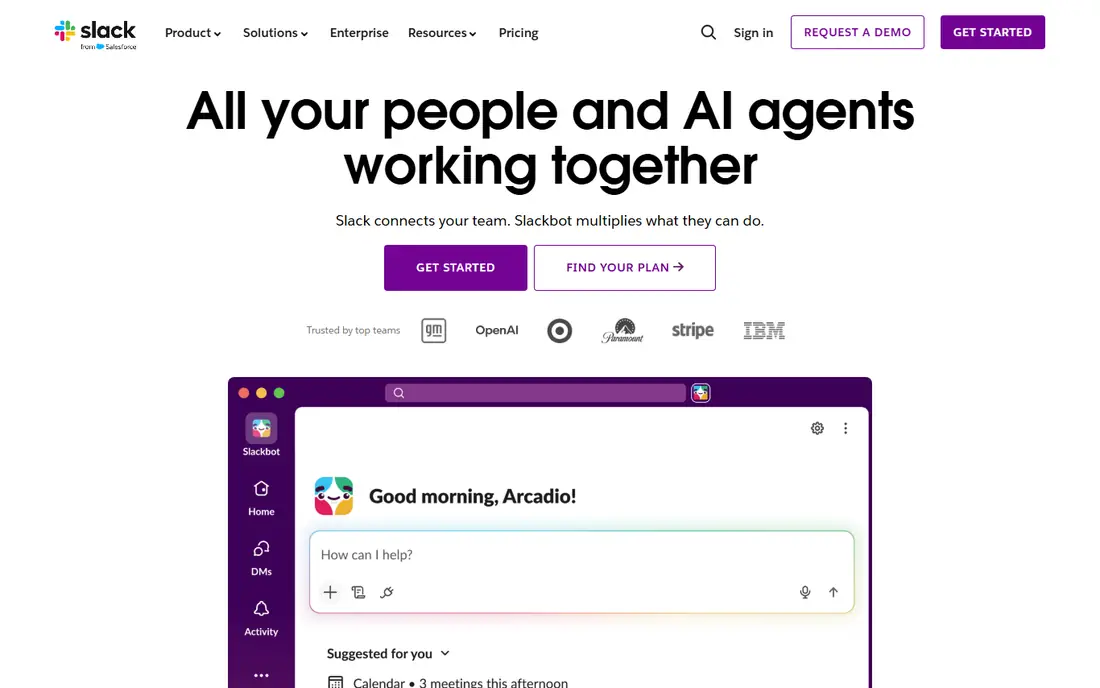
Slack organizes work into channels by team, project, or topic, with threads, direct messages, and audio huddles for quick calls. Integrations with documents, tasks, and calendars keep work in one place, and search makes past decisions easy to find. For office teams, it is the most widely adopted chat platform.
Company-wide rollout costs add up per user, and frontline staff without desks may need a different tool. For knowledge teams that live in chat, Slack is our pick for daily internal communication. Pair it with an intranet if company news matters more than chat.
- Channels, threads, and huddles for daily work
- Huge app integrations
- Strong search across messages and files
- Costs rise per user for large companies
- Message history limits on the free tier
Microsoft Teams
Ideal for: Chat inside Microsoft 365
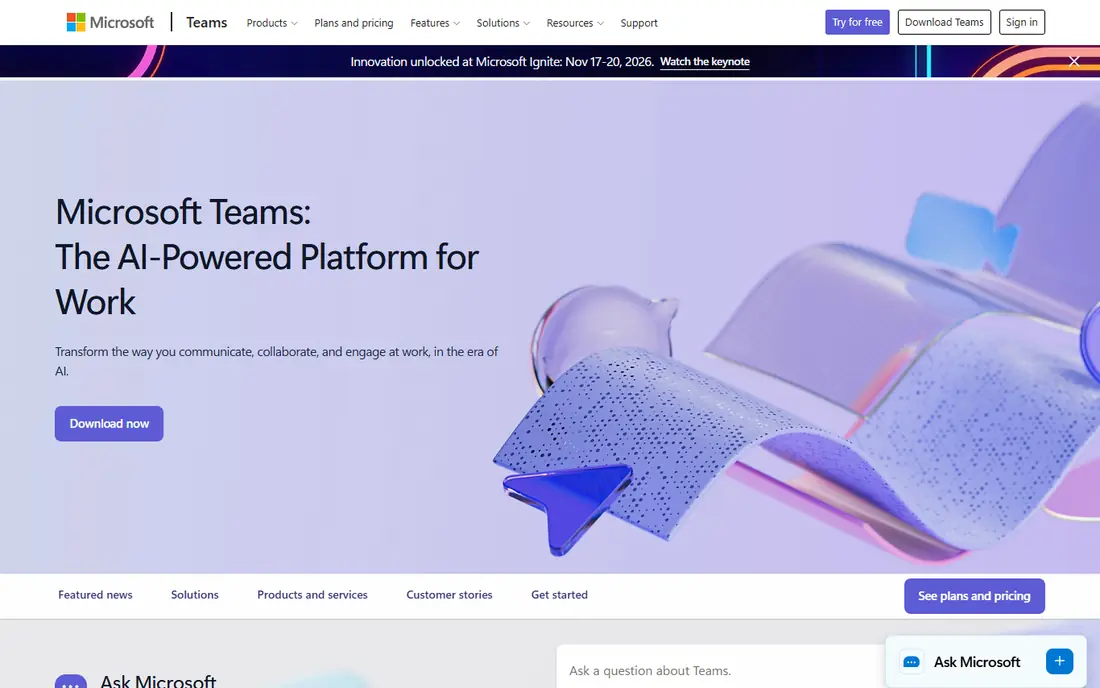
Microsoft Teams combines chat, video meetings, file storage, and app integrations for organizations on Microsoft 365. Communities and channels mirror Workplace groups, letting departments and interest groups share news and files. Security and admin controls suit large, regulated organizations.
Teams can feel crowded, and its value drops outside Microsoft 365. For companies already paying for Microsoft 365, Teams is the natural Workplace replacement, since it is often included. Check your current license before buying anything new.
- Chat, meetings, and files inside Microsoft 365
- Communities and channels for company groups
- Enterprise security
- Interface can feel busy
- Best value inside a Microsoft 365 subscription
Google Chat
Ideal for: Chat inside Google Workspace
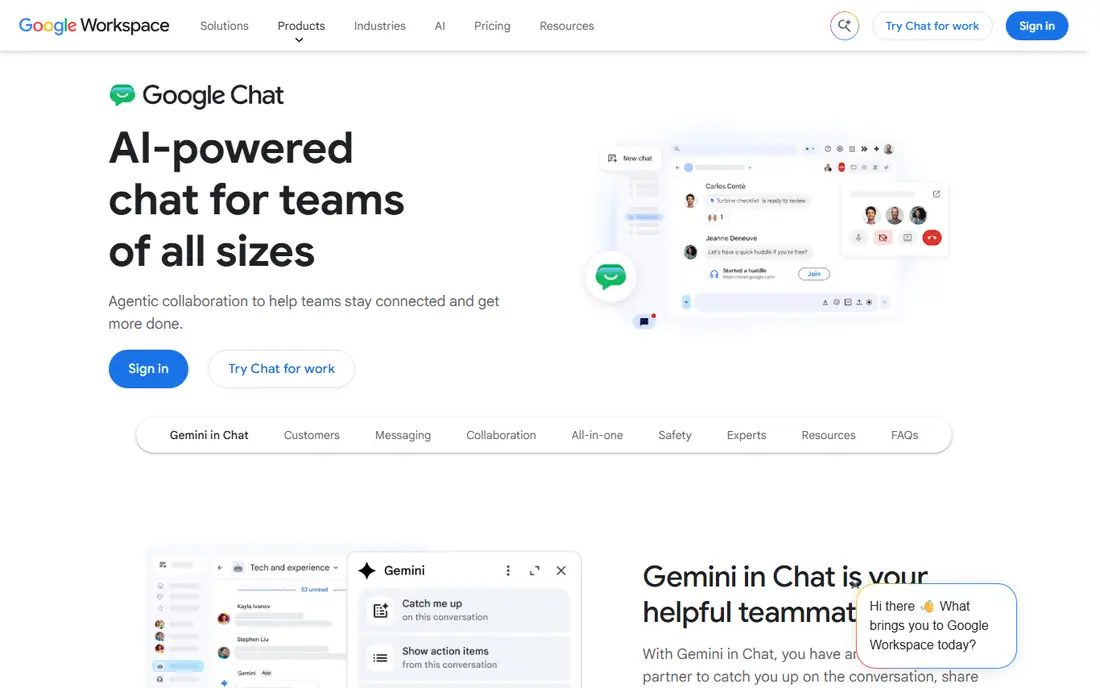
Google Chat gives Google Workspace users direct messages and spaces for team discussion, tied to Docs, Drive, and Meet. Setup is simple for organizations already on Google, and staff need no new login. Spaces work well for team and project groups.
It lacks a full company intranet with news, directories, and recognition features, so larger companies may pair it with an intranet tool. For small Google-based teams, Google Chat covers daily communication well at low extra cost.
- Chat and spaces inside Google Workspace
- Simple setup for Google users
- Integrates with Docs, Drive, and Meet
- Fewer intranet and news features than dedicated platforms
- Less suited to frontline-only staff
Zoho Connect
Ideal for: Intranet and team feeds
Zoho Connect blends a social intranet with team collaboration: feeds, groups, forums, tasks, events, and file sharing in one place. It suits small and mid-size businesses that want Workplace-style groups without enterprise pricing, and its mobile apps reach staff away from desks.
The interface is less refined than leading chat tools, and integrations are narrower. For a budget-friendly intranet with social features, Zoho Connect is a strong pick. Zoho users get extra value from shared logins and data.
- Feeds, groups, and forums with task and event tools
- Affordable plans
- Mobile apps for staff
- Interface feels less polished than Slack
- Smaller third-party app ecosystem
Staffbase
Ideal for: Frontline employee communication
Staffbase focuses on reaching every employee, including frontline staff without company email or desks. Its employee app delivers targeted news, surveys, and chats, while intranet and email channels reach office staff too. Companies with factories, stores, or field teams value that reach.
Pricing is typically quoted and enterprise oriented, so small teams may prefer Zoho Connect or Happeo. For large employers that struggle to reach frontline staff, Staffbase is a leading Workplace alternative. Ask for a demo focused on your workforce mix.
- Built for deskless and frontline staff
- Company news app with targeting
- Email and intranet options beside the app
- Enterprise pricing is quoted
- Less suited to small office-only teams
MangoApps
Ideal for: Intranet and collaboration
MangoApps combines an intranet with chat, groups, projects, and recognition, aiming to replace several tools at once. Company news, directories, and social features mirror Workplace, while project tools add task tracking. Mobile apps help reach staff outside the office.
Configuring such a broad platform takes time, and smaller teams may use only part of it. For mid-size companies that want one hub for news, chat, and collaboration, MangoApps is worth a trial. Compare its modules against your must-have list before committing.
- Intranet, chat, and project tools in one platform
- Company news and recognition features
- Mobile apps included
- Broad feature set takes time to configure
- Pricing is quoted for many plans
Happeo
Ideal for: Google Workspace intranet
Happeo builds a branded intranet on top of Google Workspace, with pages, channels, and search that pull in Google Docs and Drive content. Staff get company news, directories, and group spaces without leaving the Google environment they already use. That tight fit suits Google-based companies.
Organizations outside Google Workspace get less value, and frontline features are thinner than Staffbase. For Google shops that need a proper intranet beside Chat, Happeo is a strong pick.
- Intranet built on Google Workspace
- Channels and pages for company news
- Search across Google content
- Best inside Google Workspace
- Smaller ecosystem than Staffbase
How we picked these
We compared official feature pages, pricing pages, and public documentation, looking for company groups, news feeds, chat, and intranet features that match Workplace. We favored platforms that are actively maintained and work in October 2026, and we mixed chat tools with intranets for different workforce types. We did not claim hands-on testing, and we note that pricing is often per user, so model total cost for your headcount.
We also weighed practical details that matter after signup. That included how easy each product is to set up, whether support answers promptly, and whether pricing stays clear as usage grows. We read user complaints as well as praise, since repeated complaints about billing, onboarding, or missing features often signal a real weakness. Where a product had a known limitation, we said so in its write-up rather than smoothing it over. Our goal was a shortlist that a reader can trust for facebook workplace alternatives, not a list of every vendor in the market. Readers with unusual needs should still test their top two choices, since fit depends on budget, team size, and the features used every day.
What to check before you switch
Start with who must be reached. Office teams do well with chat tools, while frontline staff need a mobile app that works without company email. List your must-haves: company news, groups, chat, file sharing, recognition, or surveys, and test each platform against them with real staff, not just admins.
Next, plan migration and adoption. Ask how groups, posts, and files move from Workplace, and whether the new tool offers onboarding help. A pilot with one department will reveal whether staff actually open the app daily. Pick the tool people will use, not just the one with the longest feature list.
Testing your shortlist before you commit
A short trial answers questions that no comparison table can settle. Sign up for your top two choices, run a real task from your own work, and watch how long it takes and where you get stuck. For facebook workplace alternatives, that real task might be a weekly workflow you repeat, a report you need every month, or a setup step your team must repeat for new members. If a tool slows that task down, it will cost time every week, no matter how good its feature list looks.
Pay attention to support during the trial as well. Send a question through the normal support channel and note how long a useful answer takes. Check billing clarity too: confirm what the trial includes, when it ends, and what the first paid invoice will actually show. A tool that is hard to cancel, or that hides fees until checkout, deserves caution.
Finally, ask who else on your team must use the tool. A product that only one person likes will stall, while a product the whole team adopts will pay for itself. Gather quick feedback from the people who will use it daily, compare their notes with your own, and then choose. That small amount of trial discipline prevents most bad purchases, and it costs far less than switching tools again in six months.
Budgeting the full cost, not just the headline price
Headline prices rarely tell the full story. Add up per-user fees, add-on charges, implementation help, and any training your team needs, then compare that total across your shortlist. A cheaper plan that needs three paid add-ons can end up costing more than a fuller plan from a rival. Check renewal terms as well, since introductory discounts often expire after the first term and the second year price is the one you will actually live with.
Think about exit costs too. Before you commit, confirm how your data exports, whether your content or history moves cleanly, and what happens if you pause or cancel. A tool with clean exports gives you freedom later, while a tool that locks data in makes switching painful. Choosing with the full cost and the exit path in mind keeps your facebook workplace alternatives decision sound for the long term, not just for the first month.
Frequently asked questions
Is Facebook Workplace still available?
Meta announced the shutdown of Workplace, with a migration path for customers. Organizations should move to a replacement before access ends, and export important groups and files early.
Which Workplace alternative is best for frontline workers?
Staffbase and MangoApps focus most on frontline reach, with mobile apps that work without company email. Test app access with real frontline staff before deciding.
Can Slack replace Workplace fully?
Slack covers chat and channels well, but it is not a full intranet for company news and directories. Many companies pair Slack with an intranet or use Teams for a broader hub.
How much do these platforms cost?
Most charge per user per month, with free tiers for small teams on Slack, Teams, and Google Chat. Enterprise intranets are usually quoted, so request pricing for your headcount.
What happens to my Workplace groups and files?
Export groups, posts, and files before shutdown, and ask the new vendor about migration tools. Some vendors offer assisted migration from Workplace specifically.