FieldPulse Alternatives in 2026: 8 Options Compared

- 1
 JobberField service for small teamsVisit
- 2
 Housecall ProHome services scheduling and paymentsVisit
- 3
 ServiceTitanField service at enterprise scaleVisit
- 4
 WorkizScheduling and invoicing for service prosVisit
- 5
 FieldEdgeField service with flat-rate pricingVisit
- Jobber is our first pick for Field service for small teams, because it covers the core job well without a narrow focus.
- Housecall Pro is a strong second option for Home services scheduling and payments, and it suits buyers who want a different balance of features and price.
- Most options here use quote-based or trial-led pricing, so ask for current plan details before you compare totals.
- Workiz stands out for Scheduling and invoicing for service pros, with scheduling, invoicing, and online booking as its clearest strength.
- Shortlist two or three options, test each with a real task, and compare the total cost and limits before you commit.
Quick comparison
| Product | Ideal for | Price from | Free version | |
|---|---|---|---|---|
| Jobber | Field service for small teams | See website | Free trial | Visit |
| Housecall Pro | Home services scheduling and payments | See website | Free trial | Visit |
| ServiceTitan | Field service at enterprise scale | See website | See website | Visit |
| Workiz | Scheduling and invoicing for service pros | See website | Free trial | Visit |
| FieldEdge | Field service with flat-rate pricing | See website | See website | Visit |
 Service Fusion | Affordable field service management | See website | Free trial | Visit |
 Kickserv | Simple field service for small firms | See website | Free trial | Visit |
 mHelpDesk | Field service with job tracking | See website | Free trial | Visit |
The best FieldPulse alternatives
These 8 options cover the main ways to handle fieldpulse alternatives, from well-known leaders to smaller tools that suit a narrower job. We compared official feature pages, pricing, app-store listings, privacy policies, and public reviews to sort out where each one earns its place.
Jobber
Ideal for: Field service for small teams
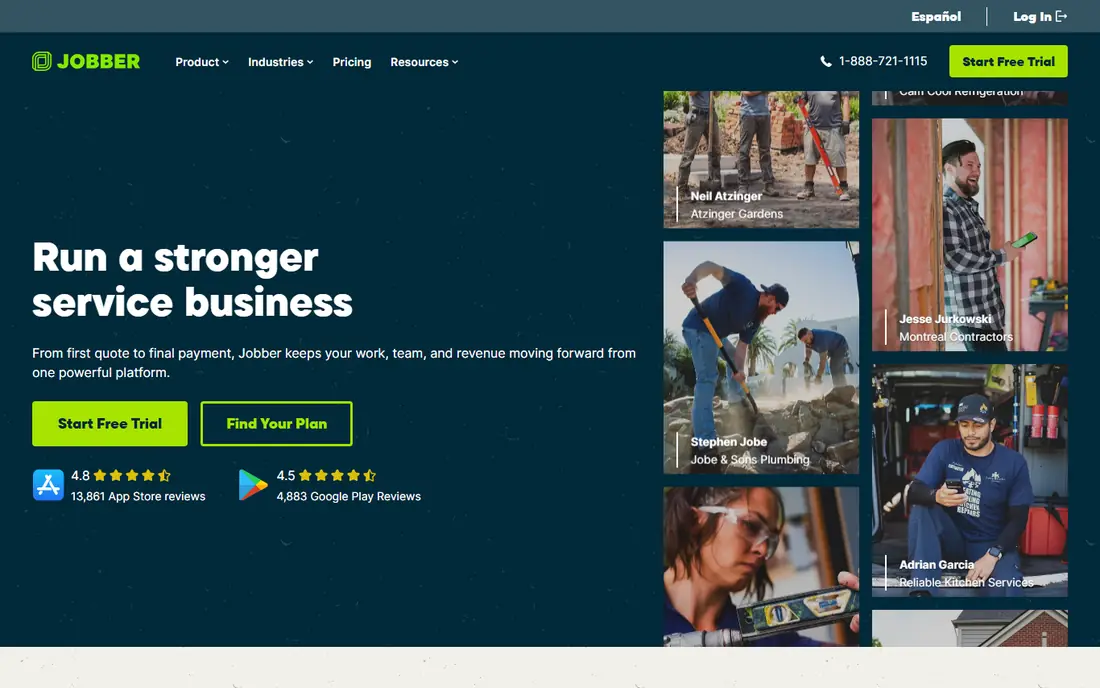
Jobber fits field service for small teams. Jobber fits small service businesses that want quoting to payment in one place. Its strengths include quoting, scheduling, invoicing, and client reminders, and mobile app for crews.
The honest catch is per-user pricing adds up, and advanced features sit on higher plans. That matters most when your team relies on that area every day, so weigh it against the strengths above before you decide. A tool can still be the right pick with a clear weakness, as long as that weakness sits outside your main job.
We would shortlist Jobber if field service for small teams is your main priority. A free trial lets you test it with real work before you pay, so use that window properly. Start small, test it with a real workload, and compare the result with one other option on this list before you commit.
- Quoting, scheduling, invoicing, and client reminders
- Mobile app for crews
- Per-user pricing adds up
- Advanced features sit on higher plans
Housecall Pro
Ideal for: Home services scheduling and payments
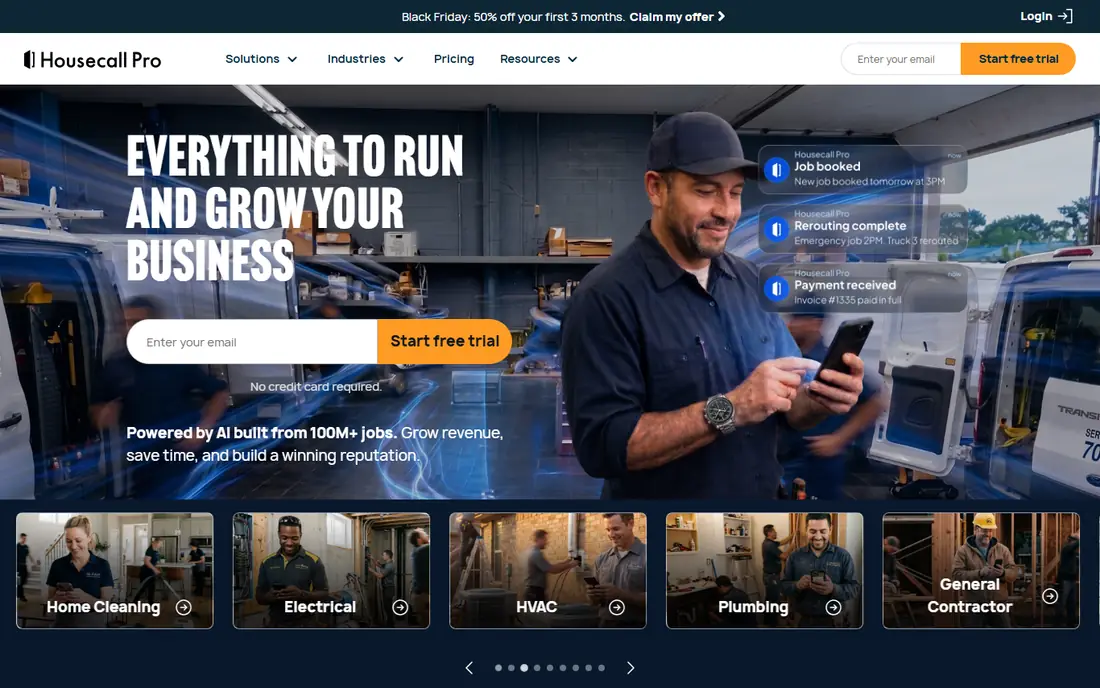
For home services scheduling and payments, Housecall Pro is a strong candidate. Housecall Pro suits home service firms that need dispatch plus payments. Its strengths include scheduling, dispatch, estimates, and payments, and consumer financing options.
The honest catch is add-on costs grow with features, and interface can feel busy. That matters most when your team relies on that area every day, so weigh it against the strengths above before you decide. A tool can still be the right pick with a clear weakness, as long as that weakness sits outside your main job.
We would shortlist Housecall Pro if home services scheduling and payments is your main priority. A free trial lets you test it with real work before you pay, so use that window properly. Start small, test it with a real workload, and compare the result with one other option on this list before you commit.
- Scheduling, dispatch, estimates, and payments
- Consumer financing options
- Add-on costs grow with features
- Interface can feel busy
ServiceTitan
Ideal for: Field service at enterprise scale
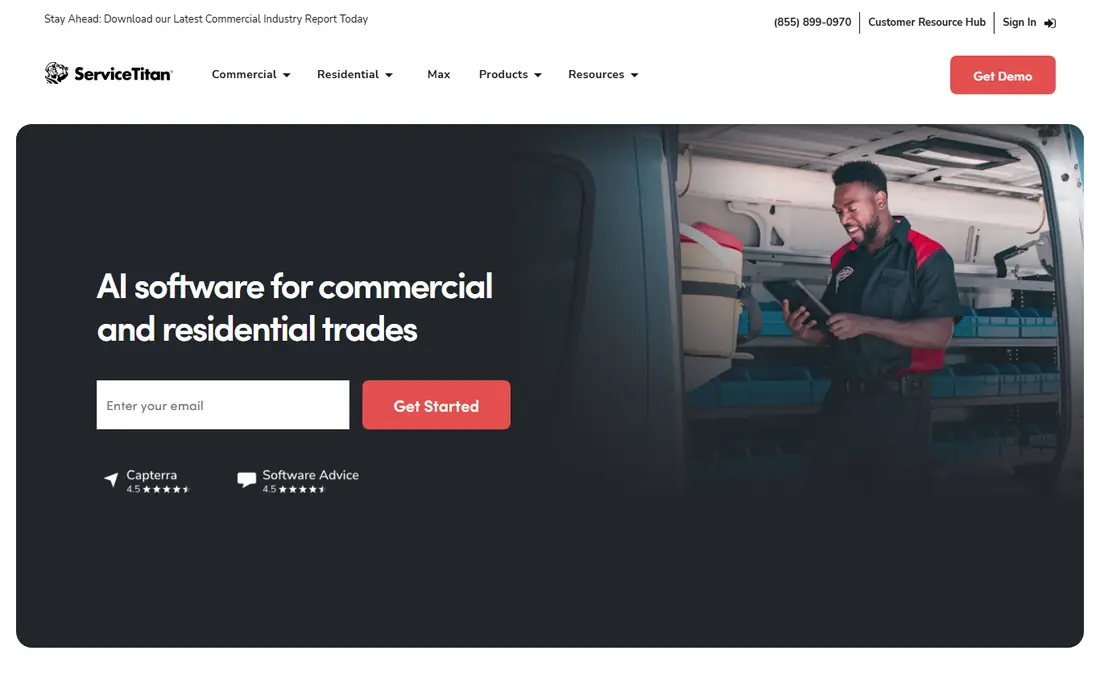
ServiceTitan is built around field service at enterprise scale. ServiceTitan fits larger home service companies that need a full operating platform. Its strengths include end-to-end job, dispatch, marketing, and reporting for large firms.
The honest catch is enterprise pricing and onboarding, and smaller firms may find it heavy. That matters most when your team relies on that area every day, so weigh it against the strengths above before you decide. A tool can still be the right pick with a clear weakness, as long as that weakness sits outside your main job.
We would shortlist ServiceTitan if field service at enterprise scale is your main priority. Check the current pricing page before you commit, since plans, limits, and terms change over time. Start small, test it with a real workload, and compare the result with one other option on this list before you commit.
- End-to-end job, dispatch, marketing, and reporting for large firms
- Enterprise pricing and onboarding
- Smaller firms may find it heavy
Workiz
Ideal for: Scheduling and invoicing for service pros
If scheduling and invoicing for service pros is the priority, Workiz deserves a close look. Workiz suits service pros who want booking and invoicing without a long setup. Its strengths include scheduling, invoicing, and online booking, and phone system options.
The honest catch is reporting depth trails larger platforms, and pricing varies by add-on. That matters most when your team relies on that area every day, so weigh it against the strengths above before you decide. A tool can still be the right pick with a clear weakness, as long as that weakness sits outside your main job.
We would shortlist Workiz if scheduling and invoicing for service pros is your main priority. A free trial lets you test it with real work before you pay, so use that window properly. Start small, test it with a real workload, and compare the result with one other option on this list before you commit.
- Scheduling, invoicing, and online booking
- Phone system options
- Reporting depth trails larger platforms
- Pricing varies by add-on
FieldEdge
Ideal for: Field service with flat-rate pricing
FieldEdge fits field service with flat-rate pricing. FieldEdge fits HVAC and similar trades that use flat-rate pricing. Its strengths include dispatch, quoting with flat-rate books, and QuickBooks integration.
The honest catch is pricing is quote-based, and mobile experience varies by workflow. That matters most when your team relies on that area every day, so weigh it against the strengths above before you decide. A tool can still be the right pick with a clear weakness, as long as that weakness sits outside your main job.
We would shortlist FieldEdge if field service with flat-rate pricing is your main priority. Check the current pricing page before you commit, since plans, limits, and terms change over time. Start small, test it with a real workload, and compare the result with one other option on this list before you commit.
- Dispatch, quoting with flat-rate books, and QuickBooks integration
- Pricing is quote-based
- Mobile experience varies by workflow
Service Fusion
Ideal for: Affordable field service management
For affordable field service management, Service Fusion is a strong candidate. Service Fusion fits budget-conscious service firms that need core field tools. Its strengths include scheduling, dispatch, invoicing, and payments, and GPS tracking options.
The honest catch is interface feels dated in places, and advanced reporting is limited. That matters most when your team relies on that area every day, so weigh it against the strengths above before you decide. A tool can still be the right pick with a clear weakness, as long as that weakness sits outside your main job.
We would shortlist Service Fusion if affordable field service management is your main priority. A free trial lets you test it with real work before you pay, so use that window properly. Start small, test it with a real workload, and compare the result with one other option on this list before you commit.
- Scheduling, dispatch, invoicing, and payments
- GPS tracking options
- Interface feels dated in places
- Advanced reporting is limited
Kickserv
Ideal for: Simple field service for small firms
Kickserv is built around simple field service for small firms. Kickserv suits small firms that want field service running with minimal training. Its strengths include simple scheduling, invoicing, and customer management, and quick setup.
The honest catch is feature depth is lighter than larger rivals, and integrations are narrower. That matters most when your team relies on that area every day, so weigh it against the strengths above before you decide. A tool can still be the right pick with a clear weakness, as long as that weakness sits outside your main job.
We would shortlist Kickserv if simple field service for small firms is your main priority. A free trial lets you test it with real work before you pay, so use that window properly. Start small, test it with a real workload, and compare the result with one other option on this list before you commit.
- Simple scheduling, invoicing, and customer management
- Quick setup
- Feature depth is lighter than larger rivals
- Integrations are narrower
mHelpDesk
Ideal for: Field service with job tracking
If field service with job tracking is the priority, mHelpDesk deserves a close look. mHelpDesk fits small service teams that want straightforward job tracking. Its strengths include job scheduling, invoicing, and customer tracking, and mobile access.
The honest catch is smaller vendor footprint, and feature updates are slower than larger rivals. That matters most when your team relies on that area every day, so weigh it against the strengths above before you decide. A tool can still be the right pick with a clear weakness, as long as that weakness sits outside your main job.
We would shortlist mHelpDesk if field service with job tracking is your main priority. A free trial lets you test it with real work before you pay, so use that window properly. Start small, test it with a real workload, and compare the result with one other option on this list before you commit.
- Job scheduling, invoicing, and customer tracking
- Mobile access
- Smaller vendor footprint
- Feature updates are slower than larger rivals
How we picked these
We started from the topic itself and kept only products that exist, work in October 2026, and truly fit the job in the title. For each option we checked official feature pages and pricing, app-store listings where relevant, privacy policies, and public reviews, and we left out products whose fit depended on stretching the definition. Where a price or free tier could not be verified from the vendor, we wrote See website rather than guessing a number.
We also weighed who each product is really for, not just its feature list. A broad platform can be the wrong pick for a small team, and a simple tool can be the wrong pick for a large operation, so the write-ups above name the audience, the strength, and the catch for each option. That is the comparison we would want before spending money or moving data.
How to choose field service software
Start with your main job
Write down the one job you need done every week, then judge each option against that job first. Extra features look good in a demo, but they add cost, training, and admin work when they sit unused. If two options both cover your main job, pick the one with the clearer pricing and the simpler setup for your team.
Check pricing and limits
Compare the total cost for your team size and usage, not just the headline plan. Check seat pricing, usage limits, add-ons, and contract terms, and ask what happens when you grow past a tier. A free plan or trial is useful, but read what it excludes, since the feature you need most is often the one held back for paid plans.
Test before you commit
Run a short trial with real data and a real task, and involve the people who will use the tool daily. Check support response, data export, and how easy it is to leave, because switching costs are part of the price. If a trial feels hard to set up, treat that as useful evidence about the product, not just about your team.
Frequently asked questions
What are fieldpulse alternatives?
They are products and services that cover the same job as the original topic, in this case fieldpulse alternatives. The list above includes Jobber, Housecall Pro, and ServiceTitan, among others, each with a different balance of features, price, and audience. Start from your main job, then narrow the list to the two or three options that fit it best.
Which option is best for most people?
For most buyers, Jobber is a sensible starting point for Field service for small teams, because it covers the core job well. If your priority is different, Housecall Pro for Home services scheduling and payments or Workiz for Scheduling and invoicing for service pros may fit better. There is no single winner for every team, so match the pick to your size, budget, and workflow.
Is there a free option?
Some options offer a free trial, while others use quote-based pricing, so the honest answer is to check each vendor page. Trials are the best way to test fit without committing, and they reveal setup effort as well as features. Do not assume a trial covers every feature you need.
How much do these options cost?
Costs vary by plan, team size, and usage, and several vendors use quote-based pricing, which is why some entries say See website. Compare the total for your actual use, including seats, add-ons, and contract length, rather than the lowest headline price. Ask each vendor for a written quote before you decide.
How do I switch from my current tool?
Start by exporting your data and checking what the new tool can import, since migration quality varies a lot. Run both tools side by side for a short period, move one team or project first, and keep the old tool until the new one proves itself. Ask the vendor for migration help in writing before you sign.