Best Fixme.it Alternatives in 2026: 8 Options Compared

- 1
 TeamViewersupport teams needing reliable remote accessVisit
- 2
 AnyDeskteams wanting fast, light remote accessVisit
- 3
 Splashtopsupport teams wanting affordable remote accessVisit
- 4
 RemotePCsmall teams wanting low-cost remote accessVisit
- 5
 Zoho AssistZoho users and small support teamsVisit
- Our pick for most readers is TeamViewer, because it balances a clear support teams needing reliable remote access focus with broad support and documentation.
- If price matters most, start with the free tiers from RemotePC and LogMeIn Rescue, then check the paid limits before you commit.
- For larger teams, AnyDesk and Splashtop offer deeper controls, but they also need more setup time and a larger budget.
- Check the official pricing page for every shortlisted option, since plans and free tiers change and the vendor page is the final word.
Quick comparison
| Product | Ideal for | Price from | Free version | |
|---|---|---|---|---|
| TeamViewer | support teams needing reliable remote access | See website | Free trial | Visit |
| AnyDesk | teams wanting fast, light remote access | Free | Yes | Visit |
| Splashtop | support teams wanting affordable remote access | See website | Free trial | Visit |
| RemotePC | small teams wanting low-cost remote access | See website | Free trial | Visit |
| Zoho Assist | Zoho users and small support teams | Free | Yes | Visit |
 ConnectWise ScreenConnect | IT teams managing many endpoints | See website | Free trial | Visit |
 LogMeIn Rescue | support teams handling high call volumes | See website | Free trial | Visit |
 RustDesk | teams wanting open source remote desktop | Free | Yes | Visit |
The best fixme.it alternatives
We compared official feature pages, pricing pages, app-store listings, privacy policies, and public reviews for these fixme.it alternatives. Shortlist two or three and test them against your own workflow before you switch.
TeamViewer
Ideal for: support teams needing reliable remote access
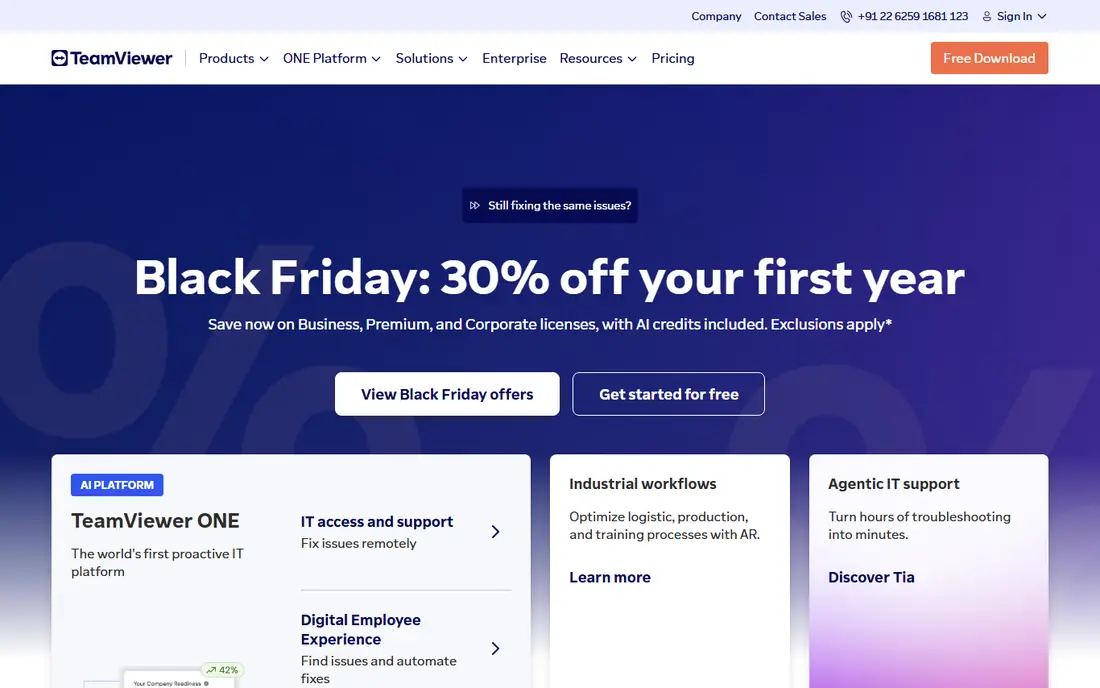
For readers comparing fixme.it alternatives, TeamViewer stands out first for support teams needing reliable remote access. Reliable remote access across devices and platforms. That combination makes it a natural first stop, even if it is not the right fit for every team.
On pricing, the listing here shows See website as the starting price and Free trial for a free plan, but treat those fields as a starting point only. We recommend opening the official pricing page and checking the exact tier, because seat limits, usage limits, and add-ons can change the total cost.
The honest catch is this: Commercial pricing is high for small teams. That limit does not rule it out, but it should shape your shortlist. If support teams needing reliable remote access is your main need and the catch does not block your workflow, keep it near the top. If the catch does block you, move to the next entry in this list rather than trying to work around it for months.
- Reliable remote access across devices and platforms
- Clear focus on support teams needing reliable remote access
- Documentation and support pages that explain the main workflows
- Commercial pricing is high for small teams
- Pricing and limits vary by tier, so the vendor page needs a check
AnyDesk
Ideal for: teams wanting fast, light remote access
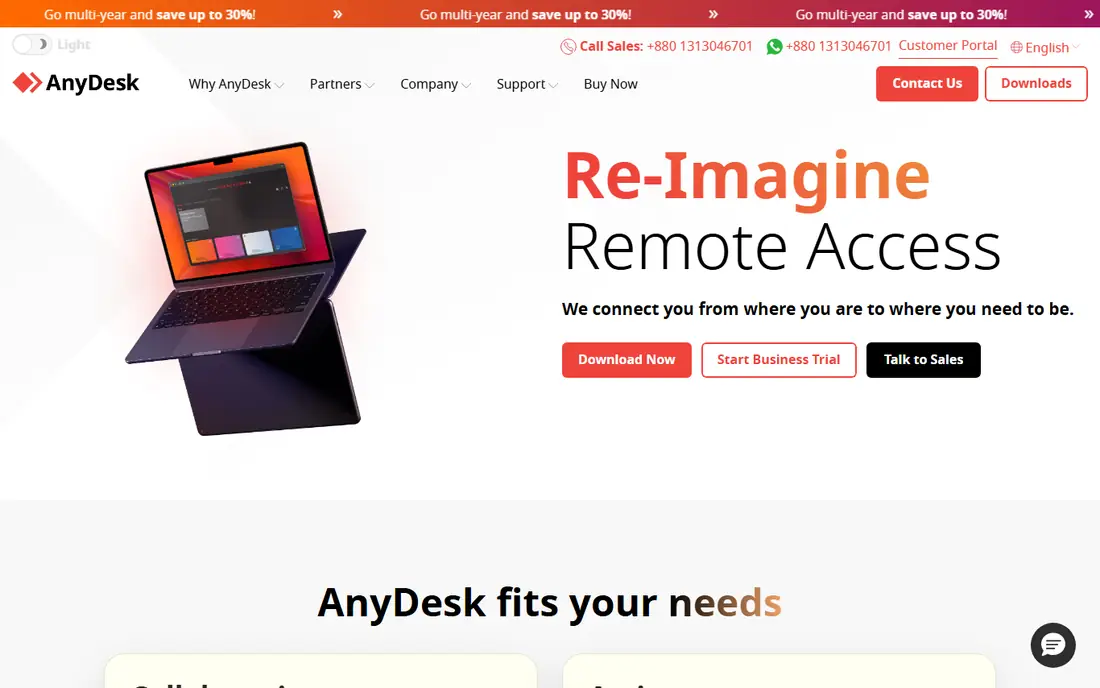
AnyDesk earns its place here because it focuses on teams wanting fast, light remote access. Fast, lightweight remote desktop with a free tier for personal use. Readers who match that profile will usually get value from it faster than from a broader tool.
Pricing deserves a close look before you sign up, with Free shown as the starting price and Yes for a free plan in this article. Vendor pages are the reliable source, and a short trial will tell you more than a feature list can. The product works best when its main job matches yours, which is teams wanting fast, light remote access, and buyers who use it for a different job often report the most friction.
Every option in this list has a trade-off, and for AnyDesk it is that commercial use needs a paid licence. Weigh that against the strength above, and ask whether your team will hit that limit in the first few months. If not, this is a solid pick. If so, a different entry here will probably serve you better, and the comparison table at the top makes that switch easy to spot.
- Fast, lightweight remote desktop with a free tier for personal use
- Clear focus on teams wanting fast, light remote access
- Documentation and support pages that explain the main workflows
- Commercial use needs a paid licence
- Pricing and limits vary by tier, so the vendor page needs a check
Splashtop
Ideal for: support teams wanting affordable remote access
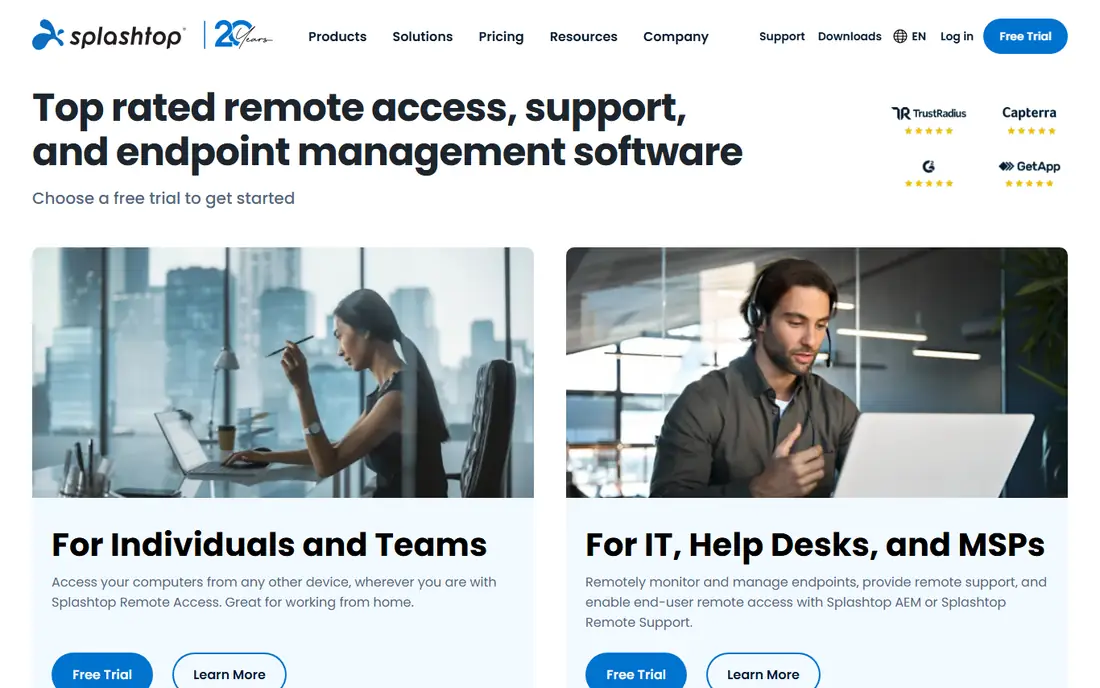
We included Splashtop for teams that need support teams wanting affordable remote access. Affordable remote support with good performance. It is not the cheapest or the simplest option in this list, but its focus is clear and easy to judge.
We would start a trial with a real task, not a demo task, and check how it handles support teams wanting affordable remote access under normal load. The starting price shown here is See website and the free plan field is Free trial, but the vendor page should confirm both. When the fit is right, the product feels focused rather than generic, and that focus is its main advantage over broader rivals in this list.
The drawback to note is that some features vary by plan and platform. We mention it plainly because readers often discover it only after migration, when switching again costs time. Test that specific point during a trial, with your own data and your own team, and keep a second option warm until you are sure.
- Affordable remote support with good performance
- Clear focus on support teams wanting affordable remote access
- Documentation and support pages that explain the main workflows
- Some features vary by plan and platform
- Pricing and limits vary by tier, so the vendor page needs a check
RemotePC
Ideal for: small teams wanting low-cost remote access
RemotePC is a strong choice when small teams wanting low-cost remote access is the main job. Low-cost remote access for computers and teams. That clarity helps when you are comparing a long list and need to cut it down quickly.
Before you commit, compare the total cost for your team size, not just the headline price shown as See website, with a free plan field of Free trial. Free tiers and trials help, but limits on users, volume, or features can matter more than the monthly figure. Used for small teams wanting low-cost remote access, this option is straightforward to judge, and a short pilot usually reveals whether the workflow fits your team.
No product here is perfect, and RemotePC is no exception: its interface is simpler than enterprise support suites. That is a normal trade-off, not a reason to dismiss it outright. Shortlist it when small teams wanting low-cost remote access matches your priority, and skip it when a different priority in this article matters more to your team.
- Low-cost remote access for computers and teams
- Clear focus on small teams wanting low-cost remote access
- Documentation and support pages that explain the main workflows
- Its interface is simpler than enterprise support suites
- Pricing and limits vary by tier, so the vendor page needs a check
Zoho Assist
Ideal for: Zoho users and small support teams
For readers comparing fixme.it alternatives, Zoho Assist stands out first for Zoho users and small support teams. Unattended and on-demand support with a free tier. That combination makes it a natural first stop, even if it is not the right fit for every team.
On pricing, the listing here shows Free as the starting price and Yes for a free plan, but treat those fields as a starting point only. We recommend opening the official pricing page and checking the exact tier, because seat limits, usage limits, and add-ons can change the total cost.
The honest catch is this: Advanced features sit on higher plans. That limit does not rule it out, but it should shape your shortlist. If Zoho users and small support teams is your main need and the catch does not block your workflow, keep it near the top. If the catch does block you, move to the next entry in this list rather than trying to work around it for months.
- Unattended and on-demand support with a free tier
- Clear focus on Zoho users and small support teams
- Documentation and support pages that explain the main workflows
- Advanced features sit on higher plans
- Pricing and limits vary by tier, so the vendor page needs a check
ConnectWise ScreenConnect
Ideal for: IT teams managing many endpoints
ConnectWise ScreenConnect earns its place here because it focuses on IT teams managing many endpoints. Strong remote support for managed service providers. Readers who match that profile will usually get value from it faster than from a broader tool.
Pricing deserves a close look before you sign up, with See website shown as the starting price and Free trial for a free plan in this article. Vendor pages are the reliable source, and a short trial will tell you more than a feature list can. The product works best when its main job matches yours, which is IT teams managing many endpoints, and buyers who use it for a different job often report the most friction.
Every option in this list has a trade-off, and for ConnectWise ScreenConnect it is that pricing and setup suit professional IT teams. Weigh that against the strength above, and ask whether your team will hit that limit in the first few months. If not, this is a solid pick. If so, a different entry here will probably serve you better, and the comparison table at the top makes that switch easy to spot.
- Strong remote support for managed service providers
- Clear focus on IT teams managing many endpoints
- Documentation and support pages that explain the main workflows
- Pricing and setup suit professional IT teams
- Pricing and limits vary by tier, so the vendor page needs a check
LogMeIn Rescue
Ideal for: support teams handling high call volumes
We included LogMeIn Rescue for teams that need support teams handling high call volumes. Enterprise remote support with session tools. It is not the cheapest or the simplest option in this list, but its focus is clear and easy to judge.
We would start a trial with a real task, not a demo task, and check how it handles support teams handling high call volumes under normal load. The starting price shown here is See website and the free plan field is Free trial, but the vendor page should confirm both. When the fit is right, the product feels focused rather than generic, and that focus is its main advantage over broader rivals in this list.
The drawback to note is that it is priced for larger support operations. We mention it plainly because readers often discover it only after migration, when switching again costs time. Test that specific point during a trial, with your own data and your own team, and keep a second option warm until you are sure.
- Enterprise remote support with session tools
- Clear focus on support teams handling high call volumes
- Documentation and support pages that explain the main workflows
- It is priced for larger support operations
- Pricing and limits vary by tier, so the vendor page needs a check
RustDesk
Ideal for: teams wanting open source remote desktop
RustDesk is a strong choice when teams wanting open source remote desktop is the main job. Open source remote desktop with self-hosting options. That clarity helps when you are comparing a long list and need to cut it down quickly.
Before you commit, compare the total cost for your team size, not just the headline price shown as Free, with a free plan field of Yes. Free tiers and trials help, but limits on users, volume, or features can matter more than the monthly figure. Used for teams wanting open source remote desktop, this option is straightforward to judge, and a short pilot usually reveals whether the workflow fits your team.
No product here is perfect, and RustDesk is no exception: self-hosting needs technical setup. That is a normal trade-off, not a reason to dismiss it outright. Shortlist it when teams wanting open source remote desktop matches your priority, and skip it when a different priority in this article matters more to your team.
- Open source remote desktop with self-hosting options
- Clear focus on teams wanting open source remote desktop
- Documentation and support pages that explain the main workflows
- Self-hosting needs technical setup
- Pricing and limits vary by tier, so the vendor page needs a check
How we picked these
We started with the fixme.it alternatives topic and looked for products that exist and work in October 2026 and truly fit it, rather than tools that only mention the topic in passing. We compared official feature pages, pricing pages, app-store listings, privacy policies, and public reviews, and we left out products we could not verify.
What to check before you choose
Start with the job, not the feature list. Write down the one task you need done every week, the number of people who will use the tool, and the systems it must connect with. Then test your top two options with that exact task.
Next, check the total cost for a full year, including seats and usage charges. Ask what happens when you cancel, whether you can export your data, and how support works. Those answers matter more over time than a small difference in monthly price.
Frequently asked questions
What are the best fixme.it alternatives?
The best choice depends on your main job. TeamViewer is our general pick, RemotePC suits teams that want a lighter start, and AnyDesk suits larger teams that need deeper controls. Shortlist two or three, then test them with a real task before you commit.
Are there free fixme.it alternatives?
Yes, some options in this list offer a free tier or a free trial, as shown in the comparison table. Free tiers usually limit users, volume, or features, so check the vendor page for the current limits. A free tier is a good way to test fit, but it may not cover a full team for long.
How much do fixme.it alternatives cost?
Costs vary widely, from free tiers to enterprise pricing, and they often depend on seats or usage. We wrote See website where we could not verify a current figure, because guessing a price would mislead readers. Always check the official pricing page for the tier you actually need.
How do I switch from one option to another?
Start by exporting your data from the old tool and checking what the new tool can import. Run both tools in parallel for a short period, move one workflow at a time, and keep the old tool until the new one handles a real week of work. That order reduces the risk of lost data or missed work.